

2 weeks 2 days ago
And you can also commit injustice by doing nothing.
▼
Source
source
(Hays translation) IX, 5

4 months 1 week ago
We know nothing accurately in reality, but [only] as it changes according to the bodily condition, and the constitution of those things that flow upon [the body] and impinge upon it.
▼
Source
source
Freeman (1948), p. 142

1 month 3 weeks ago
In thinking of history in this [progressive & eschatological] way Islam shares common ground with Christianity and with the secular creeds of the modern West. It is misleading to represent Islam and 'the West' as forming civilisations that have nothing in common. Christianity and Islam are integral parts of western monotheism, and as such they share a view of history that marks them off from the rest of the world. Both are militant faiths that seek to convert all humankind. Other religions have been implicated in twentieth-century violence-the state cult of Shintō in Japan during the militarist period and Hindu nationalism in contemporary India, for example. But only Christianity and Islam have engendered movements that are committed to the systematic use of force to achieve universal goals.
▼
Source
source
Enlightenment and Terror in the Twentieth Century: Terror and the Western Tradition
2 weeks 2 days ago
What matter and opportunity [for thy activity] art thou avoiding? For what else are all these things, except exercises for the reason, when it has viewed carefully and by examination into their nature the things which happen in life? Persevere then until thou shalt have made these things thy own, as the stomach which is strengthened makes all things its own, as the blazing fire makes flame and brightness out of everything that is thrown into it.
▼
Source
source
X, 31

2 weeks 5 days ago
If a due participation of office is a matter of right, how are vacancies to be obtained? Those by death are few; by resignation, none.
▼
Source
source
Letter to Elias Shipman and others of New Haven (12 July 1801). Often misquoted as, "few die and none resign".
2 weeks 2 days ago
Self-control and resistance to distractions. Optimism in adversity-especially illness.
▼
Source
source
(Hays translation) I, 15

3 months 2 weeks ago
Let us speak plainly: everything which keeps us from self-dissolution, every lie which protects us against our unbreathable certitudes is religious.

4 months 2 weeks ago
My argument against God was that the universe seemed so cruel and unjust. But how had I got this idea of just and unjust? A man does not call a line crooked unless he has some idea of a straight line. What was I comparing this universe with when I called it unjust?
▼
Source
source
Book II, Chapter 1, "The Rival Conceptions of God"
3 months 2 weeks ago
...the relatively unconscious man driven by his natural impulses because, imprisoned in his familiar world, he clings to the commonplace, the obvious, the probable, the collectively valid, using for his motto: 'Thinking is difficult. Therefore, let the herd pronounce judgement.'
▼
Source
source
Frequently misquoted as "Thinking is difficult, that's why most people judge" and close variants. Flying Saucers: A Modern Myth of Things Seen in the Sky. (1959), C.G. Jung, R.F.C. Hull (translator) (Princeton Press, 1979, ISBN 9780691018225

4 months 4 weeks ago
Nay, number (itself) in armies, importeth not much, where the people is of weak courage; for (as Virgil saith) it never troubles the wolf how many the sheep be.
▼
Source
source
Essays or Counsels Civil and Moral (1597), XXIX: "Of the True Greatness of Kingdoms and Estates."

4 weeks ago
The purpose of the magnanimous is to be found in procuring benefits for the world and eliminating its calamities. ... Mutual attacks among states, mutual usurpation among houses, mutual injuries among individuals; the lack of grace and loyalty between ruler and ruled, the lack of affection and filial piety between father and son, the lack of harmony between elder and younger brothers - these are the major calamities in the world.
▼
Source
source
Book 4; Universal Love II
1 month 4 weeks ago
[H]uman nature as encoded in our DNA isn't immutable. Mankind's barbaric track-record to date is an unreliable guide to the future. If Homo sapiens' nastier alleles and their more sinister combinations can be silenced or edited out of the genome, and new improved code-sequences inserted instead, then the pessimists will be confounded. A major discontinuity in the development of life lies ahead. Providentially, we've learned that the DNA-driven world isn't written in God-given proprietary code it would be hubris to tamper with, but in bug-ridden open source amenable to improvement.
▼
Source
source
Utopian Pharmacology: Mental Health in the Third Millennium MDMA and Beyond, BLTC Research, last updated 2020

3 months 1 week ago
Jesus said to His disciples, "Compare me to someone and tell Me whom I am like." Simon Peter said to Him, "You are like a righteous angel." Matthew said to Him, "You are like a wise philosopher." Thomas said to Him, "Master, my mouth is wholly incapable of saying whom You are like." Jesus said, "I am not your master. Because you have drunk, you have become intoxicated by the bubbling spring which I have measured out." And He took him and withdrew and told him three things. When Thomas returned to his companions, they asked him, "What did Jesus say to you?" Thomas said to them, "If I tell you one of the things which he told me, you will pick up stones and throw them at me; a fire will come out of the stones and burn you up."
2 weeks 6 days ago
It is as though we had buried Someone we thought dead, and now hear him calling in the night: Help me! Heaving and panting, he raises the gravestone of our soul and body higher and still higher, breathing more freely at every moment. Every word, every deed, every thought is the heavy gravestone he is forever trying to lift. And my own body and all the visible world, all heaven and earth, are the gravestone which God is struggling to heave upward.

4 months 2 weeks ago
It seems to me that, in every culture, I come across a chapter headed Wisdom. And then I know exactly what is going to follow: Vanity of vanities, all is vanity.
▼
Source
source
Conversation of 1934

4 months 1 week ago
Thou shouldst not become presumptuous through life; for death comes upon thee at last, and the perishable part falls to the ground.

4 months 2 weeks ago
Justice as fairness provides what we want.
▼
Source
source
Chapter III, Section 30, pg. 190
4 months 1 week ago
Kripke tries to sober us up by denying that meaning determines reference. Rather, we name things by confronting them and baptising them, not by creating them out of a list of qualities. Names are not, pace Russell, shorthand for such lists. They are not abbreviations for descriptions, but (in Kripke's coinage) 'rigid designators' - that is, they would name the same things in any possible world, including worlds in which their bearers did not have the properties we, in this world, use to identify them.
▼
Source
source
Kripke versus Kant. Lrb.com, september 1980.
4 months 2 weeks ago
If a person tells me he has been to the worst places I have no reason to judge him; but if he tells me it was his superior wisdom that enabled him to go there, then I know he is a fraud.
▼
Source
source
Conversation of 1930

4 months 3 weeks ago
Beauty is no quality in things themselves: It exists merely in the mind which contemplates them; and each mind perceives a different beauty. One person may even perceive deformity, where another is sensible of beauty; and every individual ought to acquiesce in his own sentiment, without pretending to regulate those of others.
▼
Source
source
Part I, Essay 23: Of The Standard of Taste
5 months 5 days ago
We are He, since we are His body and since He was made man in order to be our Head.
▼
Source
source
p.432
2 weeks 2 days ago
Live as on a mountain. ...Let men see, let them know a real man who lives according to nature. If they cannot endure him, let them kill him. For that is better than to live thus.
▼
Source
source
X, 15
4 months 3 weeks ago
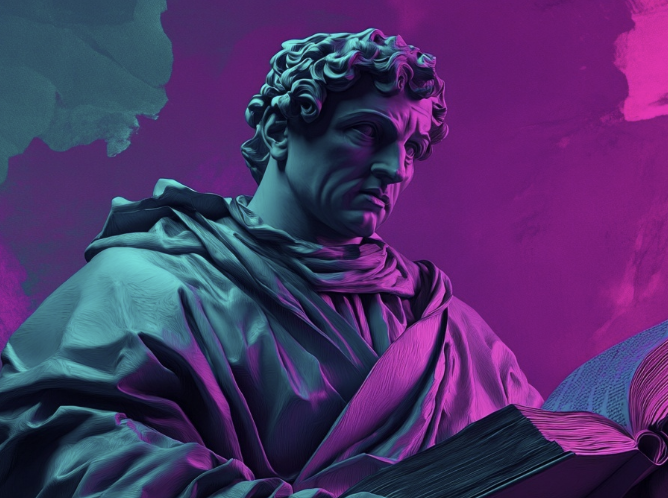
Adam was created righteous, acceptable, and without sin. He had no need from his labor in the garden to be made righteous and acceptable to God. Rather, the Lord gave Adam work in order to cultivate and protect the garden. This would have been the freest of all works because they were done simply to please God and not to obtain righteousness. ... The works of the person who trusts God are to be understood in a similar manner. Through faith we are restored to paradise and created anew. We have no need of works in order to be righteous; however, in order to avoid idleness and so that the body might be cared for an disciplined, works are done freely to please God.
▼
Source
source
pp. 73-74
4 months 2 weeks ago
So we do sometimes think because it has been found to pay.
▼
Source
source
§ 470

1 month 1 week ago
The pious soul,-which, if you reflect, will mean the ingenuous and ingenious, the gifted, intelligent and nobly-aspiring soul,-such a soul, in whatever rank of life it were born, had one path inviting it; a generous career, whereon, by human worth and valor, all earthly heights and Heaven itself were attainable. In the lowest stratum of social thraldom, nowhere was the noble soul doomed quite to choke, and die ignobly.

2 months 2 weeks ago
Advertising is the greatest art form of the twentieth century.
▼
Source
source
quoted in Advertising Age, Sep. 3, 1976
4 months 2 weeks ago
No one ever told me that grief felt so like fear. First line.
5 months 2 weeks ago
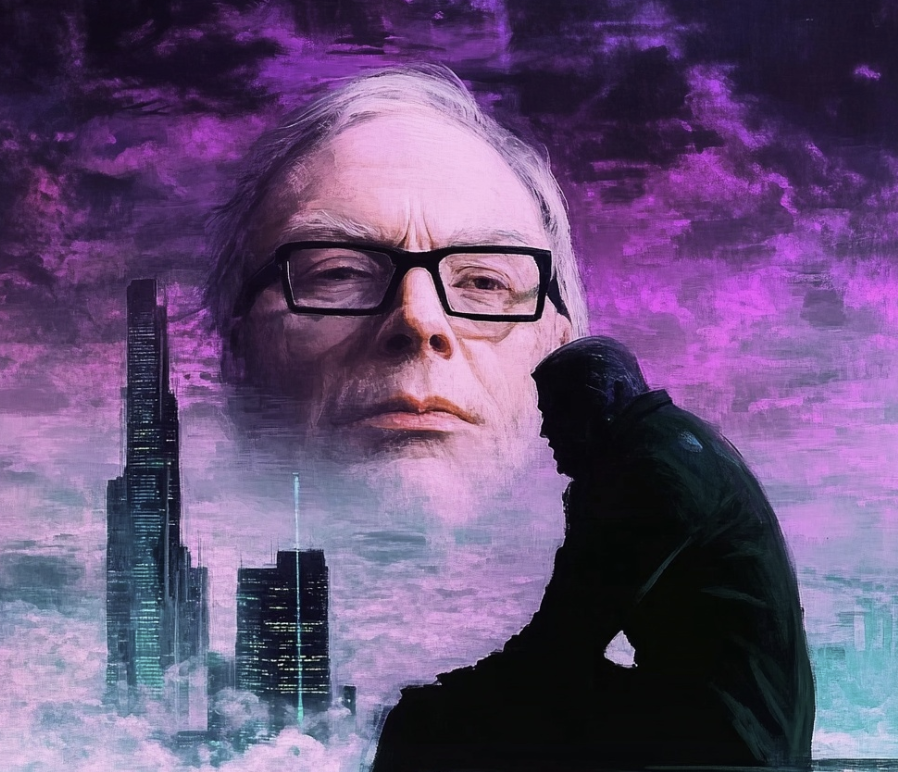
Individual science fiction stories may seem as trivial as ever to the blinder critics and philosophers of today — but the core of science fiction, its essence, the concept around which it revolves, has become crucial to our salvation if we are to be saved at all.

4 months 2 weeks ago
The true function of logic ... as applied to matters of experience ... is analytic rather than constructive; taken a priori, it shows the possibility of hitherto unsuspected alternatives more often than the impossibility of alternatives which seemed prima facie possible. Thus, while it liberates imagination as to what the world may be, it refuses to legislate as to what the world is.
▼
Source
source
p. 8
1 month 4 weeks ago
Philosophy is said to have taken the 'linguistic turn' in this century. One hundred years ago, a philosopher would think in terms of mind, spirit, experience, consciousness; now the by-word is language.
▼
Source
source
Chapter 2, Metaphysics and Metaphor, p. 26
4 months 2 weeks ago
Why you fool, it's the educated reader who can be gulled. All our difficulty comes with the others. When did you meet a workman who believes the papers? He takes it for granted that they're all propaganda and skips the leading articles. He buys his paper for the football results and the little paragraphs about girls falling out of windows and corpses found in Mayfair flats. He is our problem. We have to recondition him. But the educated public, the people who read the highbrow weeklies, don't need reconditioning. They're all right already. They'll believe anything.
▼
Source
source
Ch. 5: Elasticity, section 1 Miss Hardcastle speaking to Mark Studdock

4 months 2 weeks ago
Good bye, proud world! I'm going home; Thou art not my friend; I am not thine.
▼
Source
source
Good-bye, st. 1
4 months 2 weeks ago
You must always be puzzled by mental illness. The thing I would dread most, if I became mentally ill, would be your adopting a common sense attitude; that you could take it for granted that I was deluded.
▼
Source
source
Conversation of 1947 or 1948
2 months 1 week ago
The conformation of his mind was such that whatever was little seemed to him great, and whatever was great seemed to him little. Serious business was a trifle to him, and trifles were his serious business.
▼
Source
source
'Horace Walpole', The Edinburgh Review (October 1833), quoted in T. B. Macaulay, Critical and Historical Essays Contributed to The Edinburgh Review, Vol. II (1843), p. 99

3 months 2 weeks ago
My poor opinion is, that the closest connexion between Great Britain and Ireland, is essential to the well being, I had almost said, to the very being, of the two Kingdoms. ... I think indeed that Great Britain would be ruined by the separation of Ireland; but, as there are degrees even in ruin, it would fall the most heavily on Ireland. By such a separation Ireland would be the most completely undone Country in the world; the most wretched, the most distracted and, in the end, the most desolate part of the habitable Globe.
▼
Source
source
Letter to an unknown correspondent (February 1797), quoted in R. B. McDowell (ed.)

5 months 3 weeks ago
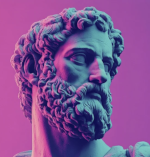
We have seen how it is originally language which works on the construction of concepts, a labor taken over in later ages by science. Just as the bee simultaneously constructs cells and fills them with honey, so science works unceasingly on this great columbarium of concepts, the graveyard of perceptions.
5 months 2 weeks ago
The third kind of life is the life of contemplation.
4 months 2 weeks ago
The more you obey your conscience, the more your conscience will demand of you.
▼
Source
source
Book IV, Chapter 8, "Is Christianity Hard or Easy?"
2 months 3 weeks ago
Nonviolence has now to be understood less as a moral position adopted by individuals in relation to a field of possible action than as a social and political practice undertaken in concert, culminating in a form of resistance to systemic forms of destruction coupled with a commitment to world building that honors global interdependency of the kind that embodies ideals of economic, social, and political freedom and equality.
▼
Source
source
p. 20

3 months 3 weeks ago
To keep our eyes open longer were but to set our Antipodes. The Huntsmen are up in America, and they are already past their first sleep in Persia. But who can be drowsy at that hour which freed us from everlasting sleep? or have slumbering thoughts at that time, when sleep itself must end, and as some conjecture all shall awake again?
▼
Source
source
Ch. 5

4 months 3 weeks ago
With the greater part of rich people, the chief enjoyment of riches consists in the parade of riches, which in their eye is never so complete as when they appear to possess those decisive marks of opulence which nobody can possess but themselves.
▼
Source
source
Chapter XI, Part II, p. 202 (See also Thorstein Veblen).
2 months 2 days ago
Of the twenty or so civilizations known to modern Western historians, all except our own appear to be dead or moribund, and, when we diagnose each case, in extremis or post mortem, we invariably find that the cause of death has been either War or Class or some combination of the two. To date, these two plagues have been deadly enough, in partnership, to kill off nineteen out of twenty representatives of this recently evolved species of human society; but, up to now, the deadliness of these scourges has had a saving limit.
▼
Source
source
Ch. 2: The Present Point in History

4 months 3 weeks ago
I have never seen a greater monster or miracle in the world than myself.
▼
Source
source
Book III, Ch. 11. Of Cripples
2 months 1 week ago
Hence it may be concluded that the happiest state of society is that in which supreme power resides in the whole body of a well-informed people. This is an imaginary, perhaps an unattainable, state of things. Yet, in some measure, we may approximate to it; and he alone deserves the name of a great statesman, whose principle it is to extend the power of the people in proportion to the extent of their knowledge, and to give them every facility for obtaining such a degree of knowledge as may render it safe to trust them with absolute power. In the mean time, it is dangerous to praise or condemn constitutions in the abstract; since, from the despotism of St. Petersburg to the democracy of Washington, there is scarcely a form of government which might not, at least in some hypothetical case, be the best possible.
▼
Source
source
pp. 161-162

4 months 2 weeks ago
Scientific theories are distinguished from myths... in being criticizable, and... open to modifications... They can be neither verified nor probabilified.
4 months 3 weeks ago
Saying is one thing, doing another.
▼
Source
source
Book II, Ch. 31. Of Anger

1 month 1 week ago
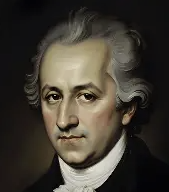
I have found a paper of mine among some others in which I call architecture 'petrified music.' Really there is something in this; the tone of mind produced by architecture approaches the effect of music.
▼
Source
source
Conversations with Eckermann (23 March 1829) - Often quoted as "Architecture is frozen music."
4 months 3 weeks ago
In England, and in all Roman Catholic countries, the lottery of the church is in reality much more advantageous than is necessary.
▼
Source
source
Chapter X, Part II, p. 155.
CivilSimian.com created by AxiomaticPanic, CivilSimian, Kalokagathia