

3 months 5 days ago
It is a paralogism to say, that the good of the individual should give way to that of the public; this can never take place, except when the government of the community, or, in other words, the liberty of the subject is concerned; this does not affect such cases as relate to private property, because the public good consists in everyone's having his property, which was given him by the civil laws, invariably preserved.
▼
Source
source
Book XXVI, Chapter 15.
5 months 4 days ago
(On the Trinitarian indwelling personally experienced by Saint Augustine) But what is it that I love in loving You? Not corporeal beauty, nor the splendour of time, nor the radiance of the light, so pleasant to our eyes, nor the sweet melodies of songs of all kinds, nor the fragrant smell of flowers, and ointments, and spices, not manna and honey, not limbs pleasant to the embracements of flesh. I love not these things when I love my God; and yet I love a certain kind of light, and sound, and fragrance, and food, and embracement in loving my God, who is the light, sound, fragrance, food, and embracement of my inner man — where that light shines unto my soul which no place can contain, where that sounds which time snatches not away, where there is a fragrance which no breeze disperses, where there is a food which no eating can diminish, and where that clings which no satiety can sunder. This is what I love, when I love my God.
▼
Source
source
X, 6, 8
2 weeks 3 days ago
How absurd it must seem for an immortal soul to be destined for Heaven or Hell, and yet be sitting in a kitchen, as a maid, or to see oneself objectified as a mechanic! how falsely the usual sunrise waked us, the clock dial, the city street the job! How wrongfully people find themselves in these systems - our time isn't there, our space isn't there, our space isn't even here... the whole social story of waking, and certainly the day of the mechanic, is false.
▼
Source
source
Traces (1930), p. 27
2 months 2 weeks ago
Youth now flees on feathered foot.
▼
Source
source
To Will H. Low, reported in Bartlett's Familiar Quotations, 10th ed. (1919).
3 months 1 week ago
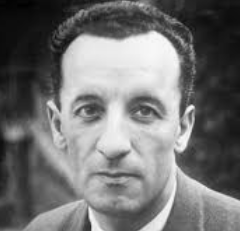
Even those who have desired to work out a completely positive philosophy have been philosophers only to the extent that, at the same time, they have refused the right to install themselves in absolute knowledge. They taught not this knowledge, but its becoming in us, not the absolute but, at most, our absolute relation to it, as Kierkegaard said. What makes a philosopher is the movement which leads back without ceasing from knowledge to ignorance, from ignorance to knowledge, and a kind of rest in this movement.
▼
Source
source
p. 5

4 months 2 weeks ago
"Everything is already there in...." How does it come about that [an] arrow points? Doesn't it seem to carry in it something besides itself? - "No, not the dead line on paper; only the psychical thing, the meaning, can do that." - That is both true and false. The arrow points only in the application that a living being makes of it.
▼
Source
source
§ 454
3 weeks 6 days ago
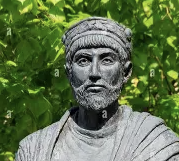
The end and aim of the Cynic philosophy, as indeed of every philosophy, is happiness, but happiness that consists in living according to nature, and not according to the opinions of the multitude.
▼
Source
source
Oration to the Uneducated Cynics

1 month 3 days ago
And this is the vote which [Cato] casts concerning them both: "If Caesar wins, I slay myself; if Pompey, I go into exile." What was there for a man to fear who, whether in defeat or in victory, had assigned to himself a doom which might have been assigned to him by his enemies in their utmost rage? So he died by his own decision.
2 months 3 weeks ago
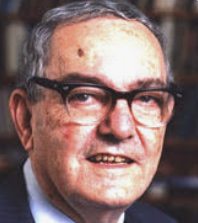
We need to augment and amend the existing body of classical and neoclassical economic theory to achieve a more realistic picture of economic process.
▼
Source
source
Herbert A. Simon (1986) in Preface to: Gilad & Kaish (eds.), Handbook of Behavioral Economics, p. xvi.

3 months 1 week ago
In the human reality, all existence that spends itself in procuring the prerequisites of existence is thus an "untrue" and unfree existence. Obviously this reflects the not at all ontological condition of a society based on the proposition that freedom is incompatible with the activity of procuring the necessities of life, that this activity is the "natural" function of a specific class, and that cognition of the truth and true existence imply freedom from the entire dimension of such activity. ... Society still is organized in such a way that procuring the necessities of life constitutes the full-time and life-long occupation of specific social classes, which are therefore unfree and prevented from a human existence. In this sense, the classical proposition according to which truth is incompatible with enslavement by socially necessary labor is still valid.
▼
Source
source
pp. 127-128

3 months 2 weeks ago
Who does not believe in Fate proves that he has not lived.
4 months 2 weeks ago
The way you use the word "God" does not show whom you mean - but, rather, what you mean.
▼
Source
source
p. 50e
2 months 3 weeks ago
Rationality requires a choice among all possible alternative behaviors. In actual behavior, only a very few of all these possible alternatives come to mind.
4 weeks 1 day ago
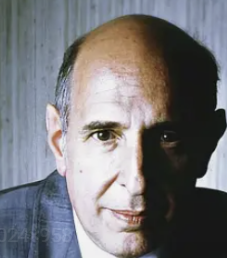
There are two kinds of openness, the openness of indifference-promoted with the twin purposes of humbling our intellectual pride and letting us be whatever we want to be, just as long as we don't want to be knowers-and the openness that invites us to the quest for knowledge and certitude, for which history and the various cultures provide a brilliant array of examples for examination.
▼
Source
source
p. 41.
5 months 2 weeks ago
If a man knows what it is right to do, he does not require a formal reason. And a person that has been thus trained, either possesses these first principles already, or can easily acquire them.
1 month 1 week ago
We must now ask how changes of this sort can come about, considering first discoveries, or novelties of fact, and then inventions, or novelties of theory. That distinction between discovery and invention or between fact and theory will, however, immediately prove to be exceedingly artificial.
▼
Source
source
p. 52

3 months 1 day ago
I was aggressively nonpolitical. I believed that people who make a fuss about politics do so because their heads are too empty to think about more important things. So I felt nothing but impatient contempt for Osborne's Jimmy Porter and the rest of the heroes of social protest.
▼
Source
source
p. 2
2 weeks 1 day ago
It is not right to vex ourselves at things, For they care not about it.
▼
Source
source
VII, 38

2 months 4 days ago
The question of questions for mankind-the problem which underlies all others, and is more deeply interesting than any other-is the ascertainment of the place which Man occupies in nature and of his relations to the universe of things.
▼
Source
source
Ch.2, p. 71
3 months 1 day ago
Maslow explained that, some time in the late thirties, he had been struck by the thought that modern psychology is based on the study of sick people. But since there are more healthy people around than sick people, how can this psychology give a fair idea of the workings of the human mind? It struck him that it might be worthwhile to devote some time to the study of healthy people.
▼
Source
source
p. 15
3 weeks 5 days ago
Our task is not so much discovery as re-discovery. What one needs is not so much thinking as remembering. Sometimes it suffices to sit quietly and listen well, when venerable men have thought before us. Constant forgettings of truths once perceived are the very charm of the human mind; the history of human thought is nothing more than the story of these forgettings and rememberings and forgettings again.
▼
Source
source
On the Wisdom of America (1950), p. xiv
3 months 2 weeks ago
One grasps incomparably more things in boredom than by labor, effort being the mortal enemy of meditation.

1 month 1 week ago
This great maxim of philosophy he had gathered by the teaching of nature alone - that man was created to work, not to speculate or feel or dream. Accordingly, he set his whole heart thitherwards. He did work wisely and unweariedly, and perhaps performed more with the tools he had than any man I now know.
3 months 2 weeks ago
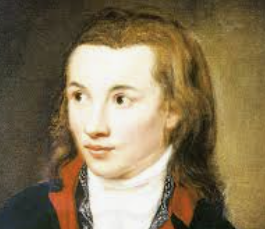
Man consists in Truth. If he exposes Truth, he exposes himself. If he betrays Truth, he betrays himself. We speak not here of lies, but of acting against Conviction.
3 months 2 weeks ago
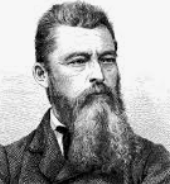
Christianity set itself the goal of fulfilling man's unattainable desires, but for that very reason ignored his attainable desires. By promising man eternal life, it deprived him of temporal life, by teaching him to trust in God's help it took away his trust in his own powers; by giving him faith in a better life in heaven, it destroyed his faith in a better life on earth and his striving to attain such a life. Christianity gave man what his imagination desires, but for that very reason failed to give him what he really and truly desires.
▼
Source
source
Lecture XXX, Atheism alone a Positive View
3 months 2 weeks ago
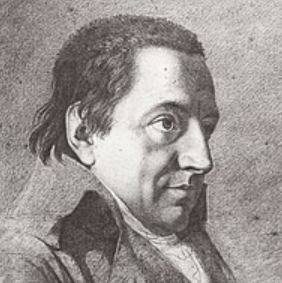
There is nothing whatever in Existence but immediate and living Thought:-Thought, I say, but by no means a thinking substance, a dead body in which thought inheres,-with which no-thought indeed a no-thinker is full surely at hand:-Thought, I say, and also the real Life of this Thought, which at bot tom is the Divine Life; both of which-Thought and , this its real Life-are molten together into one inward organic Unity; like as, outwardly, they are one simple, identical, eternal, and unchangeable Unity.
▼
Source
source
P. 56
4 months 2 weeks ago
For a work to become immortal it must possess so many excellences that it will not be easy to find a man who understands and values them all; so that there will be in all ages men who recognise and appreciate some of these excellences; by this means the credit of the work will be retained throughout the long course of centuries and ever-changing interests, for, as it is appreciated first in this sense, then in that, the interest is never exhausted.
3 months 1 week ago
Is it not altogether absurd that, under actual circumstances, the average man does not feel spontaneously, and without being preached at, an ardent enthusiasm for those sciences and the related ones of biology?... Every day furnishes a new invention which this average man utilises. Every day produces a new anesthetic or vaccine from which this average man benefits. ... How is it, nevertheless, that there is no sign of the masses imposing on themselves any sacrifice of money or attention in order to endow science more worthily? Far from this being the case, the post-war period has converted the man of science into a new social pariah.
▼
Source
source
Chap.IX: The Primitive and the Technical
4 months 1 week ago
I regard Peter as one of the great moralists, because I suspect that more than anyone he has helped to change the attitudes of very many people to the sufferings of animals. Peter is a utilitarian in normative ethics, and a humane attitude to animals is a natural corollary of utilitarianism. Utilitarian concern for animals goes back to Bentham, who, presumably alluding to the Kantians, said that the question was not whether animals can reason, but whether they can suffer.
▼
Source
source
J. J. C. Smart, Reply to Singer, in Philip Pettit, Richard Sylvan and Jean Norman (eds.), Metaphysics and Morality: Essays in Honour of J. J. C. Smart, Oxford, 1987, p. 192
3 months 1 week ago
In the state of nature, Profit is the measure of Right.
▼
Source
source
De Cive

4 months 2 weeks ago
There are various, nay, incredible faiths; why should we be alarmed at any of them? What man believes, God believes.


5 months 2 weeks ago
Someone once asked me, "If you had your choice, Dr. Asimov, would it be women or writing?" My answer was, "Well, I can write for twelve hours at a time without getting tired."

4 months 3 weeks ago
Great abuses in the world are begotten, or, to speak more boldly, all the abuses of the world are begotten, by our being taught to be afraid of professing our ignorance, and that we are bound to accept all things we are not able to refute: we speak of all things by precepts and decisions. The style at Rome was that even that which a witness deposed to having seen with his own eyes, and what a judge determined with his most certain knowledge, was couched in this form of speaking: "it seems to me." They make me hate things that are likely, when they would impose them upon me as infallible.
▼
Source
source
Ch. 12, tr. Cotton, rev. W. Carew Hazlitt, 1877
3 months 1 week ago
In old days the plastic arts, music, and poesy were so germane to man in his totality that his Transcendence plainly manifest in them. ... What is to-day obvious to all is a decay in the essence of art. ... the opposition to man's true nature as man.
2 weeks 1 day ago
..If you are troubled by external circumstances, it is not the circumstances that trouble you, but your own perception of them - and they are in your power to change at any time.
3 months 1 day ago
With all our boasted reforms, our great social changes, and our far-reaching discoveries, human beings continue to be sent to the worst of hells, wherein they are outraged, degraded, and tortured, that society may be "protected" from the phantoms of its own making.

5 months 3 days ago
We are all sprung from a heavenly seed.
▼
Source
source
Book II, line 991 (tr. Munro)

3 months 2 weeks ago
And now once again I asked myself the question: do I love her? And once more I could not answer, that is to say, again, for the hundredth time, I answered that I hated her.
5 months 2 weeks ago
But voice is a certain sound of that which is animated; for nothing inanimate emits a voice; but they are said to emit a voice from similitude, as a pipe, and a lyre, and such other inanimate things, have extension, modulation, and dialect; for thus it appears, because voice, also, has these.

4 months 2 weeks ago
I die adoring God, loving my friends, not hating my enemies, and detesting superstition.
▼
Source
source
Déclaration de Voltaire, note to his secretary, Jean-Louis Wagnière, 28 February 1778

4 months 2 weeks ago
Since the state must necessarily provide subsistence for the criminal poor while undergoing punishment, not to do the same for the poor who have not offended is to give a premium on crime.
▼
Source
source
Book V, Chapter XI, §13

3 months 2 weeks ago
Each new ontological theory, propounded in lieu of previous ones shown to be untenable, has been followed by a new criticism leading to a new scepticism. All possible conceptions have been one by one tried and found wanting; and so the entire field of speculation has been gradually exhausted without positive result: the only result reached being the negative one above stated, that the reality existing behind all appearances is, and must ever be, unknown.
▼
Source
source
Pt. I, The Unknowable; Ch. IV, The Relativity of All Knowledge
3 weeks 5 days ago
To accomplish anything whatsoever one must have standards. None have yet accomplished anything without them.
▼
Source
source
Book 1; On the necessity of standards
2 months 4 days ago
My convictions, positive and negative, on all the matters of which you speak, are of long and slow growth and are firmly rooted. But the great blow which fell on me seemed to stir them to their foundation, and had I lived a couple of centuries earlier I could have fancied a devil scoffing at me and them - and asking me what profit it was to have stripped myself of the hopes and consolations of the mass of mankind? To which my only reply was and is - Oh devil! Truth is better than much profit. I have searched over the grounds of my belief, and if wife and child and name and fame were all to be lost to me one after the other as the penalty, still I will not lie.
4 months 1 week ago
To sum up all these steps, each of which is very lengthy and complex, we will have put the game of truth back in the network of constraints and dominations. Truth, I should say rather, the system of truth and falsity, will have revealed the face it turned away from us for so long and which is that of its violence.
▼
Source
source
p. 4
3 months 2 weeks ago
The abolition of private property is, doubtless, the shortest and most significant way to characterize the revolution in the whole social order which has been made necessary by the development of industry - and for this reason it is rightly advanced by communists as their main demand.
3 months 2 weeks ago
When you love someone, you hope - the more closely to be attached - that a catastrophe will strike your beloved.
4 months 3 weeks ago
I will first discuss images according to the Law of Moses, and then according to the gospel. And I say at the outset that according to the Law of Moses no other images are forbidden than an image of God which one worships. A crucifix, on the other hand, or any other holy image is not forbidden. Heigh now! you breakers of images, I defy you to prove the opposite!
▼
Source
source
pp. 85-86
CivilSimian.com created by AxiomaticPanic, CivilSimian, Kalokagathia