

2 weeks 5 days ago
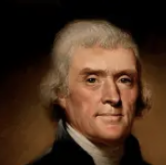
Believing that the happiness of mankind is best promoted by the useful pursuits of peace, that on these alone a stable prosperity can be founded, that the evils of war are great in their endurance, and have a long reckoning for ages to come, I have used my best endeavors to keep our country uncommitted in the troubles which afflict Europe, and which assail us on every side. Letter to the Young Republicans of Pittsburg and its vicinities
▼
Source
source
2 December 1808

3 months 3 weeks ago
There is no man alone, because every man is a Microcosm, and carries the whole world about him.
▼
Source
source
Section 10
4 weeks 1 day ago
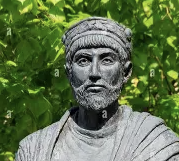
The good effects that emanate from the same source are equally diffused upon the earth. Different regions become partakers in these benefits in different ways; so that neither their production comes to an end, nor does the Deity confer his blessings upon the recipient world with any degree of variation. For where the substance is the same, so is the action thereof, in the case of Divine Powers; especially with him who is king of them all, namely, the Sun; of whom the motion is the most simple amongst all the bodies that move in a contrary direction to the world, which fact that most excellent philosopher, Aristotle, adduces to prove the superiority of that luminary to the others.
1 month ago
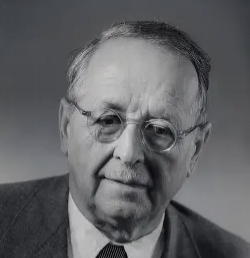
The scene of action of reality is not a three-dimensional Euclidean space but rather a four-dimensional world, in which space and time are linked together indissolubly. However deep the chasm may be that separates the intuitive nature of space from that of time in our experience, nothing of this qualitative difference enters into the objective world which physics endeavors to crystallize out of direct experience. It is a four-dimensional continuum, which is neither "time" nor "space". Only the consciousness that passes on in one portion of this world experiences the detached piece which comes to meet it and passes behind it as history, that is, as a process that is going forward in time and takes place in space.
▼
Source
source
Ch. 3 "Relativity of Space and Time"
4 months 1 week ago
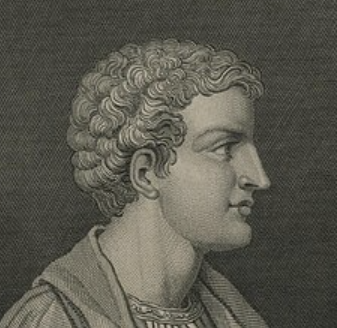
To have a great man for an intimate friend seems pleasant to those who have never tried it; those who have, fear it.
▼
Source
source
Book I, epistle xviii, line 86
3 months 3 weeks ago
How did they meet? By chance, like everybody ... Where did they come from? From the nearest place. Where were they going? Do we know where we are going?
▼
Source
source
Prologue
3 months 2 weeks ago
I believe it to be this; that my will, absolutely of itself, and without the intervention of any instrument that might weaken its effect, shall act in a sphere perfectly congenial - reason upon reason, spirit upon spirit; in a sphere to which it does not give the laws of life, of activity, of progress, but which has them in itself, therefore, upon self-active reason. But spontaneous, self-active reason is will. The law of the transcendental world must, therefore, be a Will.
▼
Source
source
Jane Sinnett, trans 1846 p.110

3 months 2 days ago
A young delicate tree, that is being clipped and cut by the gardener in order to give it an artificial form, will never reach the majestic height and the beauty as when allowed to grow in nature and freedom.
3 months 2 weeks ago
If the State, modeled after the universe, is split into two spheres or classes of beings - wherein the free represent the ideas and the unfree the concrete and sensate things - then the ultimate and uppermost order remains unrealized by both. By using sensate things as tools or organs, the ideas obtain a direct relationship to the apparitions and enter into them as souls. God, however, as identity of the highest order, remains above all reality and eternally has merely an indirect relationship. If then in the higher moral order the State represents a second nature, then the divine can never have anything other than an indirect relationship to it, never can it bear any real relationship to it, and religion, if it seeks to preserve itself in unscathed pure ideality, can therefore never exist - even in the most perfect State - other than esoterically in the form of mystery cults.
▼
Source
source
P. 51
3 months 2 days ago
A farewell does not dilute the presence of the past; it may make an even deeper presence.
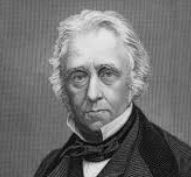
2 months 1 week ago
It may be that the public mind of India may expand under our system till it has outgrown that system; that by good government we may educate our subjects into a capacity for better government, that, having become instructed in European knowledge, they may, in some future age, demand European institutions. Whether such a day will ever come I know not. But never will I attempt to avert or to retard it. Whenever it comes, it will be the proudest day in English history.
▼
Source
source
Speech in the House of Commons
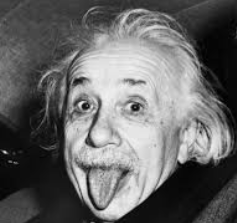
1 week 2 days ago
Whether you can observe a thing or not depends on the theory which you use. It is the theory which decides what can be observed.
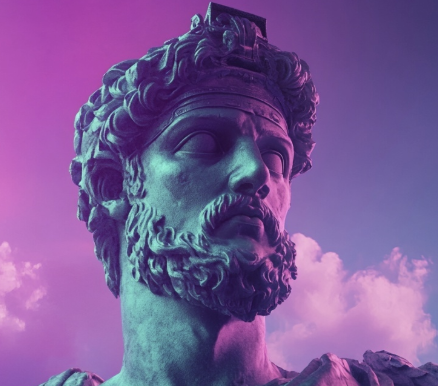
2 weeks 2 days ago
That which makes the man no worse than he was makes his life no worse: it has no power to harm, without or within.
▼
Source
source
IV, 8

1 month 4 days ago
Just as an enemy is more dangerous to a retreating army, so every trouble that fortune brings attacks us all the harder if we yield and turn our backs.
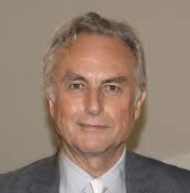
2 months 2 weeks ago
Each generation is a filter, a sieve; good genes tend to fall through the sieve into the next generation; bad genes tend to end up in bodies that die young or without reproducing.

1 month 1 week ago
Mahomet was only fourteen; had no language but his own: much in Syria must have been a strange unintelligible whirlpool to him. But the eyes of the lad were open; glimpses of many things would doubtless be taken in, and lie very enigmatic as yet, which were to ripen in a strange way into views, into beliefs and insights one day. These journeys to Syria were probably the beginning of much to Mahomet. One other circumstance we must not forget: that he had no school-learning; of the thing we call school-learning none at all.

3 months 1 week ago
If anyone comes to Me and does not hate his father and mother, wife and children, brothers and sisters, yes, and his own life also, he cannot be My disciple.
▼
Source
source
14:26

3 months 5 days ago
It is because of my wretchedness that I am "I." It is on account of the wretchedness of the universe that, in a sense, God is "I" (that is to say a person).
▼
Source
source
p. 83

2 months 2 weeks ago
The tribalizing power of the new electronic media, the way in which they return to us to the unified fields of the old oral cultures, to tribal cohesion and pre-individualist patterns of thought, is little understood. Tribalism is the sense of the deep bond of family, the closed society as the norm of community.
▼
Source
source
Tyuonyi, Volumes 1-2, 1985, p. 60
2 weeks 6 days ago
We have seen the highest circle of spiraling powers. We have named this circle God. We might have given it any other name we wished: Abyss, Mystery, Absolute Darkness, Absolute Light, Matter, Spirit, Ultimate Hope, Ultimate Despair, Silence. But we have named it God because only this name, for primordial reasons, can stir our hearts profoundly. And this deeply felt emotion is indispensable if we are to touch, body with body, the dread essence beyond logic. Within this gigantic circle of divinity we are in duty bound to separate and perceive clearly the small, burning arc of our epoch. Unsourced variant or paraphrase: ... We might have given it any name we wished: Abyss, Absolute Darkness, Absolute Light, Matter, Spirit, Ultimate Hope, Ultimate Despair, Silence. But never forget, it is we who give it a name.
1 month ago
Not everything assumes a name. Some things lead beyond words. Art inflames even a frozen, darkened soul to a high spiritual experience. Through art we are sometimes visited - dimly, briefly - by revelations such as cannot be produced by rational thinking. Like that little looking-glass from the fairy-tales: look into it and you will see - not yourself - but for one second, the Inaccessible, whither no man can ride, no man fly. And only the soul gives a groan...

4 months 2 weeks ago
I cannot read a sentence in the book of the Hindoos without being elevated as upon the table-land of the Ghauts. It has such a rhythm as the winds of the desert, such a tide as the Ganges, and seems as superior to criticism as the Himmaleh Mounts. Even at this late hour, unworn by time with a native and inherent dignity it wears the English dress as indifferently as the Sanscrit.
▼
Source
source
August 6, 1841

4 months 2 weeks ago
There is an almost universal tendency, perhaps an inborn tendency, to suspect the good faith of a man who holds opinions that differ from our own opinions. ... It obviously endangers the freedom and the objectivity of our discussion if we attack a person instead of attacking an opinion or, more precisely, a theory.
▼
Source
source
"The Importance of Critical Discussion" in On the Barricades: Religion and Free Inquiry in Conflict (1989) by Robert Basil
1 month 1 week ago
To this man life is already as earnest and awful, and beautiful and terrible, as death.
1 month 1 week ago
Such souls are, in these days, getting somewhat out of humour with the world. Your very Byron, in these days, is at least driven mad; flatly refuses fealty to the world. The world with its injustices, its golden brutalities, and dull yellow guineas, is a disgust to such souls: the ray of Heaven that is in them does at least pre-doom them to be very miserable here. Yes:-and yet all misery is faculty misdirected, strength that has not yet found its way. The black whirlwind is mother of the lightning. No smoke, in any sense, but can become flame and radiance! Such soul, once graduated in Heaven's stern University, steps out superior to your guinea.

3 months 5 days ago
Bourgeois society is ruled by equivalence. It makes the dissimilar comparable by reducing it to abstract quantities. To the enlightenment, that which does not reduce to numbers, and ultimately to the one, becomes illusion.
▼
Source
source
John Cumming trans., p. 7
2 weeks 2 days ago
Art thy not content that thou hast done something conformable to thy nature, and dost thou seek to be paid for it? Just as if the eye demanded recompense for seeing, or the feet for walking. For as these members are formed for a particular purpose... so also is man formed by nature to acts of benevolence.
▼
Source
source
IX, 42

5 months 2 weeks ago
There can be no question of holding forth on ethics. I have seen people behave badly with great morality and I note every day that integrity has no need of rules. There is but one moral code that the absurd man can accept, the one that is not separated from God: the one that is dictated. But it so happens that he lives outside that God. As for the others (I mean also immoralism), the absurd man sees nothing in them but justifications and he has nothing to justify. I start out here from the principle of his innocence. That innocence is to be feared. "Everything is permitted," exclaims Ivan Karamazov. That, too, smacks of the absurd. But on condition that it not be taken in a vulgar sense. I don't know whether or not it has been sufficiently pointed out that it is not an outburst of relief or of joy, but rather a bitter acknowledgment of a fact.

4 months 2 weeks ago
We love those who hate our enemies, and if we had no enemies there would be very few people whom we should love. All this, however, is only true so long as we are concerned solely with attitudes towards other human beings. You might regard the soil as your enemy because it yields reluctantly a niggardly subsistence. You might regard Mother Nature in general as your enemy, and envisage human life as a struggle to get the better of Mother Nature. If men viewed life in this way, cooperation of the whole human race would become easy. And men could easily be brought to view life in this way if schools, newspapers, and politicians devoted themselves to this end. But schools are out to teach patriotism; newspapers are out to stir up excitement; and politicians are out to get re-elected. None of the three, therefore, can do anything towards saving the human race from reciprocal suicide.

1 month 1 week ago
There should be 2 systems. One for needs and one for wants. We shouldn't have to compete for needs, and we shouldn't expect the things we want. An ideal system would definitely be a seriously regulated capitalism with an uncompromised safety net that we focus on with automation and AI. But, those with just want those without to die. In the end, they will lose.
4 months 2 weeks ago
No one has the right to obey.
▼
Source
source
in a radio interview with Joachim Fest (9 November 1964)


4 months 3 weeks ago
Many of these were not prisoners of war, and redeemed from savage conquerors, as some plead; and they who were such prisoners, the English, who promote the war for that very end, are the guilty authors of their being so; and if they were redeemed, as is alleged, they would owe nothing to the redeemer but what he paid for them.

3 months 3 weeks ago
Our philosophy... reduceth to a single origin and relateth to a single end, and maketh contraries to coincide so that there is one primal foundation both of origin and of end. From this coincidence of contraries, we deduce that ultimately it is divinely true that contraries are within contraries; wherefore it is not difficult to compass the knowledge that each thing is within every other.
▼
Source
source
As translated by Dorothea Waley Singer
3 months 2 weeks ago
Once the first radical attack on private property has been launched, the proletariat will find itself forced to go ever further, to concentrate increasingly in the hands of the state all capital, all agriculture, all transport, all trade. All the foregoing measures are directed to this end; and they will become practicable and feasible, capable of producing their centralizing effects to precisely the degree that the proletariat, through its labor, multiplies the country's productive forces.
3 months 2 weeks ago
Education will enable young people quickly to familiarize themselves with the whole system of production and to pass from one branch of production to another in response to the needs of society or their own inclinations. It will, therefore, free them from the one-sided character which the present-day division of labor impresses upon every individual. Communist society will, in this way, make it possible for its members to put their comprehensively developed faculties to full use. But, when this happens, classes will necessarily disappear. It follows that society organized on a communist basis is incompatible with the existence of classes on the one hand, and that the very building of such a society provides the means of abolishing class differences on the other.
1 month 4 days ago
So the wise man will develop virtue, if he may, in the midst of wealth, or, if not, in poverty; if possible, in his own country-if not, in exile; if possible, as a commander-if not, as a common soldier; if possible, in sound health-if not, enfeebled. Whatever fortune he finds, he will accomplish therefrom something noteworthy.
4 months 1 day ago
Hope is the only good that is common to all men; those who have nothing else possess hope still.
▼
Source
source
A Dictionary of Thoughts (1908) by Tryon Edwards, p. 234
2 months 2 weeks ago
TV is not good at covering single events. It needs a ritual, a rhythm, and a pattern...[TV] tends to fosters patterns rather than events.
2 months 2 weeks ago
Confession of our faults is the next thing to innocence.
▼
Source
source
Maxim 1060

5 months 2 weeks ago
A robot, the man had said, is logical but not reasonable.
1 month 1 week ago
Nature ... is inexorable and immutable; she never transgresses the laws imposed upon her, or cares a whit whether her abstruse reasons and methods of operation are understandable to men. For that reason it appears that nothing physical which sense-experience sets before our eyes, or which necessary demonstrations prove to us, ought to be called in question (much less condemned) upon the testimony of biblical passages which may have some different meaning beneath their words. For the Bible is not chained in every expression to conditions as strict as those which govern all physical effects; nor is God any less excellently revealed in Nature's actions than in the sacred statements of the Bible.
2 weeks 1 day ago
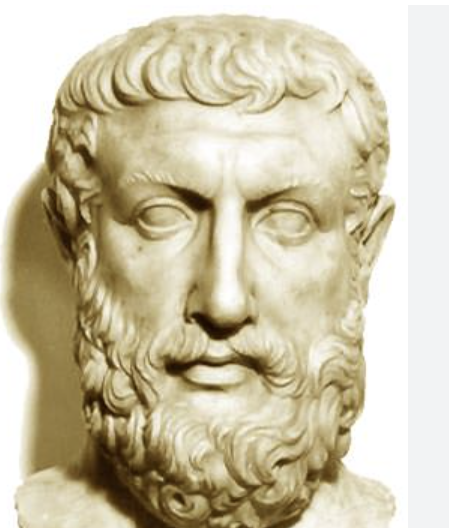
What was was ever, and ever shall be. For, if it had come into being, it needs must have been nothing before it came into being. Now, if it were nothing, in no wise could anything have arisen out of nothing.
4 months 1 week ago
Death takes the mean man with the proud; The fatal urn has room for all.
▼
Source
source
Book III, ode i, line 14 (trans. John Conington)

4 months 3 weeks ago
How many things served us yesterday for articles of faith, which today are fables for us?
▼
Source
source
Ch. 27. Of Friendship
4 months 2 weeks ago
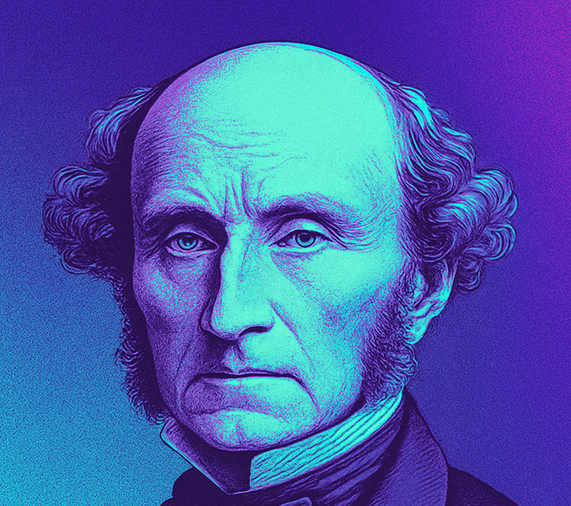
The speaker with whom I was most struck, though I dissented from nearly every word he said, was Thirlwall, the historian, since Bishop of St. David's, then a Chancery barrister, unknown except by a high reputation for eloquence acquired at the Cambridge Union before the era of Austin and Macaulay. His speech was in answer to one of mine. Before he had uttered ten sentences, I set him down as the best speaker I had ever heard, and I have never since heard any one whom I placed above him.
▼
Source
source
(p. 125)
2 weeks 3 days ago
Reason can make little headway on its own and struggles to be heard; often it has to be - so to speak - armed by the fearsome epigram. French wit pricks like a needle, so that the thread goes through the hole.
▼
Source
source
Sixth Dialogue, p. 160
5 months 5 days ago
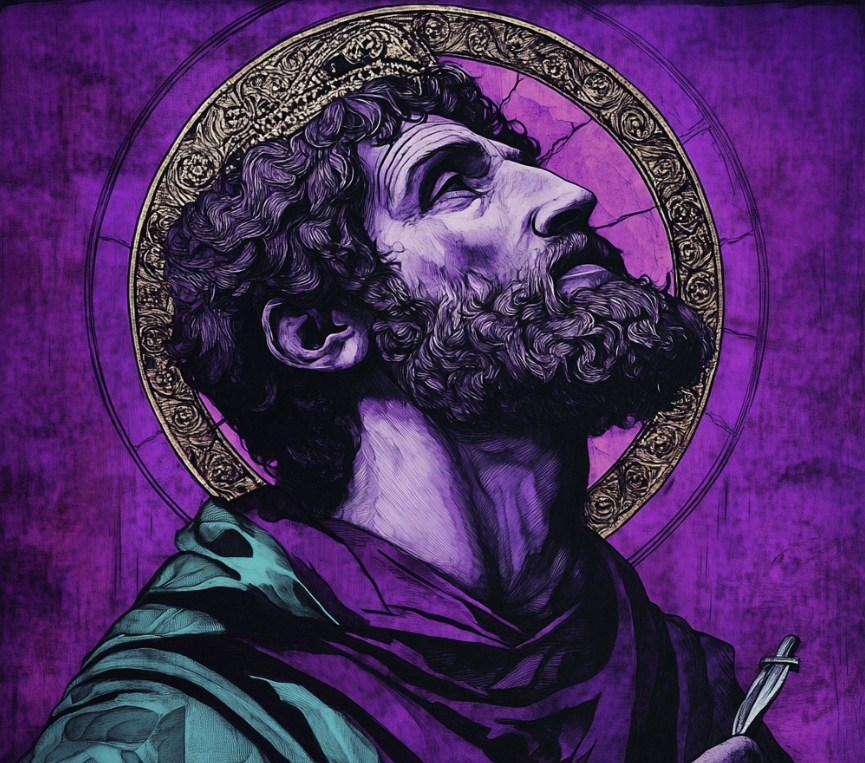
The weakness of little children's limbs is innocent, not their souls.
▼
Source
source
I, 7

4 months 2 weeks ago
We see then, commodities are in love with money, but "the course of true love never did run smooth".
▼
Source
source
Vol. I, Ch. 3, Section 2, pg. 121.
CivilSimian.com created by AxiomaticPanic, CivilSimian, Kalokagathia