

5 months 2 days ago
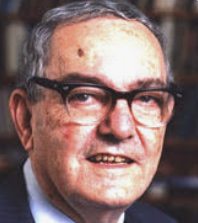
The first task of administrative theory is to develop a set of concepts that will permit the description, in terms relevant to the theory, of administrative situations. These concepts, to be scientifically useful, must be operational; that is, their meanings must correspond to empirically observable facts or situations.
▼
Source
source
p. 43.

5 months 3 weeks ago
Under the natural course of things each citizen tends towards his fittest function. Those who are competent to the kind of work they undertake, succeed, and, in the average of cases, are advanced in proportion to their efficiency; while the incompetent, society soon finds out, ceases to employ, forces to try something easier, and eventually turns to use.
▼
Source
source
Vol. 3, Ch. VII, Over-Legislation
7 months 3 weeks ago
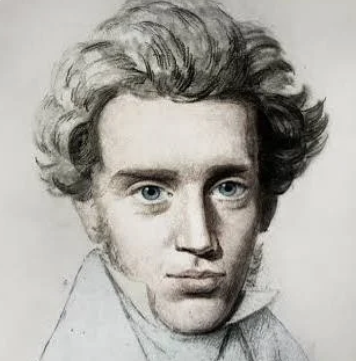
It is true that in the confessional it is the pastor who preaches; but the true preacher is still the secret-sharer in your inner being. The pastor can preach only in vague generalities; the preacher in your inner being is just the opposite; he speaks simply and solely about you, to you, and within you.
5 months 3 days ago
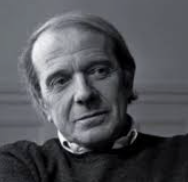
We're tired of trees. We should stop believing in trees, roots, and radicles. They've made us suffer too much. All of arborescent culture is founded on them, from biology to linguistics. Nothing is beautiful or loving or political aside from underground stems and aerial root, adventitious growths and rhizomes.
▼
Source
source
from A Thousand Plateaus: capitalism and schizophrenia, p. 15

2 months 2 weeks ago
If there is a revelation, it can not then contradict nature.



4 months 3 weeks ago
Guilt has to be understood not only as a way of checking one's own destructiveness, but as a mechanism for safeguarding the life of the other, one that emerges from our own need and dependency, from a sense that this life is not a life without another life. Indeed, when it turns into a safeguarding action, I am not sure it should still be called "guilt." If we do still use that term, we could conclude that "guilt" is strangely generative or that its productive form is reparation.
▼
Source
source
p. 93
4 months 2 weeks ago
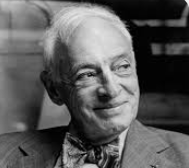
One naturally regrets not being an expert or one of those insiders who thoroughly understand. It's hell to be an amateur. A little reflection calms your sorrow, however. The experts in their own little speedboat, the rest of us floating with the rest of mankind in a great barge - that is the picture.
▼
Source
source
The Day They Signed the Treaty (1979), p. 224

4 months 3 weeks ago
So the majority of the highest classes of that age, even the popes and ecclesiastics, really believed in nothing at all. They did not believe in the Church doctrine, for they saw its insolvency; but neither could they follow Francis of Assisi, Kelchitsky, and most of the sectarians in acknowledging the moral, social teaching of Christ, for that undermined their social position. And so these people remained without any religious view of life. And, having none, they could have no standard with which to estimate what was good and what was bad art, but that of personal enjoyment.

2 months 2 weeks ago
The Leninist agrarian reform has created a new and powerful layer of popular enemies of socialism on the countryside, enemies whose resistance will be much more dangerous and stubborn than that of the noble large landowners.
▼
Source
source
Chapter Two
5 months 2 weeks ago
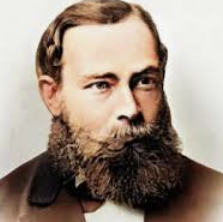
Being true is different from being taken as true, whether by one or by many or everybody, and in no case is it to be reduced to it. There is no contradiction in something's being true which everybody takes to be false. I understand by 'laws of logic' not psychological laws of takings-to-be-true, but laws of truth. ...If being true is thus independent of being acknowledged by somebody or other, then the laws of truth are not psychological laws: they are boundary stones set in an eternal foundation, which our thought can overflow, but never displace. It is because of this that they have authority for our thought if it would attain truth. They do not bear the relation to thought that the laws of grammar bear to language; they do not make explicit the nature of our human thinking and change as it changes.
▼
Source
source
Introduction, Tr. Montgomery Furth
5 months 3 weeks ago
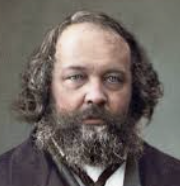
My dignity as a man, my human right which consists of refusing to obey any other man, and to determine my own acts in conformity with my convictions is reflected by the equally free conscience of all and confirmed by the consent of all humanity. My personal freedom, confirmed by the liberty of all, extends to infinity. The materialistic conception of freedom is therefore a very positive, very complex thing, and above all, eminently social, because it can be realized only in society and by the strictest equality and solidarity among all men.
6 months 5 days ago
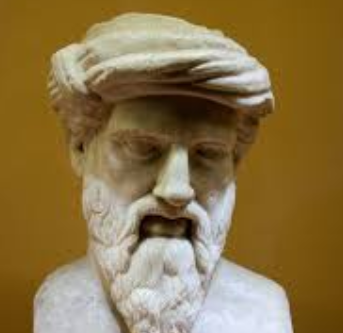
Above and before all things, worship GOD!
▼
Source
source
As quoted in The Sayings of the Wise: Or, Food for Thought: A Book of Moral Wisdom, Gathered from the Ancient Philosophers (1555) by William Baldwin [1908 edition]
5 months 2 weeks ago
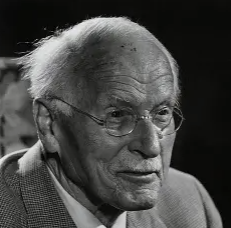
Our psychology is ... a science of mere phenomena without any metaphysical implications. [It] Treats all metaphysical claims and assertions as mental phenomena, and regards them as statements about the mind and its structure.
▼
Source
source
Psychology and Religion: West and East (1958), p. 476, as cited in Psychotherapy East and West (1961), p. 14
6 months 2 weeks ago
In contrast to "Blessed are they who do not see and still believe," he speaks of "seeing and still not believing."
▼
Source
source
p. 30

5 months 6 days ago
I do not believe that woman will make politics worse; nor can I believe that she could make it better. If, then, she cannot improve on man's mistakes, why perpetrate the latter?
5 months 2 weeks ago
The surrealist thinks he has outstripped the whole of literary history when he has written (here a word that there is no need to write) where others have written "jasmines, swans and fauns." But what he has really done has been simply to bring to light another form of rhetoric which hitherto lay hidden in the latrines.
▼
Source
source
Chapter XI: The Self-Satisfied Age
7 months 3 weeks ago
Knowledge of the fact differs from knowledge of the reason for the fact.

6 months 3 weeks ago
They made me take cod liver oil: that is the height of luxury: a medicine to make you hungry while the others, in the street, would have sold themselves for a beefsteak. I saw them passing my window with their signs: "Give me bread".
▼
Source
source
Act 3, sc. 3

3 months 1 week ago
All savageness is a sign of weakness.
▼
Source
source
De Vita Beata (On the Happy Life): cap. 3, line 4

3 months 2 weeks ago
The contradictory conceptual couple, identity and difference, is not the adequate framework for understanding the organization of the multitude. Instead we are a multiplicity of singular forms of life and at the same time share a common global existence. The anthropology of the multitude is an anthropology of singularity and commonality.
▼
Source
source
127
4 months 2 weeks ago
There is no foreign land; it is the traveller only that is foreign, and now and again, by a flash of recollection, lights up the contrasts of the ear.
▼
Source
source
Pt. II, ch. III.

3 months 2 weeks ago
The fine arts once divorcing themselves from truth are quite certain to fall mad, if they do not die.
▼
Source
source
Latter Day Pamphlet, No. 8.

5 months 1 week ago
If consciousness is, as some inhuman thinker has said, nothing more than a flash of light between two eternities of darkness, then there is nothing more execrable than existence.


6 months 3 weeks ago
It is the magician's bargain: give up our soul, get power in return. But once our souls, that is, ourselves, have been given up, the power thus conferred will not belong to us. We shall in fact be the slaves and puppets of that to which we have given our souls.

6 months 3 weeks ago
One of the ideas I had discussed in The Poverty of Historicism was the influence of a prediction upon the event predicted. I had called this the "Oedipus effect", because the oracle played a most important role in the sequence of events which led to the fulfilment of its prophecy. ... For a time I thought that the existence of the Oedipus effect distinguished the social from the natural sciences. But in biology, too-even in molecular biology-expectations often play a role in bringing about what has been expected.
▼
Source
source
Page 29

6 months 3 weeks ago
The pivot round which the religious life... revolves, is the interest of the individual in his private personal destiny. Religion, in short, is a monumental chapter in the history of human egotism. The gods believed in-whether by crude savages or by men disciplined intellectually-agree with each other in recognizing personal calls. Religious thought is carried on in terms of personality, this being, in the world of religion, the one fundamental fact. To-day, quite as much as at any previous age, the religious individual tells you that the divine meets him on the basis of his personal concerns.
▼
Source
source
Lecture XX, "Conclusions"

7 months 2 weeks ago
All systems of morality are based on the idea that an action has consequences that legitimize or cancel it. A mind imbued with the absurd merely judges that those consequences must be considered calmly. It is ready to pay up. In other words, there may be responsible persons, but there are no guilty ones, in its opinion. At very most, such a mind will consent to use past experience as a basis for its future actions.

7 months 1 week ago
Those who deny the first principle should be flogged or burned until they admit that it is not the same thing to be burned and not burned, or whipped and not whipped.
3 months 1 week ago
What is more affectionate to others than man? Yet what is more savage against them than anger?

6 months 3 weeks ago
A general State education is a mere contrivance for molding people to be exactly like one another; and as the mold in which it casts them is that which pleases the dominant power in the government, whether this be a monarch, an aristocracy, or a majority of the existing generation; in proportion as it is efficient and successful, it establishes a despotism over the mind, leading by a natural tendency to one over the body.
▼
Source
source
Ch. V: Applications


7 months 1 week ago
Venerate the martyrs, praise, love, proclaim, honor them. But worship the God of the martyrs.
▼
Source
source
273:9; translation from: The works of Saint Augustine, John E. Rotelle, New City Press, ISBN 1565480600 ISBN 9781565480605 p. 21

7 months 1 week ago
Men are disturbed, not by things, but by the principles and notions which they form concerning things.
▼
Source
source
(5). (Enchiridion 5)

5 months 4 weeks ago
The infant runs toward it with its eyes closed, the adult is stationary, the old man approaches it with his back turned.
▼
Source
source
"Death"
5 months 2 weeks ago
The capabilities (intellectual and material) of contemporary society are immeasurably greater than ever before-which means that the scope of society's domination over the individual is immeasurably greater than ever before. Our society distinguishes itself by conquering the centrifugal social forces with Technology rather than Terror, on the dual basis of an overwhelming efficiency and an increasing standard of living.
▼
Source
source
p. xliii
3 months 2 weeks ago
What is all Knowledge too but recorded Experience, and a product of History; of which, therefore, Reasoning and Belief, no less than Action and Passion, are essential materials?
▼
Source
source
Carlyle, Essays, On History. Quote reported in Hoyt's New Cyclopedia Of Practical Quotations (1922), p. 419-23.
4 months 6 days ago
I mean to lead a simple life, to choose a simple shell I can carry easily - like a hermit crab. But I do not. I find that my frame of life does not foster simplicity. My husband and five children must make their way in the world. The life I have chosen as a wife and mother entrains a whole caravan of complications.


5 months 2 weeks ago
It is not for you to know the times or the seasons, which the Father hath put in his own power. But ye shall receive power, after that the Holy Ghost is come upon you: and ye shall be witnesses unto me both in Jerusalem, and in all Judaea, and in Samaria, and unto the uttermost part of the earth.
▼
Source
source
1:7-8 (KJV)
3 months 2 weeks ago
Man, little as he may suppose it, is necessitated to obey superiors. He is a social being in virtue of this necessity; nay he could not be gregarious otherwise. He obeys those whom he esteems better than himself, wiser, braver; and will forever obey such; and even be ready and delighted to do it.

6 months 3 weeks ago
Of course, he who has put forth his total strength in fit actions, has the richest return of wisdom.
▼
Source
source
par. 28
5 months 2 weeks ago
When shall we open our minds to the conviction that the ultimate reality of the world is neither matter nor spirit, is no definite thing, but a perspective?
6 months 3 weeks ago
The interest of the dealers, however, in any particular branch of trade or manufactures, is always in some respects different from, and even opposite to, that of the public. To widen the market and to narrow the competition, is always the interest of the dealers.
▼
Source
source
Chapter XI, Part III, Conclusion of the Chapter, p. 292.
3 months 2 weeks ago
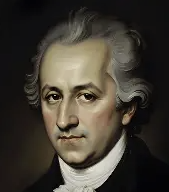
I am more and more convinced that poetry is the universal possession of mankind, revealing itself everywhere and at all times in hundreds and hundreds of men. ... I therefore like to look about me in foreign nations, and advise everyone to do the same. National literature is now a rather unmeaning term; the epoch of world literature is at hand, and everyone must strive to hasten its approach.
▼
Source
source
Conversations with Eckermann
5 months 2 weeks ago
The little world of childhood with its familiar surroundings is a model of the greater world. The more intensively the family has stamped its character upon the child, the more it will tend to feel and see its earlier miniature world again in the bigger world of adult life. Naturally this is not a conscious, intellectual process.
▼
Source
source
The Theory of Psychoanalysis
6 months 3 weeks ago
The dreamer must contaminate the others by his dream, he must make them fall into it.
▼
Source
source
p. 399

5 months 2 weeks ago
When you have understood that nothing is, that things do not even deserve the status of appearances, you no longer need to be saved, you are saved, and miserable forever.
CivilSimian.com created by AxiomaticPanic, CivilSimian, Kalokagathia