


5 months 3 weeks ago
For those who need consolation no means of consolation is so effective as the assertion that in their case no consolation is possible: it implies so great a degree of distinction that they at once hold up their heads again.

8 months 3 weeks ago
In the Critique of Cynical Reasoning, a great bestseller in Germany (Sloterdijk, 1983), Peter Sloterdijk puts forward the thesis that ideology's dominant mode of functioning is cynical which renders impossible - or, more precisely, vain - the classical critical-ideological procedure. The cynical subject is quite aware of the distance between the ideological mask and the social reality, but he none the less still insists upon the mask.
4 months 3 weeks ago
People are often reproached because their desires are directed mainly to money and they are fonder of it than of anything else. Yet it is natural and even inevitable for them to love that which, as an untiring Proteus, is ready at any moment to convert itself into the particular object of our fickle desires and manifold needs. Thus every other blessing can satisfy only one desire and one need; for instance, food is good only to the hungry, wine only for the healthy, medicine for the sick, a fur coat for winter, women for youth, and so on. Consequently, all these are only ... relatively good. Money alone is the absolutely good thing because it meets not merely one need in concreto, but needs generally in abstracto.
▼
Source
source
E. Payne, trans. (1974) Vol. 1, p. 347
3 months 1 week ago
At midday the daily food of all Spaniards was the puchero or cocido, as the dish is really called which the foreigners call pot-pourri or olla podrida. This contains principally yellow chick-peas, with a little bacon, some potatoes or other vegetables and normally also small pieces of beef or sausage, all boiled in one pot at a very slow fire; the liquid of the same makes the substantial broth that is served first.
▼
Source
source
p. 14
1 month ago
It is the fate of every truth to be an object of ridicule when it is first acclaimed. It was once considered foolish to suppose that black men were really human beings and ought to be treated as such. What was once foolish has now become a recognized truth. Today it is considered as exaggeration to proclaim constant respect for every form of life as being the serious demand of a rational ethic. But the time is coming when people will be amazed that the human race existed so long before it recognized that thoughtless injury to life is incompatible with real ethics. Ethics is in its unqualified form extended responsibility to everything that has life.

3 months 2 weeks ago
In this choice of inheritance we have given to our frame of polity the image of a relation in blood, binding up the constitution of our country with our dearest domestic ties, adopting our fundamental laws into the bosom of our family affections, keeping inseparable and cherishing with the warmth of all their combined and mutually reflected charities our state, our hearths, our sepulchres, and our altars.

4 months 2 weeks ago
People are said to believe in God, or to disbelieve in Adam and Eve. But in such cases what is believed or disbelieved is that there is an entity answering a certain description. This, which can be believed or disbelieved is quite different from the actual entity (if any) which does answer the description. Thus the matter of belief is, in all cases, different in kind from the matter of sensation or presentation, and error is in no way analogous to hallucination. A hallucination is a fact, not an error; what is erroneous is a judgment based upon it.
▼
Source
source
On the Nature of Acquaintance: Neutral Monism, 1914
1 month 5 days ago
Look upon yourself as more powerful than they give you out for, and you have more power; look upon yourself as more, and you have more.
▼
Source
source
Cambridge 1995, p. 318

4 months 3 weeks ago
To call out for the hand of the enemy is a rather extreme measure, yet a better one, I think, than to remain in continual fever over an accident that has no remedy. But since all the precautions that a man can take are full of uneasiness and uncertainty, it is better to prepare with fine assurance for the worst that can happen, and derive some consolation from the fact that we are not sure that it will happen.
▼
Source
source
Ch. 25

1 month 1 week ago
Men whose research is based on shared paradigms are committed to the same rules and standards for scientific practice. That commitment and the apparent consensus it produces are prerequisites for normal science, i.e., for the genesis and continuation of a particular research tradition.
▼
Source
source
p. 11
4 months 3 weeks ago
Our moral virtues benefit mainly other people; intellectual virtues, on the other hand, benefit primarily ourselves; therefore the former make us universally popular, the latter unpopular.
1 month ago
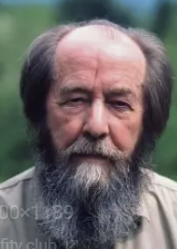
The clock of communism has stopped striking. But its concrete building has not yet come crashing down. For that reason, instead of freeing ourselves, we must try to save ourselves from being crushed by its rubble.
▼
Source
source
How We Must Rebuild Russia in Komsomolskaya Pravda

3 months 1 week ago
Man alone has the power of self-realization, the power to be a self-determining subject in all processes of becoming, for he alone has an understanding of potentialities and a knowledge of 'notions.' His very existence is the process of actualizing his potentialities, of molding his life according to the notions of reason.
▼
Source
source
P. 9
4 months 2 weeks ago
Yes, if you happen to be interested in philosophy and good at it, but not otherwise - but so does bricklaying. Anything you're good at contributes to happiness. When asked "Does philosophy contribute to happiness?"
▼
Source
source
(SHM 76), as quoted in The quotable Bertrand Russell (1993), p. 149

4 months 2 weeks ago
The best university that can be recommended to a man of ideas is the gauntlet of the mobs.
▼
Source
source
Eloquence

2 weeks 5 days ago
Knowing that religion does not furnish grosser bigots than law, I expect little from old judges.
▼
Source
source
Letter to Thomas Cooper
2 months 5 days ago
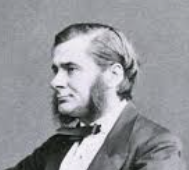
The method of scientific investigation is nothing but the expression of the necessary mode of working of the human mind.
▼
Source
source
Our Knowledge of the Causes of the Phenomena of Organic Nature

1 month 4 days ago
So near at hand is freedom, and is anyone still a slave?

3 months 2 days ago
Thinking is an expedition into quietness.

3 months 3 weeks ago
The heart of man is the place the devil dwells in; I feel sometimes a hell within myself.
▼
Source
source
Section 51
3 months 2 weeks ago
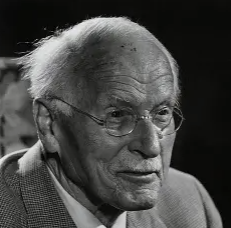
I am an orphan, alone; nevertheless I am found everywhere. I am one, but opposed to myself. I am youth and old man at one and the same time. I have known neither father nor mother, because I have had to be fetched out of the deep like a fish, or fell like a white stone from heaven. In woods and mountains I roam, but I am hidden in the innermost soul of man. I am mortal for everyone, yet I am not touched by the cycle of aeons.
▼
Source
source
Combining alchemical assertions

2 weeks 2 days ago
Everything is in a state of metamorphosis. Thou thyself art in everlasting change and in corruption to correspond; so is the whole universe.
▼
Source
source
Meditations. ix. 19.


1 month 5 days ago
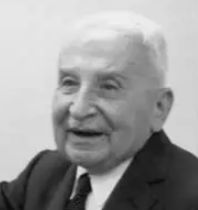
The criterion of truth is that it works even if nobody is prepared to acknowledge it.
▼
Source
source
Chapter 5: On Some Popular Errors Concerning the Scope and Method of Economics, § 9 : The Belief in the Omnipotence of Thought

4 months 2 weeks ago
Gratitude looks to the past and love to the present; fear, avarice, lust, and ambition look ahead.
▼
Source
source
Letter XVI
4 months 1 week ago
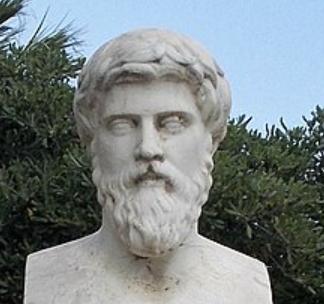
Antagoras the poet was boiling a conger, and Antigonus, coming behind him as he was stirring his skillet, said, "Do you think, Antagoras, that Homer boiled congers when he wrote the deeds of Agamemnon?" Antagoras replied, "Do you think, O king, that Agamemnon, when he did such exploits, was a peeping in his army to see who boiled congers?"
▼
Source
source
46 Antigonus I

5 months 5 days ago
Now, justification in this life is given to us according to these three things: first by the laver of regeneration by which all sins are forgiven; then, by a struggle with the faults from whose guilt we have been absolved; the third, when our prayer is heard, in which we say: Forgive us our debts, because however bravely we fight against our faults, we are men; but the grace of God so aids as we fight in this corruptible body that there is reason for His hearing us as we ask forgiveness.
▼
Source
source
Against Julian, Book II, ch. 8, 22. In The Fathers of the Church, Matthew A. Schumacher, tr., 1957, ISBN 0813214009 ISBN 9780813214009 pp. 83-84.

4 months 2 weeks ago
For the world to become philosophic amounts to philosophy's becoming world-order reality; and it means that philosophy, at the same time that it is realized, disappears.
1 month ago
Only at quite rare moments have I felt really glad to be alive. I could not but feel with a sympathy full of regret all the pain that I saw around me, not only that of men but that of the whole creation. From this community of suffering I have never tried to withdraw myself. It seemed to me a matter of course that we should all take our share of the burden of pain which lies upon the world.

4 months 2 weeks ago
No punishment has ever possessed enough power of deterrence to prevent the commission of crimes. On the contrary, whatever the punishment, once a specific crime has appeared for the first time, its reappearance is more likely than its initial emergence could ever have been.
▼
Source
source
Epilogue
4 months 3 weeks ago
We seek and offer ourselves to be gulled.
▼
Source
source
Book III, Ch. 11. Of Cripples

3 months 1 week ago
Writing is like getting married. One should never commit oneself until one is amazed at one's luck.
▼
Source
source
The Black Prince (1973); 2003, p. 10.
2 months 3 weeks ago
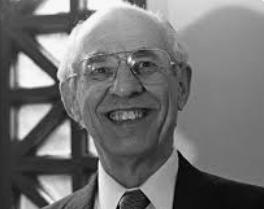
A few years ago I had occasion to visit Peru, and I got to know a fine philosopher and a truly wonderful human being-Francisco Miro Casada. Miro Casada has been an idealist all his life, while being, at the same time, a man of great experience (a former member of several governments and a former Ambassador to France). I found him a man who represents the social democratic vision in its purest form. Talking to him, and to my other friends in Peru (who represented quite a spectrum of political opinion), I heard something that was summed up in a remark he, Miro Casada, made to me, "Whenever you have a Republican president, we get a wave of military dictatorships in Latin America".
▼
Source
source
How Not to Solve Ethical Problems
2 weeks 2 days ago
If thou art pained by any external thing, it is not this that disturbs thee, but thy own judgment about it. And it is in thy power to wipe out this judgment now.
▼
Source
source
VIII. 47, trans. George Long


4 months 3 weeks ago
The importation of gold and silver is not the principal, much less the sole benefit which a nation derives from its foreign trade.
▼
Source
source
Chapter I, p. 479.
4 months 1 week ago
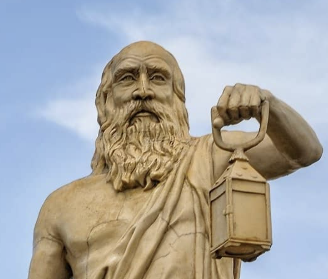
Being asked where in Greece he saw good men, he replied, "Good men nowhere, but good boys at Sparta."
▼
Source
source
Diogenes Laërtius, vi. 27

2 months 2 weeks ago
The message of radio is one of violent, unified implosion and resonance.
▼
Source
source
(p. 263)
3 months 2 weeks ago
To tax and to please, no more than to love and to be wise, is not given to men.


3 months 1 week ago
I will destroy this house, and no one will be able to build it....
2 months 2 weeks ago
Casting my perils before swains.
2 months 5 days ago
The consciousness of brutes would appear to be related to the mechanism of their body simply as a collateral product of its working, and to be as completely without any power of modifying that working as the steam-whistle which accompanies the work of a locomotive engine is without influence upon its machinery. Their volition, if they have any, is an emotion indicative of physical changes, not a cause of such changes.
3 months 2 weeks ago
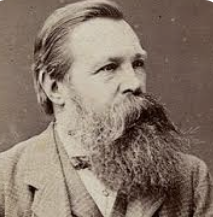
Ireland still remains the Holy Isle whose aspirations must on no account be mixed with the profane class-struggles of the rest of the sinful world ... the Irish peasant must not on any account know that the Socialist workers are his sole allies in Europe.
▼
Source
source
Letter to Karl Marx
3 months 1 week ago
My atheism, like that of Spinoza, is true piety towards the universe and denies only gods fashioned by men in their own image, to be servants of their human interests.
▼
Source
source
"On My Friendly Critics"
3 months 2 weeks ago
It makes unavoidably necessary an entirely new organization of society in which production is no longer directed by mutually competing individual industrialists but rather by the whole society operating according to a definite plan and taking account of the needs of all.

1 month 1 week ago
And so in City after City, street-barricades are piled, and truculent, more or less murderous insurrection begins; populace after populace rises, King after King capitulates or absconds; and from end to end of Europe Democracy has blazed up explosive, much higher, more irresistible and less resisted than ever before; testifying too sadly on what a bottomless volcano, or universal powder-mine of most inflammable mutinous chaotic elements, separated from us by a thin earth-rind, Society with all its arrangements and acquirements everywhere, in the present epoch, rests! The kind of persons who excite or give signal to such revolutions-students, young men of letters, advocates, editors, hot inexperienced enthusiasts, or fierce and justly bankrupt desperadoes, acting everywhere on the discontent of the millions and blowing it into flame,-might give rise to reflections as to the character of our epoch. Never till now did young men, and almost children, take such a command in human affairs.

3 months 2 weeks ago
I seem to myself, among civilised men, an intruder, a troglodyte enamored of decrepitude, plunged into subversive prayers.
CivilSimian.com created by AxiomaticPanic, CivilSimian, Kalokagathia