

2 weeks 5 days ago
The issue here really is not whether international trade shall be free but whether or not it makes any sense for a country - or, for that matter, a region - to destroy its own capacity to produce its own food. How can a government, entrusted with the safety and health of its people, conscientiously barter away in the name of an economic idea that people's ability to feed itself? And if people lose their ability to feed themselves, how can they be said to be free?
▼
Source
source
"A Bad Big Idea"
3 months 2 weeks ago
Situation seems to be the mould in which men's characters are formed.
▼
Source
source
Letter 23
2 weeks 6 days ago
I am NOT nothing! A vaporous phosphorescence on a damp meadow, a miserable worm that crawls and loves, that shouts and talks about wings for an hour or two until his mouth is blocked with earth. The dark powers give no other answer. But within me a deathless Cry, superior to me, continues to shout. For whether I want to or not, I am also, without doubt, a part of the visible and the invisible Universe. We are one.

4 months 2 weeks ago
If this labourer were in possession of his own means of production, and was satisfied to live as a labourer, he need not work beyond beyond the time necessary for the reproduction of his means of subsistence, say 8 hours a day.
▼
Source
source
Vol. I, Ch. 11, pg. 336.
2 months 2 weeks ago
Our subjective judgment of what seems like a good bet is irrelevant to what is actually a good bet.
▼
Source
source
Chapter 6 "Origins and Miracles" (p. 162)

3 months 2 weeks ago
[France is] a Country where the people, along with their political servitude, have thrown off the Yoke of Laws and morals.
▼
Source
source
Letter to William Windham (27 September 1789), quoted in Alfred Cobban and Robert A. Smith (eds.), The Correspondence of Edmund Burke, Volume VI: July 1789-December 1791 (1967), p. 25

2 months 2 weeks ago
In order that men should embrace the truth - not in the vague way they did in childhood, nor in the one-sided and perverted way presented to them by their religious and scientific teachers, but embrace it as their highest law the complete liberation of this truth from all and every superstition (both pseudo-religious and pseudo-scientific) by which it is still obscured is essential: not a partial, timid attempt, reckoning with traditions sanctified by age and with the habits of the people - not such as was effected in the religious sphere by Guru Nanak, the founder of the sect of the Sikhs, and in the Christian world by Luther, and by similar reformers in other religions - but a fundamental cleansing of religious consciousness from all ancient religious and modern scientific superstitions.
▼
Source
source
VI
2 months 2 weeks ago
One can only live while one is intoxicated with life; as soon as one is sober it is impossible not to see that it is all a mere fraud and a stupid fraud! Ch. 4 Variant: It is possible to live only as long as life intoxicates us; once we are sober we cannot help seeing that it is all a delusion, a stupid delusion.
5 months 4 days ago
When I see someone in anxiety, I say to myself, What can it be that this fellow wants? For if he did not want something that was outside of his control, how could he still remain in anxiety?
▼
Source
source
Book II, ch. 13, 1.
2 months 2 weeks ago
It is a bad plan that admits of no modification.
▼
Source
source
Maxim 469
3 months 2 weeks ago
A state without the means of some change is without the means of its conservation.

1 month 1 week ago
The habits of study acquired at Universities are of the highest importance in after-life. At the season when you are in young years the whole mind is, as it were, fluid, and is capable of forming itself into any shape that the owner of the mind pleases to order it to form itself into. The mind is in a fluid state, but it hardens up gradually to the consistency of rock or iron, and you cannot alter the habits of an old man, but as he has begun he will proceed and go on to the last.
4 months 2 weeks ago
Power and violence are opposites; where the one rules absolutely, the other is absent. Violence appears where power is in jeopardy, but left to its own course it ends in power's disappearance.
▼
Source
source
"On Violence"
2 months 2 weeks ago
The Churches as Churches-as institutions affirming their own infallibility-are anti-Christian institutions. Between the Churches as such and Christianity, not only is there nothing in common except the name, but they are two quite opposite and opposing principles. The one represents pride, violence, self-assertion, immobility and death: the other humility, penitence, meekness, progress, and life.
▼
Source
source
Chapter III, Christianity Misunderstood by Believers

4 months 2 weeks ago
We used to think that Hitler was wicked when he wanted to kill all the Jews, but what Kennedy and Macmillan and others both in the East and in the West pursue policies which will probably lead to killing not only all the Jews but all the rest of us too. They are much more wicked than Hitler and this idea of weapons of mass extermination is utterly and absolutely horrible and it is a thing which no man with one spark of humanity can tolerate and I will not pretend to obey a government which is organising the massacre of the whole of mankind. I will do anything I can to oppose such Governments in any non-violent way that seems likely to be fruitful, and I should exhort all of you to feel the same way. We cannot obey these murderers. They are wicked and abominable. They are the wickedest people that ever lived in the history of man and it is our duty to do what we can.
▼
Source
source
On Civil Disobedience, April 15th, 1961

4 months 3 weeks ago
In all ages of the world, priests have been enemies to liberty; and it is certain, that this steady conduct of theirs must have been founded on fixed reasons of interest and ambition. Liberty of thinking, and of expressing our thoughts, is always fatal to priestly power, and to those pious frauds, on which it is commonly founded; and, by an infallible connexion, which prevails among all kinds of liberty, this privilege can never be enjoyed, at least has never yet been enjoyed, but in a free government.
▼
Source
source
Part I, Essay 9: Of The Parties of Great Britain

3 months 2 weeks ago
It is an understatement to say that in this society injustices abound: in truth, it is itself the quintessence of injustice.

3 months 1 week ago
Thou hast said: nevertheless I say unto you, Hereafter shall ye see the Son of man sitting on the right hand of power, and coming in the clouds of heaven.
▼
Source
source
26:64 (KJV) Said to Caiaphas, the high priest.
3 months 2 weeks ago
In this choice of inheritance we have given to our frame of polity the image of a relation in blood, binding up the constitution of our country with our dearest domestic ties, adopting our fundamental laws into the bosom of our family affections, keeping inseparable and cherishing with the warmth of all their combined and mutually reflected charities our state, our hearths, our sepulchres, and our altars.
2 weeks 2 days ago
Before Descartes, some of the ancients made the essence of matter consist in solid extension. But this opinion, of which all the Cartesians have made much, has at all times been victoriously combated...
▼
Source
source
Ch. III Concerning the Extension of Matter
3 months 2 weeks ago
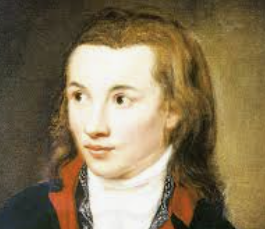
To romanticize the world is to make us aware of the magic, mystery and wonder of the world; it is to educate the senses to see the ordinary as extraordinary, the familiar as strange, the mundane as sacred, the finite as infinite.
▼
Source
source
As quoted in "Bildung in Early German Romanticism" by Frederick C. Beiser, in Philosophers on Education : Historical Perspectives (1998) by Amélie Rorty, p. 294

5 months 2 weeks ago
To work and create "for nothing," to sculpture in clay, to know one's creation has no future, to see one's work destroyed in a day while being aware that fundamentally this has no more importance than building for centuries, this is the difficult wisdom that absurd thought sanctions. Performing these two tasks simultaneously, negating on the one hand and magnifying on the other, it the way open to the absurd creator. He must give the void its colors.

3 months 5 days ago
The needs of the soul can for the most part be listed in pairs of opposites which balance and complete one another. The human soul has need of equality and of hierarchy. Equality is the public recognition, effectively expressed in institutions and manners, of the principle that an equal degree of attention is due to the needs of all human beings. Hierarchy is the scale of responsibilities. Since attention is inclined to direct itself upwards and remain fixed, special provisions are necessary to ensure the effective compatibility of equality and hierarchy.
1 month 4 days ago
The fact is that in order to do any thing in this world worth doing, we must not stand shivering on the bank thinking of the cold and the danger, but jump in and scramble through as well as we can.
▼
Source
source
Lecture IX : On the Conduct of the Understanding
4 months 3 weeks ago
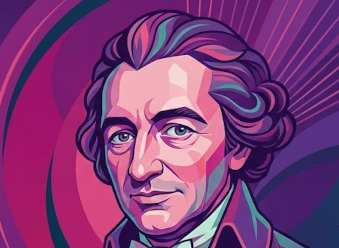
The society adopts neither rites nor priesthood, and it will never lose sight of the resolution not to advance any thing as a society inconvenient to any sect or sects, in any time or country, and under any government. It will be seen that it is so much the more easy for the society to keep within this circle, because, that the dogmas of the Theophilanthropists are those upon which all the sects have agreed, that their moral is.that upon which there has never been the least dissent; and that the name they have taken expresses the double end of all the sects, that of leading to the adoration of God and love of man.
▼
Source
source
Introduction

5 months 2 weeks ago
Deep within every human being there still lives the anxiety over the possibility of being alone in the world, forgotten by God, overlooked among the millions and millions in this enormous household. One keeps this anxiety at a distance by looking at the many round about who are related to him as kin and friends, but the anxiety is still there, nevertheless, and one hardly dares think of how he would feel if all this were taken away.
4 months 2 weeks ago
While it is true that science cannot decide questions of value, that is because they cannot be intellectually decided at all, and lie outside the realm of truth and falsehood. Whatever knowledge is attainable, must be attained by scientific methods; and what science cannot discover, mankind cannot know.
▼
Source
source
Religion and Science (1935), Ch. IX: Science of Ethics.

4 months 2 weeks ago
A man fits out a ship at a great expense and sends it to the West Indies with a crew of men and boys, and after six months or a year, it comes back with a load of pine-apples; now, if no more gets accomplished than the speculator commonly aims at, if it simply turns out what is called a successful venture, I am less interested in this expedition than in some child's first excursions a-huckleberrying, in which it is introduced into a new world, experiences a new development, though it brings home only a gill of berries in its basket.
3 months 1 week ago
We return to our analysis of qualities. Something preserves itself throughout this flux, something that passes into other things, but also stands against them as a being for itself. This something can exist only as the product of a process through which it integrates its otherness with its own proper being. Hegel says that its existence comes about through 'the negation of the negation.' The first negation is the otherness in which it turns, and the second is the incorporation of this other into its own self. Such a process presupposes that things possess a certain power over their movement, that they exist in a certain self-relation that enables them to 'mediate' their existential conditions.
▼
Source
source
P. 132-133
4 months 2 weeks ago
Men who are unhappy, like men who sleep badly, are always proud of the fact.
4 months 2 weeks ago
In capitalist society spare time is acquired for one class by converting the whole life-time of the masses into labour-time.
▼
Source
source
Vol. I, Ch. 17, Section IV, pg. 581.

1 month 3 weeks ago
There is no more consensus on what justice means than there is on the character of the good. If anything, there is less. Among the virtues, justice is one of the most shaped by convention. For that reason it is among the most changeable.
▼
Source
source
'Modus Vivendi' (p.34)
2 months 5 days ago
Each such answer to the great question, invariably asserted by the followers of its propounder, if not by himself, to be complete and final, remains in high authority and esteem, it may be for one century, or it may be for twenty: but, as invariably, Time proves each reply to have been a mere approximation to the truth-tolerable chiefly on account of the ignorance of those by whom it was accepted, and wholly intolerable when tested by the larger knowledge of their successors.
▼
Source
source
Ch.2, p. 72

1 month 4 days ago
You are doing an excellent thing, one which will be wholesome for you, if, as you write me, you are persisting in your effort to attain sound understanding; it is foolish to pray for this when you can acquire it from yourself. We do not need to uplift our hands towards heaven, or to beg the keeper of a temple to let us approach his idol's ear, as if in this way our prayers were more likely to be heard. A god is near you, with you, and in you. This is what I mean, Lucilius: there sits a holy spirit within us, one who marks our good and bad deeds, and is our a guardian.
4 months 3 weeks ago
Is it reasonable to assume a purposiveness in all the parts of nature and to deny it to the whole?
▼
Source
source
Seventh Thesis
1 month 3 weeks ago
Darwinist thinkers such as Richard Dawkins and Daniel Dennett are militant opponents of Christianity. Yet their atheism and humanism are versions of Christian concepts. As a defender of Darwinism, Dawkins is committed to the view that humans are like other animal species in being 'gene machines' ruled by the laws of natural selection. He asserts nevertheless that humans, uniquely, can defy these natural laws: 'We, alone on earth, can rebel against the tyranny of the selfish replicators.' In affirming human uniqueness in this way, Dawkins relies on a Christian world-view.
▼
Source
source
Post-Apocalypse: After Secularism (pp. 265-6)

1 month 2 weeks ago
Fundamentally we are highly social creatures. We feel a big sense of anomie and discomfort when we are isolated from our fellow human beings. …We seek community in different ways. There's a right wing... and... a left wing version of this.
▼
Source
source
15:58

4 months 1 week ago
Man is a universe in little [Microcosm].
▼
Source
source
Freeman (1948), p. 150
4 months 1 week ago
I am a utilitarian. I am also a vegetarian. I am a vegetarian because I am a utilitarian.
▼
Source
source
Utilitarianism and Vegetarianism, Philosophy & Public Affairs, 9(4): 325 (1980).
1 month 1 week ago
The ones who are preoccupied by logic are above all; to read their works, one is tempted to believe they have advanced only step by step, after the manner of a Vauban who pushes on his trenches against the place besieged, leaving nothing to chance. The others are guided by intuition and, at the first stroke, make quick but sometimes precarious conquests, like bold cavalrymen of the advance guard.
▼
Source
source
quoted in Jacques Hadamard, An essay on the psychology of invention in the mathematical field (1954), pp. 106.
3 months 2 weeks ago
The more you live, the less useful it seems to have lived.
3 months 2 weeks ago
We are living in what the Greeks called the right time for a "metamorphosis of the gods," i.e. of the fundamental principles and symbols. This peculiarity of our time, which is certainly not of our conscious choosing, is the expression of the unconscious man within us who is changing. Coming generations will have to take account of this momentous transformation if humanity is not to destroy itself through the might of its own technology and science.
▼
Source
source
p 110
4 months 2 weeks ago
In its most general form, confinement was explained, or at least justified, by a will to avoid scandal. It thereby signalled an important change in the consciousness of evil. The Renaissance had let unreason in all its forms come out into the light of day, as public exposure gave evil the chance to redeem itself and to serve as an exemplum.
▼
Source
source
Part One: 5. The Insane

4 months 1 day ago
There is no word or action but has its echo in Eternity. Thought is an Idea in transit, which when once released, never can be lured back, nor the spoken word recalled. Nor ever can the overt act be erased All that thou thinkest, sayest, or doest bears perpetual record of itself, enduring for Eternity.
▼
Source
source
As quoted in Pythagoron: The Religious, Moral, and Ethical Teachings of Pythagoras (1947) by Hobart Huson, p. 99
3 months 1 week ago
Pragmatism ... reflects with almost disarming candor the spirit of the prevailing business culture, the very same attitude of 'being practical' as counter to which philosophical meditation as such was conceived.
▼
Source
source
p. 52.
2 months 4 weeks ago
In order for music to free itself, it will have to pass over to the other side - there where territories tremble, where the structures collapse, where the ethoses get mixed up, where a powerful song of the earth is unleashed, the great ritornelles that transmutes all the airs it carries away and makes return.
▼
Source
source
from Essays Critical and Clinical, p. 104.

4 months 2 weeks ago
In early times, the great majority of the male sex were slaves, as well as the whole of the female. And many ages elapsed, some of them ages of high cultivation, before any thinker was bold enough to question the rightfulness, and the absolute social necessity, either of the one slavery or of the other.
▼
Source
source
Ch. 1
3 weeks 6 days ago
All men and women have passions, natural desires and noble ambitions, and also a conscience; they have sex, hunger, fear, anger, and are subject to sickness, pain, suffering and death. Culture consists in bringing about the expression of these passions and desires in harmony.
▼
Source
source
p. 20

4 months 2 weeks ago
But the man is a humbug - a vulgar, shallow, self-satisfied mind, absolutely inaccessible to the complexities and delicacies of the real world. He has the journalist's air of being a specialist in everything, of taking in all points of view and being always on the side of the angels: he merely annoys a reader who has the least experience of knowing things, of what knowing is like. There is not two pence worth of real thought or real nobility in him. But he isn't dull.
▼
Source
source
Part of a diary entry dated "Wednesday-Wednesday 9-16 July", 1924, regarding Thomas Babington Macaulay
CivilSimian.com created by AxiomaticPanic, CivilSimian, Kalokagathia