


6 months 3 weeks ago
These numerous points at which money is withdrawn from circulation and accumulated in numerous individual hoards or potential money-capitals appears as so many obstacles to circulation, because they immobilise the money and deprive it of its capacity to circulate for a certain time.
▼
Source
source
Vol. II, Ch. XXI, p. 497.
7 months 1 week ago
It is only he who is possessed of the most complete sincerity that can exist under heaven, who can give its full development to his nature. Able to give its full development to his own nature, he can do the same to the nature of other men. Able to give its full development to the nature of other men, he can give their full development to the natures of animals and things. Able to give their full development to the natures of creatures and things, he can assist the transforming and nourishing powers of Heaven and Earth. Able to assist the transforming and nourishing powers of Heaven and Earth, he may with Heaven and Earth form a ternion.

5 months 2 weeks ago
The seat of faith, however, is not consciousness but spontaneous religious experience, which brings the individual's faith into immediate relation with God. Here we must ask: Have I any religious experience and immediate relation to God, and hence that certainty which will keep me, as an individual, from dissolving in the crowd?
▼
Source
source
p 85
5 months 2 weeks ago
The man that does not know himself not to be at the mercy of other men, that does not feel that he is invulnerable to all the vicissitudes of fortune, is incapable of a constant and inflexible virtue.
▼
Source
source
Book V, "Of Education"
4 months ago
Against the many Russian thinkers influenced by Hegel who believed that history was governed by universal laws to which one could only submit, Turgenev upheld the freedom of different societies to pursue different paths of development and of individuals to pursue, even in opposition to powerful historical forces, their own goals and values. Here Turgenev endorsed the celebrated dictum of Alexander Herzen, with whom he disagreed on other matters: that history has no libretto. Human history is a realm of contingency and unpredictability, in which each generation faces conflicts that have no ideal solution.
▼
Source
source
'Isaiah Berlin: The Value of Decency' (p.105)
6 months 2 weeks ago
The end of man (as a factual anthropological limit) is announced to thought from the vantage of the end of man (as a determined opening or the infinity of a telos). Man is that which is in relation to his end, in the fundamentally equivocal sense of the word. Since always.
▼
Source
source
"The Ends of Man," Margins of Philosophy, tr. w/ notes by Alan Bass. The University of Chicago Press. Chicago, 1982. (original French published in Paris, 1972, as Marges de la philosophie). p. 123

6 months 3 weeks ago
Great minds are related to the brief span of time during which they live as great buildings are to a little square in which they stand: you cannot see them in all their magnitude because you are standing too close to them.
▼
Source
source
Vol. 2, Ch. 20, § 242

6 months 3 weeks ago
What potent blood hath modest May!
▼
Source
source
May-Day

5 months 6 days ago
One of the major problems of our society is that so many people are too intelligent to accept religion, but not intelligent or strong-minded enough to look for acceptable alternatives; in the same way, many people are strong-minded enough not to want to be 'organization men', but incapable of seeing beyond an act of protest. These situations produce a sense of being 'between two stools', lacking real motive; a sense of mental strain is produced that may find its outlet in violence, or in organised anti-social behaviour.
▼
Source
source
p. 224, Crimes of Freedom -- and their cure
4 months 1 week ago
Soon fades the spell, soon comes the night: Say will it not be then the same, Whether we played the black or white,Whether we lost or won the game?
▼
Source
source
Sermon in a Churchyard, st. 8 (1825), quoted in The Miscellaneous Writings of Lord Macaulay, Vol. II (1860), p. 390

4 months 3 weeks ago
Primitivism has become the vulgar cliche of much modern art and speculation.
▼
Source
source
(p. 77)
3 months 2 weeks ago
In order to properly understand the big picture, everyone should fear becoming mentally clouded and obsessed with one small section of truth.
▼
Source
source
Quoted in: Joan Klostermann-Ketels (2011) HumaniTrees, p. 96
6 months 3 weeks ago
Money does not arise by convention, any more than the state does. It arises out of exchange, and arises naturally out of exchange; it is a product of the same.
▼
Source
source
Notebook I, The Chapter on Money, p. 85.
2 months 3 weeks ago
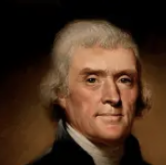
The majority, oppressing an individual, is guilty of a crime, abuses its strength, and by acting on the law of the strongest breaks up the foundations of society.
▼
Source
source
Letter to Éleuthère Irénée du Pont de Nemours

5 months 2 weeks ago
A distant enemy is always preferable to one at the gate.

2 months 3 weeks ago
We are alive within mystery, by miracle. "Life," wrote Erwin Chargaff, "is the continual intervention of the inexplicable." We have more than we can know. We know more than we can say. The constructions of language (which is to say the constructions of thought) are formed within experience, not the other way around. Finally we live beyond words, as also we live beyond computation and beyond theory. There is no reason whatever to assume that the languages of science are less limited than other languages.
3 months 1 day ago
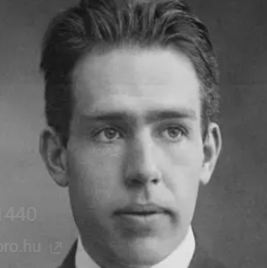
Some subjects are so serious that one can only joke about them.
▼
Source
source
As quoted in The Genius of Science: A Portrait Gallery (2000) by Abraham Pais, p. 24
3 months 1 week ago
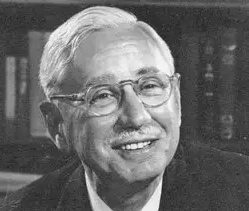
Middle age begins with marriage; for then work and responsibility replace carefree play, passion surrenders to the limitations of social order, and poetry yields to prose.
▼
Source
source
Ch. 3 : On Middle Age

6 months 3 weeks ago
A man might say, with enough truth to justify a joke: "Science is what we know, and philosophy is what we don't know." But it should be added that philosophical speculation as to what we do not yet know has shown itself a valuable preliminary to exact scientific knowledge.
7 months 1 day ago
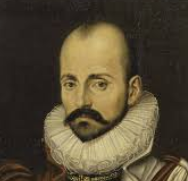
He who would teach men to die would teach them to live.
▼
Source
source
Ch. 20. Of the Force of Imagination (tr. Donald M. Frame)
7 months 2 weeks ago
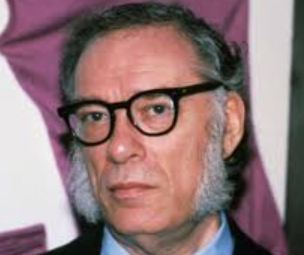
In the course of my fight with the school, I couldn't help but notice that I became a pariah. [...] Once, however, a fellow faculty member, making sure we were unobserved, said to me, "Isaac, the faculty is proud of you for your courage in fighting the administration for academic freedom."I said, "There's no courage involved in it. Don't you know my definition of academic freedom?""No. What's your definition of academic freedom?"I said, "Independent income."
7 months 3 weeks ago
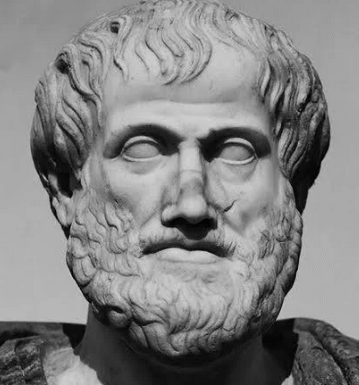
My lectures are published and not published; they will be intelligible to those who heard them, and to none beside.

6 months 3 weeks ago
If He who in Himself can lack nothing chooses to need us, it is because we need to be needed.
5 months 2 weeks ago
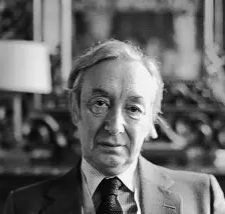
The problem of induction is, roughly speaking, the problem of finding a way to prove that certain empirical generalizations which are derived from past experience will hold good also in the future. There are only two ways of approaching this problem on the assumption that it is a genuine problem, and it is easy to see that neither of them can lead to its solution.
▼
Source
source
p. 49.
2 months 1 week ago
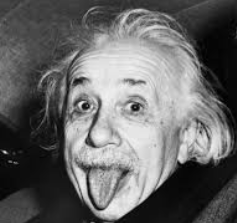
As an eminent pioneer in the realm of high frequency currents... I congratulate you on the great successes of your life's work.
▼
Source
source
[http://www.teslasociety.com/einsteinletter.jpg Einstein's letter] to Nikola Tesla for Tesla's 75th birthday (1931)

7 months 1 day ago
There is no need for you to develop an armed insurrection. Christ himself has already begun an insurrection with his mouth.
▼
Source
source
pp. 67-68

5 months 2 days ago
Even truth needs to be clad in new garments if it is to appeal to a new age.
▼
Source
source
C 33
6 months 3 weeks ago
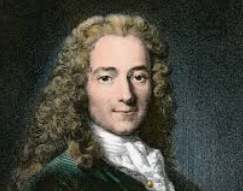
Use, do not abuse; as the wise man commands. I flee Epictetus and Petronius alike. Neither abstinence nor excess ever renders man happy.
▼
Source
source
"Cinquième discours: sur la nature de plaisir," Sept Discours en Vers sur l'Homme, 1738
6 months 3 weeks ago
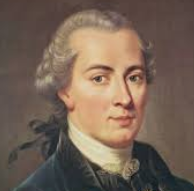
Two things fill the mind with ever-increasing wonder and awe, the more often and the more intensely the mind of thought is drawn to them: the starry heavens above me and the moral law within me.
▼
Source
source
Translated by Lewis White Beck Two things fill the heart with renewed and increasing awe and reverence the more often and the more steadily that they are meditated on: the starry skies above me and the moral law inside me.

5 months 1 week ago
When at the beginning of the so-called modern age, at the Renaissance, the pagan sense of religion came to life again, it took the concrete form in the knightly ideal with its codes of conduct of love and honor. But it was a paganism Christianized, baptized. "Woman - la donna - was the divinity enshrined within those savage breasts. Whosoever will investigate the memorials of primitive times will find this ideal of woman in its full force and purity; the Universe is woman.

6 months 1 week ago
The pleasures that give most joy are the ones that most rarely come.
5 months 2 weeks ago
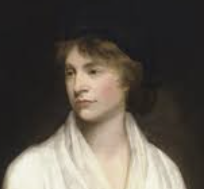
Should it be proved that woman is naturally weaker than man, from whence does it follow that it is natural for her to labour to become still weaker than nature intended her to be? Arguments of this cast are an insult to common sense, and savour of passion. The divine right of husbands, like the divine right of kings, may, it is to be hoped, in this enlightened age, be contested without danger, and though conviction may not silence many boisterous disputants, yet, when any prevailing prejudice is attacked, the wise will consider, and leave the narrow-minded to rail with thoughtless vehemence at innovation.
▼
Source
source
Ch. 3

6 months 3 weeks ago
We are not so absurd as to propose that the teacher should not set forth his own opinions as the true ones and exert his utmost powers to exhibit their truth in the strongest light. To abstain from this would be to nourish the worst intellectual habit of all, that of not finding, and not looking for, certainty in any teacher. But the teacher himself should not be held to any creed; nor should the question be whether his own opinions are the true ones, but whether he is well instructed in those of other people, and, in enforcing his own, states the arguments for all conflicting opinions fairly.
▼
Source
source
"Civilization," London and Westminster Review, April 1836
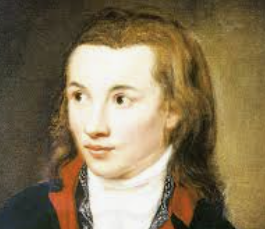
5 months 2 weeks ago
Every beloved object is the center point of a paradise.
▼
Source
source
Fragment No. 51; Jeder geliebte Gegenstand ist der Mittelpunkt eines Paradieses. Variant translations:
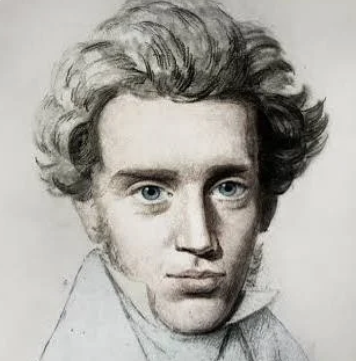
7 months 3 weeks ago
To understand oneself in existence is the Christian principle, except that this self has received much richer and much more profound qualifications that are even more difficult to understand together with existing. The believer is a subjective thinker, and the difference, is only between the simple person and the simple wise person. Here again the oneself is not humanity in general, subjectivity in general, and other such things, whereas everything becomes easy inasmuch as the difficulty is removed and the whole matter is shifted over into the shadow play of abstraction.
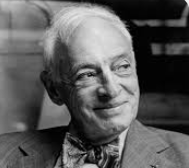
4 months 2 weeks ago
The principles of Western liberalism seem no longer to lend themselves to effective action. Deprived of the expressive power, we are awed by it, have a hunger for it, and are afraid of it. Thus we praise the gray dignity of our soft-spoken leaders, but in our hearts we are suckers for passionate outbursts, even when those passionate outbursts are hypocritical and falsely motivated.
▼
Source
source
"Literary Notes on Khrushchev" (1961), p. 36

6 months 3 weeks ago
Those who believe that they are exclusively in the right are generally those who achieve something.
▼
Source
source
"Note on Dogma"

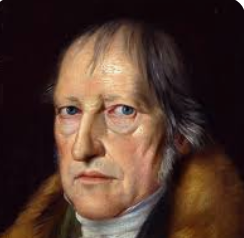
6 months 3 weeks ago
The science of religion is one science within philosophy; indeed it is the final one. In that respect it presupposes the other philosophical disciplines and is therefore a result.
2 months 3 weeks ago
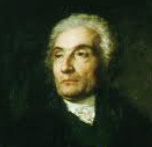
I don't know what the life of a rascal is like since I have never been one, but that of an honest man is abominable. How few men are there whose passage on this stupid planet has been marked by really good and useful acts! I prostrate myself before the one of which one can say: pertransivit bene faciendo; the one who had been able to instruct, console, and relieve his fellows; the one who made great sacrifices for charity; these heroes of silent charity who hide themselves and expect nothing in this world. But what is the ordinary man? And how many are there in a thousand who can ask themselves without terror: what have I done in this world? In what way have I advanced the common good and what will remain of me of good or evil?
▼
Source
source
Letter to chevalier de Saint-Réal, 21 December 1816, Œuvre critique, xiv, p. 10

5 months 2 weeks ago
The harvest truly is plenteous, but the labourers are few; Pray ye therefore the Lord of the harvest, that he will send forth labourers into his harvest.
▼
Source
source
9:37-38 (KJV)
5 months 3 weeks ago
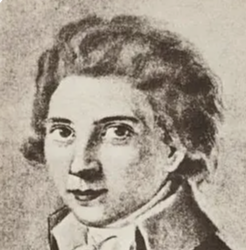
In England ... everything becomes professional ... even the rogues of that island are pedants.
▼
Source
source
"Selected Aphorisms from the Lyceum (1797)"

5 months 1 week ago
Life is complex in its expression, involving more than percipience, namely desire, emotion, will, and feeling. ... identification of rhythm as the causal counterpart of life; wherever there is some life, only perceptible to us when the analogies are sufficiently close ... The rhythm is then the life, in the sense in which it can be said to be included within nature.
▼
Source
source
p. 197
2 months 3 weeks ago
I repair, then, fellow-citizens, to the post you have assigned me. With experience enough in subordinate offices to have seen the difficulties of this the greatest of all, I have learnt to expect that it will rarely fall to the lot of imperfect man to retire from this station with the reputation and the favor which bring him into it.
3 months 4 days ago
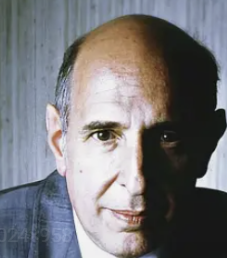
Did Romeo and Juliet have a ... "relationship"? The term "relationship" ... betokens a chaste egalitarianism leveling different ranks and degrees of attachment.
▼
Source
source
p. 14.
5 months 2 days ago
What is the good of drawing conclusions from experience? I don't deny we sometimes draw the right conclusions, but don't we just as often draw the wrong ones?
▼
Source
source
F 123

3 months 1 week ago
You will die, not because you are ill, but because you are alive; even when you have been cured, thesame end awaits you; when you have recovered, it will be not death, but ill health, that you have escaped.

CivilSimian.com created by AxiomaticPanic, CivilSimian, Kalokagathia