

2 weeks 4 days ago
What all agree upon is probably right; what no two agree in most probably is wrong.
▼
Source
source
Letter to John Adams (11 January 1817) This statement has been referred to as "Jefferson's Axiom"

4 months 2 weeks ago
Never read any book that is not a year old.
▼
Source
source
Books
2 weeks 1 day ago
If the gods care not for me and for my children, There is a reason for it.
▼
Source
source
VII, 41

4 months 2 weeks ago
Every story of conversion is the story of a blessed defeat.
▼
Source
source
Foreword to Joy Davidman's Smoke on the Mountain, 1954
4 months 2 weeks ago
Explore, and explore, and explore. Be neither chided nor flattered out of your position of perpetual inquiry. Neither dogmatise yourself, nor accept another's dogmatism. Why should you renounce your right to traverse the star-lit deserts of truth, for the premature comforts of an acre, house, and barn? Truth also has its roof, and bed, and board. Make yourself necessary to the world, and mankind will give you bread, and if not store of it, yet such as shall not take away your property in all men's possessions, in all men's affections, in art, in nature, and in hope.
2 months 4 days ago
The great end of life is not knowledge but action.
▼
Source
source
"Technical Education"

1 month 3 days ago
Perhaps its destruction has been brought about only that it may be raised up again to a better destiny. Oftentimes a reverse has but made room for more prosperous fortune. Many structures have fallen only to rise to a greater height.
5 months 2 weeks ago
The truly good and wise man will bear all kinds of fortune in a seemly way, and will always act in the noblest manner that the circumstances allow.
2 weeks 5 days ago
We do not only free God by battling and subduing the visible world about us; we also create God. "Open your eyes," God shouts; "I want to see! Prick up your ears, I want to hear! March in the front ranks: you are my head!"

4 months 3 weeks ago
I have no great faith in political arithmetic, and I mean not to warrant the exactness of either of these computations.
▼
Source
source
Chapter V, p. 577.
1 month 3 days ago
Kindly remember that he whom you call your slave sprang from the same stock, is smiled upon by the same skies, and on equal terms with yourself breathes, lives and dies. It is just as possible for you to see in him a free-born man as for him to see in you a slave.
▼
Source
source
Line 10.

5 months 2 weeks ago
What, then, of human activities? Is humankind itself hastening its own end? Man has, for instance, been burning carbon-containing fuel — wood, coal, oil, gas — at a steadily accelerating rate. All these fuels form carbon dioxide. Some is absorbed by plants and the oceans but not as fast as it is produced. This means the carbon dioxide content of the air is going up — slightly but nevertheless up. Carbon dioxide retains heat, and even a small rise means a warming of the Earth's atmosphere. This may result in the melting of the polar ice caps with unusual speed, flooding the world before we have learned climate control. In reverse, our industrial civilization is making our atmosphere dustier so that it reflects more sunlight away and cools the Earth slightly — thus making possible a glacial advance in a few centuries, also before we have learned climate control.
3 months 1 week ago
The concept of freedom, as the Philosophy of Right has shown, follows the pattern of free ownership. As a result, the history of the world that Hegel looks out upon exalts and enshrines the history of the middle-class, which based itself on this pattern. There is a stark truth in Hegel's strangely certain announcement that history has reached its end. But it announces the funeral of a class, not of history.
▼
Source
source
P. 227
4 months 1 week ago
When the objective gaze is turned on human beings and other experiencing creatures, who are undeniably parts of the world, it can reveal only what they are like in themselves. And if the way things are for these subjects is not part of the way things are in themselves, an objective account, whatever it shows, will omit something. So reality is not just objective reality, and the pursuit of objectivity is not an equally effective method of reaching the truth about everything.
▼
Source
source
"Subjective and Objective" (1979), pp. 212-213.
2 weeks 1 day ago
What is my ruling faculty now to me? and of what nature am I now making it? and for what purpose am I now using it? is it void of understanding? is it loosed and rent asunder from social life? is it melted and mixed with the poor flesh so as to move together with it?
▼
Source
source
X, 24
1 month 1 week ago
Most precious are the people; next come the spirits of land and grain; and last, the kings.
▼
Source
source
7B:14.
5 months 2 weeks ago
Scientific theories can always be improved and are improved. That is one of the glories of science. It is the authoritarian view of the Universe that is frozen in stone and cannot be changed, so that once it is wrong, it is wrong forever.
2 months 1 week ago
Wherever literature consoles sorrow, or assuages pain,-wherever it brings gladness to eyes which fail with wakefulness and tears, and ache for the dark house and the long sleep,-there is exhibited, in its noblest form, the immortal influence of Athens.
▼
Source
source
p. 179

3 months 1 week ago
Enter by the narrow gate; for wide is the gate and broad is the way that leads to destruction, and there are many who go in by it. Because narrow is the gate and difficult is the way which leads to life, and there are few who find it.
▼
Source
source
Matthew 7:13-14 (NKJV) (Also Luke 13:24)


4 months 3 weeks ago
There are some defeats more triumphant than victories.
▼
Source
source
Ch. 30. Of Cannibals, tr. Cotton, rev. W. Hazlitt, 1842
1 month 1 week ago
When young, one is confident to be able to build palaces for mankind, but when the time comes one has one's hands full just to be able to remove their trash.
▼
Source
source
Letter to Johann Kaspar Lavatar
4 weeks 1 day ago
The only originality I claim is that for me this truth goes hand in hand with the intellectual certainty that the human spirit is capable of creating in our time a new mentality, an ethical mentality. Inspired by this certainty, I too proclaim this truth in the hope that my testimony may help to prevent its rejection as an admirable sentiment but a practical impossibility. Many a truth has lain unnoticed for a long time, ignored simply because no one perceived its potential for becoming reality.
2 months 4 days ago
Even in the important matter of cranial capacity, Men differ more widely from one another than they do from the Apes; while the lowest Apes differ as much, in proportion, from the highest, as the latter does from Man.
▼
Source
source
Ch.2, p. 95

4 months 3 weeks ago
Read not to contradict and confute, nor to believe and take for granted, nor to find talk and discourse, but to weigh and consider.
▼
Source
source
Of Studies
2 weeks 4 days ago
Of liberty I would say that, in the whole plenitude of its extent, it is unobstructed action according to our will. But rightful liberty is unobstructed action according to our will within limits drawn around us by the equal rights of others. I do not add "within the limits of the law" because law is often but the tyrant's will, and always so when it violates the rights of the individual.
▼
Source
source
Letter to Isaac H. Tiffany
3 months 2 weeks ago
To be or not to be is not the question where transcendence is concerned. The statement of being's other, of the otherwise than being, claims to state a difference over and beyond that which separates being from nothingness - the very difference of the beyond, the difference of transcendence.
▼
Source
source
Otherwise than Being, or Beyond Essence (1974) Chapter I, Section 1.
4 weeks 1 day ago
Bacon, Locke, Descartes, Hume, and all the others knew they were giving rights to vulgarity. But in so doing-in addition to caring for man's well-being-they were providing rights for themselves.
▼
Source
source
"Commerce and Culture," p. 289.

5 months 1 week ago
To no one but the Son of Heaven does it belong to order ceremonies, to fix the measures, and to determine the written characters.
5 months 2 weeks ago
What if the equality between us human being, in which we completely resemble one another, were that none of us really thinks about his being loved?

3 months 2 weeks ago
I feel effective, competent, likely to do something positive only when I lie down and abandon myself to an interrogation without object or end.

4 months 2 weeks ago
A process which led from the amœba to man appeared to the philosophers to be obviously a progress - though whether the amœba would agree with this opinion is not known.
▼
Source
source
Ch. 1: Mysticism and Logic
1 month 3 weeks ago
Much more seriously, in those traditional eco-systems that we chose to retain, millions of non-human animals will continue periodically to starve, die horribly of thirst and disease, or even get eaten alive. This is commonly viewed as "natural" and hence basically OK. It would indeed be comforting to think that in some sense this ongoing animal holocaust doesn't matter too much. We often find it convenient to act as though the capacity to suffer were somehow inseparably bound up with linguistic ability or ratiocinative prowess. Yet there is absolutely no evidence that this is the case, and a great deal that it isn't.
▼
Source
source
1.9 The Taste of Depravity
1 month 2 weeks ago
A large plural society cannot be governed without recognizing that, transcending its plural interests, there is a rational order with a superior common law.
▼
Source
source
pp. 106-107

4 months 2 weeks ago
In general, the art of government consists in taking as much money as possible from one party of the citizens to give to the other.
▼
Source
source
"Money", 1770

5 months 2 weeks ago
So many men are deprived of grace. How can one live without grace? One has to try it and do what Christianity never did: be concerned with the damned.
5 months 1 day ago
All men are almost led to believe not of proof, but by attraction. This way is base, ignoble, and irrelevant; every one therefore disavows it. Each one professes to believe and even to love nothing but what he knows to be worthy of belief and love.
5 months 6 days ago
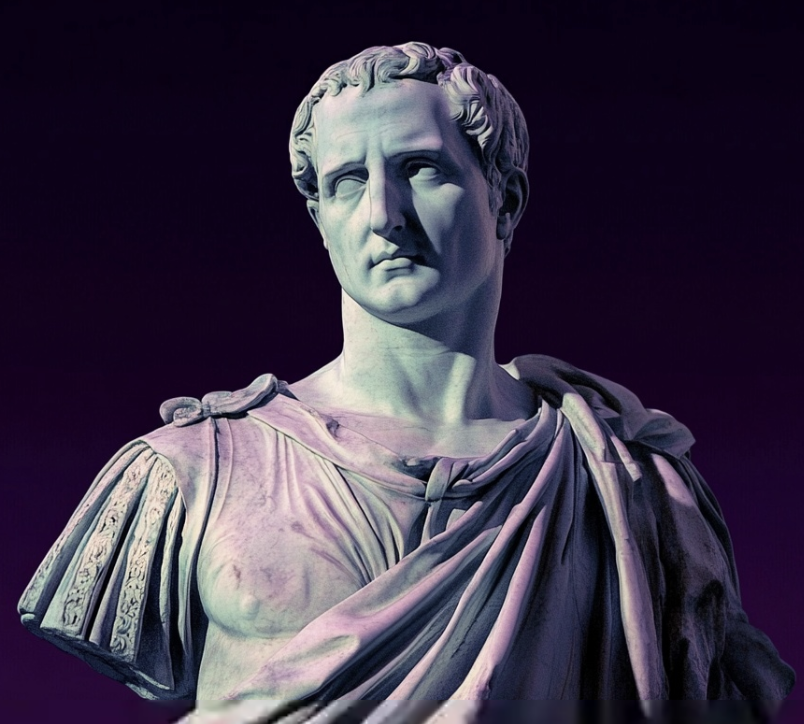
I will speak in a low voice, just so as to let the judges hear me. For men are not wanting who would be glad to excite that people against me and against every eminent man; and I will not assist them and enable them to do so more easily.
▼
Source
source
Cicero, The Orations of Marcus Tullius Cicero; Translation by C.D. Yonge., 1856.
3 months 2 weeks ago
The strides of humanity are slow, they can only be counted in centuries.
▼
Source
source
Act II.
3 months 1 week ago
All journeys have secret destinations of which the traveler is unaware.
▼
Source
source
The Legend of the Baal-Shem (1955),1995 edition, p. 36

4 months 3 weeks ago
My opinion concerning God differs widely from that which is ordinarily defended by modern Christians. For I hold that God is of all things the cause immanent, as the phrase is, not transient. I say that all things are in God and move in God, thus agreeing with Paul, and, perhaps, with all the ancient philosophers, though the phraseology may be different ; I will even venture to affirm that I agree with all the ancient Hebrews, in so far as one may judge from their traditions, though these are in many ways corrupted. The supposition of some, that I endeavour to prove in the Tractatus Theologico-Politicus the unity of God and Nature (meaning by the latter a certain mass or corporeal matter), is wholly erroneous. As regards miracles, I am of opinion that the revelation of God can only be established by the wisdom of the doctrine, not by miracles, or in other words by ignorance.
▼
Source
source
Letter 21 (73) to Henry Oldenburg , November

4 months ago
Govern your tongue before all other things, following the gods.
▼
Source
source
Symbol 7
2 weeks 2 days ago
The sentiment that dominates all Rousseau's works is a certain plebeian anger that excites him against every kind of superiority. The energetic submission of the wise man bends nobly under the indispensable empire of social distinctions, and never does be appear greater than when he bows; but Rousseau has nothing at all of this loftiness. Weak and surly, he spent his life spouting insults to the great, as he would have offered the same to the people if he had been born a great lord.
4 months 3 weeks ago
Is it reasonable to assume a purposiveness in all the parts of nature and to deny it to the whole?
▼
Source
source
Seventh Thesis
4 months 2 weeks ago
Men resign themselves to their position should it ever occur to them to question it; and since all may view themselves as assigned their vocation, everyone is held to be equally fated and equally noble in the eyes of providence.
▼
Source
source
Chapter IX, Section 82, p. 547
4 months 2 weeks ago
The moment we no longer have a free press, anything can happen. What makes it possible for a totalitarian or any other dictatorship to rule is that people are not informed; how can you have an opinion if you are not informed? If everybody always lies to you, the consequence is not that you believe the lies, but rather that nobody believes anything any longer. This is because lies, by their very nature, have to be changed, and a lying government has constantly to rewrite its own history. On the receiving end you get not only one lie - a lie which you could go on for the rest of your days - but you get a great number of lies, depending on how the political wind blows. And a people that no longer can believe anything cannot make up its mind. It is deprived not only of its capacity to act but also of its capacity to think and to judge. And with such a people you can then do what you please.
▼
Source
source
p. 70
5 months 1 week ago
You [a disciple], shall I teach you about knowledge? What you know, you know, what you don't know, you don't know. This is true knowledge.
4 months 3 weeks ago
Things are not so painful and difficult of themselves, but our weakness or cowardice makes them so.
▼
Source
source
Ch. 14, tr. Cotton, rev. W. Carew Hazlitt, 1877
4 weeks 1 day ago
We came to a tree which was still bare, and on which the birds were singing out gaily in the morning, without any fear of us. Then stooping over like an Indian on the hunt, my companion placed a pebble in the leather of his sling and stretched it. Obeying his peremptory glance I did the same, with frightful twinges of conscience, vowing firmly that I would shoot when he did. At that very moment the church bells began to sound, mingling with the song of the birds in the sunshine. It was the warning bell that came a half-hour before the main bell. For me it was a voice from heaven. I threw the sling down, scaring the birds away, so that they were safe from my companion's sling, and fled home. And ever afterwards when the bells of Holy Week ring out amidst the leafless trees in the sunshine I remember with moving gratitude how they rang into my heart at that time the commandment: Thou shalt not kill.
CivilSimian.com created by AxiomaticPanic, CivilSimian, Kalokagathia