


6 months 3 weeks ago
I wish that life should not be cheap, but sacred. I wish the days to be as centuries, loaded, fragrant.
▼
Source
source
Considerations by the Way
2 months 3 weeks ago
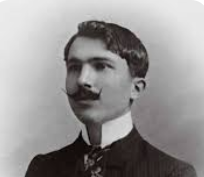
Nothing exists! Neither life nor death. I watch mind and matter hunting each other like two nonexistent erotic phantasms - merging, begetting, disappearing - and I say: "This is what I want!" I know now: I do not hope for anything. I do not fear anything, I have freed myself from both the mind and the heart, I have mounted much higher, I am free. This is what I want. I want nothing more. I have been seeking freedom.
▼
Source
source
This passage was used for Kazantzakis' epitaph: "Δεν ελπίζω τίποτα, δε φοβούμαι τίποτα, είμαι λεύτερος." I hope for nothing. I fear nothing. I am free.
5 months 1 week ago
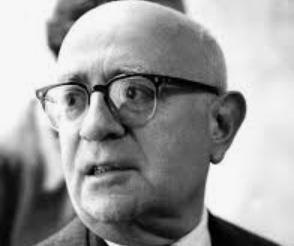
If one is to take Lulu's twelve-tone chord as the integral totality of complementary harmony, then Berg's allegorical genius proves itself within a historical perspective which makes the brain reel: just as Lulu in the world of total illusion longs for nothing but her murderer and finally finds him in that sound, so does all harmony of unrequited happiness long for its fatal chord as the cipher of fulfillment - twelve-tone music is not to be separated from dissonance. Fatal: because all dynamics come to a standstill within it without finding release. The law of complementary harmony already implies the end of the musical experience of time, as this was heralded in the dissociation of time according to Expressionistic extremes.
▼
Source
source
Philosophy of Modern Music (1973) as translated by Anne G. Mitchell and Wesley V. Blomster
6 months 3 weeks ago
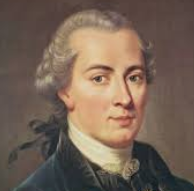
The more we devote ourselves to observing animals and their behaviour, the more we love them, on seeing how gready they care for their young; in such a context, we cannot even contemplate cruelty to a wolf. Leibnitz put the grub he had been observing back on the tree with its leaf, lest he should be guilty of doing any harm to it. It upsets a man to destroy such a creature for no reason, and this tenderness is subsequently transferred to man.
▼
Source
source
Part II, pp. 212-213
5 months 5 days ago
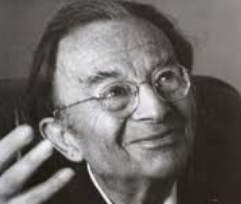
Optimism is an alienated form of faith, pessimism an alienated form of despair. If one truly responds to man and his future, ie, concernedly and "responsibly." one can respond only by faith or by despair. Rational faith as well as rational despair are based on the most thorough, critical knowledge of all the factors that are relevant for the survival of man.
▼
Source
source
p. 483

5 months 2 weeks ago
What can be said, lacks reality. Only what fails to make its way into words exists and counts.
7 months 2 weeks ago
When a war breaks out, people say: "It's too stupid; it can't last long." But though the war may well be "too stupid," that doesn't prevent its lasting. Stupidity has a knack of getting its way; as we should see if we were not always so much wrapped up in ourselves.
4 months 2 weeks ago
So long as we love we serve; so long as we are loved by others, I would almost say that we are indispensable; and no man is useless while he has a friend.
▼
Source
source
"Lay Morals" Ch. 4, in Lay Morals and Other Essays (1911).

6 months 3 weeks ago
Whenever a theory appears to you as the only possible one, take this as a sign that you have neither understood the theory nor the problem which it was intended to solve.
▼
Source
source
Objective Knowledge: An Evolutionary Approach

3 months 2 weeks ago
All old Poems, Homer's and the rest, are authentically Songs. I would say, in strictness, that all right Poems are; that whatsoever is not sung is properly no Poem, but a piece of Prose cramped into jingling lines,-to the great injury of the grammar, to the great grief of the reader, for most part! What we wants to get at is the thought the man had, if he had any: why should he twist it into jingle, if he could speak it out plainly? It is only when the heart of him is rapt into true passion of melody, and the very tones of him, according to Coleridge's remark, become musical by the greatness, depth and music of his thoughts, that we can give him right to rhyme and sing; that we call him a Poet, and listen to him as the Heroic of Speakers,-whose speech is Song.

6 months 3 weeks ago
Luxury is the opposite of the naturally necessary.
▼
Source
source
Notebook V, The Chapter on Capital, p. 448.

5 months 3 weeks ago
An American cannot converse, but he can discuss, and his talk falls into a dissertation. He speaks to you as if he was addressing a meeting; and if he should chance to become warm in the discussion, he will say "Gentlemen" to the person with whom he is conversing.
▼
Source
source
Chapter XIV.
3 months 3 days ago
Symmetry is a vast subject, significant in art and nature. Mathematics lies at its root, and it would be hard to find a better one on which to demonstrate the working of the mathematical intellect.
▼
Source
source
Symmetry

7 months 1 week ago
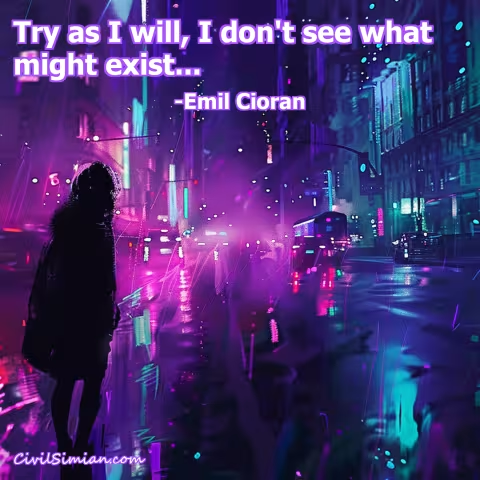
In theory there is nothing to hinder our following what we are taught; but in life there are many things to draw us aside.
▼
Source
source
Book I, ch. 26, 3.
6 months 3 weeks ago
The very cannibalism of the counterrevolution will convince the nations that there is only one way in which the murderous death agonies of the old society and the bloody birth throes of the new society can be shortened, simplified and concentrated, and that way is revolutionary terror.
▼
Source
source
"The Victory of the Counter-Revolution in Vienna," Neue Rheinische Zeitung, 7 November 1848.

6 months 3 weeks ago
We are faced with the paradoxical fact that education has become one of the chief obstacles to intelligence and freedom of thought.
▼
Source
source
Ch. 12: Free Thought and Official Propaganda
6 months 3 weeks ago
The application of algebra to geometry... far more than any of his metaphysical speculations, has immortalized the name of Descartes, and constitutes the greatest single step ever made in the progress of the exact sciences.
▼
Source
source
An Examination of Sir William Hamilton's Philosophy (1865) as quoted in 5th ed. (1878) p. 617.
7 months 3 weeks ago
Tolerance and apathy are the last virtues of a dying society.
6 months 1 week ago
Being summoned by the Athenians out of Sicily to plead for his life, Alcibiades absconded, saying that that criminal was a fool who studied a defence when he might fly for it.
▼
Source
source
51 Alcibiades

5 months 3 weeks ago
Influences of various kinds conspire to increase corporate action and decrease individual action. And the change is being on all sides aided by schemers, each of whom thinks only of his pet plan and not at all of the general reorganization which his plan, joined with others such, are working out. It is said that the French Revolution devoured its own children. Here, an analogous catastrophe seems not unlikely. The numerous socialistic changes made by Act of Parliament, joined with the numerous others presently to be made, will by-and-by be all merged in State-socialism-swallowed in the vast wave which they have little by little raised."But why is this change described as 'the coming slavery'?," is a question which many will still ask. The reply is simple. All socialism involves slavery.
5 months 2 weeks ago
All metaphysical theories are inconclusively vulnerable to positivist attack.
▼
Source
source
Ch. 9, p. 127

4 months 2 weeks ago
It is experience, rather than understanding, that influences behaviour.

5 months 4 weeks ago
Nature is none other than God in things... Animals and plants are living effects of Nature; Whence all of God is in all things... Think thus, of the sun in the crocus, in the narcissus, in the heliotrope, in the rooster, in the lion.
▼
Source
source
As quoted in Elements of Pantheism (2004) by Paul A. Harrison

6 months 3 weeks ago
The normal process of life contains moments as bad as any of those which insane melancholy is filled with, moments in which radical evil gets its innings and takes its solid turn. The lunatic's visions of horror are all drawn from the material of daily fact. Our civilization is founded on the shambles, and every individual existence goes out in a lonely spasm of helpless agony. If you protest, my friend, wait till you arrive there yourself! ... Here on our very hearths and in our gardens the infernal cat plays with the panting mouse, or holds the hot bird fluttering in her jaws. Crocodiles and rattlesnakes and pythons are at this moment vessels of life as real as we are; their loathsome existence fills every minute of every day that drags its length along; and whenever they or other wild beasts clutch their living prey, the deadly horror which an agitated melancholiac feels is the literally right reaction on the situation.
▼
Source
source
Lectures VI and VII, "The Sick Soul"
5 months ago
Much early alchemy seems to have been adventure. You heated and mixed and burnt and pounded and to see what would happen. An adventure might suggest an hypothesis that can subsequently be tested, but adventure is prior to theory.
▼
Source
source
Chapter 4, Evidence, p. 36.
7 months 2 weeks ago
In my fiction I am careful to make everything probable and to tie up all loose ends. Real life is not hampered by such considerations.
5 months 6 days ago
Money, as a matter of principle, makes everything the same.

6 months 3 weeks ago
Suppose that I wish to deserve the title of "robber of remorse" and that I place in myself all the townspeople's repentence?
▼
Source
source
Orestes to Electra, Act 2
5 months 2 weeks ago
The rights and duties of man thus simplified, it seems almost impertinent to attempt to illustrate truths that appear so incontrovertible: yet such deeply rooted prejudices have clouded reason, and such spurious qualities have assumed the name of virtues, that it is necessary to pursue the course of reason as it has been perplexed and involved in error, by various adventitious circumstances, comparing the simple axiom with casual deviations.Men, in general, seem to employ their reason to justify prejudices, which they have imbibed, they cannot trace how, rather than to root them out. The mind must be strong that resolutely forms its own principles; for a kind of intellectual cowardice prevails which makes many men shrink from the task, or only do it by halves. Yet the imperfect conclusions thus drawn, are frequently very plausible, because they are built on partial experience, on just, though narrow, views.
▼
Source
source
Ch. 1
7 months 1 week ago
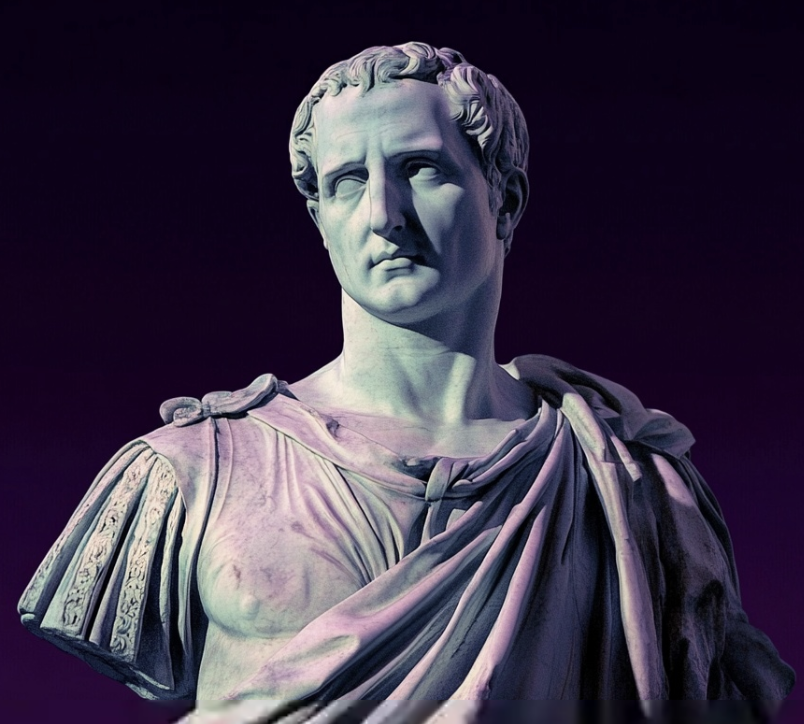
I am a Roman citizen.
▼
Source
source
Against Verres [In Verrem], part 2, book 5, section 57; reported in Cicero, The Verrine Orations, trans. L. H. G. Greenwood (1935), vol. 2, p. 629
7 months 1 week ago
When I see someone in anxiety, I say to myself, What can it be that this fellow wants? For if he did not want something that was outside of his control, how could he still remain in anxiety?
▼
Source
source
Book II, ch. 13, 1.

6 months 3 weeks ago
I am sorry that my convictions do not allow me to repeat my friend's offer, said one of the others. But I have had to abandon the humanitarian and egalitarian fancies. His name was Mr. Neo-Classical.
▼
Source
source
Pilgrim's Regress 89
7 months 2 weeks ago
It seems to be almost an invariable rule that as real power declines, the symbols of power multiply and intensify in compensation.
7 months 2 weeks ago
But in the end one needs more courage to live than to kill himself.
6 months 3 weeks ago
Surplus value is exactly equal to surplus labour; the increase of the one [is] exactly measured by the diminution of necessary labour.
▼
Source
source
Notebook III, The Chapter on Capital, p. 259.

2 months 2 weeks ago
The best revenge is not to be like your enemy.
▼
Source
source
VI, 6
7 months 2 days ago
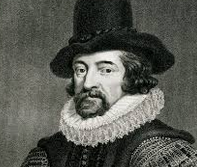
The human understanding is of its own nature prone to suppose the existence of more order and regularity in the world than it finds. And though there be many things in nature which are singular and unmatched, yet it devises for them parallels and conjugates and relatives which do not exist. Hence the fiction that all celestial bodies move in perfect circles, spirals and dragons being (except in name) utterly rejected.
▼
Source
source
Aphorism 45
6 months 3 weeks ago
For want of the apparatus of propositional functions, many logicians have been driven to the conclusion that there are unreal objects. It is argued, e.g., by Meinong, that we can speak about "the golden mountain," "the round square," and so on; we can make true propositions of which these are the subjects; hence they must have some kind of logical being, since otherwise the propositions in which they occur would be meaningless. In such theories, it seems to me, there is a failure of that feeling for reality which ought to be preserved even in the most abstract studies. Logic, I should maintain, must no more admit a unicorn than zoology can; for logic is concerned with the real world just as truly as zoology, though with its more abstract and general features.
▼
Source
source
Ch. 16: Descriptions


3 months 1 week ago
A great fortune is a great slavery.
▼
Source
source
From Ad Polybium De Consolatione (Of Consolation, To Polybius), chap. VI, line 5

6 months 3 weeks ago
We can pool information about experiences, but never the experiences themselves. From family to nation, every human group is a society of island universes.
▼
Source
source
Page 159
7 months 3 weeks ago
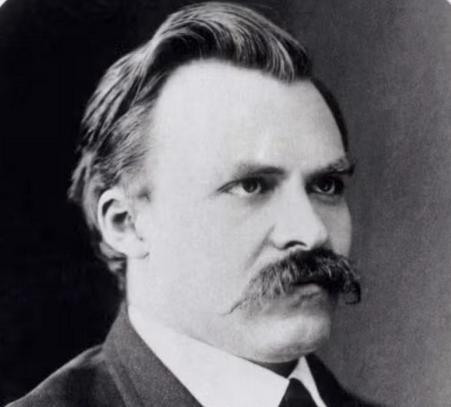
Art furnishes us with eyes and hands and above all the good conscience to be able to turn ourselves into such a phenomenon.

5 months 6 days ago
The everyday world demands our attention, and prevents us from sinking into ourselves. As a romantic, I have always resented this: I like to sink into myself. The problems and anxieties of living make it difficult. Well, now I had an anxiety that referred to something inside of me, and it reminded me that my inner world was just as real and important as the world around me.
▼
Source
source
p. 39
6 months 3 weeks ago
The soul active sees absolute truth; and utters truth, or creates.
▼
Source
source
par. 17
5 months 2 weeks ago
That history just unfolds, independently of a specified direction, of a goal, no one is willing to admit.

CivilSimian.com created by AxiomaticPanic, CivilSimian, Kalokagathia