


4 months 2 weeks ago
For eighteen hundred years, though perchance I have no right to say it, the New Testament has been written; yet where is the legislator who has wisdom and practical talent enough to avail himself of the light which it sheds on the science of legislation?
2 weeks 1 day ago
It might be said to the agitator, "However convinced you were of the justice of your cause and the truth of your convictions, you ought not to have made a public attack upon any man's character until you had examined the evidence on both sides with the utmost patience and care." In the first place, let us admit that, so far as it goes, this view of the case is right and necessary; right, because even when a man's belief is so fixed that he cannot think otherwise, he still has a choice in the action suggested by it, and so cannot escape the duty of investigating on the ground of the strength of his convictions; and necessary, because those who are not yet capable of controlling their feelings and thoughts must have a plain rule dealing with overt acts.
3 weeks 5 days ago
Altogether, Jesus never behaves like a man wandering in a system of delusions. He reacts in absolutely normal fashion to what is said to Him, and to the events that concern Him. He is never out of touch with reality.
▼
Source
source
Ch. 12 : Literary Work During My Medical Course, p. 133.
3 months 2 weeks ago
Reorganisation, irrespectively of God or king, by the worship of Humanity, systematically adopted. Man's only right is to do his duty. The Intellect should always be the servant of the Heart, and should never be its slave.
▼
Source
source
Title Page
2 weeks ago
I propose in this inquiry to take nothing for granted, but to bring even accepted theories to the test of first principles, and should they not stand the test, freshly to interrogate facts in the endeavor to discover their law. I propose to beg no question, to shrink from no conclusion, but to follow truth wherever it may lead. Upon us is the responsibility of seeking the law, for in the very heart of our civilization to-day women faint and little children moan. But what that law may prove to be is not our affair. If the conclusions that we reach run counter to our prejudices, let us not flinch; if they challenge institutions that have long been deemed wise and natural, let us not turn back.
▼
Source
source
Introductory : The Problem

4 months 2 weeks ago
It is not for its own sake that men desire money, but for the sake of what they can purchase with it.
▼
Source
source
Chapter I, p. 471.


4 months 2 weeks ago
Man is free at the instant he wants to be.
▼
Source
source
Source Brutus, act II, scene I, 1730

3 months 1 week ago
True confessions are written with tears only. But my tears would drown the world, as my inner fire would reduce it to ashes.
3 months 1 week ago
I forsook the company and the dinner-parties, the port-wine and champagne of the middle-classes, and devoted my leisure-hours almost exclusively to the intercourse with plain working men; I am both glad and proud of having done so. Glad, because thus I was induced to spend many a happy hour in obtaining a knowledge of the realities of life-many an hour, which else would have been wasted in fashionable talk and tiresome etiquette; proud, because thus I got an opportunity of doing justice to an oppressed and calumniated class of men who with all their faults and under all the disadvantages of their situation, yet command the respect of every one but an English money-monger.
▼
Source
source
p. 27

2 months 3 weeks ago
Women are never supposed to have any occupation of sufficient importance not to be interrupted, except "suckling their fools "; and women themselves have accepted this, have written books to support it, and have trained themselves so as to consider whatever they do as not of such value to the world or to others, but that they can throw it up at the first "claim of social life." They have accustomed themselves to consider intellectual occupation as a merely selfish amusement, which it is their " duty " to give up for every trifler more selfish than themselves.
4 months 3 weeks ago
In judging policies we should consider the results that have been achieved through them rather than the means by which they have been executed.
▼
Source
source
From an undated letter to Piero Soderini (translated here by Dr. Arthur Livingston), in The Living Thoughts of Machiavelli, by Count Carlo Sforza, published by Cassell, London (1942), p. 85
2 months 1 week ago
Either be silent or say something better than silence.
▼
Source
source
Maxim 960

3 months 2 weeks ago
The pretended rights of these theorists are all extremes: and in proportion as they are metaphysically true, they are morally and politically false. The rights of men are in a sort of middle, incapable of definition, but not impossible to be discerned. The rights of men in government are their advantages; and these are often in balances between differences of good; in compromises between good and evil, and sometimes between evil and evil. Political reason is a computing principle: adding, subtracting, multiplying, and dividing, morally and not metaphysically or mathematically, true moral denominations.

2 months 1 week ago
The ways of thinking implanted by electronic culture are very different from those fostered by print culture. Since the Renaissance most methods and procedures have strongly tended towards stress on the visual organization of knowledge.
1 month 4 weeks ago
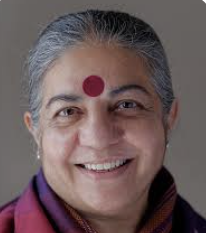
corporate globalization is really about an aggressive privatization of the water, biodiversity, and food systems of the Earth, when these communities declare sovereignty and act on that sovereignty, they have developed a powerful response to globalization. Living democracy then is the democracy that is custodian of the living wealth on which people depend.

3 months 3 weeks ago
To a body of infinite size there can be ascribed neither centre nor boundary... Thus the Earth no more than any other world is at the centre.
4 months 2 weeks ago
In this consists the difference between the character of a miser and that of a person of exact economy and assiduity. The one is anxious about small matters for their own sake; the other attends to them only in consequence of the scheme of life which he has laid down to himself.
▼
Source
source
Chap. VI.
3 months 2 weeks ago
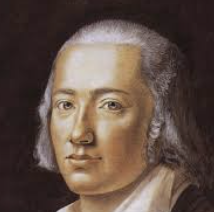
He who has thought most deeply loves what is most alive.

1 month ago
Mankind is born for mutual assistance, anger for mutual ruin: the former loves society, the latter estrangement.
2 months 1 week ago
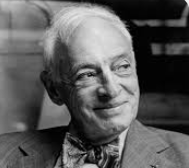
When we read the best nineteenth- and twentieth-century novelists, we soon realize that they are trying in a variety of ways to establish a definition of human nature, to justify the continuation of life as well as the writing of novels.
▼
Source
source
"The Sealed Treasure" (1960), p. 60

3 months 2 weeks ago
Do you know that ages will pass and mankind will proclaim in its wisdom and science that there is no crime and, therefore no sin, but that there are only hungry people. "Feed them first and then demand virtue of them!" - that is what they will inscribe on their banner which they will raise against you and which will destroy your temple.
2 months 1 week ago
Mysticism is just tomorrow's science dreamed today.

1 month 6 days ago
Whatsoever is not beaverish seems to go forth in the shape of talk. To such length is human intellect wasted or suppressed in this world!
1 month 6 days ago
The true Church of England, at this moment, lies in the Editors of its Newspapers. These preach to the people daily, weekly; admonishing kings themselves; advising peace or war, with an authority which only the first Reformers, and a long-past class of Popes, were possessed of; inflicting moral censure; imparting moral encouragement, consolation, edification; in all ways diligently "administering the Discipline of the Church."

4 months 2 weeks ago
I thought that I was the only historian, that had at once neglected present power, interest, and authority, and the cry of popular prejudices; and as the subject was suited to every capacity, I expected proportional applause. But miserable was my disappointment: I was assailed by one cry of reproach, disapprobation, and even detestation; English, Scotch, and Irish, Whig and Tory, churchman and sectary, freethinker and religionist, patriot and courtier, united in their rage against the man, who had presumed to shed a generous tear for the fate of Charles I and the Earl of Strafford.
▼
Source
source
My Own Life' (1776), quoted in David Hume, Essays: Moral, Political, and Literary (1741-1777), ed. Eugene Miller (1985), p. xxxvii

4 months 2 weeks ago
Human infirmity in moderating and checking the emotions I name bondage: for, when a man is a prey to his emotions, he is not his own master, but lies at the mercy of fortune: so much so, that he is often compelled, while seeing that which is better for him, to follow that which is worse.
▼
Source
source
Part IV, Preface; translation by R. H. M. Elwes

4 months 1 week ago
Absurdity destroys the and of the enumeration by making impossible the in where the things enumerated would be divided up.
▼
Source
source
Preface
5 months 1 day ago
It is not by change of place that we can come nearer to Him who is in every place, but by the cultivation of pure desires and virtuous habits.
▼
Source
source
p. 433

5 months 1 week ago
I was once being interviewed by Barbara Walters [...] In between two of the segments she asked me [...] "But what would you do if the doctor gave you only six months to live?" I said, "Type faster." This was widely quoted, but the "six months" was changed to "six minutes," which bothered me. It's "six months."

4 months 2 weeks ago
Many of these were not prisoners of war, and redeemed from savage conquerors, as some plead; and they who were such prisoners, the English, who promote the war for that very end, are the guilty authors of their being so; and if they were redeemed, as is alleged, they would owe nothing to the redeemer but what he paid for them.

4 months 3 weeks ago
Man is certainly crazy. He could not make a mite, and he makes gods by the dozen.
▼
Source
source
Ch. 12
3 months 1 week ago
What a judgment upon the living, if it is true, as has been maintained, that what dies has never existed!
4 months 3 weeks ago
The true Gospel has it that we are justified by faith alone, without the deeds of the Law.
▼
Source
source
Chapter 2
2 weeks 1 day ago
The Catastrophist constructs theories, the Uniformitarian Demolishes them.

4 months 2 weeks ago
A habit of basing convictions upon evidence, and of giving to them only that degree of certainty which the evidence warrants, would, if it became general, cure most of the ills from which the world is suffering. But at present, in most countries, education aims at preventing the growth of such a habit, and men who refuse to profess belief in some system of unfounded dogmas are not considered suitable as teachers of the young.
▼
Source
source
preface xxiii-xxiv
3 months 1 week ago
At the present time a serious, strong state can have but one sound foundation - military and bureaucratic centralization. Between a monarchy and the most democratic republic there is only one essential difference: in the former, the world of officialdom oppresses and robs the people for the greater profit of the privileged and propertied classes, as well as to line its own pockets, in the name of the monarch; in the latter, it oppresses and robs the people in exactly the same way, for the benefit of the same classes and the same pockets, but in the name of the people's will. In a republic a fictitious people, the "legal nation" supposedly represented by the state, smothers the real, live people. But it will scarcely be any easier on the people if the cudgel with which they are beaten is called the people's cudgel.
4 months 2 weeks ago
The Grecian are youthful and erring and fallen gods, with the vices of men, but in many important respects essentially of the divine race. In my Pantheon, Pan still reigns in his pristine glory, with his ruddy face, his flowing beard, and his shaggy body, his pipe and his crook, his nymph Echo, and his chosen daughter Iambe; for the great god Pan is not dead, as was rumored. No god ever dies. Perhaps of all the gods of New England and of ancient Greece, I am most constant at his shrine.
4 months 2 weeks ago
When the husk gets separated from the kernel, almost all men run after the husk and pay their respects to that. It is only the husk of Christianity that is so bruited and wide spread in this world; the kernel is still the very least and rarest of all things. There is not a single church founded on it.
4 months 2 weeks ago
The old often envy the young; when they do, they are apt to treat them cruelly.
1 week 5 days ago
External things are not the problem. It's your assessment of them. Which you can erase right now.
▼
Source
source
(Hays translation) VIII, 47
2 months 3 weeks ago
Now, moral philosophers generally prefer to talk about virtues, or about (specific) duties, rights, and so on, rather than about moral images of the world. There are obvious reasons for this; nevertheless, I think that it is a mistake, and that Kant is profoundly right. What we require in moral philosophy is, first and foremost, a moral image of the world, or rather--since, here again, I am more of a pluralist than Kant--a number of complementary moral images of the world.
▼
Source
source
Lecture III: Equality and Our Moral Image of the World
1 month 4 weeks ago
By and large, mothers and housewives are the only workers who do not have regular time off. They are the great vacationless class.
3 months 1 week ago
England is the paradise of individuality, eccentricity, heresy, anomalies, hobbies, and humors.
▼
Source
source
"The British Character"
1 month 6 days ago
Suppose Odin to have been the inventor of Letters, as well as "magic," among that people! It is the greatest invention man has ever made! this of marking down the unseen thought that is in him by written characters. It is a kind of second speech, almost as miraculous as the first.

5 months 2 weeks ago
Forgetting when God does it in relation to sin, is the opposite of creating, since to create is to bring forth from nothing and to forget is to take back into nothing. What is hidden from my eyes, that I have never seen; but what is hidden behind my back, that I have seen. The one who loves forgives in this way; he forgives, he forgets, he blots out the sin, in love he turns toward the one he forgives; but when he turns toward him, he of course, cannot see what is lying behind his back.
2 months 2 weeks ago
Lives matter in the sense that they assume physical form within the sphere of appearance; lives matter because they are to be valued equally.
▼
Source
source
p. 12
2 months 1 week ago
If we sit and talk in a dark room, words suddenly acquire new meanings and different textures...and on the radio. Given only the sound of a play, we have to fill in all of the senses, not just the sight of the action. So much do-it-yourself, or completion and "closure" of action, develops a kind of independent isolation in the young that makes them remote and inaccessible.
▼
Source
source
(p. 264)
2 months 1 week ago
The unformulated message of an assembly of news items from every quarter of the globe is that the world today is one city. All war is civil war. All suffering is our own.
▼
Source
source
p. 291
3 months 1 week ago
Who Rebels? Who rises in arms? Rarely the slave, but almost always the oppressor turned slave.
CivilSimian.com created by AxiomaticPanic, CivilSimian, Kalokagathia