


4 months 3 weeks ago
He that gives quickly gives twice.
▼
Source
source
Adagia, 1508
3 months 6 days ago
No one is guiltless...But no one is beyond the pale of human existence, provided he pays for his guilt.

5 months 5 days ago
If a man has no humaneness what can his propriety be like? If a man has no humaneness what can his happiness be like?
3 months 5 days ago
Pragmatism ... reflects with almost disarming candor the spirit of the prevailing business culture, the very same attitude of 'being practical' as counter to which philosophical meditation as such was conceived.
▼
Source
source
p. 52.
1 month 5 days ago
I know how unfashionable it is now to acknowledge in life or history any genius loftier than ourselves. Our democratic dogma has leveled not only all voters but all leaders; we delight to show that living geniuses are only mediocrities, and that dead ones are myths. ... Since it is contrary to good manners to exalt ourselves, we achieve the same result by slyly indicating how inferior are the great men of the earth. In some of us, perhaps, it is a noble and merciless asceticism, which would root out of our hearts the last vestige of worship and adoration, lest the old gods should return and terrify us again. For my part, I cling to this final religion, and discover in it a content and stimulus more lasting than came from the devotional ecstasies of youth.
▼
Source
source
The Greatest Minds and Ideas of All Time (2002) edited by John Little, Ch. 1 : The Shameless Worship of Heroes
2 months 1 week ago
The imagination loves to trifle with what is not.
▼
Source
source
The Sea Fogs
2 months 4 days ago
A single breaker may recede; but the tide is evidently coming in.
▼
Source
source
pp. 266-267

1 month ago
It is a rough road that leads to the heights of greatness.
▼
Source
source
Line 13
3 months 6 days ago
This new philosophy, however, was far from giving the temporal an inherent position and function in the constitution of things. Change was acting on the side of man but only because of fixed laws which governed the changes that take place. There was hope in change just because the laws that govern it do not change.
2 months 3 weeks ago
One has to do something new in order to see something new.
▼
Source
source
J 1770
2 weeks 1 day ago
The Palaetiological Sciences point backwards with lines which are broken, but which all converge to the 'same' invisible point: and this point is the Origin of the Moral and Spiritual, as well as of the natural world.

3 months 2 weeks ago
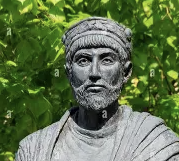
I look upon you as a gem of the old rock. Dedication
3 weeks 3 days ago
Is it not absurd when a human being tries to find happiness somewhere outside himself, and thinks that wealth and birth and the influence of friends...is of the utmost importance?
▼
Source
source
Oration to the Uneducated Cynics

4 months 2 weeks ago
Man is essentially a dreamer, wakened sometimes for a moment by some peculiarly obtrusive element in the outer world, but lapsing again quickly into the happy somnolence of imagination. Freud has shown how largely our dreams at night are the pictured fulfilment of our wishes; he has, with an equal measure of truth, said the same of day-dreams; and he might have included the day-dreams which we call beliefs.
▼
Source
source
Ch. 2: Dreams and Facts

2 weeks 1 day ago
No body wishes more than I do to see such proofs as you exhibit, that nature has given to our black brethren, talents equal to those of the other colors of men, and that the appearance of a want of them is owing merely to the degraded condition of their existence, both in Africa & America. I can add with truth, that no body wishes more ardently to see a good system commenced for raising the condition both of their body & mind to what it ought to be, as fast as the imbecility of their present existence, and other circumstances which cannot be neglected, will admit.
▼
Source
source
Letter to Benjamin Banneker (30 August 1791), quoted in The Writings of Thomas Jefferson (1853), p. 291
4 months 5 days ago
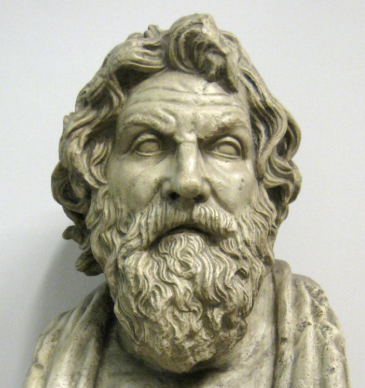
It is a royal privilege to do good and be ill spoken of.
▼
Source
source
§ 3; quoted also by Marcus Aurelius, vii. 36

1 week 5 days ago
Whatever is in any way beautiful hath its source of beauty in itself, and is complete in itself; praise forms no part of it. So it is none the worse nor the better for being praised. Variant: That which is really beautiful has no need of anything.
▼
Source
source
(trans. George Long) IV, 20
2 months 4 weeks ago
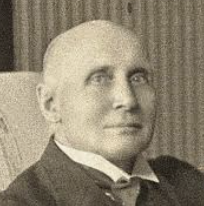
Every intellectual revolution which has ever stirred humanity into greatness has been a passionate protest against inert ideas. Then, alas, with pathetic ignorance of human psychology, it has proceeded by some educational scheme to bind humanity afresh with inert ideas of its own fashioning.

2 weeks 2 days ago
Thus did the Holy Harlots unhinge the brains of man,and when they met and clashed with the pure Mountain Maidens,they raised their white arms high, their armpits smelled of musk,and, as the rites decreed, both fought their verbal war:"God swoops from mountain peeks to eat and play on earth;we are his food and drink and even his sacred toys -and learn, O sterile maids, we are his soft, sweet mates.Let her now leave who fears to merge with her dread God!"The scornful savage mouth of Krino flashed reply:"We will not leave! We guard the innocent soul of man!God is a spirit with pure white wings, a soul that sails,light, disembodied, deep in our thoughts, without embrace.It's we who keep the world in bloom with virgin souls!"
▼
Source
source
From the Bull Ritual, Book VI, line 197
2 weeks 1 day ago
If an event really happened which was not a part of the uniformity of nature, it would have two properties: no evidence could give the right to believe it to any except those whose actual experience it was; and no inference worthy of belief could be founded upon it at all. Are we then bound to believe that nature is absolutely and universally uniform? Certainly not; we have no right to believe anything of this kind. The rule only tells us that in forming beliefs which go beyond our experience, we may make the assumption that nature is practically uniform so far as we are concerned. Within the range of human action and verification, we may form, by help of this assumption, actual beliefs; beyond it, only those hypotheses which serve for the more accurate asking of questions.

4 months 1 week ago
Deconstruction never had meaning or interest, at least in my eyes, than as a radicalization, that is to say, also within the tradition of a certain Marxism, in a certain spirit of Marxism.
▼
Source
source
Specters of Marx. Routledge, 1994. p. 115

4 months 2 weeks ago
I do not understand! I understand nothing! I cannot understand nor do I want to understand! I want to believe! To Believe!
▼
Source
source
Act 1

5 months 5 days ago
Fine words and an insinuating appearance are seldom associated with true virtue.
▼
Source
source
Variant: Someone who is a clever speaker and maintains a 'too-smiley' face is seldom considered a humane person.

3 months 1 week ago
When we are young, we take a certain pleasure in our infirmities. They seem so new, so rich! With age, they no longer surprise us, we know them too well. Now, without anything unexpected in them, they do not deserve to be endured.
3 weeks 3 days ago
I too am not one to despise myths, and I am far from rejecting those that have the right tendency; indeed I am of the same opinion as you and your admired, or rather the universally admired, Plato. He also often conveyed a serious lesson in his myths.
4 months 2 weeks ago
I cannot believe - and I say this with all the emphasis of which I am capable - that there can ever be any good excuse for refusing to face the evidence in favour of something unwelcome. It is not by delusion, however exalted, that mankind can prosper, but only by unswerving courage in the pursuit of truth.
▼
Source
source
"The Pursuit of Truth" in The Collected Papers of Bertrand Russell, 1993


2 months 4 weeks ago
We have all experienced the moments that William James calls melting moods, when it suddenly becomes perfectly obvious that life is infinitely fascinating. And the insight seems to apply retrospectively. Periods of my life that seemed confusing and dull at the time now seem complex and rather charming. It is almost as if some other person a more powerful and mature individual has taken over my brain. This higher self views my problems and anxieties with kindly detachment, but entirely without pity. Looking at problems through his eyes, I can see I was a fool to worry about them.
▼
Source
source
pp. 2-3

3 months 1 day ago
Every time that a man has, with a pure heart, called upon Osiris, Dionysus, Buddha, the Tao, etc., the Son of God has answered him by sending the Holy Spirit. And the Holy Spirit has acted upon his soul, not by inciting him to abandon his religious tradition, but by bestowing upon him light - and in the best of cases the fullness of light - in the heart of that same religious tradition. ... It is, therefore, useless to send out missions to prevail upon the peoples of Asia, Africa or Oceania to enter the Church.
▼
Source
source
Section 8

5 months 1 week ago
I believe that only scientists can understand the universe. It is not so much that I have confidence in scientists being right, but that I have so much in nonscientists being wrong.

2 months 2 weeks ago
Feelings, the most diverse, very strong and very weak, very significant and very worthless, very bad and very good, if only they infect the reader, the spectator, the listener, constitute the subject of art.
3 months 1 day ago
I have sometimes told myself that if only there were a notice on church doors forbidding entry to anyone with an income above a certain figure, and a low one, I would be converted at once.
▼
Source
source
Letter to Georges Bernanos (1938), in Seventy Letters, as translated by Richard Rees (Wipf and Stock: 1965), p. 105
3 months 1 week ago
Few new truths have ever won their way against the resistance of established ideas save by being overstated.
▼
Source
source
As quoted in Communications and History : Theories of Knowledge, Media and Civilization (1988) by Paul Heyer, p. 125

3 months 2 weeks ago
People talk sometimes of a bestial cruelty, but that's a great injustice and insult to the beasts; a beast can never be so cruel as a man, so artistically cruel. The tiger only tears and gnaws, that's all he can do. He would never think of nailing people by the ears, even if he were able to do it.

9 months 1 week ago
A common goal...
Issue:
Because of subgrouping, physical separation, different types of genetics and other cultural factors, as well as limited isolation people subjectively deviate from their universal human necessity. They become aware of it when they are exposed to difference regularly.
Solution:
With controlled information delivery, as well as a clear ideological goal like universality, we can clear away the noise of chaos to understand deterministic goals directly.
4 months 2 weeks ago
Many conservative writers have contended that the tendency to equality in modern social movements is the expression of envy. In this way they seek to discredit this trend, attributing it to collectively harmful impulses.
▼
Source
source
Chapter IX, Section 82, p. 538
2 weeks 1 day ago
If a due participation of office is a matter of right, how are vacancies to be obtained? Those by death are few; by resignation, none.
▼
Source
source
Letter to Elias Shipman and others of New Haven (12 July 1801). Often misquoted as, "few die and none resign".
3 months 1 week ago
Life is a disease of the spirit; a working incited by Passion. Rest is peculiar to the spirit.
4 months 2 weeks ago
The extreme nature of dominant-end views is often concealed by the vagueness and ambiguity of the end proposed.
▼
Source
source
Chapter IX, Section 83, p. 554

4 months 3 weeks ago
It is the mind that maketh good or ill, That maketh wretch or happy, rich or poor.
2 weeks 1 day ago
We were laboring under a dropsical fulness of circulating medium. Nearly all of it is now called in by the banks, who have the regulation of the safety-valves of our fortunes, and who condense and explode them at their will. Lands in this State cannot now be sold for a year's rent; and unless our Legislature have wisdom enough to effect a remedy by a gradual diminution only of the medium, there will be a general revolution of property in this state.
▼
Source
source
Letter to John Adams (7 November 1819) ME 15:224 : The Writings of Thomas Jefferson "Memorial Edition" (20 Vols., 1903-04) edited by Andrew A. Lipscomb and Albert Ellery Bergh, Vol. 15, p. 224
3 weeks 4 days ago
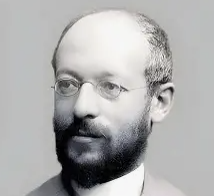
Every social occurrence as such, consists of an interaction between individuals. In other words, each individual is at the same time an active and a passive agent in a transaction. In case of superiority and inferiority, however, the relation assumes the appearance of a one-sided operation ; the one party appears to exert, while the other seems merely to receive an influence.
▼
Source
source
p. 169
3 months 2 weeks ago
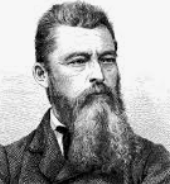
The secret of Hegel's dialectic lies ultimately in this alone, that it negates theology through philosophy in order then to negate philosophy through theology. Both the beginning and the end are constituted by theology; philosophy stands in the middle as the negation of the first positedness, but the negation of the negation is again theology. At first everything is overthrown, but then everything is reinstated in its old place, as in Descartes. The Hegelian philosophy is the last grand attempt to restore a lost and defunct Christianity through philosophy, and, of course, as is characteristic of the modern era, by identifying the negation of Christianity with Christianity itself.
▼
Source
source
Part II, Section 21

3 months 2 days ago
Jesus said that God was not the God of the dead, but of the living. And the other life is not, in fact, thinkable to us except under the same forms as those of this earthly and transitory life.
2 weeks 1 day ago
We ought not to teach to little children, as a known fact, that which is not a known fact.
▼
Source
source
[Lectures and essays (1879), vol. 2, p. 294]
3 months 1 week ago
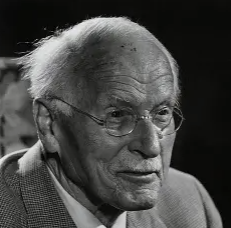
You can take away a man's gods, but only to give him others in return.
▼
Source
source
p 63
3 months 1 week ago
What I know wreaks havoc upon what I want.
3 months 1 week ago
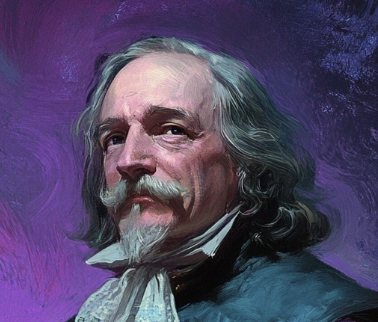
But this priviledge, is allayed by another; and that is, by the priviledge of Absurdity; to which no living creature is subject, but man only.
▼
Source
source
The First Part, Chapter 5, p. 20
CivilSimian.com created by AxiomaticPanic, CivilSimian, Kalokagathia