

7 months 2 weeks ago
One does not decide the truth of a thought according to whether it is right-wing or left-wing.

5 months 5 days ago
What so impressed me on that first reading was the self-containedness of Tolkien's world. I suppose there are a few novelists who have created worlds that are uniquely their own -- Faulkner, for example, or Dickens. But since their world is fairly close to the actual world, it cannot really be called a unique creation. The only parallel that occurs to me is the Wagner Ring cycle, that one can only enter as if taking a holiday on a strange planet.
▼
Source
source
pp. 8-9

3 months 1 week ago
It is not that we have a short space of time, but that we waste much of it. Life is long enough.
▼
Source
source
De Brevitate Vitae ("On the Shortness of Life", trans. John W. Basore), Ch. 1

6 months 2 weeks ago
The difficulty in philosophy is to say no more than we know.
▼
Source
source
p. 45
3 months 2 weeks ago
It always seems to me extreme rashness on the part of some when they want to make human abilities the measure of what nature can do. On the contrary, there is not a single effect in nature, even the least that exists, such that the most ingenious theorists can arrive at a complete understanding of it. This vain presumption of understanding everything can have no other basis than never understanding anything. For anyone who had experienced just once the perfect understanding of one single thing, and had truly tasted how knowledge is accomplished, would recognize that of the infinity of other truths he understands nothing.
▼
Source
source
Day One

6 months 3 weeks ago
If things are ever to move upward, some one must take the first step, and assume the risk of it. No one who is not willing to try charity, to try non-resistance as the saint is always willing, can tell whether these methods will or will not succeed.
▼
Source
source
Lectures XIV and XV, "The Value of Saintliness"

6 months 3 weeks ago
As a beast of toil an ox is fixed capital. If he is eaten, he no longer functions as an instrument of labour, nor as fixed capital either.
▼
Source
source
Vol. II, Ch. VIII, p. 163.


5 months 1 week ago
What the public wants is the image of passion, not passion itself.
▼
Source
source
"Le monde où l'on catche"
6 months 3 weeks ago
The mind intent upon resolving as well as compounding the concept of a composite demands and presumes boundaries in which it may acquiesce in the former as well as in the latter direction.
4 months 2 weeks ago
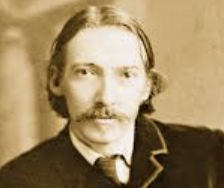
Wherever a man is, there will be a lie.
▼
Source
source
Episodes in the Story of a Mine.
7 months 1 week ago
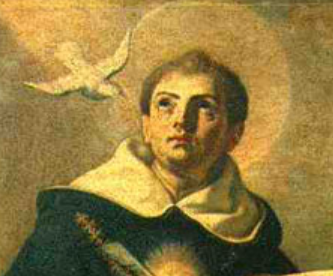
It would be better if they [rulers] compelled the Jews to work for their living, as they do in parts of Italy, than that, living without occupation, they can grow rich only by usury .
▼
Source
source
art. 2
6 months 3 weeks ago
The concept of space is not abstracted from external sensations.

5 months 2 weeks ago
If I used to ask myself, over a coffin, "what good did it do the occupant to be born?" I now put the same question about anyone alive.
6 months 3 weeks ago
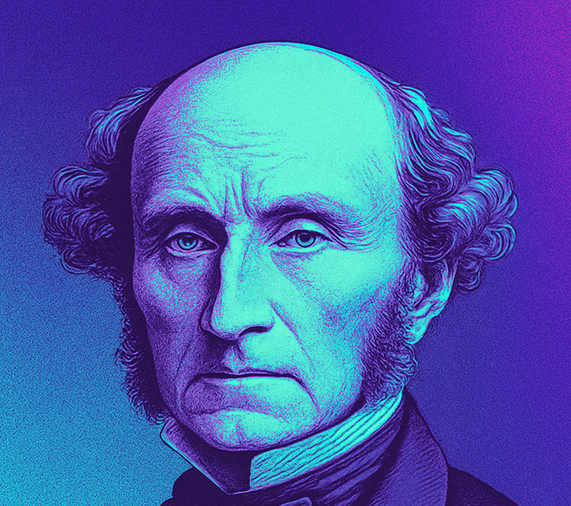
It is better to be a human being dissatisfied than a pig satisfied; better to be Socrates dissatisfied than a fool satisfied. And if the fool, or the pig, are of a different opinion, it is because they only know their own side of the question. The other party to the comparison knows both sides.
▼
Source
source
Ch. 2

2 months 2 weeks ago
What was man before the invention of words and the knowledge of language? An animal..
7 months 3 weeks ago
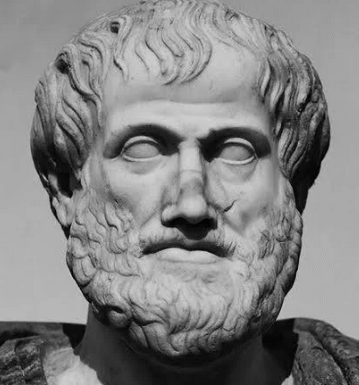
It is the mark of an educated man to look for precision in each class of things just so far as the nature of the subject admits; it is evidently equally foolish to accept probable reasoning from a mathematician and to demand from a rhetorician scientific proofs.

3 months 1 week ago
It lies deep in our habits, confirmed by all manner of educational and other arrangements for several centuries back, to consider human talent as best of all evincing itself by the faculty of eloquent speech. Our earliest schoolmasters teach us, as the one gift of culture they have, the art of spelling and pronouncing, the rules of correct speech; rhetorics, logics follow, sublime mysteries of grammar, whereby we may not only speak but write. And onward to the last of our schoolmasters in the highest university, it is still intrinsically grammar, under various figures grammar. To speak in various languages, on various things, but on all of them to speak, and appropriately deliver ourselves by tongue or pen,-this is the sublime goal towards which all manner of beneficent preceptors and learned professors, from the lowest hornbook upwards, are continually urging and guiding us.

6 months 3 weeks ago
Truth, Goodness, Beauty - those celestial thrins, Continually are born; e'en now the Universe, With thousand throats, and eke with greener smiles, Its joy confesses at their recent birth.
▼
Source
source
June 14, 1838
5 months 5 days ago
Sabbath rest does not follow creation; it brings creation to completion.
7 months ago
T is one and the same Nature that rolls on her course, and whoever has sufficiently considered the present state of things might certainly conclude as to both the future and the past.
▼
Source
source
Book II, Ch. 12. Apology for Raimond Sebond
2 months 3 weeks ago
In the effort to tell a whole story, to see it whole and clear, I have had to imagine more than I have known.
▼
Source
source
"Imagination in Place"

5 months 5 days ago
The contention that a standing army and navy is the best security of peace is about as logical as the claim that the most peaceful citizen is he who goes about heavily armed. The experience of every-day life fully proves that the armed individual is invariably anxious to try his strength. The same is historically true of governments. Really peaceful countries do not waste life and energy in war preparations, with the result that peace is maintained.

4 months 3 weeks ago
Is not the reason of the confidence of the positive, critical, experimental scientists, and of the reverent attitude of the crowd towards their doctrines, still the same? At first it seems strange how the theory of evolution (which, like the redemption in theology, serves the majority as a popular expression of the whole new creed) can justify people in their injustice, and it seems as if the scientific theory dealt only with facts and did nothing but observe facts. But that only seems so. It seemed just the same in the case of theological doctrine: theology, it seemed, was only occupied with dogmas and had no relation to people's lives, and it seemed the same with regard to philosophy, which appeared to be occupied solely with transcendental reasonings. But that only seemed so. It was just the same with the Hegelian doctrine on a large scale and with the particular case of the Malthusian teaching.
3 months 1 week ago
I never read a book before reviewing it: it prejudices a man so.
▼
Source
source
Reported in Bon-Mots of Sydney Smith and R. Brinsley Sheridan, edited by Walter Jerrold with grotesques by Aubrey Beardsley (London: J. M. Dent and Company, 1893), p. 24
7 months 2 weeks ago
There is nothing so eternally adhesive as the memory of power.
4 months 2 weeks ago
A woman can earn her pardon for a good year of disobedience by a single adroit submission.
▼
Source
source
The Rajah's Diamond, Story of the Bandbox.
4 months 1 week ago
To have been a Sovereign, yet the champion of liberty,-a revolutionary leader, yet the supporter of social order, is the peculiar glory of William. Till his accession the British Constitution was in its Chaos. It had contained, from a very remote period, the simple elements of an harmonious government. But they were in a state not of amalgamation, but of conflict,-not of equilibrium but of alternate elevation and depression. The tyranny of Charles the first produced civil war and anarchy. Tyranny had now again produced resistance and revolution. And, but for the wisdom of the new King, it seems probable that the same cycle of misery would have been again described.
▼
Source
source
'Essay on the Life and Character of King William III' (1822), written for the Greaves Historical Prize at Cambridge, quoted in The Times Literary Supplement (1 May 1969), p. 469
5 months 2 weeks ago
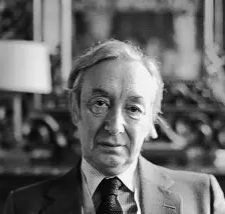
I saw a Divine Being. I'm afraid I'm going to have to revise all my various books and opinions.
▼
Source
source
National Post (3 March 2001).
5 months 2 weeks ago
The real, the unique misfortune: to see the light of day. A disaster which dates back to aggressiveness, to the seed of expansion and rage within origins, to the tendency to the worst which first shook them up.

5 months 3 weeks ago
The First thing that strikes a traveler in the United States is the innumerable multitude of those who seek to emerge from their original condition; and the second is the rarity of lofty ambition to be observed in the midst of the universally ambitious stir of society. No Americans are devoid of a yearning desire to rise, but hardly any appear to entertain hopes of great magnitude or to pursue very lofty aims. All are constantly seeking to acquire property, power, and reputation.
▼
Source
source
Book Three, Chapter XIX.

3 months 2 weeks ago
In order to properly understand the big picture, everyone should fear becoming mentally clouded and obsessed with one small section of truth.
▼
Source
source
Quoted in: Joan Klostermann-Ketels (2011) HumaniTrees, p. 96
6 months 3 weeks ago
The creed which accepts as the foundation of morals, Utility, or the Greatest Happiness Principle, holds that actions are right in proportion as they tend to promote happiness, wrong as they tend to produce the reverse of happiness. By happiness is intended pleasure, and the absence of pain; by unhappiness, pain, and the privation of pleasure.
▼
Source
source
Ch. 2
6 months 3 weeks ago
Love is a severe critic. Hate can pardon more than love.
▼
Source
source
Pearls of Thought (1881) p. 159
5 months 5 days ago
The Fathers of the Church can well afford to preach the gospel of Christ. It contains nothing dangerous to the regime of authority and wealth; it stands for self-denial and self-abnegation, for penance and regret, and is absolutely inert in the face of every indignity, every outrage imposed upon mankind.

6 months 3 weeks ago
I must confess that I am deeply troubled. I fear that human beings are intent upon acting out a vast deathwish and that it lies with us now to make every effort to promote resistance to the insanity and brutality of policies which encompass the extermination of hundreds of millions of human beings.
▼
Source
source
Letter to Rudolf Carnap, June 21, 1962
4 months 2 weeks ago
To be what we are, and to become what we are capable of becoming, is the only end of life.
▼
Source
source
Familiar Studies of Men and Books (1882).
7 months 2 weeks ago
The evil that is in the world always comes of ignorance, and good intentions may do as much harm as malevolence, if they lack understanding. On the whole men are more good than bad; that, however, isn't the real point. But they are more or less ignorant, and it is this that we call vice or virtue; the most incorrigible vice being that of an ignorance which fancies it knows everything and therefore claims for itself the right to kill. There can be no true goodness, nor true love, without the utmost clear-sightedness.
3 months 3 days ago
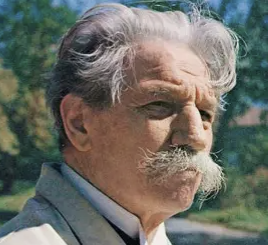
There slowly grew up in me an unshakable conviction that we have no right to inflict suffering and death on another living creature unless there is some unavoidable necessity for it, and that we ought all of us to feel what a horrible thing it is to cause suffering and death out of mere thoughtlessness. And this conviction has influenced me only more and more strongly with time. I have grown more and more certain that at the bottom of our heart we all think this, and that we fail to acknowledge it because we are afraid of being laughed at by other people as sentimentalists, though partly also because we allow our best feelings to get blunted. But I vowed that I would never let my feelings get blunted, and that I would never be afraid of the reproach of sentimentalism.
▼
Source
source
p. 275
4 months 2 weeks ago
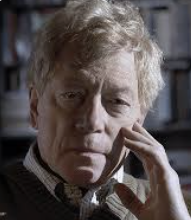
Yes, I am in favor of censorship, but it has to be conducted by people like me. And that's the difficulty (laughs). I'm in favor of encouraging every possible form of self-restraint and parental control. And I certainly don't think that pornography should be protected under the American Constitution.
▼
Source
source
Interview with Salon.com, 1998
3 months 1 week ago
This poor amphibious Pope too gives loaves to the Poor; has in him more good latent than he is himself aware of. His poor Jesuits, in the late Italian Cholera, were, with a few German Doctors, the only creatures whom dastard terror had not driven mad: they descended fearless into all gulfs and bedlams; watched over the pillow of the dying, with help, with counsel and hope; shone as luminous fixed stars, when all else had gone out in chaotic night: honour to them!
5 months 2 weeks ago
The reaction against your own thought in itself lends life to thought. How this reaction is born is hard to describe, because it identifies with the very rare intellectual tragedies. - The tension, the degree and level of intensity of a thought proceeds from its internal antinomies, which in turn are derived from the unsolvable contradictions of a soul. Thought cannot solve the contradictions of the soul. As far as linear thinking is concerned, thoughts mirror themselves in other thoughts, instead of mirroring a destiny.

5 months 2 weeks ago
As far as we can discern, the sole purpose of human existence is to kindle a light in the darkness of mere being.
▼
Source
source
p. 326
6 months 3 weeks ago
When one admits that nothing is certain one must, I think, also admit that some things are much more nearly certain than others. It is much more nearly certain that we are assembled here tonight than it is that this or that political party is in the right. Certainly there are degrees of certainty, and one should be very careful to emphasize that fact, because otherwise one is landed in an utter skepticism, and complete skepticism would, of course, be totally barren and completely useless.
▼
Source
source
"Skepticism"
3 months 3 weeks ago
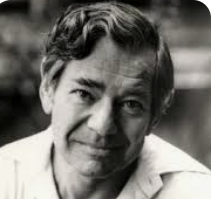
What makes The Present Age and The Difference Between a Genius and an Apostle important is not so much that the former essay anticipates Heidegger and the latter, Barth: it would be more accurate to say that Heidegger's originality is widely overestimated, and that many things he says at great length in his highly obscure German were said earlier by various writers who had made the same points much more elegantly, and that some of these writers, including Kierkegaard, were known to Heidegger. Why should Kierkegaard's significance depend on someone else's, quite especially when many points that others copied from him may be wrong?
▼
Source
source
Walter Kaufmann, Preface to The Present Age, by Soren Kierkegaard, Dru translation 1962 p. 15-16
7 months 2 weeks ago
The whole business is the crudest sort of stratagem, since we have no way of foreseeing it to the end. It is a mere paying out of rope on the chance that somewhere along the length of it will be a noose.
7 months ago
Even opinion is of force enough to make itself to be espoused at the expense of life.
▼
Source
source
Book I, Ch. 40. Of Good and Evil, tr. Cotton, rev. W. Hazlitt, 1842
3 months 3 days ago
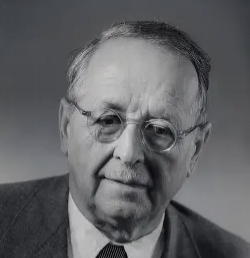
In my work, I have always tried to unite the true with the beautiful; but when I had to choose one or the other, I usually chose the beautiful. In a conversation with Freeman Dyson.
▼
Source
source
Quoted in Chandrasekhar, S. (2010-12-01) . "Beauty and the quest for beauty in science". Physics Today 63 (12): 57-62. ISSN 0031-9228. DOI:10.1063/1.3529003.
CivilSimian.com created by AxiomaticPanic, CivilSimian, Kalokagathia