


3 months 1 day ago
The Hebrews took for their idol, not something made of metal or wood, but a race, a nation, something just as earthly. Their religion is essentially inseparable from such idolatry, because of the notion of the "chosen people".
▼
Source
source
Section 2
3 months 1 week ago
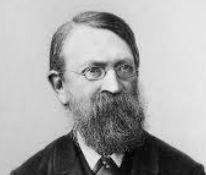
:...Vienna is the origin of so many schools of its own which were dominant in the 1920s. And one of the most fundamental and influential, in which we all were partially caught, was logical positivism. In fact, Mises' brother, Richard von Mises, became one of the leading figures. Now he and I all grew up in this Ernst Mach philosophy that ultimately everything must be rationally justified...
▼
Source
source
Friedrich Hayek, in 1985 interview, quoted in Alan Ebenstein, Hayek's Journey: The Mind of Friedrich Hayek (2003), Ch. 10. Epistemology, Psychology, and Methodology
2 months 3 weeks ago
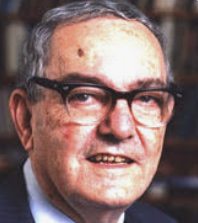
Modem mainstream economic theory bravely assumes that people make their decisions in such a way as to maximize their utility. Accepting this assumption enables economics to predict a great deal of behavior (correctly or incorrectly) without ever making empirical studies of human actors.
▼
Source
source
Simon (1990) "Invariants of Human Behavior" in: Annu. Rev. Psychol. 41: p. 6.

1 week 5 days ago
No state sorrier than that of the man who keeps up a continual round, and pries into "the secrets of the nether world," as saith the poet, and is curious in conjecture of what is in his neighbour's heart.
▼
Source
source
II, 13

5 months 1 week ago
By 1204, the only place where the entire body of Greek learning existed, still intact, was Constantinople. As a result of the crusaders' conquest, however, Constantinople was ruthlessly pillaged and destroyed and almost all the great treasures of ancient Greek learning were lost forever. It is because of that sack, for instance, that we have only seven plays left out of the better than one hundred written by Sophocles. The tragedy of 1204 can never be undone and for all of time, only bits and pieces of the marvelous Greek world can be known to us.
4 months 4 weeks ago
Does anyone bathe in a mighty little time? Don't say that he does it ill, but in a mighty little time. Does anyone drink a great quantity of wine? Don't say that he does ill, but that he drinks a great quantity. For, unless you perfectly understand the principle from which anyone acts, how should you know if he acts ill? Thus you will not run the hazard of assenting to any appearances but such as you fully comprehend.
▼
Source
source
(45).
1 week 5 days ago
Have I done something for the general interest? Well then I have had my reward. Let this always be present to thy mind, and never stop doing such good.
▼
Source
source
XI, 4
4 months 4 days ago
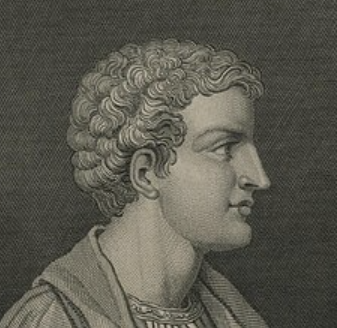
And what he fears he cannot make attractive with his touch he abandons.
▼
Source
source
Line 149 (tr. H. R. Fairclough)

1 month 1 week ago
He who exerts his mind to the utmost knows his nature.
▼
Source
source
7A:1, as translated by Wing-tsit Chan in A Source Book in Chinese Philosophy (1963), p. 62



4 months 3 weeks ago
He who fears he shall suffer, already suffers what he fears.
▼
Source
source
Book III, Ch. 13

4 months 5 days ago
For a man petticoat government is the limit of insolence.

4 months 1 week ago
To live, by definition, is not something one learns. Not from oneself, it is not learned from life, taught by life. Only from the other and by death. In any case from the other at the edge of life. At the internal border or the external border, it is a heterodidactics between life and death.
▼
Source
source
Exordium

4 months 2 weeks ago
What is new in our time is the increased power of the authorities to enforce their prejudices.
▼
Source
source
Quoted on Who Said That?, BBC TV, 8/8/1958

4 months 2 weeks ago
The history of mankind could... be described as a history of outbreaks of fashionable philosophical and religious maladies. These... have... one serious function... evoking criticism.

4 months 2 weeks ago
His obedience is real since he really and truly fulfills his mission, since he runs real risks in order to carry out the beloved's orders. But, on the other hand, it is imaginary because he submits only to a creature of his mind.
▼
Source
source
p. 152
2 months 1 week ago
The future of mankind, for the socialist, is simple: pull down the existing order and allow the future to emerge.
▼
Source
source
"Eliot and Conservatism" (p. 208)

4 months 2 weeks ago
Man's greatest concern is to know how he shall properly fill his place in the universe and correctly understand what he must be in order to be a man.
▼
Source
source
Part III : Selection on Education from Kant's other Writings, Ch. I Pedagogical Fragments, # 53

3 months 2 weeks ago
The supporters of the Development Hypothesis... can show that any existing species-animal or vegetable-when placed under conditions different from its previous ones, immediately begins to undergo certain changes fitting it for the new conditions. They can show that in successive generations these changes continue; until, ultimately, the new conditions become the natural ones. They can show that in cultivated plants, in domesticated animals, and in the several races of men, such alterations have taken place. They can show that the degrees of difference so produced are often, as in dogs, greater than those on which distinctions of species are in other cases founded.
3 months 1 week ago
One must always maintain one's connection to the past and yet ceaselessly pull away from it. To remain in touch with the past requires a love of memory. To remain in touch with the past requires a constant imaginative effort.
▼
Source
source
A Retrospective Glance at the Lifework of a Master of Books

4 months 3 weeks ago
I doubt if a single individual could be found from the whole of mankind free from some form of insanity. The only difference is one of degree. A man who sees a gourd and takes it for his wife is called insane because this happens to very few people.
▼
Source
source
As quoted in Words from the Wise : Over 6,000 of the Smartest Things Ever Said (2007) by Rosemarie Jarski, p. 312. From The Praise of Folly.

4 months 2 weeks ago
My dear Wormwood, I note what you say about guiding your patient's reading and taking care that he sees a good deal of his materialist friend. But are you not being a trifle naive? It sounds as if you suppose that argument was the way to keep him out of the enemy's clutches. That might have been so if he had lived a few centuries earlier.
▼
Source
source
Letter I
3 months 6 days ago
To confuse our own constructions and inventions with eternal laws or divine decrees is one of the most fatal delusions of men.
▼
Source
source
Essays in Honour of E. H. Carr (1974) edited by Chimen Abramsky, p. 9


3 months 1 week ago
We dread the future only when we are not sure we can kill ourselves when we want to.

1 month 6 days ago
The history of the world is but the biography of great men.

2 months 2 weeks ago
The Intentionality of the mind not only creates the possibility of meaning, but limits its forms.
▼
Source
source
P. 166.

4 months 2 weeks ago
Let him sensibly perceive, that the kindness he shews to others, is no ill husbandry for himself; but that it brings a return in kindness both from those that receive it, and those who look on. Make this a contest among children, who shall out-do one another in this way: and by this means, by a constant practise, children having made it easy to themselves to part with what they have, good nature may be settled in them into a habit, and they may take pleasure, and pique themselves in being kind, liberal and civil, to others.
▼
Source
source
Sec. 110

4 months 2 weeks ago
The natural effort of every individual to better his own condition, when suffered to exert itself with freedom and security is so powerful a principle that it is alone, and without any assistance, not only capable of carrying on the society to wealth and prosperity, but of surmounting a hundred impertinent obstructions with which the folly of human laws too often incumbers its operations; though the effect of these obstructions is always more or less either to encroach upon its freedom, or to diminish its security.
▼
Source
source
Chapter V, paragraph 82.
1 month ago
If one takes pleasure in calling the gold standard a "barbarous relic," one cannot object to the application of the same term to every historically determined institution. Then the fact that the British speak English - and not Danish, German, or French - is a barbarous relic too, and every Briton who opposes the substitution of Esperanto for English is no less dogmatic and orthodox than those who do not wax rapturous about the plans for a managed currency.
▼
Source
source
The Gold Standard - LvMI, excerpt from chapter 17 of Human Action

5 months 1 week ago
Since those who rule in the city do so because they own a lot, I suppose they're unwilling to enact laws to prevent young people who've had no discipline from spending and wasting their wealth, so that by making loans to them, secured by the young people's property, and then calling those loans in, they themselves become even richer and more honored.
1 month 6 days ago
The seeing eye! It is this that discloses the inner harmony of things; what Nature meant, what musical idea Nature has wrapped up in these often rough embodiments. Something she did mean. To the seeing eye that something were discernible. Are they base, miserable things? You can laugh over them, you can weep over them; you can in some way or other genially relate yourself to them; - you can, at lowest, hold your peace about them, turn away your own and others' face from them, till the hour come for practically exterminating and extinguishing them!
5 months 1 week ago
There is nothing so eternally adhesive as the memory of power.
3 months 1 week ago
I would say act like a man of thought and think like a man of action.
▼
Source
source
Speech at the Descartes Conference in Paris (1937) Quoted in The Forbes Scrapbook of Thoughts on the Business of Life (1950), p. 442, as "Think like a man of action, act like a man of thought."

2 weeks 1 day ago
When we get piled upon one another in large cities, as in Europe, we shall become corrupt as in Europe.
▼
Source
source
Letter to James Madison (20 December 1787), The Writings of Thomas Jefferson (19 Vols., 1905) edited by Andrew A. Lipscomb and Albert Ellery Bergh, Vol. VI, p. 392.
2 weeks 1 day ago
Who holds a sword is tempted, who has youth must play,he who does not fear death on earth does not fear God.
▼
Source
source
Odysseus, Book VIII, line 560
3 months 1 week ago
Eternal vigilance is the price of knowledge.
▼
Source
source
p. 58

2 months 4 weeks ago
Feminist thought and practice were fundamentally altered when radical women of color and white women allies began to rigorously challenge the notion of "gender" was the primary factor determining a woman's fate. I can still recall how it upset everyone in the first women's studies class I attended-a class where everyone except me was white and female and mostly from privileged backgrounds-when I interrupted a discussion about the origins of domination in which it was argued that when a child is coming out of the womb the factor deemed most important is gender. I stated that when the child of two black parents is coming out of the womb the factor that is considered first is skin color, then gender, because race and gender will determine that child's fate. Looking at the interlocking nature of gender, race, and class was the perspective that changed the direction of feminist thought.
▼
Source
source
p. xiii.
2 months 1 week ago
People reserve their best thinking for their professional specialties and, next in line, for serious matters confronting the alert citizen -economics, politics, the disposal of nuclear waste, etc. The day's work done, they want to be entertained.
▼
Source
source
p. 16
2 months 1 week ago
He dies twice who perishes by his own hand.
▼
Source
source
Maxim 97
3 months 1 day ago
The politician being interviewed clearly takes a great deal of trouble to imagine an ending to his sentence: and if he stopped short? His entire policy would be jeopardized!
▼
Source
source
Sentence, in The Pleasure of the Text
3 months 5 days ago
With the abolition of otium and of the ego no aloof thinking is left. ... Without otium philosophical thought is impossible, cannot be conceived or understood.
▼
Source
source
p. 39.
2 months 3 days ago
We have classical associations and great names of our own which we can confidently oppose to the most splendid of ancient times. Senate has not to our ears a sound so venerable as Parliament. We respect the Great Charter more than the laws of Solon. The Capitol and the Forum impress us with less awe than our own Westminster Hall and Westminster Abbey... The list of warriors and statesmen by whom our constitution was founded or preserved, from De Montfort down to Fox, may well stand a comparison with the Fasti of Rome. The dying thanksgiving of Sydney is as noble as the libation which Thrasea poured to Liberating Jove: and we think with far less pleasure of Cato tearing out his entrails than of Russell saying, as he turned away from his wife, that the bitterness of death was past.
▼
Source
source
'History', The Edinburgh Review (May 1828), quoted in The Miscellaneous Writings of Lord Macaulay, Vol. I (1860), p. 252

4 months 1 week ago
I would in fact tend to have more confidence in the outcome of a democratic decision if there was a minority that voted against it, than if it was unanimous... Social psychology has amply shown the strength of this bandwagon effect.
▼
Source
source
Habermas (1993) "Further reflections on the public sphere", in: Craig Calhoun Eds. Habermas and the Public Sphere. MIT Press. p. 441
3 months 1 week ago
We suppose, it would seem, that concepts grow in the individual mind like leaves on a tree, and we think to discover their nature by studying their growth; we seek to define them psychologically, in terms of the human mind. But this account makes everything subjective, and if we follow it through to the end, does away with truth. What is known as the history of concepts is really a history either of our knowledge of concepts or of the meanings of words.
▼
Source
source
Translation J. L. Austin (Oxford, 1950) as quoted by Stephen Toulmin, Human Understanding: The Collective Use and Evolution of Concepts (1972) Vol. 1, p. 56.
2 months 1 week ago
Faith exalts the human heart, by removing it from the market-place, making it sacred and unexchangeable. Under the jurisdiction of religion our deeper feelings are sacralized, so as to become raw material for the ethical life: the life lived in judgement.
▼
Source
source
"Avant-garde and Kitsch" (p. 91)

5 months 2 weeks ago
[I]t's gravity is the cause; and that which is heavy abides in the middle, and the earth is in the middle: in like manner also, the infinite will abide in itself, through some other cause... and will itself support itself. ...[T]he places of the whole and the part are of the same species; as of the whole earth and a clod, the place is downward; and of the whole of fire, and a spark, the place is upward. So that if the place of the infinite is in itself, there will be the same place also of a part of the infinite.
CivilSimian.com created by AxiomaticPanic, CivilSimian, Kalokagathia