


3 months 2 weeks ago
I am well aware, that men love to hear of their power, but have an extreme disrelish to be told of their duty.
▼
Source
source
p. 441

4 months 3 weeks ago
I am convinced that the unwritten knowledge scattered among men of different callings surpasses in quantity and in importance anything we find in books, and that the greater part of our wealth has yet to be recorded.
▼
Source
source
1688-1690
3 months 4 days ago
Barthes's discovery and articulation of the "new" liberatory category of perception and deciphering, semiotic-mythology, belongs to the praxis of his heroic mythologist, alone. This unfortunate theoretical strategy makes the articulation of a coalitional consciousness in social struggle impossible to imagine or enact. ... His terminologies appropriate the technologies of the oppressed for use by academic classes.
▼
Source
source
Chela Sandoval, Methodology of the Oppressed, p. 201
1 month 1 week ago
Two difficulties: (1) Can we transform psychologic time, which is qualitative, into a quantitative time? (2) Can we reduce to one and the same measure facts which transpire in different worlds [of conscious beings]!
2 months 1 week ago
As free constitutions are the strongest supports of governments, social order is the best safeguard of freedom. Liberty has no enemies so pernicious as those misguided friends whose ardour in her cause leads them to outrage the moral sense of mankind, and to arm against her the interests and feelings which are her natural allies. Even the prejudices of nations should be respected.
▼
Source
source
'Essay on the Life and Character of King William III' (1822), written for the Greaves Historical Prize at Cambridge, quoted in The Times Literary Supplement (1 May 1969), p. 469

4 months 2 weeks ago
It is our interest and our task to make the revolution permanent until all the more or less propertied classes have been driven from their ruling positions, until the proletariat has conquered state power and until the association of the proletarians has progressed sufficiently far - not only in one country but in all the leading countries of the world - that competition between the proletarians of these countries ceases and at least the decisive forces of production are concentrated in the hands of the workers. Our concern cannot simply be to modify private property, but to abolish it, not to hush up class antagonisms but to abolish classes, not to improve the existing society but to found a new one.
▼
Source
source
Address of the Central Committee to the Communist League in London, March 1850
3 months 2 weeks ago
The poem of the understanding is philosophy.
▼
Source
source
"Logological Fragments," Philosophical Writings, M. Stolijar, trans. (Albany: 1997) #24

3 months 2 weeks ago
Only optimists commit suicide, the optimists who can no longer be . . . optimists. The others, having no reason to live, why should they have any to die?

4 months 2 weeks ago
If we cannot "practice the presence of God," it is something to practice the absence of God, to become increasingly aware of our unawareness till we feel like man who should stand beside a great cataract and hear no noise, or like a man in a story who looks in a mirror and finds no face there, or a man in a dream who stretches his hand to visible objects and gets no sensation of touch. To know that one is dreaming is to no longer be perfectly asleep. Bur for news of the fully waking world you must go to my betters.
▼
Source
source
"Charity"

5 months 3 weeks ago
Being silent is something one completely unlearns if, like him, one has been for so long a solitary mole.
3 months 2 weeks ago
Plants are Children of the Earth; we are Children of the Æther. Our Lungs are properly our Root; we live, when we breathe; we begin our life with breathing.

3 months 1 week ago
The kingdom of heaven can be compared to a king who wanted to settle accounts with his slaves.
▼
Source
source
18:23
1 month 1 week ago
Roemer used eclipses of the satellites of Jupiter, and sought how much the event fell behind its prediction. But... this prediction is made... by... astronomic laws; for instance Newton's... The velocity of light... is adopted, such that the astronomic laws compatible with this value may be as simple as possible.
3 months 2 weeks ago
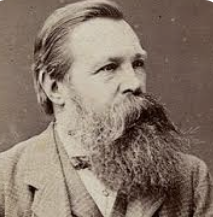
Communism is the doctrine of the conditions of the liberation of the proletariat.
2 months 4 days ago
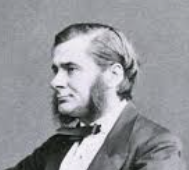
Try to learn something about everything and everything about something.
▼
Source
source
A favourite comment, inscribed on his memorial at Ealing, quoted in Nature Vol. XLVI (30 October 1902), p. 658

2 months 4 weeks ago
If countries were named after the words you first hear when you go there, England would have to be called Damn It.
▼
Source
source
F 33
5 months 3 days ago
For freedom is not acquired by satisfying yourself with what you desire, but by destroying your desire.
▼
Source
source
Book IV, ch. 1, 175.
3 months 2 weeks ago
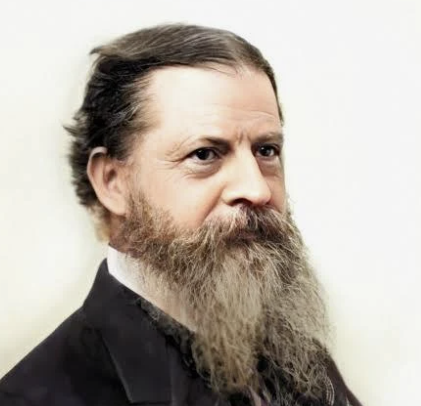
I have taken pains to make my distinction of icons, indices, and tokens clear, in order to enunciate this proposition: in a perfect system of logical notation signs of these several kinds must all be employed. Without tokens there would be no generality in the statements, for they are the only general signs; and generality is essential to reasoning. ... But tokens alone do not state what is the subject of discourse ; and this can, in fact, not be described in general terms ; it can only be indicated. The actual world cannot be distinguished from a world of imagination by any description. Hence the need of pronoun and indices, and the more complicated the subject the greater the need of them.

5 months 2 weeks ago
Often, writers on historical events tend to consider ... a loss of willingness to fight as a sign of "decadence," as though there were something despicable about not being a bully and not being willing to engage in mass murder. Perhaps we ought to feel instead that to cease to be warlike means to begin to be civilized and decent.
3 months 2 weeks ago
Reflect how you are to govern a people who think they ought to be free, and think they are not. Your scheme yields no revenue; it yields nothing but discontent, disorder, disobedience; and such is the state of America, that after wading up to your eyes in blood, you could only end just where you begun; that is, to tax where no revenue is to be found, to - my voice fails me; my inclination indeed carries me no farther - all is confusion beyond it.

4 months 3 weeks ago
Lastly, there are Idols which have immigrated into men's minds from the various dogmas of philosophies, and also from wrong laws of demonstration. These I call Idols of the Theater, because in my judgment all the received systems are but so many stage plays, representing worlds of their own creation after an unreal and scenic fashion.
▼
Source
source
Aphorism 44

1 month 1 week ago
Of America it would ill beseem any Englishman, and me perhaps as little as another, to speak unkindly, to speak unpatriotically, if any of us even felt so. Sure enough, America is a great, and in many respects a blessed and hopeful phenomenon. Sure enough, these hardy millions of Anglosaxon men prove themselves worthy of their genealogy... But as to a Model Republic, or a model anything, the wise among themselves know too well that there is nothing to be said... Their Constitution, such as it may be, was made here, not there... Cease to brag to me of America, and its model institutions and constitutions.
▼
Source
source
Latter Day Pamphlets, No. 1., p. 23, 24.
5 months 6 days ago
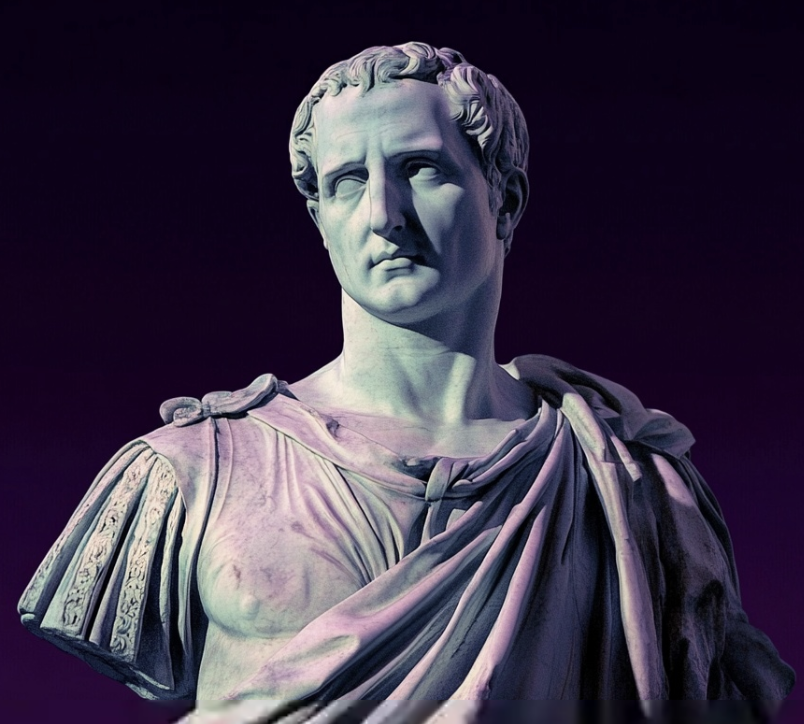
Do not blame Caesar, blame the people of Rome who have so enthusiastically acclaimed and adored him and rejoiced in their loss of freedom and danced in his path and gave him triumphal processions. Blame the people who hail him when he speaks in the Forum of the 'new, wonderful good society' which shall now be Rome, interpreted to mean 'more money, more ease, more security, more living fatly at the expense of the industrious.
▼
Source
source
This is also from the 1965 essay by Justice Millard Caldwell. It is not clear if this is based in any specific dialogue.

2 weeks 6 days ago
Being doesn't know.

3 months 3 weeks ago
The genius of democracies is seen not only in the great number of new words introduced but even more in the new ideas they express.
▼
Source
source
Book One, Chapter XVI.
4 months 2 weeks ago
He [Jesus] not only forbids actual uncleanness, but all irregular desires, upon pain of hell-fire; causeless divorces; swearing in conversation, as well as forswearing in judgment; revenge; retaliation; ostentation of charity, of devotion, and of fasting; repetitions in prayer, covetousness, worldly care, censoriousness: and on the other side commands loving our enemies, doing good to those that hate us, blessing those that curse us, praying for those that despitefully use us; patience and meekness under injuries, forgiveness, liberality, compassion: and closes all; his particular injunctions, with this general golden rule, Matt. VII. 12, "All things whatsoever ye would that men should do to you, do you even so to them, for this is the law and the prophets." And to show how much He is in earnest, and expects obedience to these laws, He tells them, Luke VI. 35, That if they obey, " great shall be their reward".
▼
Source
source
§ 116
1 week 1 day ago
By a clock we understand anything characterized by a phenomenon passing periodically through identical phases so that we must assume, by the principle of sufficient reason, that all that happens in a given period is identical with all that happens in an arbitrary period.

4 months 3 weeks ago
Animals only follow their natural instincts; but man, unless he has experienced the influence of learning and philosophy, is at the mercy of impulses that are worse than those of a wild beast. There is no beast more savage and dangerous than a human being who is swept along by the passions of ambition, greed, anger, envy, extravagance, and sensuality.
▼
Source
source
Translated by Beert C. Verstraete as On Education for Children, in The Erasmus Reader (University of Toronto Press: 1990), p. 73

3 months 5 days ago
The philosophy of the soul of my people appears to me as an expression of an inward tragedy analogous to the tragedy of the soul of Don Quixote, as the expression of conflict between what the world is as scientific reason shows it to be and what we wish that it might be, as our religious faith affirms it to be. And in this philosophy is to be found the explanation of what is usually said about us - namely, that we are fundamentally irreducible to Kultur - or in other words, that we refuse to submit to it. No, Don Quixote does not resign himself either to the world, or to science or logic, or to art or esthetics, or to morality or ethics.


2 months 3 weeks ago
The sense in which an automatic door "understands instructions" from its photoelectric cell is not at all the sense in which I understand English.
3 months 2 weeks ago
Long before physics or psychology were born, pain disintegrated matter, and affliction the soul.
2 months 2 weeks ago
He who helps the guilty, shares the crime.
▼
Source
source
Maxim 139

1 month 3 days ago
"You will have less money." Yes, and less trouble. "Less influence." Yes, and less envy.
3 months 1 week ago
The more ideas have become automatic, instrumentalized, the less does anybody see in them thoughts with a meaning of their own. They are considered things, machines. Language has been reduced to just another tool in the gigantic apparatus of production in modern society.
▼
Source
source
pp. 21-22.

4 months 2 weeks ago
But petitional prayer is only one department of prayer; and if we take the word in the wider sense as meaning every kind of inward communion or conversation with the power recognized as divine, we can easily see that scientific criticism leaves it untouched. Prayer in this wide sense is the very soul and essence of religion.
▼
Source
source
Lecture XIX, "Other Characteristics"
3 months 5 days ago
"The bitterest sorrow that man can know is to aspire to do much and to achieve nothing"... so Herodotus relates that a Persian said to a Theban at a banquet (book ix., chap. xvi.). And it is true. With knowledge and desire we can embrace everything , or almost everything; with the will nothing, or almost nothing. And contemplation is not happiness - no! not if this contemplation implies impotence. And out of this collision between our knowledge and our power pity arises.
3 months 2 weeks ago
The representation of the self-sufficiency of the I can certainly co-exist with a representation of the self-sufficiency of the thing, though the self-sufficiency of the I itself cannot co-exist with that of the thing. Only one of these two can come first, only one can be the starting point; only one can be independent. The one that comes second, just because it comes second, necessarily becomes dependent upon the one that comes first, with which it is supposed to be connected. Which of these two should come first?
▼
Source
source
p. 17-18.

4 months 2 weeks ago
So monstrous is the making and keeping them slaves at all, abstracted from the barbarous usage they suffer, and the many evils attending the practice; as selling husbands away from wives, children from parents, and from each other, in violation of sacred and natural ties; and opening the way for adulteries, incests, and many shocking consequences, for all of which the guilty Masters must answer to the final Judge.

4 months 2 weeks ago
No congress, nor mob, nor guillotine, nor fire, nor all together, can avail, to cut out, burn, or destroy the offense of superiority in persons. The superiority in him is inferiority in me.
▼
Source
source
p. 65
3 months 2 weeks ago
It is an advantage to all narrow wisdom and narrow morals that their maxims have a plausible air; and, on a cursory view, appear equal to first principles. They are light and portable. They are as current as copper coin; and about as valuable. They serve equally the first capacities and the lowest; and they are, at least, as useful to the worst men as to the best. Of this stamp is the cant of not man, but measures; a sort of charm by which many people get loose from every honourable engagement.
3 months 1 week ago
The people are led to find in the productive apparatus the effective agent of thought and action to which their personal thought and action can and must be surrendered. And in this transfer, the apparatus also assumes the role of a moral agent.
▼
Source
source
Conscience is absolved by reification. p. 79
3 months 2 weeks ago
Time is heavy sometimes; imagine how heavy eternity must be.
3 months 2 weeks ago
Can it really be that for us existence means exile, and nothingness, home?

5 months 1 week ago
It is quite clear to you that all the people see that lower kinds of creation could have been made in a different way from that in which they really are, and as they see this lower degree in many things they think that they must have been made by chance.
3 months ago
Man is born as a freak of nature, being within nature and yet transcending it. He has to find principles of action and decision-making which replace the principles of instincts. He has to have a frame of orientation which permits him to organize a consistent picture of the world as a condition for consistent actions. He has to fight not only against the dangers of dying, starving, and being hurt, but also against another danger which is specifically human: that of becoming insane. In other words, he has to protect himself not only against the danger of losing his life but also against the danger of losing his mind.
▼
Source
source
The Revolution of Hope: Toward a Humanized Technology (1968), p. 61

3 months 1 day ago
What is beginning to emerge, then, is a theory about psychic sensitivity. It runs as follows. When I relax deeply, it is as if someone opened up the partition between the two compartments of my brain, turning them into a single large room. I experience a sense of mental freedom as if I can suddenly breathe more deeply, and a feeling of contact with things. Everyone has had the experience of being in a state of hurry or excitement, and failing to notice that they have bruised or scratched themselves -- until the excitement evaporates and the pain makes itself known. Hurry and tension raise our sensitivity threshold, and at the same time, erect a glass wall between us and reality. In the "unicameral" state, this wall vanishes, and everything seems more real.
▼
Source
source
p. 51
1 month 4 days ago
State and government are the social apparatus of violent coercion and repression. Such an apparatus, the police power, is indispensable in order to prevent anti-social individuals and bands from destroying social co-operation. Violent prevention and suppression of anti-social activities benefit the whole of society and each of its members. But violence and oppression are none the less evils and corrupt those in charge of their application. It is necessary to restrict the power of those in office lest they become absolute despots. Society cannot exist without an apparatus of violent coercion. But neither can it exist if the office holders are irresponsible tyrants free to inflict harm upon those they dislike.
3 months 2 weeks ago
Beware of thinkers whose minds function only when they are fueled by a quotation.
CivilSimian.com created by AxiomaticPanic, CivilSimian, Kalokagathia