


4 months 2 weeks ago
We are obviously heading for revolution-something I have never once doubted since 1850. The first act will include a by no means gratifying rehash of the stupidities of '48-'49. However, that's how world history runs its course, and one has to take it as one finds it.
▼
Source
source
Letter to Ludwig Kugelmann (28 December 1862), quoted in The Collected Works of Karl Marx and Friedrich Engels: Volume 41. Letters 1860-64 (2010), p. 437

1 month 1 week ago
Multitude is a class concept. ... Class is determined by class struggle. There are, of course, in infinite number of ways that humans can be grouped into classes - hair color, blood type, and so forth - but the classes that matter are those defined by the lines of collective struggle. Race is just as much a political concept as economic class is in this regard. ... Class is a political concept, in short, in that a class is and can only be a collectivity that struggles in common.
▼
Source
source
104

4 months 2 weeks ago
The Christian Religion not only was at first attended with miracles, but even at this day cannot be believed by any reasonable person without one. Mere reason is insufficient to convince us of its veracity: and whoever is moved by Faith to assent to it, is conscious of a continued miracle in his own person, which subverts all the principles of his understanding, and gives him a determination to believe what is most contrary to custom and experience.
▼
Source
source
Section 10 : Of Miracles Pt. 2

5 months 4 days ago
It is only the individual possessed of the most entire sincerity that can exist under Heaven, who can adjust the great invariable relations of mankind, establish the great fundamental virtues of humanity, and know the transforming and nurturing operations of Heaven and Earth; shall this individual have any being or anything beyond himself on which he depends? Call him man in his ideal, how earnest is he! Call him an abyss, how deep is he! Call him Heaven, how vast is he! Who can know him, but he who is indeed quick in apprehension, clear in discernment, of far-reaching intelligence, and all-embracing knowledge, possessing all Heavenly virtue?

3 months 1 week ago
When you love someone, you hope - the more closely to be attached - that a catastrophe will strike your beloved.
3 weeks 2 days ago
There is something in the nature of tea that leads us into a world of quiet contemplation of life.
▼
Source
source
p. 224



4 months 2 weeks ago
In how many churches, by how many prophets, tell me, is man made sensible that he is an infinite Soul; that the earth and heavens are passing into his mind; that he is drinking forever the soul of God?
▼
Source
source
p. 18

4 months 2 weeks ago
The fundamental defect of fathers, in our competitive society, is that they want their children to be a credit to them.
▼
Source
source
Ch. 14: Freedom Versus Authority in Education

1 week 4 days ago
Now a man need not be very conversant in the writings of Chymists to observe, in how Laxe, Indefinite, and almost Arbitrary Senses they employ the Terms of Salt, Sulphur and Mercury; of which I could never find that they were agreed upon any certain Definitions or setled Notions; not onely differing Authors, but not unfrequently one and the same, and perhaps in the same Book, employing them in very differing senses.
1 month 3 weeks ago
More controversially, technology can accelerate the transition from harming to helping free-living sentient beings: mankind's fitfully expanding "circle of compassion". The civilising process needn't be species-specific but instead extend to free-living dwellers in tomorrow's wildlife parks. Every cubic metre of the biosphere will soon be computationally accessible to surveillance, micro-management and control. Fertility regulation via immunocontraception can replace Darwinian ecosystems governed by starvation and predation. Any species of obligate carnivore we choose to preserve can be genetically and behaviourally tweaked into harmlessness. Asphyxiation, disembowelling, and agonies of being eaten alive can pass into the dustbin of history.
▼
Source
source
High-tech Jainism, The World Transformed, Jul. 2014
2 months 2 weeks ago
One day, we shall stand up and our backsides will remain attached to our seats.

4 months 2 weeks ago
Societies are composed of individuals and are good only insofar as they help individuals to realize their potentialities and to lead a happy and creative life.
▼
Source
source
Chapter 3 (p. 20)
3 months 5 days ago
Be it well understood, I am free by compulsion, whether I wish to be or not. Freedom is not an activity pursued by an entity that, apart from and previous to such pursuit, is already possessed of a fixed being. To be free means to be lacking in constitutive identity, not to have subscribed to a determined being, to be able to be other than what one was, to be unable to install oneself once and for all in any given being. The only attribute of the fixed, stable being in the free being is this constitutive instability.
▼
Source
source
"Man has no nature"

2 months 2 weeks ago
If you want to be happy, be.
▼
Source
source
Attributed in Wisdom for the Soul : Five Millennia of Prescriptions for Spiritual Healing (2006) by Larry Chang, p. 352

2 months 3 weeks ago
In sum, a theory is only accepted if the theory has substantial, non-ad hoc, explanatory successes. This is in accordance with Popper; unfortunately, it is in even better accordance with the 'inductivist' accounts that Popper rejects, since these stress support rather than falsification.
▼
Source
source
The 'corroboration' of theories
3 months 1 week ago
To call war the soil of courage and virtue is like calling debauchery the soil of love.
▼
Source
source
Ch. III: Industry, Government, the peasants

2 months 4 weeks ago
(Gardner) writes about various kinds of cranks with the conscious superiority of the scientist, and in most cases one can share his sense of the victory of reason. But after half a dozen chapters this non-stop superiority begins to irritate; you begin to wonder about the standards that make him so certain he is always right. He asserts that the scientist, unlike the crank, does his best to remain open-minded. So how can he be so sure that no sane person has ever seen a flying saucer, or used a dowsing rod to locate water? And that all the people he disagrees with are unbalanced fanatics? A colleague of the positivist philosopher A. J. Ayer once remarked wryly "I wish I was as certain of anything as he seems to be about everything." Martin Gardner produces the same feeling.
▼
Source
source
pp. 2-3
5 months 4 days ago
When the Great Dao (Tao, perfect order) prevails, the world is like a Commonwealth State shared by all, not a dictatorship.
3 months 1 week ago
Outside the academic establishment, the "far-reaching change in all our habits of thought" is more serious. It serves to coordinate ideas and goals with those exacted by the prevailing system, to enclose them in the system, and to repel those which are irreconcilable with the system. The reign of such a one-dimensional reality does not mean that materialism rules, and that the spiritual, metaphysical, and bohemian occupations are petering out. On the contrary, there is a great deal of "Worship together this week," "Why not try God," Zen, existentialism, and beat ways of life, etc. But such modes of protest and transcendence are no longer contradictory to the status quo and no longer negative. They are rather the ceremonial part of practical behaviorism, its harmless negation, and are quickly digested by the status quo as part of its healthy diet.
▼
Source
source
pp. 13-14
4 months 2 weeks ago
It is not only when it takes the form of physical addiction that sex is evil. It is also evil when it manifests itself as a way of satisfying the lust for power or the climber's craving for position and social distinction.
▼
Source
source
Ch. 14, p. 358 [2012 reprint]
3 months 1 week ago
When all capital, all production, all exchange have been brought together in the hands of the nation, private property will disappear of its own accord, money will become superfluous, and production will so expand and man so change that society will be able to slough off whatever of its old economic habits may remain.
4 months 2 weeks ago
The best effect of fine persons is felt after we have left their presence.
▼
Source
source
1839

1 month 6 days ago
Literature, the strange entity so called,-that indeed is here. If Literature continue to be the haven of expatriated spiritualisms, and have its Johnsons, Goethes and true Archbishops of the World, to show for itself as heretofore, there may be hope in Literature. If Literature dwindle, as is probable, into mere merry-andrewism, windy twaddle, and feats of spiritual legerdemain, analogous to rope-dancing, opera-dancing, and street-fiddling with a hat carried round for halfpence, or for guineas, there will be no hope in Literature.

4 months 5 days ago
For a man petticoat government is the limit of insolence.

1 month ago
What, if you were to pass from the consideration of those single men against whom anger has broken out to view whole assemblies cut down by the sword, the people butchered by the soldiery let loose upon it, and whole nations condemned to death in one common ruin... as though by men who either freed themselves from our charge or despised our authority?

5 months ago
The confession of evil works is the first beginning of good works.
▼
Source
source
Tractates on the Gospel of John; tractate XII on John 3:6-21, and 13

2 months 1 week ago
World War III is a guerrilla information war with no division between military and civilian participation.
▼
Source
source
(p.66)

4 months 2 weeks ago
The Spirit of the Age wishes to allow argument and not to allow argument. ... If anyone argues with them they say that he is rationalizing his own desires, and therefore need not be answered. But if anyone listens to them they will then argue themselves to show that their own doctrines are true. ... You must ask them whether any reasoning is valid or not. If they say no, then their own doctrines, being reached by reasoning, fall to the ground. If they say yes, then they will have to examine your arguments and refute them on their merits: for if some reasoning is valid, for all they know, your bit of reasoning may be one of the valid bits.'
▼
Source
source
Pilgrim's Regress 63
2 months 4 weeks ago
This in turn suggests an answer to our question: what happened between the birth of De Sade and the birth of Krafft-Ebbing? The rise of the novel taught Europe to use its imagination. And when imagination was applied to sex, the result was the rise of pornography -- and of "sexual perversion."
▼
Source
source
p. 86

2 weeks ago
Do not think me gentle because I speak in praise of gentleness, or elegant because I honor the grace that keeps this world. I am a man crude as any, gross of speech, intolerant, stubborn, angry, full of fits and furies. That I may have spoken well at times, is not natural. A wonder is what it is.
▼
Source
source
A Warning To My Readers
2 months ago
The students of physical science are not unfrequently told that their pursuits unfit them for the estimation of moral probability. And it may be so, for I am afraid that to those who are accustomed to severe reasoning, either in the province of Science or in that of Law, reasoning from 'moral probability' is apt to be regarded as a process of accumulating inconclusive arguments, in the hope that a great heap of them may, at least, look as firm as one good demonstration.
▼
Source
source
The Evidence of the Miracle of the Resurrection
4 months 1 week ago
Nietzsche ... does not shy from conscious exaggeration and one-sided formulations of his thought, believing that in this way he can most clearly set in relief what in his vision and in his inquiry is different from the run-of-the-mill.
▼
Source
source
p. 50

4 months 2 weeks ago
Not without a slight shudder at the danger, I often perceive how near I had come to admitting into my mind the details of some trivial affair, - the news of the street; and I am astonished to observe how willing men are to lumber their minds with such rubbish, - to permit idle rumors and incidents of the most insignificant kind to intrude on ground which should be sacred to thought. Shall the mind be a public arena, where the affairs of the street and the gossip of the tea-table chiefly are discussed? Or shall it be a quarter of heaven itself, - an hypæthral temple, consecrated to the service of the gods? I find it so difficult to dispose of the few facts which to me are significant, that I hesitate to burden my attention with those which are insignificant, which only a divine mind could illustrate. Such is, for the most part, the news in newspapers and conversation. It is important to preserve the mind's chastity in this respect.
▼
Source
source
pp. 491-2
1 month ago
The criterion of truth is that it works even if nobody is prepared to acknowledge it.
▼
Source
source
Chapter 5: On Some Popular Errors Concerning the Scope and Method of Economics, § 9 : The Belief in the Omnipotence of Thought
2 weeks ago
We may believe what goes beyond our experience, only when it is inferred from that experience by the assumption that what we do not know is like what we know. We may believe the statement of another person, when there is reasonable ground for supposing that he knows the matter of which he speaks, and that he is speaking the truth so far as he knows it.It is wrong in all cases to believe on insufficient evidence; and where it is presumption to doubt and to investigate, there it is worse than presumption to believe.
3 months 1 week ago
I like thought which preserves a whiff of flesh and blood, and I prefer a thousand times an idea rising from sexual tension or nervous depression to empty abstraction.

3 months 2 weeks ago
Scepticism is the first step towards truth. Variant: A thing is not proved just because no one has ever questioned it. What has never been gone into impartially has never been properly gone into. Hence skepticism is the first step toward truth. It must be applied generally, because it is the touchstone.
▼
Source
source
As quoted in The Anchor Book of French Quotations with English Translations (1963) by Norbert Gutermam

3 months 2 weeks ago
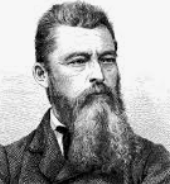
Speculative philosophy as the realisation of God is the positing of God, and at the same time his cancellation or negation; theism and at the same time atheism: for God - in the sense of theology - is God only as long as he is taken to be a being distinguished from and independent of the being of man as well as of nature. The theism that as the positing of God is simultaneously his negation or, conversely, as the negation of God equally his affirmation, is pantheism. Theological theism - that is, theism properly speaking - is nothing other than imaginary pantheism which itself is nothing other than real and true theism.
▼
Source
source
Part I, Section 14

3 months 2 days ago
I am dreaming ...? Let me dream, if this dream is my life. Do not awaken me from it. I believe in the immortal origin of this yearning for immortality, which is the very substance of my soul. But do I really believe in it ...? And wherefore do you want to be immortal? you ask me, wherefore? Frankly, I do not understand the question, for it is to ask the reason of the reason, the end of the end, the principle of the principle.

1 week 5 days ago
Things have no hold on the soul. They have no access to it, cannot move or direct it. It is moved and directed by itself alone. It takes the things before it and interprets them as it sees fit.
▼
Source
source
(Hays translation) V, 19

4 months 2 weeks ago
An army of principles will penetrate where an army of soldiers cannot; it will succeed where diplomatic management would fall: it is neither the Rhine, the Channel, nor the ocean that can arrest its progress: it will march on the horizon of the world, and it will conquer.
▼
Source
source
Means by Which the Fund Is to Be Created
3 months 2 weeks ago
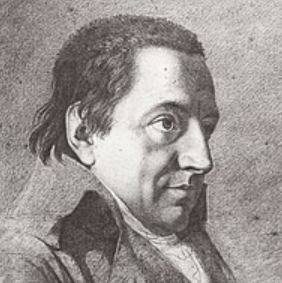
Instinct is blind;-a consciousness without insight. Freedom, as the opposite of Instinct, is thus seeing, and clearly conscious of the grounds of its activity.
▼
Source
source
p. 7
1 month ago
The State's behavior is violence, and it calls its violence "law"; that of the individual, "crime." The state calls its own violence law, but that of the individual, crime.
▼
Source
source
As quoted in The Great Quotations (1960) by George Seldes, p. 664

4 months 3 weeks ago
The unassisted hand and the understanding left to itself possess but little power. Effects are produced by the means of instruments and helps, which the understanding requires no less than the hand; and as instruments either promote or regulate the motion of the hand, so those that are applied to the mind prompt or protect the understanding.
▼
Source
source
Aphorism 2
1 week 5 days ago
If it is not right, do not do it, if it is not true, do not say it. For let thy efforts be -
▼
Source
source
XII, 17
4 months 4 weeks ago
To the rational being only the irrational is unendurable, but the rational is endurable.
▼
Source
source
Variant translation: To a reasonable creature, that alone is insupportable which is unreasonable; but everything reasonable may be supported. Book I, ch. 2,1.
4 months 2 weeks ago
We, on the contrary, now send to the Brahmans English clergymen and evangelical linen-weavers, in order out of sympathy to put them right, and to point out to them that they are created out of nothing, and that they ought to be grateful and pleased about it. But it is Just the same as if we fired a bullet at a cliff. " In India, our religions wIll never at any time take root; the ancient wisdom of the human race will not be supplanted by the events in Galilee. On the contrary, Indian Wisdom flows back to Europe, and will produce a fundamental change in our knowledge and thought.
▼
Source
source
Schopenhauer, Arthur The world as will and representation. Translated from the German by E. F. J. Payne. New York, Dover Publications [c1969 - Volume I, & 63 p. 356-357. quoted in Londhe, S. (2008).
CivilSimian.com created by AxiomaticPanic, CivilSimian, Kalokagathia