


7 months 2 weeks ago
Existence would be a quite impracticable enterprise if we stopped granting importance to what has none.

8 months 4 weeks ago
We must learn how to imitate Cicero from Cicero himself. Let us imitate him as he imitated others.
▼
Source
source
in The Erasmus Reader (1990), p. 130.
7 months 2 weeks ago
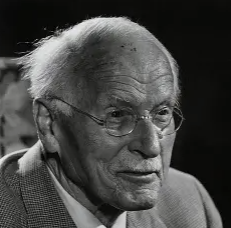
All ages before ours believed in gods in some form or other. Only an unparalleled impoverishment in symbolism could enable us to rediscover the gods as psychic factors, which is to say, as archetypes of the unconscious. No doubt this discovery is hardly credible as yet.
▼
Source
source
p. 72



8 months 3 weeks ago
I am looking forward very much to getting back to Cambridge, and being able to say what I think and not to mean what I say: two things which at home are impossible. Cambridge is one of the few places where one can talk unlimited nonsense and generalities without anyone pulling one up or confronting one with them when one says just the opposite the next day.
▼
Source
source
Letter to Alys Pearsall Smith (1893); published in The Selected Letters of Bertrand Russell, Volume 1: The Private Years (1884-1914), edited by Nicholas Griffin
4 months 4 weeks ago
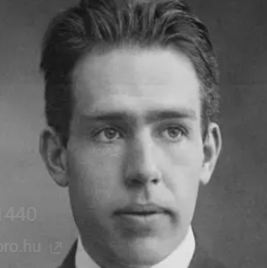
It is not enough to be wrong, one must also be polite.
▼
Source
source
As quoted in The Genius of Science: A Portrait Gallery (2000) by Abraham Pais, p. 24
7 months 2 weeks ago
We suffer: the external world begins to exist . . . ; we suffer to excess: it vanishes. Pain instigates the world only to unmask its unreality.

9 months 3 days ago
It is not among extraordinary and fantastic things that excellence is to be found, of whatever kind it may be. We rise to attain it and become removed from it: it is oftenest necessary to stoop for it.
9 months 1 week ago
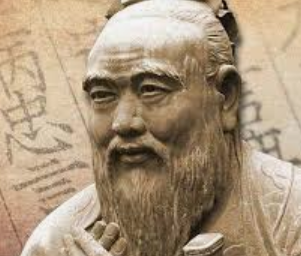
Let the superior man never fail reverentially to order his own conduct, and let him be respectful to others and observant of propriety: then all within the four seas, all men are brothers. What has the superior man to do with being distressed because he has no brothers?
8 months 1 week ago
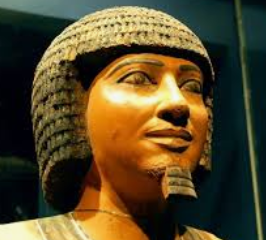
Do not repeat slander; you should not hear it, for it is the result of hot temper.
▼
Source
source
Maxim no. 23.
8 months 3 weeks ago
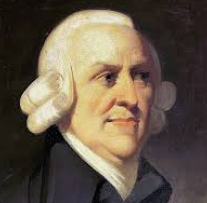
The necessaries of life occasion the great expense of the poor. They find it difficult to get food, and the greater part of their little revenue is spent in getting it. The luxuries and vanities of life occasion the principal expense of the rich, and a magnificent house embellishes and sets off to the best advantage all the other luxuries and vanities which they possess. A tax upon house-rents, therefore, would in general fall heaviest upon the rich; and in this sort of inequality there would not, perhaps, be anything very unreasonable. It is not very unreasonable that the rich should contribute to the public expense, not only in proportion to their revenue, but something more than in that proportion.
▼
Source
source
Chapter II, Part II, Article I, p. 911.
4 months 1 week ago
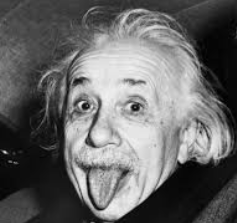
We may assume the existence of an aether; only we must give up ascribing a definite state of motion to it, i.e. we must by abstraction take from it the last mechanical characteristic which Lorentz had still left it. ... But this ether may not be thought of as endowed with the quality characteristic of ponderable media, as consisting of parts which may be tracked through time. The idea of motion may not be applied to it.
7 months 2 weeks ago
As the years pass, the number of those we can communicate with diminishes. When there is no longer anyone to talk to, at last we will be as we were before stooping to a name.


8 months 2 weeks ago
Let me never fall into the vulgar mistake of dreaming that I am persecuted whenever I am contradicted.
▼
Source
source
November 8, 1838

7 months 3 weeks ago
Pithy sentences are like sharp nails which force truth upon our memory.
▼
Source
source
As quoted in A Dictionary of Thoughts : Being a Cyclopedia of Laconic Quotations (1908) by Tryon Edwards, p. 338

8 months 2 weeks ago
In a world, man must create his own essence: it is in throwing himself into the world, suffering there, struggling there, that he gradually defines himself.

7 months 2 weeks ago
As there must be moderation in other things, so there must be moderation in self-criticism. Perpetual contemplation of our own actions produces a morbid consciousness, quite unlike that normal consciousness accompanying right actions spontaneously done; and from a state of unstable equilibrium long maintained by effort, there is apt to be a fall towards stable equilibrium, in which the primitive nature reasserts itself. Retrogression rather than progression may hence result.
▼
Source
source
Ch. 10, General Conclusions
8 months 3 weeks ago
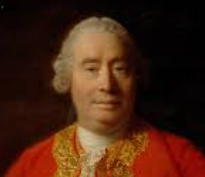
And why should man, added he, pretend to an exemption from the lot of all other animals? The whole earth, believe me, PHILO, is cursed and polluted. A perpetual war is kindled amongst all living creatures. Necessity, hunger, want, stimulate the strong and courageous: Fear, anxiety, terror, agitate the weak and infirm. The first entrance into life gives anguish to the new-born infant and to its wretched parent: Weakness, impotence, distress, attend each stage of that life: and it is at last finished in agony and horror.
▼
Source
source
Demea to Philo, Part X

6 months 2 weeks ago
Hypnotized by their rear-view mirrors, philosophers and scientists alike tried to focus the figure of man in the old ground of nineteenth-century industrial mechanism and congestion. They failed to bridge from the old figure to the new. It is man who has become both figure and ground via the electrotechnical extension of his awareness. With the extension of his nervous system as a total information environment, man bridges art and nature.
▼
Source
source
(p. 11)
8 months 3 weeks ago
Many of the actions by which men have become rich are far more harmful to the community than the obscure crimes of poor men, yet they go unpunished because they do not interfere with the existing order.
▼
Source
source
Ch. V: Government and Law
8 months 2 weeks ago
When the rich make war, it's the poor that die.

8 months 2 weeks ago
For what comes is Judgment: happy are those whom it finds labouring in their vocations, whether they were merely going out to feed the pigs or laying good plans to deliver humanity a hundred years hence from some great evil. The curtain has indeed now fallen. Those pigs will never in fact be fed, the great campaign against White Slavery or Governmental Tyranny will never in fact proceed to victory. No matter; you were at your post when the Inspection came.

7 months 3 days ago
I have been taught that the land should belong to those who till the soil. With all of his deep-seated sympathies with the Arabs, our comrade cannot possibly deny that the Jews in Palestine have tilled the soil. Tens of thousands of them, young and deeply devout idealists, have flocked to Palestine, there to till the soil under the most trying pioneer conditions. They have reclaimed wastelands and have turned them into fertile fields and blooming gardens. Now I do not say that therefore Jews are entitled to more rights than the Arabs, but for an ardent socialist to say that the Jews have no business in Palestine seems to me rather a strange kind of socialism.
7 months 2 weeks ago
There are as many nights as days, and the one is just as long as the other in the year's course. Even a happy life cannot be without a measure of darkness, and the word "happy" would lose its meaning if it were not balanced by sadness.
▼
Source
source
"The Art of Living", interview with journalist Gordon Young first published in 1960
4 months 1 week ago
I have come to believe that the motion of the Earth cannot be detected by any optical experiment.
7 months 2 weeks ago
Life creates itself in delirium and is undone in ennui.
6 months 2 weeks ago
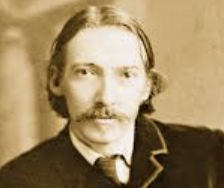
The world is a great place and stocked with wealth and beauty, and there is no limit to the rewards that may be offered. Such an one who would refuse a million of money may sell his honour for an empire or the love of a woman.
▼
Source
source
The Rajah's Diamond, The Adventure of Prince Florizel and a Detective.
8 months 3 weeks ago
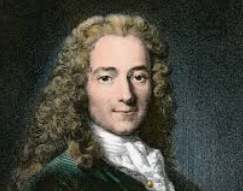
Money is always to be found when men are to be sent to the frontiers to be destroyed: when the object is to preserve them, it is no longer so.
▼
Source
source
"Charity", 1770
6 months 2 weeks ago
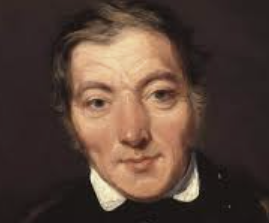
Is it not the interest of the human race, that every one should be so taught and placed, that he would find his highest enjoyment to arise from the continued practice of doing all in his power to promote the well-being, and happiness, of every man, woman, and child, without regard to their class, sect, party, country or colour?
▼
Source
source
Paper Dedicated to the Governments of Great Britain, Austria, Russia, France, Prussia and the United States of America (1841) 17th of "20 Questions to the Human Race"
4 months 1 week ago
We shall, therefore, assume the complete physical equivalence of a gravitational field and a corresponding acceleration of the reference system.
5 months 3 weeks ago
Whatever arises from a just situation by just steps is itself just.
▼
Source
source
Ch. 7 : Distributive Justice, Section I, The Entitlement Theory, p. 151

8 months 2 weeks ago
Capital is dead labor, that vampire-like, only lives by sucking living labor, and lives the more, the more labor it sucks.
▼
Source
source
Vol. I, Ch. 10, Section 1, p. 257.
8 months 3 weeks ago
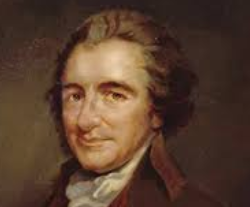
War involves in its progress such a train of unforeseen and unsupposed circumstances ... that no human wisdom can calculate the end. Prospects on the Rubicon
▼
Source
source
London: J. Debrett, 1787

6 months 6 days ago
I adopt Mr. Darwin's hypothesis, therefore, subject to the production of proof that physiological species may be produced by selective breeding; just as a physical philosopher may accept the undulatory theory of light, subject to the proof of the existence of the hypothetical ether; or as the chemist adopts the atomic theory, subject to the proof of the existence of atoms; and for exactly the same reasons, namely, that it has an immense amount of primâ facie probability: that it is the only means at present within reach of reducing the chaos of observed facts to order; and lastly, that it is the most powerful instrument of investigation which has been presented to naturalists since the invention of the natural system of classification and the commencement of the systematic study of embryology.
▼
Source
source
Ch.2, p. 128
9 months 3 weeks ago
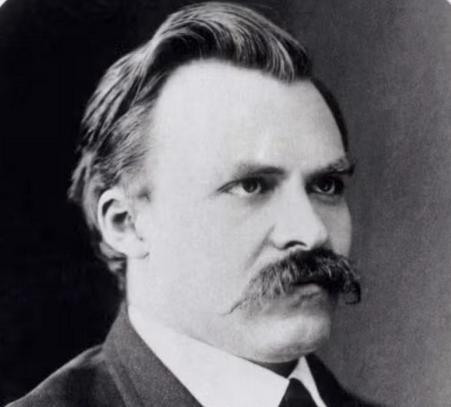
With all great deceivers there is a noteworthy occurrence to which they owe their power. In the actual act of deception... they are overcome by belief in themselves. It is this which then speaks so miraculously and compellingly to those who surround them.
8 months 1 week ago
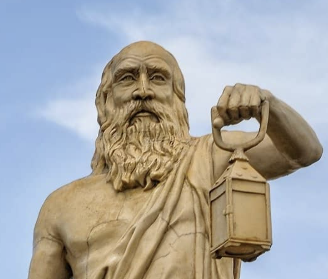
Once he saw the officials of a temple leading away some one who had stolen a bowl belonging to the treasurers, and said, "The great thieves are leading away the little thief."
▼
Source
source
Diogenes Laërtius, vi. 45

8 months 3 weeks ago
I have seen something of the project of M. de St. Pierre, for maintaining a perpetual peace in Europe. I am reminded of a device in a cemetery, with the words: Pax perpetua; for the dead do not fight any longer: but the living are of another humor; and the most powerful do not respect tribunals at all.
▼
Source
source
Taken from Leibniz: Political Writings (2nd Edition, 1988), Edited by Patrick RileyLetter 11 to Grimarest: Passages Concerning the Abbe de St. Pierre's 'Project for Perpetual Peace' (June 1712).


8 months 1 week ago
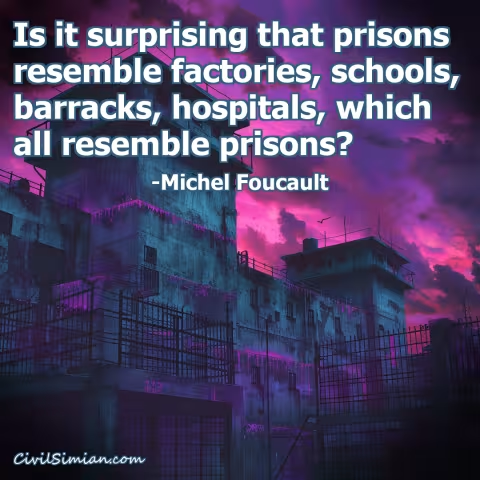
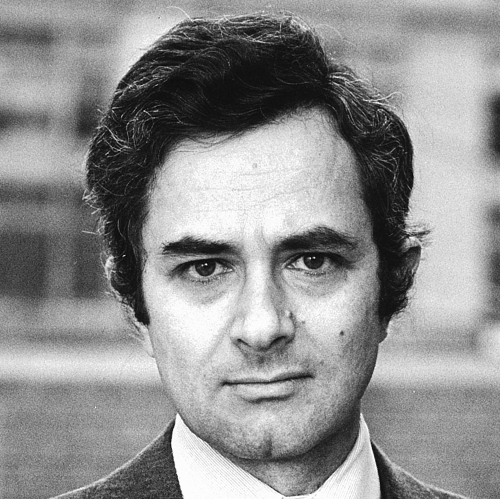
It is often remarked that nothing we do now will matter in a million years. But if that is true, then by the same token, nothing that will be the case in a million years matters now.
▼
Source
source
"The Absurd" (1971), p. 11.
7 months 2 weeks ago
The skepticism which fails to contribute to the ruin of our health is merely an intellectual exercise.
6 months 1 week ago
No realistic, sane person goes around Chicago without protection.
▼
Source
source
Humboldt's Gift (1975), p. 452
8 months 2 weeks ago
We're at such a low point in the American empire. Its spiritual decay and its immoral decadence are so profound that we have to begin on the foundational level of a spiritual awakening and a moral reckoning. Organized greed. Institutionalized hatred. Routinized indifference to the lives of poor and working people of all colors. We've got to get beyond an analysis of the predatory capitalist processes that have saturated every nook and cranny of the culture. We've got to get beyond the ways in which the political system has been colonized by corporate wealth and by monied elite. We've got to get beyond that sense of impotence of the citizenry. These are all the signs of an empire in decline. The only thing that we have to add is military overreach, and we see that as well. Speaking to Chris Hedges about his decision to run for president in 2024.
▼
Source
source
Chris Hedges: Dr. Cornel West Announces He Is Running for President. Scheerpost. June 5, 2023
CivilSimian.com created by AxiomaticPanic, CivilSimian, Kalokagathia