

3 months 3 weeks ago
Those who claim to care about the wellbeing of human beings and the preservation of our environment should become vegetarians for that reason alone. They would thereby increase the amount of grain available to feed people elsewhere, reduce pollution, save water and energy, and cease contributing to the clearing of forests; moreover, since a vegetarian diet is cheaper than one based on meat dishes, they would have more money available to devote to famine relief, population control, or whatever social or political cause they thought most urgent. ... when nonvegetarians say that "human problems come first" I cannot help wondering what exactly it is that they are doing for human beings that compels them to continue to support the wasteful, ruthless exploitation of farm animals.
▼
Source
source
Ch. 6: Speciesism Today

5 months 4 days ago
The Philology of Christianity. How little Christianity cultivates the sense of honesty can be inferred from the character of the writings of its learned men. They set out their conjectures as audaciously as if they were dogmas, and are but seldom at a disadvantage in regard to the interpretation of Scripture. Their continual cry is: am right, for it is written and then follows an explanation so shameless and capricious that a philologist, when he hears it, must stand stock-still between anger and laughter, asking himself again and again: Is it possible? Is it honest? Is it even decent?It is only those who never or always attend church that underestimate the dishonesty with which this subject is still dealt in Protestant pulpits; in what a clumsy fashion the preacher takes advantage of his security from interruption; how the Bible is pinched and squeezed; and how the people are made acquainted with every form of the art of false reading.

3 months 2 days ago
A people who are still, as it were, but in the gristle, and not yet hardened into the bone of manhood.
2 months 3 weeks ago
By MANNERS, I mean not here Decency of behaviour; as how one man should salute another, or how a man should wash his mouth, or pick his teeth before company, and such other points of the Small Morals; But those qualities of mankind that concern their living together in Peace and Unity. To which end we are to consider that the Felicity of this life consisteth not in the repose of a mind satisfied. For there is no such Finis ultimus (utmost aim) nor Summum Bonum (greatest good) as is spoken of in the books of the old Moral Philosophers. Nor can a man any more live whose desires are at an end than he whose Senses and Imaginations are at a stand.
▼
Source
source
The First Part, Chapter 11, p. 47
5 months 2 days ago
Editor Preface In this book, originating in the year 1848, the requirement for being a Christian is forced up by the pseudonymous author to the supreme ideality. Yet the requirement should indeed be stated, presented, and heard. From the Christian point of view, there ought to be no scaling down of the requirement, nor suppression of it-instead of a personal admission and confession. The requirement should be heard-and I understand what is said as spoken to me alone-so that I might learn not only to resort to grace but to resort to it in relation to the use of grace.
3 months 2 days ago
We are taught to believe that a desire of domineering over our countrymen is love to our country; and those who hate civil war abet rebellion, and that the amiable and conciliatory virtues of lenity, moderation, and tenderness to the privileges of those who depend on this kingdom are a sort of treason to the state. It is impossible that we should remain long in a situation, which breeds such notions and dispositions, without some great alteration in the national character.

4 months 4 weeks ago
There lay certitude; there, in the daily round. All the rest hung on mere threads and trivial contingencies; you couldn't waste your time on it. The thing was to do your job as it should be done.
2 months 1 week ago
In sum, a theory is only accepted if the theory has substantial, non-ad hoc, explanatory successes. This is in accordance with Popper; unfortunately, it is in even better accordance with the 'inductivist' accounts that Popper rejects, since these stress support rather than falsification.
▼
Source
source
The 'corroboration' of theories

4 months 3 days ago
I quite understand the principle of confining employment as far as possible to the British without regard for efficiency. I think, however, that the Ministry is not applying the principle sufficiently widely. I know many Englishmen who have married foreigners, and many English potential wives who are out of a job. Would not a year be long enough to train an English wife to replace the existing foreign one in such cases?
▼
Source
source
Enclosed reply to the Ministry of Labour, in defense of A. S. Neill (who declined to send it), 27 January, 1931
1 month 4 weeks ago
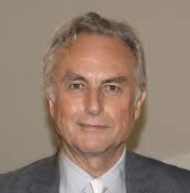
Such delusions of grandeur to think that a God with a hundred billion galaxies on his mind would give a tuppenny damn who you sleep with, or indeed whether you believe in him.
▼
Source
source
Richard Dawkins debates Rowan Williams
2 months 3 weeks ago
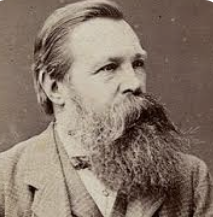
Since the management of industry by individuals necessarily implies private property, and since competition is in reality merely the manner and form in which the control of industry by private property owners expresses itself, it follows that private property cannot be separated from competition and the individual management of industry. Private property must, therefore, be abolished and in its place must come the common utilization of all instruments of production and the distribution of all products according to common agreement - in a word, what is called the communal ownership of goods.

4 months 1 week ago
They [theologians] will explain to you how Christ was formed in the Virgin's womb; how accident subsists in synaxis without domicile in place. The most ordinary of them can do this. Those more fully initiated explain further whether there is an instans in Divine generation; whether in Christ there is more than a single filiation; whether 'the Father hates the Son' is a possible proposition; whether God can become the substance of a woman, of an ass, of a pumpkin, or of the devil, and whether, if so, a pumpkin could preach a sermon, or work miracles, or be crucified. And they can discover a thousand other things to you besides these. They will make you understand notions, and instants, formalities, and quiddities, things which no eyes ever saw, unless they were eyes which could see in the dark what had no existence.
▼
Source
source
as quoted by Froude ibid.,
CivilSimian.com created by AxiomaticPanic, CivilSimian, Kalokagathia