


2 months 1 day ago
There are two atheisms of which one is a purification of the notion of God.
▼
Source
source
As quoted in The New Christianity (1967) edited by William Robert Miller



3 months 2 weeks ago
Nature magically suits the man to his fortunes, by making these the fruit of his character.
▼
Source
source
Fate

3 months 2 weeks ago
A testimony is sufficient when it rests on: 1st. A great number of very sensible witnesses who agree in having seen well. 2d. Who are sane, bodily and mentally. 3d. Who are impartial and disinterested. 4th. Who unanimously agree. 5th. Who solemnly certify to the fact.
▼
Source
source
As quoted by H. P. Blavatsky in Isis Unveiled, Vol. I, p. 108, 1877

3 months 2 weeks ago
All human activities are equivalent ... and ... all are on principle doomed to failure.
▼
Source
source
Conclusion, II

3 months 2 weeks ago
It is clear that thought is not free if the profession of certain opinions makes it impossible to earn a living. It is clear also that thought is not free if all the arguments on one side of a controversy are perpetually presented as attractively as possible, while the arguments on the other side can only be discovered by diligent search.
▼
Source
source
Ch. 12: Free Thought and Official Propaganda, books.google.com, archive.org
3 months 1 week ago
In order to remain silent Da-sein must have something to say.
▼
Source
source
Stambaugh translation
1 month 3 weeks ago
The successful revolutionary is a statesman, the unsuccessful one a criminal.
▼
Source
source
Ch. 7
3 months 2 weeks ago
All that time is lost which might be better employed.
▼
Source
source
As quoted in A Dictionary of Quotations in Most Frequent Use: Taken Chiefly from the Latin and French, but comprising many from the Greek, Spanish, and Italian Languages, translated into English (1809) by David Evans Macdonnel

3 months 4 weeks ago
Men are eager to tread underfoot what they have once too much feared.
▼
Source
source
Book V, line 1140 (tr. Rouse)
2 months 1 day ago
The jargon of authenticity ... is a trademark of societalized chosenness, ... sub-language as superior language.
▼
Source
source
pp. 5-6
2 months 1 day ago
If you say to someone who has ears to hear: "What you are doing to me is not just," you may touch and awaken at its source the spirit of attention and love. But it is not the same with words like, "I have the right..." or "you have no right to..." They evoke a latent war and awaken the spirit of contention.
▼
Source
source
p. 63

4 months 1 day ago
Therefore, on hearing His words let no one say either: "These are not Christ's words," or "These are not my words." On the contrary, if he knows that he is in the body of Christ, let him say: "These are both Christ's words and my words." Say nothing without Him, and He will say nothing without thee. We must not consider ourselves as strangers to Christ, or look upon ourselves as other than Himself.
▼
Source
source
p.422

1 month 1 week ago
The name of a man is a numbing blow from which he never recovers.
4 months 1 week ago
The Dantean conceptions of Inferno were childish and unworthy of the Divine imagination: fire and torture. Boredom is much more subtle. The inner torture of a mind unable to escape itself in any way, condemned to fester in its own exuding mental pus for all time, is much more fitting. Oh, yes, my friend, we have been judged, and condemned, too, and this is not Heaven, but hell.
2 months 1 week ago
Virtue can only flourish amongst equals.
▼
Source
source
A Vindication of the Rights of Men

1 month 2 weeks ago
'BUT science and art! You are denying science and art: that is you are denying that by which humanity lives.' People constantly make this rejoinder to me, and they employ: this method in order to reject my arguments without examination. 'He rejects science and art, he wishes man to revert to a state of savagery - why listen to him or discuss with him?' But this is unjust. Not only do I not repudiate science, that is, the reasonable activity of humanity, and art - the expression of that reasonable activity - but it is just on behalf of that reasonable activity and its expression that I speak, only that It may be possible for mankind to escape from the savage state into which it is rapidly lapsing thanks to the false teaching of our time. It is only on that account that I speak as I do.
1 day ago
On the contrary, to educate rational people, that should be sufficient; it is not really intended for sensible people; to understand things and conditions, there is the matter ended,-to understand oneself does not seem to be everyman's concern.
▼
Source
source
p. 22
3 months 2 weeks ago
Government has no other end than the preservation of property.
▼
Source
source
Second Treatise of Government, Ch. VII. sec. 94
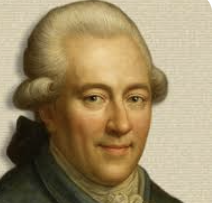
1 month 3 weeks ago
Much can be inferred about a man from his mistress: in her one beholds his weaknesses and his dreams.
▼
Source
source
F 88
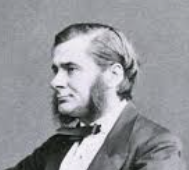
1 month 1 day ago
The life, the fortune, and the happiness of every one of us, and, more or less, of those who are connected with us, do depend upon our knowing something of the rules of a game infinitely more difficult and complicated than chess. It is a game which has been played for untold ages, every man and woman of us being one of the two players in a game of his or her own. The chessboard is the world, the pieces are the phenomena of the universe, the rules of the game are what we call the laws of Nature. The player on the other side is hidden from us. We know that his play is always fair, just, and patient. But also we know, to our cost, that he never overlooks a mistake, or makes the smallest allowance for ignorance. To the man who plays well, the highest stakes are paid, with that sort of overflowing generosity with which the strong shows delight in strength. And one who plays ill is checkmated - without haste, but without remorse.
2 months 3 weeks ago
Truth is the cry of all, but the game of the few.
▼
Source
source
Paragraph 368

3 months 3 weeks ago
We must not attach knowledge to the mind, we have to incorporate it there.
▼
Source
source
Ch. 25
3 months 2 weeks ago
His imperial muse tosses the creation like a bauble from hand to hand to embody any capricious thought that is uppermost in her mind. The remotest spaces of nature are visited, and the farthest sundered things are brought together by a subtle spiritual connection.
▼
Source
source
p. 237

6 days ago
Aesop's Fly, sitting on the axle of the chariot, has been much laughed at for exclaiming: What a dust I do raise!
1 month 2 weeks ago
But one no longer wonders when one realizes that in the higher classes there is an unerring instinct of what tends to maintain and of what tends to destroy the organization by virtue of which they enjoy their privileges. The fashionable lady had certainly not reasoned out that if there were no capitalists and no army to defend them, her husband would have no fortune, and she could not have her entertainments and her ball-dresses. And the artist certainly does not argue that he needs the capitalists and the troops to defend them, so that they may buy his pictures. But instinct, replacing reason in this instance, guides them unerringly. And it is precisely this instinct which leads all men, with few exceptions, to support all the religious, political, and economic institutions which are to their advantage.
▼
Source
source
Chapter XII, Conclusion-Repent Ye, for the Kingdom of Heaven is at Hand

1 month 4 weeks ago
The exploration of oneself is usually also an exploration of the world at large, of other writers, a process of comparison with oneself with others, discoveries of kinships, gradual illumination of one's own potentialities.
▼
Source
source
p. 231
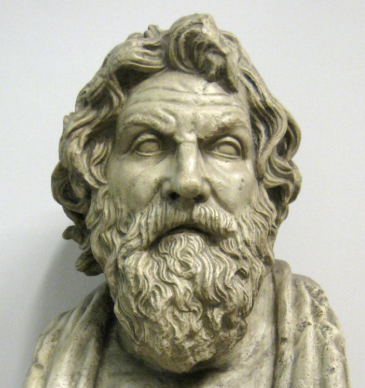
3 months 5 days ago
Antisthenes ... was asked on one occasion what learning was the most necessary, and he replied, "To unlearn one's bad habits."
▼
Source
source
§ 4
1 week 3 days ago
The fundamental political question is why do people obey a government. The answer is that they tend to enslave themselves, to let themselves be governed by tyrants. Freedom from servitude comes not from violent action, but from the refusal to serve. Tyrants fall when the people withdraw their support.
▼
Source
source
This quote is a paraphrase of the contents of the first chapter of Discourse on Voluntary Servitude. The quote appears in an edition titled Politics of Obedience: The Discourse of Voluntary Servitude edited by Murray Rothbard and Harry Kurz (1975), p. 39
2 months 1 day ago
Creatures inveterately wrong in their inductions have a pathetic but praiseworthy tendency to die before reproducing their kind.
▼
Source
source
"Natural Kinds", in Ontological Relativity and Other Essays (1969), p. 126
2 months 2 weeks ago
Let us apply these principles to adultery. The state can no more prohibit it or punish it by law than any other illegitimate satisfaction of the sexual impulse.
▼
Source
source
P. 431
4 months 2 weeks ago
It occurs to me that artists go forward by going backward, something which I have nothing against intrinsically when it is a reproduced retreat - as is the case with the better artists. But it does not seem right that they stop with the historical themes already given and, so to speak, think that only these are suitable for poetic treatment, because these particular themes, which intrinsically are no more poetic than others, are now again animated and inspirited by a great poetic nature. In this case the artists advance by marching on the spot. - Why are modern heroes and the like not just as poetic? Is it because there is so much emphasis on clothing the content in order that the formal aspect can be all the more finished?

3 months 1 week ago
We are aware of all the inconveniences of prison, and that it is dangerous when it is not useless. And yet one cannot 'see' how to replace it. It is the detestable solution, which one seems unable to do without.
▼
Source
source
Part Four, Complete and austere institutions
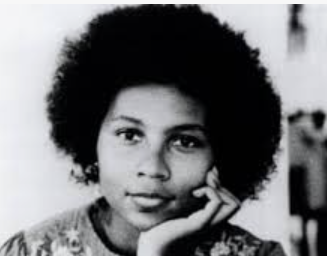
1 month 4 weeks ago
Today's fashion magazines may carry an article about the dangers of anorexia while bombarding its readers with images of emaciated young bodies representing the height of beauty and desirability.
▼
Source
source
As quoted in Feminism is for Everybody: Passionate Politics (2014), p.34
3 months 2 weeks ago
It makes a great difference in the force of a sentence whether a man be behind it or no.
▼
Source
source
p. 261
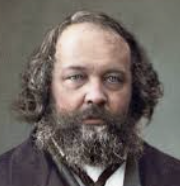
2 months 1 week ago
If there is a state, then necessarily there is domination and consequently slavery. A state without slavery, open or camouflaged, is inconceivable - that is why we are enemies of the state.
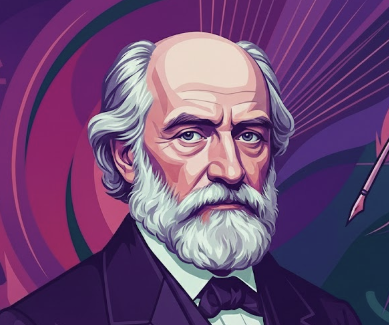
3 months 2 weeks ago
It is the courage to make a clean breast of it in the face of every question that distinguishes the philosopher. He must be like Sophocles' Oedipus, who, seeking enlightenment concerning his terrible fate, pursues his indefatigable inquiry even though he divines that appalling horror awaits him in the answer. But most of us carry with us the Jocasta in our hearts, who begs Oedipus, for God's sake, not to inquire further.
▼
Source
source
Letter to Johann Wolfgang von Goethe (November 1815)
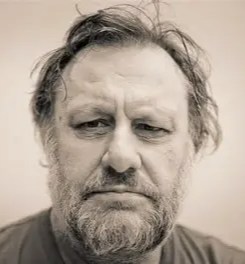
7 months 3 weeks ago
Think about the strangeness of today's situation. Thirty, forty years ago, we were still debating about what the future will be: communist, fascist, capitalist, whatever. Today, nobody even debates these issues. We all silently accept global capitalism is here to stay. On the other hand, we are obsessed with cosmic catastrophes: the whole life on earth disintegrating, because of some virus, because of an asteroid hitting the earth, and so on. So the paradox is, that it's much easier to imagine the end of all life on earth than a much more modest radical change in capitalism.

3 months 2 weeks ago
Never aim at more precision than... required by the problem...
4 months 5 days ago
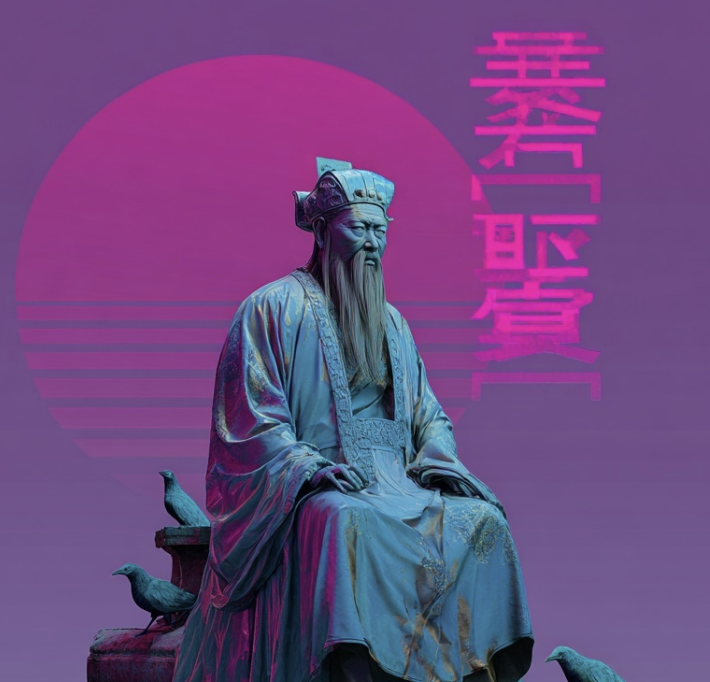
When we have intelligence resulting from sincerity, this condition is to be ascribed to nature; when we have sincerity resulting from intelligence, this condition is to be ascribed to instruction. But given the sincerity, and there shall be the intelligence; given the intelligence, and there shall be the sincerity.
3 months 2 weeks ago
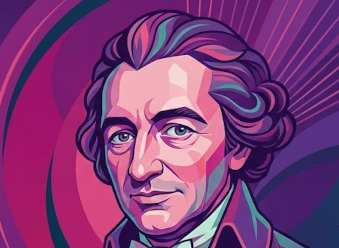
Eloquence may strike the ear, but the language of poverty strikes the heart; the first may charm like music, but the second alarms like a knell.
▼
Source
source
The Case of the Officers of Excise (1772), p. 20
1 month 3 weeks ago
Law is the continuous manifestation of God's presence - not reason for believing him absent. Great confusion arises from our using the same word law in two totally distinct senses ... as the cause and the effect. It is said that to "explain away" everything by law is to enable us to do without God. But law is no explanation of anything; law is simply a generalization, a category of facts. Law is neither a cause, nor a reason, nor a power, nor a coercive force. It is nothing but a general formula, a statistical table. Law brings us continually back to God instead of carrying us away from him.
▼
Source
source
Suggestions for Thought : Selections and Commentaries (1994), edited by Michael D. Calabria and Janet A. MacRae, p. 41
3 months 2 weeks ago
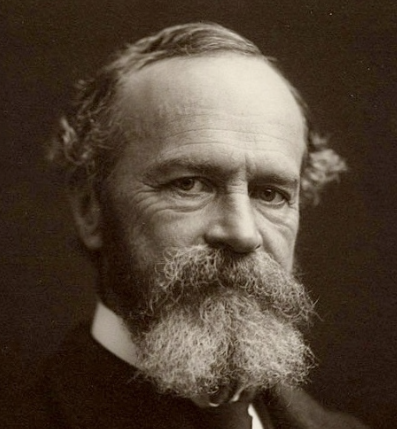
Need and struggle are what excite and inspire us; our hour of triumph is what brings the void. Not the Jews of the captivity, but those of the days of Solomon's glory are those from whom the pessimistic utterances in our Bible come.
▼
Source
source
"Is Life Worth Living?"

3 months 2 weeks ago
The best way to drive out the devil, if he will not yield to texts of Scripture, is to jeer and flout him, for he cannot bear scorn.
▼
Source
source
Martin Luther, quoted at the beginning of The Screwtape Letters
3 months 2 weeks ago
It is dangerous to be right in matters where established men are wrong.
▼
Source
source
Le Siècle de Louis XIV (1752) Fontenelle Note: The most frequently attributed variant of this quote is: It is dangerous to be right when the government is wrong.
1 month 1 week ago
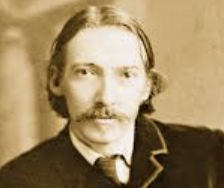
In anything fit to be called by the name of reading, the process itself should be absorbing and voluptuous; we should gloat over a book, be rapt clean out of ourselves, and rise from the perusal, our mind filled with the busiest, kaleidoscopic dance of images, incapable of sleep or of continuous thought. The words, if the book be eloquent, should run thenceforward in our ears like the noise of breakers, and the story, if it be a story, repeat itself in a thousand coloured pictures to the eye.
▼
Source
source
A Gossip on Romance, printed in Longman's Magazine (November 1882).
2 months 1 day ago
One of the most exquisite pleasures of human love - to serve the loved one without his knowing it - is only possible, as regards the love of God, through atheism.
▼
Source
source
Last Notebook (1942) p. 84
3 months 2 weeks ago
For my part, while I am as convinced a Socialist as the most ardent Marxian, I do not regard Socialism as a gospel of proletarian revenge, nor even, primarily, as a means of securing economic justice. I regard it primarily as an adjustment to machine production demanded by considerations of common sense, and calculated to increase the happiness, not only of proletarians, but of all except a tiny minority of the human race.
▼
Source
source
Ch. 7: The Case for Socialism
3 months 2 weeks ago
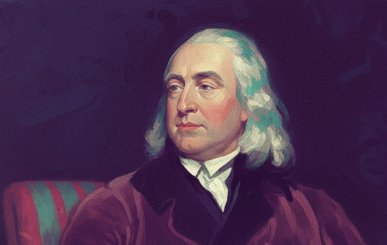
Pleasure is in itself a good; nay, even setting aside immunity from pain, the only good: pain is in itself an evil; and, indeed, without exception, the only evil; or else the words good and evil have no meaning. And this is alike true of every sort of pain, and of every sort of pleasure.
▼
Source
source
Ch. 10: Of Motives

2 months 2 weeks ago
That Vulcan gave arrows unto Apollo and Diana the fourth day after their Nativities, according to Gentile Theology, may pass for no blind apprehension of the Creation of the Sun and Moon, in the work of the fourth day.
▼
Source
source
Opening lines of Ch. 1
CivilSimian.com created by AxiomaticPanic, CivilSimian, Kalokagathia