


2 months 3 weeks ago
No one entrusts a secret to a drunken man; but one will entrust a secret to a good man; therefore, the good man will not get drunk.
▼
Source
source
As quoted in Epistulae morales ad Lucilium by Seneca, Epistle LXXXIII (trans. R. M. Gummere)

3 months 2 weeks ago
Money does not arise by convention, any more than the state does. It arises out of exchange, and arises naturally out of exchange; it is a product of the same.
▼
Source
source
Notebook I, The Chapter on Money, p. 85.

1 month 1 week ago
Bless advertising art for its pictorial vitality and verbal creativity.
▼
Source
source
(p. 18)

2 months 1 week ago
We are all secularised anarchists today.

1 month 3 weeks ago
We Americans claim to be a peace-loving people. We hate bloodshed; we are opposed to violence. Yet we go into spasms of joy over the possibility of projecting dynamite bombs from flying machines upon helpless citizens. We are ready to hang, electrocute, or lynch anyone, who, from economic necessity, will risk his own life in the attempt upon that of some industrial magnate. Yet our hearts swell with pride at the thought that America is becoming the most powerful nation on earth, and that it will eventually plant her iron foot on the necks of all other nations. Such is the logic of patriotism.
2 weeks ago
I agree with Paul that love is more important than faith and hope; but so are honesty, integrity, and moral courage. The world needs less faith and more love and nobility.
▼
Source
source
Preface
1 month ago
The chalk is no unimportant element in the masonry of the earth's crust, and it impresses a peculiar stamp, varying with the conditions to which it is exposed, on the scenery of the districts in which it occurs.

Just now
He who wants to govern must have insight into the hearts of men and act accordingly.
2 months 1 week ago
One cannot live without motives. I have no motives left, and I am living.
1 month 4 weeks ago
The fear of being alone, or of being unloved, had caused women of all races to passively accept sexism and sexist oppression.
3 weeks 6 days ago
A life which does not go into action is a failure.
▼
Source
source
Vol. 10
2 months 1 week ago
The man that does not know himself not to be at the mercy of other men, that does not feel that he is invulnerable to all the vicissitudes of fortune, is incapable of a constant and inflexible virtue.
▼
Source
source
Book V, "Of Education"
2 months 1 week ago
A human being possessed by a belief and not eager to pass it on to others is a phenomenon alien to the earth, where our mania for salvation makes life unbreathable.

4 months 2 weeks ago
Not merely in the realm of commerce but in the world of ideas as well our age is organizing a regular clearance sale. Everything is to be had at such a bargain that it is questionable whether in the end there is anybody who will want to bid. Every speculative price-fixer who conscientiously directs attention to the significant march of modern philosophy, every Privatdocent, tutor, and student, every crofter and cottar goes further. Perhaps it would be untimely and ill-timed to ask them where they are going.

3 months 2 weeks ago
As to [General Douglas] Macarthur, I don't feel in a position to have clear opinions about anyone I know only from newspapers. You see, whenever they deal with anyone (or anything) I know myself, I find they're always a mass of lies & misunderstandings: so I conclude they're no better in the places where I don't know.
▼
Source
source
Letter to Mrs. Mary Van Deusen, April 30, 1951. Collected Letters of C. S. Lewis, vol. 3, "Narnia, Cambridge, and Joy", 1950-1963. p. 114.

4 months ago
I became evil for no reason. I had no motive for my wickedness except wickedness itself. It was foul, and I loved it. I loved the self-destruction, I loved my fall, not the object for which I had fallen but my fall itself. My depraved soul leaped down from your firmament to ruin. I was seeking not to gain anything by shameful means, but shame for its own sake.
▼
Source
source
II, 4

3 weeks 3 days ago
No amount of happiness enjoyed by some organisms can notionally justify the indescribable horrors of Auschwitz. [...] Nor can the fun and games outweigh the sporadic frightfulness of pain and despair that occurs every second of every day. For there's nothing inherently wrong with non-sentience or [...] non-existence; whereas there is something frightfully and self-intimatingly wrong with suffering.
▼
Source
source
2.7 Why Be Negative?

3 months 2 weeks ago
We have been given free will, in order that we may will our self-will out of existence and so come to live continuously in a 'state of grace.' All our actions must be directed, in the last analysis, to making ourselves passive in relation to the activity and the being of divine reality. We are, as it were, aeolian harps, endowed with the power either to expose themselves to the wind of the Spirit or to shut themselves away from it.
2 weeks 4 days ago
Utopia is a meta-utopia: the environment in which Utopian experiments may be tried out; the environment in which people are free to do their own thing; the environment which must, to a great extent, be realized first if more particular Utopian visions are to be realized stably.
▼
Source
source
Ch. 10 : A Framework for Utopia; The Framework, p. 312

6 days ago
Literature, the strange entity so called,-that indeed is here. If Literature continue to be the haven of expatriated spiritualisms, and have its Johnsons, Goethes and true Archbishops of the World, to show for itself as heretofore, there may be hope in Literature. If Literature dwindle, as is probable, into mere merry-andrewism, windy twaddle, and feats of spiritual legerdemain, analogous to rope-dancing, opera-dancing, and street-fiddling with a hat carried round for halfpence, or for guineas, there will be no hope in Literature.

2 months 1 week ago
You have heard that it was said to those of old, 'You shall not commit adultery.' But I say to you that whoever looks at a woman to lust for her has already committed adultery with her in his heart. If your right eye causes you to sin, pluck it out and cast it from you; for it is more profitable for you that one of your members perish, than for your whole body to be cast into hell. And if your right hand causes you to sin, cut it off and cast it from you; for it is more profitable for you that one of your members perish, than for your whole body to be cast into hell.
▼
Source
source
Exodus 20:14, Seventh Commandment Matthew 5:27-30 (NKJV)

3 months 2 weeks ago
The believers in the non-natural character of sudden conversion have had practically to admit that there is no unmistakable class-mark distinctive of all true converts. The super-normal incidents, such as voices and visions and overpowering impressions of the meaning of suddenly presented scripture texts, the melting emotions and tumultuous affections connected with the crisis of change, may all come by way of nature, or worse still, be counterfeited by Satan. The real witness of the spirit to the second birth is to be found only in the disposition of the genuine child of God, the permanently patient heart, the love of self eradicated. And this, it has to be admitted, is also found in those who pass no crisis, and may even be found outside of Christianity altogether.
▼
Source
source
Lecture X, "Conversion, concluded"
4 months ago
For if a thing is not diminished by being shared with others, it is not rightly owned if it is only owned and not shared.
▼
Source
source
1:1:1 English Latin Latin: Omnis enim res quae dando non deficit, dum habetur et non datur, nondum habetur quomodo habenda est.

1 month 3 weeks ago
What concerns me alone I only think, what concerns my friends I tell them, what can be of interest to only a limited public I write, and what the world ought to know is printed...
▼
Source
source
B 52

2 months 2 weeks ago
To study the meaning of man and of life - I am making significant progress here. I have faith in myself. Man is a mystery: if you spend your entire life trying to puzzle it out, then do not say that you have wasted your time. I occupy myself with this mystery, because I want to be a man.
▼
Source
source
Personal correspondence (1839), as quoted in Dostoevsky: His Life and Work (1971) by Konstantin Mochulski, as translated by Michael A. Minihan, p. 17
1 month 1 week ago
Electric circuitry profoundly involves men with one another. Information pours upon us, instantaneously and continuously.
6 days ago
A great man shows his greatness by the way he treats little men.

3 months 1 week ago
All those movements which took place in the fifteenth and sixteenth centuries and which had the Reformation as their main expression and result should be analyzed as a great crisis of the Western experience of subjectivity and a revolt against the kind of religious and moral power which gave form, during the Middle Ages, to this subjectivity. The need to take a direct part in spiritual life, in the work of salvation, in the truth which lies in the Book-all that was a struggle for a new subjectivity.
▼
Source
source
p. 782

2 months 3 weeks ago
The universal Intellect is the intimate, most real, peculiar and powerful part of the soul of the world. This is the single whole which filleth the whole, illumineth the universe and directeth nature to the production of natural things, as our intellect with the congruous production of natural kinds.
3 months 2 weeks ago
To be independent of public opinion is the first formal condition of achieving anything great or rational whether in life or in science. Great achievement is assured, however, of subsequent recognition and grateful acceptance by public opinion, which in due course will make it one of its own prejudices.
▼
Source
source
Sect. 318, as translated by T. M. Knox,, 1952
2 months 1 week ago
For the first time in the revolutionary movement of 1848, for the first time since 1793, a nation surrounded by superior counter-revolutionary forces dares to counter the cowardly counter-revolutionary fury by revolutionary passion, the terreur blanche by the terreur rouge. For the first time after a long period we meet with a truly revolutionary figure, a man who in the name of his people dares to accept the challenge of a desperate struggle, who for his nation is Danton and Carnot in one person - Lajos Kossuth.
▼
Source
source
The Magyar Struggle in Neue Rheinische Zeitung (13 January 1849).
1 month 2 weeks ago
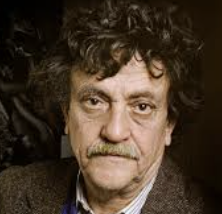
I never knew a writer's wife who wasn't beautiful.
▼
Source
source
Preface (p. xi)


1 month 1 week ago
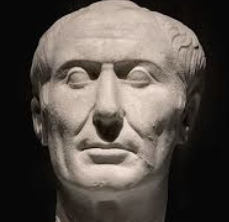
The fear of death is more to be dreaded than death itself.
▼
Source
source
Maxim 511
5 days ago
History, if viewed as a repository for more than anecdote or chronology, could produce a decisive transformation in the image of science by which we are now possessed.
1 week 3 days ago
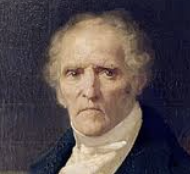
There is a class of writers who are ever boasting of the progress of civilization and of the human mind in modern times. If we were to credit their pretensions, we should be led to believe that the science of society had reached its highest degree of perfection, because old metaphysical and economic theories have been somewhat refined upon.In answer to their boasts of social progress, it is not sufficient to refer to the deeply-rooted social evils which exist, and which prey upon our boasted civilized social order. We will mention but a single one, the frightful increase of national debts and of taxation.
▼
Source
source
The Theory of Social Organization. Harmonian Man: Selected Writings of Charles Fourier
3 months 1 week ago
Yet it seems extraordinary that the justice of increasing the expectations of the better placed by a billion dollars, say, should turn on whether the prospects of the least favored increase or decrease by a penny.
▼
Source
source
Chapter III, Section 26, pg. 157

3 months 2 weeks ago
The prejudices of the second species, since they impose upon the intellect by the sensual conditions restricting the mind if it wishes in certain cases to attain to what is intellectual, lurk more deeply. One of them is that which affects knowledge of quantity, the other that affecting knowledge of qualities generally. The former is: every actual multiplicity can be given numerically, and hence, every infinite quantity; the latter, whatever is impossible contradicts itself. In either of them the concept of time, it is true, does not enter into the very notion of the predicate, nor is it attributed as a qualification to the subject. But yet it serves as a means for forming an idea of the predicate, and thus, being a condition, affects the intellectual concept of the subject to the extent that the latter is only attained by its aid.

3 months 2 weeks ago
To Americans. That some desperate wretches should be willing to steal and enslave men by violence and murder for gain, is rather lamentable than strange. But that many civilized, nay, christianized people should approve, and be concerned in the savage practice, is surprising; and still persist, though it has been so often proved contrary to the light of nature, to every principle of Justice and Humanity, and even good policy, by a succession of eminent men, and several late publications.
7 months 2 weeks ago
In the more sophisticated versions of the critics of ideology - that developed by the Frankfurt School, for example - it is not just a question of seeing things (that is, social reality) as they 'really are," of throwing away the distorting spectacles of ideology; the main point is to see how the reality itself cannot reproduce itself without this so-called ideological mystification. The mask is not simply hiding the real state of things; the ideological distortion is written into its very essence... the moment we see it 'as it really is,' this being dissolves itself into nothingness or, more precisely, it changes into another kind of reality. That is why we must avoid simple metaphors of demasking, of throwing away the veils which are supposed to hide the naked reality.

3 months 5 days ago
In the beginning there were two primal spirits,Twins spontaneously active,These are the Good and the Evil, in thought, and in word, and in deed.
▼
Source
source
Ahunuvaiti Gatha; Yasna 30, 3.

3 months 2 weeks ago
It is in vain to dream of a wildness distant from ourselves.
▼
Source
source
August 30, 1856
1 week ago
All things are subject to decay and change.
▼
Source
source
The General History of Polybius as translated by James Hampton' (1762), Vol. II, pp. 177-178

3 months 2 weeks ago
An atheist, like a Christian, holds that we can know whether or not there is a God. The Christian holds that we can know there is a God; the atheist, that we can know there is not. The Agnostic suspends judgment, saying that there are not sufficient grounds either for affirmation or for denial. At the same time, an Agnostic may hold that the existence of God, though not impossible, is very improbable; he may even hold it so improbable that it is not worth considering in practice. In that case, he is not far removed from atheism. His attitude may be that which a careful philosopher would have towards the gods of ancient Greece. If I were asked to prove that Zeus and Poseidon and Hera and the rest of the Olympians do not exist, I should be at a loss to find conclusive arguments. An Agnostic may think the Christian God as improbable as the Olympians; in that case, he is, for practical purposes, at one with the atheists.
▼
Source
source
What is an Agnostic?, 1953
2 months 1 week ago
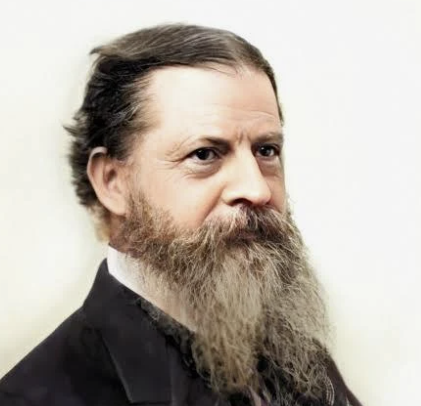
May some future student go over this ground again, and have the leisure to give his results to the world.
1 month 3 weeks ago
The application of psychoanalysis to sociology must definitely guard against the mistake of wanting to give psychoanalytic answers where economic, technical, or political facts provide the real and sufficient explanation of sociological questions. On the other hand, the psychoanalyst must emphasize that the subject of sociology, society, in reality consists of individuals, and that it is these human beings, rather than abstract society as such, whose actions, thoughts, and feelings are the object of sociological research.
▼
Source
source
"Psychoanalyse und Soziologie" (1929); published as "Psychoanalysis and Sociology" as translated by Mark Ritter, in Critical Theory and Society : A Reader (1989) edited by S. E. Bronner and D. M. Kellner

3 months 3 weeks ago
One may be humble out of pride.
▼
Source
source
Book II, Ch. 17. Of Presumption

3 months 2 weeks ago
Every man I meet is in some way my superior, and in that, I can learn of him.
▼
Source
source
As quoted in Think, Vol. 4-5 (1938), p. 32
2 months 1 week ago
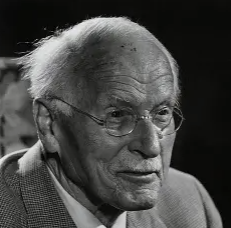
The little world of childhood with its familiar surroundings is a model of the greater world. The more intensively the family has stamped its character upon the child, the more it will tend to feel and see its earlier miniature world again in the bigger world of adult life. Naturally this is not a conscious, intellectual process.
▼
Source
source
The Theory of Psychoanalysis
CivilSimian.com created by AxiomaticPanic, CivilSimian, Kalokagathia