


3 months 2 weeks ago
There is nothing in any object, consider'd in itself, which can afford us a reason for drawing a conclusion beyond it; [...] even after the observation of the frequent or constant conjunction of objects, we have no reason to draw any inference concerning any object beyond those of which we have had experience.
▼
Source
source
Part 3, Section 12
3 months 2 weeks ago
The only fence against the world is a thorough knowledge of it, into which a young gentleman should be enter'd by degrees, as he can bear it; and the earlier the better, so he be in safe and skillful hands to guide him.
▼
Source
source
Sec. 94

4 months 1 week ago
There is less trouble and trauma involved in writing a new piece than in trying to salvage an unsatisfactory old one.

3 months 1 week ago
The problem is not to discover in oneself the truth of one's sex, but, rather, to use one's sexuality henceforth to arrive at a multiplicity of relationships. And, no doubt, homosexuality is not a form of desire but something desirable. Therefore, we have to work at becoming homosexuals.
▼
Source
source
"Friendship as a Way of Life," interview in Gai pied, April 1981, as translated in Ethics, Subjectivity and Truth (1994), pp. 135-136
4 months 1 week ago
Weisinger, a couple of years ago, made up the following story: "Isaac Asimov was asked how Superman could fly faster than the speed of light, which was supposed to be an absolute limit. To this Asimov replied, 'That the speed of light is a limit is a theory; that Superman can travel faster than light is a fact.'"

3 months 1 week ago
If you die, I will lie down beside you and I will stay there until the end, without eating or drinking, you will rot in my arms and I will love you as carcass: for you love nothing if you do not love everything.
▼
Source
source
Act 10, sc. 2
1 month 4 weeks ago
As more and more women acquired prestige, fame, or money from feminist writings or from gains from feminist movement for equality in the workforce, individual opportunism undermined appeals for collective struggle. Women who were not opposed to patriarchy, capitalism, classism, or racism labeled themselves "feminist." Their expectations were varied. Privileged women wanted social equality with men of their class; some women wanted equal pay for equal work; others wanted an alternative lifestyle. Many of these legitimate concerns were easily co-opted by the ruling capitalist patriarchy.
▼
Source
source
p. 7.
5 days ago
Out-of-date theories are not in principle unscientific because they have been discarded. That choice, however, makes it difficult to see scientific development as a process of accretion.

3 weeks 3 days ago
There is no disease so destructive as lust.
2 months ago
By abstaining from all definite content, whether as formal logic and theory of science or as the legend of Being beyond all beings, philosophy declared its bankruptcy regarding concrete social goals.
▼
Source
source
p. 6

3 months 3 weeks ago
Above all, every relation must be considered as suspicious, which depends in any degree upon religion, as the prodigies of Livy: And no less so, everything that is to be found in the writers of natural magic or alchemy, or such authors, who seem, all of them, to have an unconquerable appetite for falsehood and fable.
▼
Source
source
Aphorism 29

2 months 1 week ago
Art can speak its own language only as long as the images are alive which refuse and refute the established order.
▼
Source
source
p. 62
3 months 1 week ago
He who is subjected to a field of visibility, and who knows it, assumes responsibility for the constraints of power; he makes them play spontaneously upon himself; he inscribes in himself the power relation in which he simultaneously plays both roles; he becomes the principle of his own subjection.
▼
Source
source
Part Three, Panopticism

3 months 1 day ago
Perseverance is more prevailing than violence; and many things which cannot be overcome when they are together, yield themselves up when taken little by little.
▼
Source
source
Sertorius 16 (Tr. Dryden and Clough)

3 months 4 days ago
He is not poor who has enough of things to use. If it is well with your belly, chest and feet, the wealth of kings can give you nothing more.
▼
Source
source
Book I, epistle xii, line 4
2 months ago
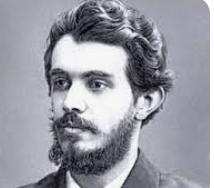
The whole economic system of Capitalism is an offshoot of a devouring and overwhelming lust, of a kind that can hold sway only in a society that has deliberately renounced the Christian asceticism and turned away from Heaven to give itself over exclusively to earthly gratifications. ... It is the result of a secularization of economic life, and by it the hierarchical subordination of the material to the spiritual is inverted. The autonomy of economics has ended in their dominating the whole life of human societies: the worship of Mammon has become the determining force of the age. And the worst of it is that this undisguised "mammonism" is regarded as a very good thing, an attainment to the knowledge of truth and a release from illusions. Economic materialism formulates this to perfection when it brands the whole spiritual life of man as a deception and a dream.
▼
Source
source
p. 92

3 months 1 week ago
There is an almost universal tendency, perhaps an inborn tendency, to suspect the good faith of a man who holds opinions that differ from our own opinions. ... It obviously endangers the freedom and the objectivity of our discussion if we attack a person instead of attacking an opinion or, more precisely, a theory.
▼
Source
source
"The Importance of Critical Discussion" in On the Barricades: Religion and Free Inquiry in Conflict (1989) by Robert Basil
1 month 3 days ago
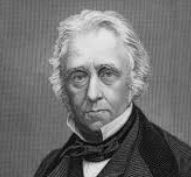
I would not give up the keys to the granary, because I know that, by doing so, I should turn scarcity into a famine.
▼
Source
source
Sullivan, p. 266

1 week ago
The social contract between all people around the world only has one requirement: Don't kill. From there it's those who don't agree, those that agree but have some reactive justification, and those that agree and don't kill.

1 month 3 weeks ago
What concerns me alone I only think, what concerns my friends I tell them, what can be of interest to only a limited public I write, and what the world ought to know is printed...
▼
Source
source
B 52

2 months 2 weeks ago
If the people are happy, united, wealthy, and powerful, we presume the rest. We conclude that to be good from whence good is derived.

4 months 2 weeks ago
There are many people who reach their conclusions about life like schoolboys; they cheat their master by copying the answer out of a book without having worked out the sum for themselves.
4 months 2 weeks ago
How absurd men are! They never use the liberties they have, they demand those they do not have. They have freedom of thought, they demand freedom of speech. Either/Or Part I, Swenson Translation p. 19 Variations include: People demand freedom of speech to make up for the freedom of thought, which they avoid. People demand freedom of speech as a compensation for the freedom of thought which they seldom use.


3 months 2 weeks ago
Why has the Revolution of France been stained with crimes, which the Revolution of the United States of America was not? Men are physically the same in all countries; it is education that makes them different. Accustom a people to believe that priests or any other class of men can forgive sins, and you will have sins in abundance.
▼
Source
source
Worship and Church Bells, 1797

2 months 2 weeks ago
We have, indeed, in the part taken by many scientific men in this controversy of "Law versus Miracle," a good illustration of the tenacious vitality of superstitions. Ask one of our leading geologists or physiologists whether he believes in the Mosaic account of the creation, and he will take the question as next to an insult. Either he rejects the narrative entirely, or understands it in some vague non-natural sense. ...Whence ...this notion of "special creations"...Why, after rejecting all the rest of the story, he should strenuously defend this last remnant of it, as though he had received it on valid authority, he would be puzzled to say.

3 months 1 week ago
We are not necessarily doubting that God will do the best for us; we are wondering how painful the best will turn out to be.
▼
Source
source
Letters of C. S. Lewis (29 April 1959), para. 1, p. 285 - as reported in The Quotable Lewis (1989), p. 469
3 months 1 week ago
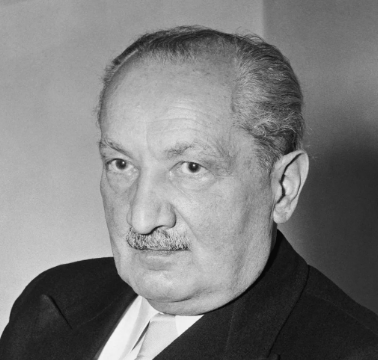
There is no information about the thingness of the thing without knowledge of the kind of truth in which the thing stands. But there is no information about this truth of the thing without knowledge of the thingness of the thing whose truth is in question. Where are we to get a foothold? The ground slips away under us. Perhaps we are already close to falling into the well. At any rate the housemaids are already laughing.
▼
Source
source
p. 27
2 months 6 days ago
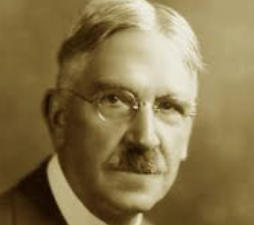
Movement in direct experience is alteration in the qualities of objects, and space as experienced is an aspect of this qualitative change. Up and down, back and front, to and fro, this side and that- or right and left- here and there, feel differently. The reason they do is that they are not static points in something itself static, but objects in movement, qualitative changes of value. For "back" is short for backwards and front for forwards. So with velocity. Mathematically there are no such things as fast and slow. They mark simply greater and less on a number scale. As experienced they are qualitatively as unlike as noise and silence, heat and cold, black and white. To be forced to wait a long time for an important event to happen is a length very different from that measured by the movements of the hands of a clock. It is something qualitative.

3 months 2 weeks ago
The nature of power is such that even those who have not sought it, but have had it forced upon them, tend to acquire a taste for more.
▼
Source
source
Chapter 1 (p. 12)
2 months 2 weeks ago
Corrupt influence, which is itself the perennial spring of all prodigality, and of all disorder; which loads us, more than millions of debt; which takes away vigor from our arms, wisdom from our councils, and every shadow of authority and credit from the most venerable parts of our constitution.

1 month 1 week ago
Man works when he is partially involved. When he is totally involved he is at play or leisure.
3 months 4 weeks ago
When I see someone in anxiety, I say to myself, What can it be that this fellow wants? For if he did not want something that was outside of his control, how could he still remain in anxiety?
▼
Source
source
Book II, ch. 13, 1.

2 months 1 week ago
The discussion of the sexual problem is only a somewhat crude prelude to a far deeper question, and that is the question of the psychological relationship between the sexes. In comparison with this the other pales into insignificance, and with it we enter the real domain of woman. Woman's psychology is founded on the principle of Eros, the great binder and loosener, whereas from ancient times the ruling principle ascribed to man is Logos.
▼
Source
source
P.254
1 month 1 week ago
We begin again to structure the primordial feelings...from which 3000 years of literacy divorced us. We begin again to live a myth.
▼
Source
source
(p. 17)
3 months 1 week ago
For anyone who at the end of Western philosophy can and must still question philosophically, the decisive question is no longer merely "What basic character do beings manifest?" or "How may the being of beings be characterized?" but "What is this 'being' itself?" The decisive question is that of "the meaning of being," not merely that of the being of beings.
▼
Source
source
p. 18
3 months 2 weeks ago
And suddenly I had an inkling of what it must feel like to be mad.

2 months 2 weeks ago
I am in no way facetious, nor disposed for the mirth and galliardize of company, yet in one dream I can compose a whole Comedy, behold the action, apprehend the jests, and laugh myself awake at the conceits thereof.
▼
Source
source
Section 11

2 months 2 weeks ago
I'll know how to die with courage; that is easier than living.
▼
Source
source
Act II.

4 months 2 weeks ago
Everything that depends on the action of nature is by nature as good as it can be, and similarly everything that depends on art or any rational cause, and especially if it depends on the best of all causes. To entrust to chance what is greatest and most noble would be a very defective arrangement.

1 month 3 weeks ago
Suffering is admittedly one of the central problems of human existence; but this is because we have a suspicion that it is all for nothing. If we had a certainty about meaning, the suffering would be bearable. With no certainty of meaning, even comfort begins to feel futile.
▼
Source
source
p. 89
4 days ago
There is no greater drama in human record than the sight of a few Christians, scorned or oppressed by a succession of emperors, bearing all trials with a fierce tenacity, multiplying quietly, building order while their enemies generated chaos, fighting the sword with the word, brutality with hope, and at last defeating the strongest state that history has known. Caesar and Christ had met in the arena, and Christ had won.
▼
Source
source
Chapter 30, part 1, p. 652

1 week 2 days ago
Neoconservatives believed that history can be pushed along with the right application of power and will. Leninism was a tragedy in its Bolshevik version, and it has returned as farce when practiced by the United States. Neoconservatism, as both a political symbol and a body of thought, has evolved into something I can no longer support. ..."War" is the wrong metaphor for the broader struggle, since wars are fought at full intensity and have clear beginnings and endings. Meeting the jihadist challenge is more of a "long, twilight struggle" whose core is not a military campaign but a political contest for the hearts and minds of ordinary Muslims around the world.
▼
Source
source
From the essay "After Neoconservatism" in the New York Times Magazine

3 months 2 weeks ago
Men tend to have the beliefs that suit their passions. Cruel men believe in a cruel God, and use their belief to excuse their cruelty. Only kindly men believe in a kindly God, and they would be kindly in any case.
▼
Source
source
In London Calling (1947), p. 18

1 week 3 days ago
Every identity, such (third) critics say, even the multitude, must be defined by its remained, those outside of it, call them excluded, the abject, or the subaltern. ... There can certainly be points or nodes outside a network but none are necessarily outside. Its boundaries are indefinite and open. ... None is necessarily excluded but this inclusion is not guaranteed: the expansion of the common is a practical, political manner.
▼
Source
source
226

2 months 1 week ago
My soul is exceeding sorrowful, even unto death: tarry ye here, and watch with me.
▼
Source
source
26:38 (KJV)
2 months 1 week ago
Simon Peter said to Him, "Let Mary leave us, for women are not worthy of Life." Jesus said, "I myself shall lead her in order to make her male, so that she too may become a living spirit resembling you males. For every woman who will make herself male will enter the Kingdom of Heaven."
1 month 3 weeks ago
Since my world picture approximates reality only crudely, I cannot aspire to optimize anything; at most, I can aim at satisficing. Searching for the best can only dissipate scarce cognitive resources; the best is the enemy of the good.
▼
Source
source
(p.361) p. 361; As cited in Ronald J. Baker (2010) Implementing Value Pricing: A Revolutionary Business Model for Professional Firms. p. 122.
3 months 5 days ago
Eventually, I believe, current attempts to understand the mind by analogy with man-made computers that can perform superbly some of the same external tasks as conscious beings will be recognized as a gigantic waste of time.
▼
Source
source
p. 16.
3 months 2 weeks ago
Whensoever therefore the legislative shall transgress this fundamental rule of society; and either by ambition, fear, folly or corruption, endeavour to grasp themselves, or put into the hands of any other, an absolute power over the lives, liberties, and estates of the people; by this breach of trust they forfeit the power the people had put into their hands for quite contrary ends, and it devolves to the people, who have a right to resume their original liberty, and, by the establishment of a new legislative, (such as they shall think fit) provide for their own safety and security, which is the end for which they are in society.
▼
Source
source
Second Treatise of Civil Government, Ch. XIX, sec. 222
CivilSimian.com created by AxiomaticPanic, CivilSimian, Kalokagathia