

1 month 1 day ago
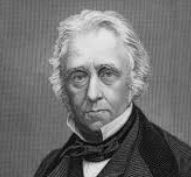
What an incalculable debt do we owe to that little speck of land, Greece.-The principles of taste, the finest models of composition, the doctrines and the glorious examples to which we owe political freedom, the arts, the sciences, architecture, sculpture, every thing that is great and splendid in literature and politics, must be considered as ultimately derived from that little peninsula.
▼
Source
source
Letter to Zachary Macaulay (8 September 1821), quoted in The Letters of Thomas Babington Macaulay, Volume I: 1807-February 1831, ed. Thomas Pinney (1974), p. 163
2 months 1 week ago
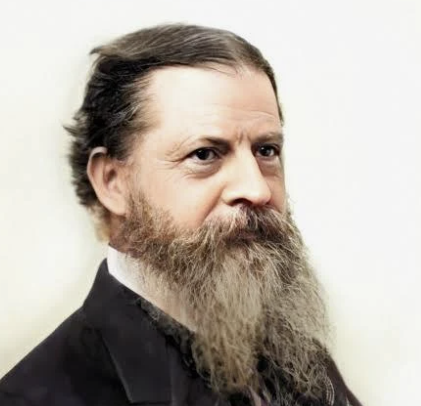
A certain maxim of Logic which I have called Pragmatism has recommended itself to me for diverse reasons and on sundry considerations. Having taken it as my guide for most of my thought, I find that as the years of my knowledge of it lengthen, my sense of the importance of it presses upon me more and more. If it is only true, it is certainly a wonderfully efficient instrument. It is not to philosophy only that it is applicable. I have found it of signal service in every branch of science that I have studied. My want of skill in practical affairs does not prevent me from perceiving the advantage of being well imbued with pragmatism in the conduct of life.
▼
Source
source
Lecture I : Pragmatism : The Normative Sciences, CP 5.14
4 months ago
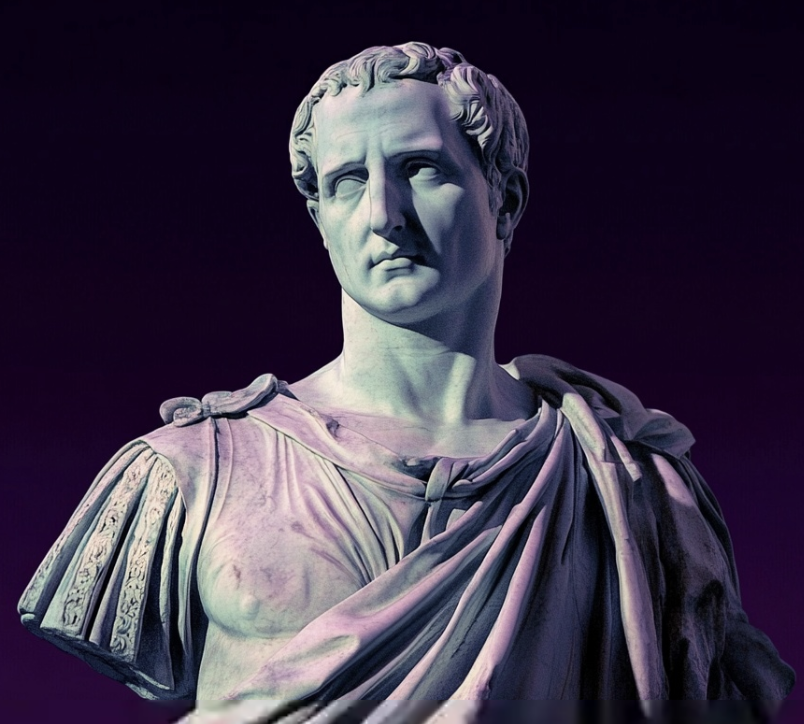
How long will men dare to call anything expedient that is not right? Can odium and infamy be of service to any empire, which ought to be supported by glory and by the good-will of its allies? I was often at variance even with my friend Cato. He seemed to me to guard the treasury and the revenues too obstinately, to refuse everything to the farmers of the revenue, and many things to our allies; while we ought to be generous to our allies, and to deal with the farmers of the revenue as leniently as we individually do with our own tenants, especially as the union of orders to which such a course would conduce is for the well-being of the state.
▼
Source
source
Book III, Sect. 22, as translated by Andrew P. Peabody
3 months 1 week ago
The appearance in nineteenth-century psychiatry, jurisprudence, and literature of a whole series of discourses on the species and subspecies of homosexuality, inversion, pederasty, and "psychic hermaphroditism" made possible a strong advance of social controls into this area of "perversity"; but it also made possible the formation of a "reverse" discourse: homosexuality began to speak in its own behalf, to demand that its legitimacy or "naturality" be acknowledged, often in the same vocabulary, using the same categories by which it was medically disqualified.
▼
Source
source
Vol. I, p. 101

3 months 1 week ago
Solitude, the safeguard of mediocrity, is to genius the stern friend.
▼
Source
source
Culture

3 months 2 weeks ago
The greatest improvement in the productive powers of labour, and the greatest part of skill, dexterity, and judgment with which it is any where directed, or applied, seem to have been the effects of the division of labour.
▼
Source
source
Chapter I, p. 7
1 month 3 weeks ago
Men and women meet now to be idle. Is it extraordinary that they do not know each other, and that, in their mutual ignorance, they form no surer friendships? Did they meet to do something together, then indeed they might form some real tie. But, as it is, they are not there, it is only a mask which is there - a mouth-piece of ready-made sentences about the "topics of the day"; and then people rail against men for choosing a woman "for her face" - why, what else do they see?
2 months 5 days ago
If, as I believe, the ends of men are many, and not all of them are in principle compatible with each other, then the possibility of conflict - and of tragedy - can never wholly be eliminated from human life, either personal or social. The necessity of choosing between absolute claims is then an inescapable characteristic of the human condition. This gives its value to freedom as Acton conceived of it - as an end in itself, and not as a temporary need, arising out of our confused notions and irrational and disordered lives, a predicament which a panacea could one day put right.

2 months 1 week ago
We had nothing to say to one another, and while I was manufacturing my phrases I felt that earth was falling through space and that I was falling with it at a speed that made me dizzy.
2 months 2 weeks ago
Gaiety - a quality of ordinary men. Genius always presupposes some disorder in the machine.
▼
Source
source
"Diseases"

2 months 3 weeks ago
A transition, therefore, is not undeservedly made from sense to consideration, and from this to the nobler energies of intellect. Hence, as the certain knowledge of numbers received its origin among the Phœnicians, on account of merchandise and commerce, so geometry was found out among the Egyptians from the distribution of land. When Thales, therefore, first went into Egypt, he transferred this knowledge from thence into Greece: and he invented many things himself, and communicated to his successors the principles of many. Some of which were, indeed, more universal, but others extended to sensibles.
▼
Source
source
Chap. IV.

3 months 2 weeks ago
The best life is the one in which the creative impulses play the largest part and the possessive impulses the smallest.
3 months 1 week ago
The writers by whom, more than by any others, a new mode of political thinking was brought home to me, were those of the St. Simonian school in France. In 1829 and 1830 I became acquainted with some of their writings. They were then only in the earlier stages of their speculations. They had not yet dressed out their philosophy as a religion, nor had they organized their scheme of Socialism. They were just beginning to question the principle of hereditary property. I was by no means prepared to go with them even this length; but I was greatly struck with the connected view which they for the first time presented to me, of the natural order of human progress; and especially with their division of all history into organic periods and critical periods.
▼
Source
source
(p. 163)

2 months 2 weeks ago
I have often admired the mystical way of Pythagoras, and the secret Magic of numbers.
▼
Source
source
Section 12
3 months 2 weeks ago
This idea of weapons of mass extermination is utterly horrible and is something which no one with one spark of humanity can tolerate. I will not pretend to obey a government which is organising a mass massacre of mankind.
▼
Source
source
Speech in Birmingham, England encouraging civil disobedience in support of nuclear disarmament, 4/15/1961
2 months 2 weeks ago
There is no good father who would want to resemble our Heavenly Father.
▼
Source
source
No. 51
2 months 1 week ago
Illusion begets and sustains the world; we do not destroy one without destroying the other. Which is what I do every day. An apparently ineffectual operation, since I must begin all over again the next day.
1 month 1 day ago
What a singular destiny has been that of this remarkable man! To be regarded in his own age as a classic, and in ours as a companion! To receive from his contemporaries that full homage which men of genius have in general received only from posterity! To be more intimately known to posterity than other men are known to their contemporaries!
▼
Source
source
'Samuel Johnson', The Edinburgh Review (September 1831), quoted in T. B. Macaulay, Critical and Historical Essays Contributed to The Edinburgh Review, Vol. I (1843), p. 407

2 weeks 6 days ago
The belief that torture is always wrong is a prejudice inherited from an obsolete philosophy. We need to shed the belief that human rights are violated when a terrorist is tortured. As Rawls and others have shown, basic freedoms must form a coherent whole. Self-evidently, there can be no right to attack basic human rights. Therefore, once the proper legal procedures are in place, torturing terrorists cannot violate their rights. In fact, in a truly liberal society, terrorists have an inalienable right to be tortured.This is what demonstrates the moral superiority of liberal societies over others, past and present. Other societies have degraded terrorists by subjecting them to lawless and unaccountable power. In the new world that is taking shape, terrorists, although they themselves degrade human rights by practising terrorism, will be afforded the full dignity of due legal process, even while being tortured.

3 months 1 week ago
Undeterred by this examination, the French Revolution gave rise to ideas which led beyond the ideas of the entire old world order. The revolutionary movement which began in 1789 in the Cercle Social, which in the middle of its course had as its chief representatives Leclerc and Roux, and which finally with Babeuf's conspiracy was temporarily defeated, gave rise to the communist idea which Babeuf's friend Buonarroti re-introduced in France after the Revolution of 1830. This idea, consistently developed, is the idea of the new world order.
▼
Source
source
Chapter 6, 3

1 month 3 weeks ago
To be content with life - or to live merrily, rather - all that is required is that we bestow on all things only a fleeting, superficial glance; the more thoughtful we become the more earnest we grow.
▼
Source
source
K 29

2 months ago
Don Quixote made himself ridiculous; but did he know the most tragic ridicule of all, the inward ridicule, the ridiculousness of a man's self to himself, in the eyes of his own soul? Imagine Don Quixote's battlefield to be his own soul; imagine him to be fighting in his soul to save the Middle Ages from the Renaissance, to preserve the treasure of his infancy; imagine him an inward Don Quixote, with a Sancho at his side, inward and heroic too - and tell me if you find anything comic in the tragedy.
2 months 5 days ago
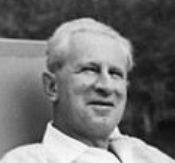
The slaves of developed industrial civilization are sublimated slaves.
▼
Source
source
p. 32
2 months 1 week ago
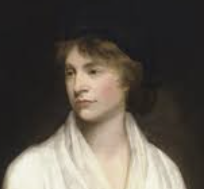
You know I am not born to tread in the beaten track - the peculiar bent of my nature pushes me on.
▼
Source
source
Letter to Everina Wollstonecraft
2 weeks 6 days ago
In Kleist's essay humans are caught between the graceful automatism of the puppet and the conscious freedom of a god. The jerky, stuttering quality of their actions comes from their feeling that they must determine the course of their lives. Other animals live without having to choose their path through life. Whatever uncertainty they may feel sniffing their way through the world is not a permanent condition; once they reach a place of safety, they are at rest. In contrast, human life is spent anxiously deciding how to live.
▼
Source
source
The Faith of Puppets: Leopardi and the Souls of Machines (p.25-6)

2 months 2 weeks ago
Americans of all ages, all stations of life, and all types of disposition are forever forming associations... In democratic countries knowledge of how to combine is the mother of all other forms of knowledge; on its progress depends that of all the others.
▼
Source
source
Book Two, Chapter V.
2 months 3 days ago
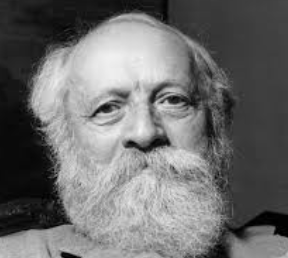
When we see a great man desiring power instead of his real goal we soon recognize that he is sick, or more precisely that his attitude to his work is sick. He overreaches himself, the work denies itself to him, the incarnation of the spirit no longer takes place, and to avoid the threat of senselessness he snatches after empty power. This sickness casts the genius on to the same level as those hysterical figures who, being by nature without power, slave for power, in order that they may enjoy the illusion that they are inwardly powerful, and who in this striving for power cannot let a pause intervene, since a pause would bring with it the possibility of self-reflection and self-reflection would bring collapse.
▼
Source
source
p. 180
1 month 2 weeks ago
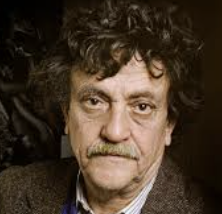
Generally speaking, espionage offers each spy an opportunity to go crazy in a way he finds irresistible.

3 months 1 week ago
It is remarkable that among all the preachers there are so few moral teachers. The prophets are employed in excusing the ways of men.
▼
Source
source
p. 489
3 months 2 weeks ago
When I found myself regarded as respectable, I began to wonder what sins I had committed. I must be very wicked, I thought. I began to engage in the most uncomfortable introspection. Interview with Irwin Ross, September 1957;If there were a God, I think it very unlikely that he would have such an uneasy vanity as to be offended by those who doubt his existence.
▼
Source
source
Collected Papers of Bertrand Russell (2005), p. 385

2 months 3 weeks ago
Friends share all things.
▼
Source
source
As quoted in Lives and Opinions of Eminent Philosophers, "Pythagoras", Sect. 10

3 months 1 week ago
He was free, free in every way, free to behave like a fool or a machine, free to accept, free to refuse, free to equivocate; to marry, to give up the game, to drag this death weight about with him for years to come. He could do what he liked, no one had the right to advise him, there would be for him no Good or Evil unless he thought them into being.
▼
Source
source
L'âge de raison (The Age of Reason)
3 months 1 week ago
So long as the product is sold, everything is taking its regular course from the standpoint of the capitalist producer.
▼
Source
source
Vol. II, Ch. II, p. 78.
3 months 1 week ago
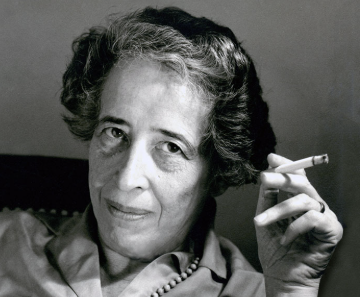
Real power begins where secrecy begins.
▼
Source
source
Part 3, Ch. 12, § 1
2 months 1 week ago
The plea of anger or of drunkenness - as having placed the criminal for the moment beyond the control of his reason - relieves him from the charge of premeditated and malicious intent; but a rational legislation will rather provide more severe than milder punishment for such cases, particularly if such a state of mind is habitual with the accused; for a single unlawful act may well constitute an exception from an otherwise blameless life. But a person who pleads, "I habitually get so angry or so drunk as not to be any longer master of my senses!" confesses thereby that he changes himself into a beast on a fixed principle, and that he is, therefore, not fit to live among rational beings.
▼
Source
source
P. 351
4 months 2 weeks ago
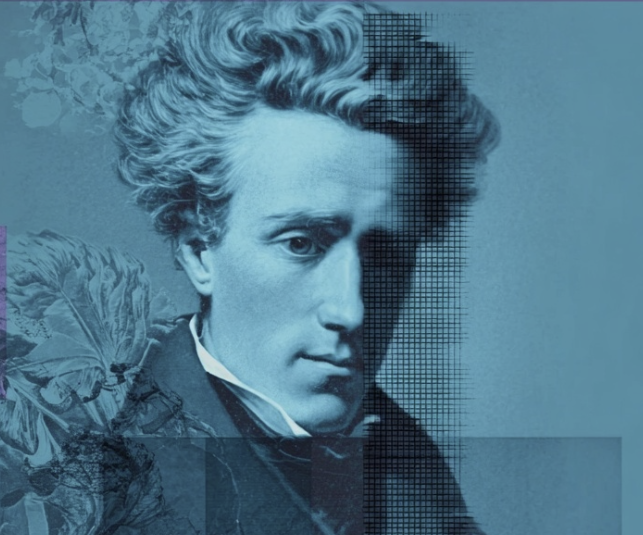
When God chooses to let himself be born in lowliness, when he who holds all possibilities in his hand takes upon himself the form of a lowly servant, when he goes about defenseless and lets people do with him what they will, he surely must know well enough what he is doing and why he wills it; but for all that it is he who has people in his power and not they who have power over him-so history ought not play Mr. Malapert by this wanting to make manifest who he was.
2 months 2 weeks ago
Who will not commend the wit of astrology? Venus, born out of the sea, hath her exaltation in Pisces.
▼
Source
source
Commonplace notebooks, Part I

4 months 1 week ago
If anyone can be considered the greatest writer who ever lived, it is Shakespeare.

3 months 1 week ago
To plead the organic causation of a religious state of mind, then, in refutation of its claim to possess superior spiritual value, is quite illogical and arbitrary, unless one have already worked out in advance some psycho-physical theory connecting spiritual values in general with determinate sorts of physiological change. Otherwise none of our thoughts and feelings, not even our scientific doctrines, not even our dis-beliefs, could retain any value as revelations of the truth, for every one of them without exception flows from the state of their possessor's body at the time.
▼
Source
source
Lecture I, "Religion and Neurology"
3 months 1 week ago
One is still what one is going to cease to be and already what one is going to become. One lives one's death, one dies one's life.
▼
Source
source
Book 2, "The Melodious Child Dead in Me"
1 month 3 weeks ago
The most important misunderstanding seems to me to lie in a confusion between the human necessities which I consider part of human nature, and the human necessities as they appear as drives, needs, passions, etc., in any given historical period. This division is not very different from Marx's concept of "human nature in general", to be distinguished from "human nature as modified in each historical period". The same distinction exists in Marx when he distinguishes between "constant" or "fixed" drives and "relative" drives. The constant drives "exist under all circumstances and ... can be changed by social conditions only as far as form and direction are concerned". The relative drives "owe their origin only to a certain type of social organization".
2 months 5 days ago
Power as is really divided, and as dangerously to all purposes, by sharing with another an Indirect Power, as a Direct one.
▼
Source
source
The Third Part, Chapter 42, p. 315

1 month 1 week ago
The interiorization of the technology of the phonetic alphabet translates man from the magical world of the ear to the neutral visual world.
▼
Source
source
(p. 21)
2 months 1 week ago
The more remote and unreal the personal mother is, the more deeply will the son's yearning for her clutch at his soul, awakening that primordial and eternal image of the mother for whose sake everything that embraces, protects, nourishes, and helps assumes maternal form, from the Alma Mater of the university to the personification of cities, countries, sciences and ideals.
▼
Source
source
"Paracelsus as a Spiritual Phenomenon" (1942) In CW 13: Alchemical Studies P.47
1 month 4 weeks ago
We must leave on one side the beliefs which fill up voids and sweeten what is bitter. The belief in immortality. The belief in the utility of sin: etiam peccata. The belief in the providential ordering of events - in short the "consolations" which are ordinarily sought in religion.
▼
Source
source
p. 258
1 month 1 week ago
Evolution is a fact. Beyond reasonable doubt, beyond serious doubt, beyond sane, informed, intelligent doubt, beyond doubt evolution is a fact. The evidence for evolution is at least as strong as the evidence for the Holocaust, even allowing for eye witnesses to the Holocaust. It is the plain truth that we are cousins of chimpanzees, somewhat more distant cousins of monkeys, more distant cousins still of aardvarks and manatees, yet more distant cousins of bananas and turnips... continue the list as long as desired.
▼
Source
source
The Greatest Show on Earth: The Evidence for Evolution (2009) (p. 8)


3 months 3 days ago
Strength and beauty are the blessings of youth; temperance, however, is the flower of old age.
▼
Source
source
Fragment quoted in H. Diels and W. Kranz (eds.) Die Fragmente der Vorsokratiker, Vol. II (1952), no. 294
2 months ago
The ascetic morality is a negative morality. And strictly, what is important for a man is not to die, whether he sins or not.
3 months 1 week ago
Political questions are far too serious to be left to the politicians.
▼
Source
source
Men in Dark Times
CivilSimian.com created by AxiomaticPanic, CivilSimian, Kalokagathia