


4 days ago
In morals, truth is but little prized when it is a mere sentiment, and only attains its full value when realized in the world as fact.
▼
Source
source
Ch. 5.
1 month 6 days ago
Have courage, or cunning, when you deal with an enemy.
▼
Source
source
Maxim 156

3 months 1 week ago
Quite a heavy weight, a name too quickly famous.
▼
Source
source
La Henriade, chant troisième, l.41, 1722
3 months 1 week ago
A book can never be anything more than the impression of its author's thoughts [Ein Buch kann nie mehr seyn, als der Abdruck der Gedanken des Verfassers]. The value of these thoughts lies either in the matter about which he has thought, or in the form in which he develops his matter - that is to say, what he has thought about it.

2 months 1 day ago
Repent: for the kingdom of heaven is at hand.
▼
Source
source
4:17 (KJV)
2 months 6 days ago
You know I am not born to tread in the beaten track - the peculiar bent of my nature pushes me on.
▼
Source
source
Letter to Everina Wollstonecraft

2 months 1 week ago
I discuss with myself questions of politics, love, taste, or philosophy. I let my mind rove wantonly, give it free rein to follow any idea, wise or mad that may present itself. ... My ideas are my harlots.

4 months 6 days ago
Parmenides: Whatever the subject of your hypothesis, if you suppose that it is or is not, or that it experiences any other affection, you must consider what happens to it and to any other particular things you may choose, and to a greater number and to all in the same way; and you must consider other things in relation to themselves and to anything else you may choose in any instance, whether you suppose that the subject of your hypothesis exists or does not exist, if you are to train yourself completely to see the truth perfectly.
1 month 4 weeks ago
The philosopher will ask himself ... if the criticism we are now suggesting is not the philosophy which presses to the limit that criticism of false gods which Christianity has introduced into our history.
▼
Source
source
p. 47

1 month 3 weeks ago
The rather more dubious side of Nietzsche's 'evolutionism' is his glorification of the warrior -- particularly when, as an exemplification of the warrior-hero, he chooses an archetypal 'spoilt brat' like Cesare Borgia. Nietzsche's own physical weakness and consequent inability to escape the atmosphere of the study leads him to take a rather unrealistic view of the man of action.
▼
Source
source
p. 87
1 month 3 weeks ago
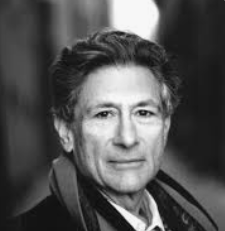
As a way of maintaining relative intellectual independence, having the attitude of an amateur instead of a professional is a better course.
▼
Source
source
p. 87
1 month 3 weeks ago
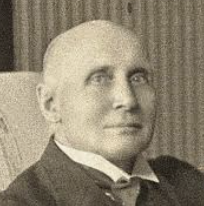
The aim of science is to seek the simplest explanations of complex facts. We are apt to fall into the error of thinking that the facts are simple because simplicity is the goal of our quest. The guiding motto in the life of every natural philosopher should be, "Seek simplicity and distrust it."
▼
Source
source
The Concept of Nature (1919), Chapter VII, p.143.

4 months 6 days ago
There was no denying that he would always be conscious of the fact that an Earthman was an Earthman. He couldn't help that. That was the result of a childhood immersed in an atmosphere of bigotry so complete that it was almost invisible, so entire that you accepted its axioms as second nature. Then you left it and saw it for what it was when you looked back.

1 month 1 week ago
Psychic communal integration, made possible at last by the electronic media, could create the universality of consciousness foreseen by Dante when he predicted that men would continue as no more than broken fragments until they were unified into an inclusive consciousness...This is a new interpretation of the mystical body of Christ; and Christ, after all, is the ultimate extension of man.
2 months 6 days ago
Till society is very differently constituted, parents, I fear, will still insist on being obeyed, because they will be obeyed, and constantly endeavour to settle that power on a Divine right, which will not bear the investigation of reason.
▼
Source
source
Ch. 11
1 month 3 weeks ago
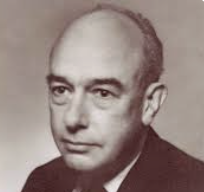
Tactically, conceptualism is no doubt the strongest position of the three; for the tired nominalist can lapse into conceptualism and still allay his puritanic conscience with the reflection that he has not quite taken to eating lotus with the Platonists.
▼
Source
source
"Logic and the Reification of Universals"

3 months 1 week ago
My thinking is first and last and always for the sake of my doing.
▼
Source
source
Sometimes paraphrased as "Thinking is for doing", perhaps originally by S.T. Fiske (1992) Ch. 22

2 months 1 week ago
Despotism may govern without faith, but liberty cannot. How is it possible that society should escape destruction if the moral tie is not strengthened in proportion as the political tie is relaxed? And what can be done with a people who are their own masters if they are not submissive to the Deity?
▼
Source
source
Chapter XVII.
1 month 1 week ago
Chinese script is not visual but iconic and tactile. It does not disturb the tribal bonds.
▼
Source
source
(p. 72)

3 months 1 week ago
Reason has always existed, but not always in a rational form.
▼
Source
source
Letter from Marx to Arnold Ruge, September 1843

3 months 4 days ago
It is not by recognizing the want of courage in someone else that you acquire courage yourself.
▼
Source
source
p. 44e


1 month 5 days ago
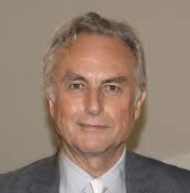
I do feel visceral revulsion at the burka because for me it is a symbol of the oppression of women.
▼
Source
source
As quoted in Richard Dawkins causes outcry after likening the burka to a bin liner (10 August 2010), The Telegraph.
3 months 1 week ago
The more rational statement is that we feel sorry because we cry, angry because we strike, afraid because we tremble, and not that we cry, strike, or tremble, because we are sorry, angry, or fearful, as the case may be. Without the bodily states following on the perception, the latter would be purely cognitive in form, pale, colorless, destitute of emotional warmth.
▼
Source
source
Ch. 25

3 months 2 weeks ago
Cato said the best way to keep good acts in memory was to refresh them with new.
▼
Source
source
No. 247

2 months 1 week ago
If I seem happy to you . . . You could never say anything that would please me more. For men are made for happiness, and anyone who is completely happy has a right to say to himself, 'I am doing God's will on earth.' All the righteous, all the saints, all the holy martyrs were happy.
▼
Source
source
Book II, Chapter 4 (trans. Constance Garnett)

3 months 1 week ago
I respect orders but I respect myself too and I do not obey foolish rules made especially to humiliate me.
▼
Source
source
Hugo to Slick and Georges, Act 3, sc. 2

3 months 4 weeks ago
Against the diseases of the mind, philosophy provides sufficient antidotes. The instruments which it employs for this purpose are the virtues; the root of which, whence all the rest proceed, is prudence. This virtue comprehends the whole art of living discreetly, justly, and honorably, and is, in fact, the same thing with wisdom. It instructs men to free their understandings from the clouds of prejudice; to exercise temperance and fortitude in the government of themselves: and to practice justice towards others. Although pleasure, or happiness, which is the end of living, be superior to virtue, which is only the means, it is every one's interest to practice all the virtues; for in a happy life, pleasure can never be separated from virtue.

2 months 2 weeks ago
They that endeavour to abolish vice destroy also virtue, for contraries, though they destroy one another, are yet the life of one another.
▼
Source
source
Section 4

3 months 3 days ago
Do not ask who I am and do not ask me to remain the same: leave it to our bureaucrats and our police to see that our papers are in order. At least spare us their morality when we write.
▼
Source
source
The Archaeology of Knowledge (1972), tr. A. M. Sheridan Smith (New York: Pantheon)

1 month 1 week ago
Service of the people by sciences and arts will only exist when men live with the people and as the people live, and without presenting any claims will offer their scientific and artistic services, which the people will be free to accept or decline as they please.
3 months 1 week ago
Correct and accurate conclusions may be arrived at if we carefully observe the relation of the spheres of concepts, and only conclude that one sphere is contained in a third sphere, when we have clearly seen that this first sphere is contained in a second, which in its turn is contained in the third. On the other hand, the art of sophistry lies in casting only a superficial glance at the relations of the spheres of the concepts, and then manipulating these relations to suit our purposes, generally in the following way: - When the sphere of an observed concept lies partly within that of another concept, and partly within a third altogether different sphere, we treat it as if it lay entirely within the one or the other, as may suit our purpose.
▼
Source
source
Vol. I, Ch. 10, as translated by R. B. Haldane

1 month 3 weeks ago
Any madness in us gains from being expressed, because in this way one gives a human form to what separates us from humanity.
▼
Source
source
p. 76
1 month 1 week ago
Mysticism is just tomorrow's science dreamed today.
3 months 1 week ago
The native and untaught suggestions of inquisitive children do often offer things, that may set a considering man's thoughts on work. And I think there is frequently more to be learn'd from the unexpected questions of a child than the discourses of men, who talk in a road, according to the notions they have borrowed, and the prejudices of their education.
▼
Source
source
Sec. 121
2 months 1 week ago
The last thing abandoned by a party is its phraseology, because among political parties, as elsewhere, the vulgar make the language, and the vulgar abandon more easily the ideas that have been instilled into it than the words that it has learnt. France Before The Consulate, Chapter I: "How the Republic was ready to accept a master", in Memoir, Letters, and Remains, Vol I (1862), p. 266 Variant translation: The last thing a political party gives up is its vocabulary. This is because, in party politics as in other matters, it is the crowd who dictates the language, and the crowd relinquishes the ideas it has been given more readily than the words it has learned.
▼
Source
source
As quoted in The Viking book of Aphorisms : A Personal Selection (1962) by W. H. Auden, and Louis Kronenberger, p. 306. Variant translation: The last thing that a party abandons is its language.
1 month 1 week ago
Gutenberg made all history available as classified data: the transportable book brought the world of the dead into the space of the gentlemen's library; the telegraph brought the entire world of the living to the workman's breakfast table.
▼
Source
source
(p. 15)

3 months 4 weeks ago
The superior man, when resting in safety, does not forget that danger may come. When in a state of security he does not forget the possibility of ruin. When all is orderly, he does not forget that disorder may come. Thus his person is not endangered, and his States and all their clans are preserved.
1 month 3 weeks ago
The existential split in man would be unbearable could he not establish a sense of unity within himself and with the natural and human world outside.
▼
Source
source
p. 262

1 month 3 weeks ago
Christianity is most admirably adapted to the training of slaves, to the perpetuation of a slave society; in short, to the very conditions confronting us to-day.... The rulers of the earth have realized long ago what potent poison inheres in the Christian religion. That is the reason they foster it; that is why they leave nothing undone to instill it into the blood of the people. They know only too well that the subtleness of the Christian teachings is a more powerful protection against rebellion and discontent than the club or the gun.

3 months 1 week ago
Standing on the bare ground, - my head bathed by the blithe air, and uplifted into infinite space, - all mean egotism vanishes. I become a transparent eye-ball; I am nothing; I see all; the currents of the Universal Being circulate through me; I am part or particle of God.
▼
Source
source
Nature
2 months 6 days ago
All religions are cruel, all founded on blood; for all rest principally on the idea of sacrifice - that is, on the perpetual immolation of humanity to the insatiable vengeance of divinity.

3 months 1 week ago
Everything that is possible demands to exist.
▼
Source
source
1686

3 months 3 weeks ago
The true servants of God are not solicitous that He should order them to do what they desire to do, but that they may desire to do what He orders them to do.
▼
Source
source
p. 616

3 months 2 weeks ago
Some will object that the Law is divine and holy. Let it be divine and holy. The Law has no right to tell me that I must be justified by it.
▼
Source
source
Chapter 2
3 months 3 weeks ago
To wisdom belongs the intellectual apprehension of things eternal; to knowledge, the rational apprehension of things temporal.
▼
Source
source
As quoted in The Anchor Book of Latin Quotations: with English translations (1990) by Norbert Guterman, p. 375

3 months 1 week ago
To see ourselves as others see us is a most salutary gift. Hardly less important is the capacity to see others as they see themselves.
▼
Source
source
Page 159
3 months 3 weeks ago
If a person gave your body to any stranger he met on his way, you would certainly be angry. And do you feel no shame in handing over your own mind to be confused and mystified by anyone who happens to verbally attack you?
▼
Source
source
(28) [tr. Elizabeth Carter]
2 months 1 day ago
The lord of that servant will come in a day when he looketh not for him, and at an hour when he is not aware, and will cut him in sunder, and will appoint him his portion with the unbelievers.
▼
Source
source
Luke 12:46 (KJV)
1 month 4 days ago
Perpetual devotion to what a man calls his business, is only to be sustained by perpetual neglect of many other things.
▼
Source
source
An Apology for Idlers.
CivilSimian.com created by AxiomaticPanic, CivilSimian, Kalokagathia