

2 months 1 week ago
Our psychology is ... a science of mere phenomena without any metaphysical implications. [It] Treats all metaphysical claims and assertions as mental phenomena, and regards them as statements about the mind and its structure.
▼
Source
source
Psychology and Religion: West and East (1958), p. 476, as cited in Psychotherapy East and West (1961), p. 14

1 month 3 weeks ago
For this is our central human problem: that we are almost constantly the victims of our emotions, always being swept up and down on a kind of inner-switchback. We possess a certain control over them; we can 'direct our thoughts' -- or feelings -- in such a way as to intensify them. This is certainly our most remarkable human characteristic: imagination. Animals require actual physical stimuli to trigger their experience. A man can retreat into a book -- or a daydream -- and live through certain experiences quite independent of the physical world. He can even, for example, imagine a sexual encounter, and not only experience all the appropriate physical responses, but even the sexual climax. Such a curious ability is far beyond the power of any animal.
▼
Source
source
p. 23

3 weeks 5 days ago
Nuclear power started in weaponry. It was designed for war. And any instrument that has its origins in war always has the potential for war. First because the material you need to make bombs, you're multiplying it though nuclear power, you're taking uranium and turn it into plutonium. Second by equipping governments and private companies with this potential, in society you spread this potential, that here is a weapon of mass destruction available. This is exactly what happened with fertilizers. Chemical fertilizers came from explosive factories are increasingly used in terrorist attacks.
▼
Source
source
On nuclear power, as quoted in "Koodankulam Must Be Stopped: Vandana Shiva", DiaNuke

4 months 1 week ago
Man is a synthesis of psyche and body, but he is also a synthesis of the temporal and the eternal. In the former, the two factors are psyche and body, and spirit is the third, yet in such a way that one can speak of a synthesis only when the spirit is posited. The latter synthesis has only two factors, the temporal and the eternal. Where is the third factor? And if there is no third factor, there really is no synthesis, for a synthesis that is a contradiction cannot be completed as a synthesis without a third factor, because the fact that the synthesis is a contradiction asserts that it is not. What, then, is the temporal?

1 month 1 week ago
There is absolutely no inevitability, so long as there is a willingness to contemplate what is happening.
▼
Source
source
[A chapter sub-heading attributed by McLuhan to Alfred North Whitehead]

3 months 3 days ago
The resolute one who moved by the principles of Thy FaithExtends the prosperity of order to his neighbors And works the land the evil now hold desolate, Earns through Righteousness, the Blessed Recompense Thy Good Mind has promised in Thy Kingdom of Heaven.
▼
Source
source
Spenta Mainyu Gatha; Yasna 50, 3.

2 months 1 week ago
To be acutely conscious is a disease, a real, honest-to-goodness disease.
▼
Source
source
Part 1, Chapter 2 (tr. David Magarshack, 1950) To think too much is a disease, a real, actual disease.

1 month 3 weeks ago
God is nothingness: He is 'beyond all speech.'
2 months 1 week ago
Science raises itself above all Ages and all Times, embracing and apprehending the ONE UNCHANGING TIME as the higher source of all Ages and Epochs, and grasping that vast idea in its free, unbounded comprehension.
▼
Source
source
p. 11

3 months 2 weeks ago
For my own part, I may desire in general to be other than I am; I may condemn and dislike my whole form, and beg of Almighty God for an entire reformation, and that He will please to pardon my natural infirmity: but I ought not to call this repentance, methinks, no more than the being dissatisfied that I am not an angel or Cato. My actions are regular, and conformable to what I am and to my condition; I can do no better; and repentance does not properly touch things that are not in our power; sorrow does.. I imagine an infinite number of natures more elevated and regular than mine; and yet I do not for all that improve my faculties, no more than my arm or will grow more strong and vigorous for conceiving those of another to be so.
▼
Source
source
Ch. 2

3 months 1 week ago
So in the end when one is doing philosophy one gets to the point where one would like just to emit an inarticulate sound.
▼
Source
source
§ 261

2 months 1 week ago
The Creation was the first act of sabotage.

2 months 1 week ago
Women becoming, consequently weaker, in mind and body, than they ought to be...have not sufficient strength to discharge the first duty of a mother; and sacrificing to lasciviousness the parental affection...either destroy the embryo in the womb, or cast if off when born. Nature in every thing demands respect, and those who violate her laws seldom violate them with impunity.
▼
Source
source
Ch. 8

1 month 3 weeks ago
Marcus Garvey, Elijah Muhammad, Malcolm X, Martin Luther King, Stokely Carmichael, Amiri Baraka and other black male leaders have righteously supported patriarchy. They have all argued that it is absolutely necessary for black men to relegate black women to a subordinate position both in the political sphere and in home life.
2 months 1 week ago
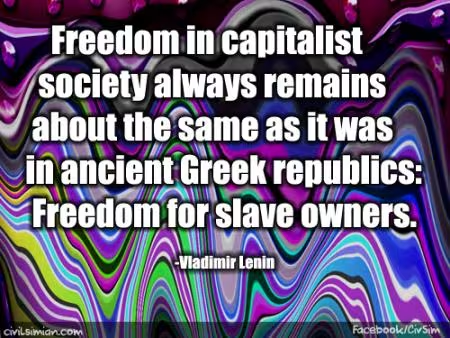
The slave is outside competition; the proletarian is in it and experiences all its vagaries.

3 months 1 week ago
I quite understand the principle of confining employment as far as possible to the British without regard for efficiency. I think, however, that the Ministry is not applying the principle sufficiently widely. I know many Englishmen who have married foreigners, and many English potential wives who are out of a job. Would not a year be long enough to train an English wife to replace the existing foreign one in such cases?
▼
Source
source
Enclosed reply to the Ministry of Labour, in defense of A. S. Neill (who declined to send it), 27 January, 1931

3 months 2 weeks ago
In all determinations of morality, this circumstance of public utility is ever principally in view; and wherever disputes arise, either in philosophy or common life, concerning the bounds of duty, the question cannot, by any means, be decided with greater certainty, than by ascertaining, on any side, the true interests of mankind. If any false opinion, embraced from appearances, has been found to prevail; as soon as farther experience and sounder reasoning have given us juster notions of human affairs, we retract our first sentiment, and adjust anew the boundaries of moral good and evil.
▼
Source
source
§ 2.17 : Of Benevolence, Pt. 2
1 month 4 weeks ago
Only the feeble resign themselves to final death and substitute some other desire for the longing for personal immortality. In the strong the zeal for perpetuity overrides the doubt of realizing it, and their superabundance of life overflows upon the other side of death.
4 weeks ago
The great end of life is not knowledge but action.
▼
Source
source
"Technical Education"
4 months 1 week ago
My lectures are published and not published; they will be intelligible to those who heard them, and to none beside.


1 month 4 weeks ago
"God does not think, He creates; He does not exist, He is eternal," wrote Kierkegaard (Afslutende uvidenskabelige Efterskrift); but perhaps it is more exact to say with Mazzini, the mystic of the Italian city, that "God is great because his thought is action" (Ai giovani d'Italila), because with Him to think is to create, and He gives existence to that which exists in His thought by the mere fact of thinking it, and the impossible is unthinkable by God. It is not written in the Scriptures that God creates with His word - that is to say, with His thought - and that by this, by His Word, He made everything that exists? And what God has once made does He ever forget? May it not be that all the thoughts that have ever passed through the Supreme Consciousness still subsist therein? In Him, who is eternal, is not all existence eternalized?
2 months 5 days ago
Functional communication is only the outer layer of the one- dimensional universe in which man is trained to target-to translate the negative into the positive so that he can continue to function, reduced but fit and reasonably well. The institutions of free speech and freedom of thought do not hamper the mental coordination with the established reality. What is taking place is a sweeping redefinition of thought itself, of its function and content. The coordination of the individual with his society reaches into those layers of the mind where the very concepts are elaborated which are designed to comprehend the established reality. These concepts are taken from the intellectual tradition and translated into operational terms-a translation which has the effect of reducing the tension between thought and reality by weakening the negative power of thought.
▼
Source
source
p. 104

3 months 1 week ago
Science does not know its debt to imagination.
▼
Source
source
Poetry and Imagination
1 month 3 weeks ago
Phenomenology is not a philosophy; it is a philosophical method, a tool. It is like an adjustable spanner that can be used for dismantling a refrigerator or a car, or used for hammering in nails, or even for knocking somebody out.
▼
Source
source
p. 92
1 week 1 day ago
We admire people to the extent that we cannot explain what they do, and the word "admire" then means "marvel at."
▼
Source
source
Beyond Freedom and Dignity

3 days ago
The science of the age, in short, is physical, chemical, physiological; in all shapes mechanical. Our favourite Mathematics, the highly prized exponent of all these other sciences, has also become more and more mechanical. Excellence in what is called its higher departments depends less on natural genius than on acquired expertness in wielding its machinery. Without undervaluing the wonderful results which a Lagrange or Laplace educes by means of it, we may remark, that their calculus, differential and integral, is little else than a more cunningly-constructed arithmetical mill; where the factors, being put in, are, as it were, ground into the true product, under cover, and without other effort on our part than steady turning of the handle. We have more Mathematics than ever; but less Mathesis.
3 months 1 week ago
Among the Romans in Christian times Mithras-worship as very widely spread, and so late as the Middle Ages we meet with a secret Mithras-worship ostensibly connected with the order of the Knights-Templars. Mithras thrusting the knife into the neck of the ox is a figurative representation belonging essentially to the cult of Mithras, of which examples have been frequently found in Europe. Hegel, Georg Wilhelm Friedrich, Lectures on the philosophy of religion, together with a work on the proofs of the existence of God.
▼
Source
source
Vol 2 Translated from the 2d German ed. 1895 Ebenezer Brown Speirs 1854-1900, and J Burdon Sanderson p. 81-82
3 months 1 week ago
Not from a vain or shallow thought His awful Jove young Phidias brought.
▼
Source
source
The Problem, st. 2

2 weeks 5 days ago
For a consistent naturalist science can only be a refinement of animal exploration, a practice humans have devised for finding their way in the bit of the universe in which they have so far survived. Instead of thinking of science as a law-seeking activity, we can think of it as a tool humans use to cope with a world they will never understand.
▼
Source
source
Sweet Morality (p. 224)
3 months 1 week ago
Don't for heaven's sake, be afraid of talking nonsense! But you must pay attention to your nonsense.
▼
Source
source
p. 56e

4 months 2 days ago
Let the superior man never fail reverentially to order his own conduct, and let him be respectful to others and observant of propriety: then all within the four seas, all men are brothers. What has the superior man to do with being distressed because he has no brothers?

3 months 2 days ago
Of all things the worst to teach the young is dalliance, for it is this that is the parent of those pleasures from which wickedness springs.
1 month 1 day ago
It is now time for us to pay a decent, a rational, a manly reverence to our ancestors, not by superstitiously adhering to what they, in other circumstances, did, but by doing what they, in our circumstances, would have done.
▼
Source
source
Speech in the House of Commons on the Reform Bill (2 March 1831), quoted in Speeches of the Right Honourable T. B. Macaulay, M.P. (1854), p. 8

3 months 2 weeks ago
There never was in the world two opinions alike, no more than two hairs or two grains; the most universal quality is diversity.
▼
Source
source
Book II, Ch. 37. Of the Resemblance of Children to their Fathers
3 months 2 days ago
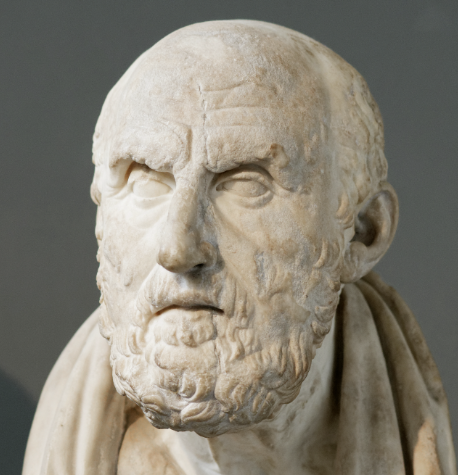
If I knew that it was fated for me to be sick, I would even wish for it; for the foot also, if it had intelligence, would volunteer to get muddy.
▼
Source
source
As quoted by Epictetus, Discourses, ii. 6. 10.
3 days ago
The Philosopher of this age is not a Socrates, a Plato, a Hooker, or Taylor, who inculcates on men the necessity and infinite worth of moral goodness, the great truth that our happiness depends on the mind which is within us, and not on the circumstances which are without us; but a Smith, a De Lolme, a Bentham, who chiefly inculcates the reverse of this,-that our happiness depends entirely on external circumstances; nay, that the strength and dignity of the mind within us is itself the creature and consequence of these. Were the laws, the government, in good order, all were well with us; the rest would care for itself! Dissentients from this opinion, expressed or implied, are now rarely to be met with; widely and angrily as men differ in its application, the principle is admitted by all.
3 months 1 week ago
Fanaticism is the danger of the world, and always has been, and has done untold harm. I might almost say that I was fanatical against fanaticism.
▼
Source
source
The Future of Science (1959), p. 79; also in BBC The Listener, Vol. 61 (1959), p. 505
4 months 1 day ago
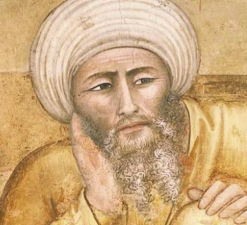
Praise be to God with all due praise, and a prayer for Muhammad His chosen servant and apostle. The purpose of this treatise is to examine, from the standpoint of the study of the Law, whether the study of philosophy and logic is allowed by the Law, or prohibited, or commanded either by way of recommendation or as obligatory.
3 months 1 week ago
A mollusk is a cheap edition [of man] with a suppression of the costlier illustrations, designed for dingy circulation, for shelving in an oyster-bank or among the seaweed.
▼
Source
source
Power and Laws of Thought, c. 1870
1 month 3 weeks ago
It is a profoundly erroneous truism, repeated by all copy-books and by eminent people when they are making speeches, that we should cultivate the habit of thinking of what we are doing. The precise opposite is the case. Civilization advances by extending the number of important operations which we can perform without thinking about them. Operations of thought are like cavalry charges in a battle - they are strictly limited in number, they require fresh horses, and must only be made at decisive moments.
▼
Source
source
ch. 5.

2 months 3 days ago
Man does not exercise his thought because he finds it amusing, but because, obliged as he is to live immersed in the world and to force his way among things, he finds himself under the necessity of organizing his psychic activities, which are not very different from those of the anthropoid, in the form of thought - which is what the animal does not do.
▼
Source
source
p. 28

4 months 1 week ago
Nonsense. You are a military man and should know better. If there is one science into which man has probed continuously and successfully, it is that of military technology. No potential weapon would remain unrealized for ten thousand years.
3 months 1 week ago
Death is not an event in life: we do not live to experience death. If we take eternity to mean not infinite temporal duration but timelessness, then eternal life belongs to those who live in the present. Our life has no end in just the way in which our visual field has no limits.

2 months 1 week ago
Under the pressure of the cares and sorrows of our mortal condition, men have at all times, and in all countries, called in some physical aid to their moral consolations - wine, beer, opium, brandy, or tobacco.
2 months 3 days ago
Man must be free of it all, of his bad conscience and of the bad salvation from this conscience in order to become in truth the way. Now, he no longer promises others the fulfillment of his duties, but promises himself the fulfillment of man.
▼
Source
source
p. 178
CivilSimian.com created by AxiomaticPanic, CivilSimian, Kalokagathia