


2 months 1 week ago
How good would it be if one could die by throwing oneself into an infinite void.

3 months 4 weeks ago
(On the Trinitarian indwelling personally experienced by Saint Augustine) But what is it that I love in loving You? Not corporeal beauty, nor the splendour of time, nor the radiance of the light, so pleasant to our eyes, nor the sweet melodies of songs of all kinds, nor the fragrant smell of flowers, and ointments, and spices, not manna and honey, not limbs pleasant to the embracements of flesh. I love not these things when I love my God; and yet I love a certain kind of light, and sound, and fragrance, and food, and embracement in loving my God, who is the light, sound, fragrance, food, and embracement of my inner man — where that light shines unto my soul which no place can contain, where that sounds which time snatches not away, where there is a fragrance which no breeze disperses, where there is a food which no eating can diminish, and where that clings which no satiety can sunder. This is what I love, when I love my God.
▼
Source
source
X, 6, 8

4 months 1 week ago
The purpose of aphorisms is to keep fools who have memorised them from having nothing to say.
2 months 1 week ago
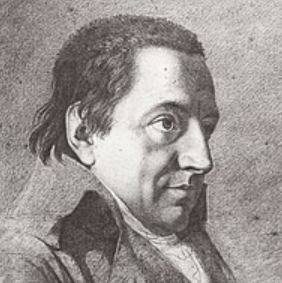
The conception of Rights involves that when men are to live in a community, each must so restrict his freedom as to permit the coexistence of the freedom of all others. But it does not involve that this particular person, A, is to restrict his freedom by the freedom of those particular persons, B, C, and D. That it has happened so that I, A, must conform myself particularly to the freedom of these, B, C, and D, of all other men, is purely the result of my living together with them; and I so live with them, simply by my free-will, not because there is an obligation for me to do so.
▼
Source
source
P. 23-24
3 months 1 week ago
Dissimulation is innate in woman, and almost as much a quality of the stupid as of the clever.
▼
Source
source
"Of Women"
3 months 2 days ago
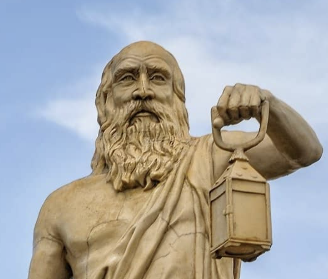
Once he saw the officials of a temple leading away some one who had stolen a bowl belonging to the treasurers, and said, "The great thieves are leading away the little thief."
▼
Source
source
Diogenes Laërtius, vi. 45
2 months 1 week ago
The source of an emotion is very difficult to grasp, but it comes to just that. That holds for all phenomena, for faith, etc. Why did it begin, how did it develop? and so forth-only he who has the gift of divination can perceive where it really comes from. But it is not accessible to reflection.
3 months 2 days ago
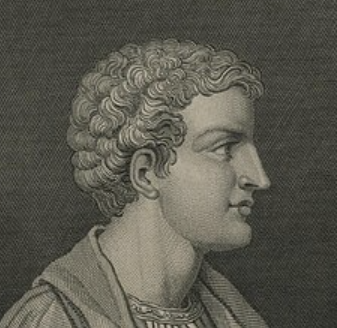
So live, my boys, as brave men; and if fortune is adverse, front its blows with brave hearts.
▼
Source
source
Book II, Satire II, Line 135-136 (trans. E. C. Wickham)

3 months 1 week ago
There is no worse lie than a truth misunderstood by those who hear it.
▼
Source
source
Lectures XIV and XV, "The Value of Saintliness"

4 months 1 week ago
The inexperienced in wisdom and virtue, ever occupied with feasting and such, are carried downward, and there, as is fitting, they wander their whole life long, neither ever looking upward to the truth above them nor rising toward it, nor tasting pure and lasting pleasures. Like cattle, always looking downward with their heads bent toward the ground and the banquet tables, they feed, fatten, and fornicate. In order to increase their possessions they kick and butt with horns and hoofs of steel and kill each other, insatiable as they are.

4 months 1 week ago
In order to cease being a doubtful case, one has to cease being, that's all.
3 weeks 5 days ago
Principles of Earth Democracy, #10: Earth Democracy connects people in circles of care, cooperation, and compassion instead of dividing them through competition and conflict, fear and hatred. In the face of a world of greed, inequality, and overconsumption, Earth Democracy globalizes compassion, justice, and sustainability.
▼
Source
source
(p. 11)

3 months 1 week ago
England's genius filled all measure Of heart and soul, of strength and pleasure, Gave to the mind its emperor, And life was larger than before: Nor sequent centuries could hit Orbit and sum of Shakespeare's wit. The men who lived with him became Poets, for the air was fame.
▼
Source
source
Solution, ll. 35-42

3 months 2 weeks ago
Like rowers, who advance backward.
▼
Source
source
Book III, Ch. 1. Of Profit and Honesty

3 months 1 week ago
If a victory is told in detail, one can no longer distinguish it from a defeat.
▼
Source
source
Act 1

2 months 2 weeks ago
The more man ascends through the past, and the more he launches into the future, the greater he will be, and all these philosophers and ministers and truth-telling men who have fallen victims to the stupidity of nations, the atrocities of priests, the fury of tyrants, what consolation was left for them in death? This: That prejudice would pass, and that posterity would pour out the vial of ignominy upon their enemies. O Posterity! Holy and sacred stay of the unhappy and the oppressed; thou who art just, thou who art incorruptible, thou who findest the good man, who unmaskest the hypocrite, who breakest down the tyrant, may thy sure faith, thy consoling faith never, never abandon me!
▼
Source
source
As quoted in "Diderot" in The Great Infidels (1881) by Robert Green Ingersoll; The Works of Robert G. Ingersoll Vol. III (1900), p. 367

1 week ago
One of the problems... both on the left and the right is that the... individual autonomy protected by liberalism tends to take more and more extreme versions... and... becomes self-undermining.
▼
Source
source
13:24

3 months 1 week ago
A religious symbol does not rest on any opinion. And error belongs only with opinion. One would like to say: This is what took place here; laugh, if you can.
▼
Source
source
Ch. 7 : Remarks on Frazer's Golden Bough, p. 123

3 months 1 week ago
I was a solitary, shy, priggish youth. I had no experience of the social pleasures of boyhood and did not miss them. But I liked mathematics, and mathematics was suspect because it has no ethical content. I came also to disagree with the theological opinions of my family, and as I grew up I became increasingly interested in philosophy, of which they profoundly disapproved. Every time the subject came up they repeated with unfailing regularity, 'What is mind? No matter. What is matter? Never mind.' After some fifty or sixty repetitions, this remark ceased to amuse me.
▼
Source
source
p. 9
3 months 2 days ago
Poverty is a virtue which one can teach oneself.
▼
Source
source
Stobaeus, iv. 32a. 19
2 months 5 days ago
A man is a man to the extent that he is a superman. A man should be defined by the sum of those tendencies which impel him to surpass the human condition.
▼
Source
source
Introduction

1 month 1 week ago
Reason has discovered the struggle for existence and the law that I must throttle all those who hinder the satisfaction of my desires. That is the deduction reason makes. But the law of loving others could not be discovered by reason, because it is unreasonable.
▼
Source
source
Pt. VIII, ch. 13

3 months 2 weeks ago
Phenomena of the external sense are examined and set forth in physics; those of the internal sense in empirical psychology. Pure mathematics considers space in geometry and time in pure mechanics. To these is to be added a certain concept, intellectual to be sure in itself, but whose becoming actual in the concrete requires the auxiliary notions of time and space in the successive addition and simultaneous juxtaposition of separate units, which is the concept of number treated in arithmetic.

1 month 1 week ago
I do feel visceral revulsion at the burka because for me it is a symbol of the oppression of women.
▼
Source
source
As quoted in Richard Dawkins causes outcry after likening the burka to a bin liner (10 August 2010), The Telegraph.
2 months 1 week ago
It is not by genius, it is by suffering, and suffering alone, that one ceases to be a marionette.

3 months 2 weeks ago
People who invented the word charity, and used it in a good sense, inculcated more clearly, and much more efficaciously, the precept, Be charitable, than any pretended legislator or prophet, who should insert such a maxim in his writings.
▼
Source
source
Part I, Essay 22: Of the Standard of Taste
2 months 1 week ago
How many women does one need to sing the scale of love all the way up and down?
▼
Source
source
Act I.
1 month 3 weeks ago
If we accept values as given and consistent, if we postulate an objective description of the world as it really is, and if we assume that the decision maker's computational powers are unlimited, then two important consequences follow. First, we do not need to distinguish between the real world and the decision maker's perception of it: he or she perceives the world as it really is. Second, we can predict the choices that will be made by a rational decision maker entirely from our knowledge of the real world and without a knowledge of the decision maker's perceptions or modes of calculation. (We do, of course, have to know his or her utility function.)
1 month 1 week ago
An agreeable companion on a journey is as good as a carriage.
▼
Source
source
Maxim 143
2 months 1 week ago
I get along quite well with someone only when he is at his lowest point and has neither the desire nor the strength to restore his habitual illusions.
2 months 2 days ago
The complexity of the connection between the world of perception and the world of physics does not preclude that such a connection can be shown to exist at any time.
▼
Source
source
p. 133.

3 months 1 week ago
I pre-suppose, of course, a reader who is willing to learn something new and therefore to think for himself.
▼
Source
source
Author's prefaces to the First Edition.
3 months 1 week ago
To understand a name you must be acquainted with the particular of which it is a name.
2 months 5 days ago
Man alone has the power of self-realization, the power to be a self-determining subject in all processes of becoming, for he alone has an understanding of potentialities and a knowledge of 'notions.' His very existence is the process of actualizing his potentialities, of molding his life according to the notions of reason.
▼
Source
source
P. 9

3 months 2 weeks ago
There are two distinct classes of men in the nation, those who pay taxes, and those who receive and live upon the taxes.

3 months 1 week ago
My form remains one, though the matter in it changes continually. I am, in that respect, like a curve in a waterfall.
▼
Source
source
Ch. 16: "Miracles of the New Creation"

1 month 4 weeks ago
The simultaneous existence of opposite virtues in the soul - like pincers to catch hold of God.
▼
Source
source
p. 92
4 months 1 week ago
The dullness of fact is the mother of fiction.

3 months 3 days ago
Be cheerful while you are alive.
▼
Source
source
Maxim no. 34.
1 month 3 weeks ago
It is thought pretty to say that "Women have no passion." If passion is excitement in the daily social intercourse with men, women think about marriage much more than men do; it is the only event of their lives. It ought to be a sacred event, but surely not the only event of a woman's life, as it is now. Many women spend their lives in asking men to marry them, in a refined way. Yet it is true that women are seldom in love. How can they be?

1 month 2 days ago
Whenever you say anything good about East Germany, immediately somebody jumps up and says, "My God, you're a Stalinist..." I'm not defending everything about it, of course. But I laboured on the chapter that talks about the east. I fact-checked it; I had somebody else fact-check it. I knew that I was going to get a lot of flak for that. But in the beginning, East Germany did a better job. They just did.
▼
Source
source
From an interview with Alex Clark, as cited in "Nazism, slavery, empire: can countries learn from national evil?", The Guardian

2 months 1 week ago
The Whigs of this day have before them, in this Appeal, their constitutional ancestors: They have the doctors of the modern school. They will choose for themselves. The author of the Reflections has chosen for himself. If a new order is coming on, and all the political opinions must pass away as dreams, which our ancestors have worshipped as revelations, I say for him, that he would rather be the last (as certainly he is the least) of that race of men, than the first and greatest of those who have coined to themselves Whig principles from a French die, unknown to the impress of our fathers in the constitution.
▼
Source
source
p. 476
3 months 2 weeks ago
Morality is a subject that interests us above all others: We fancy the peace of society to be at stake in every decision concerning it; and 'tis evident, that this concern must make our speculations appear more real and solid, than where the subject is, in a great measure, indifferent to us. What affects us, we conclude can never be a chimera; and as our passion is engag'd on the one side or the other, we naturally think that the question lies within human comprehension; which, in other cases of this nature, we are apt to entertain some doubt of. Without this advantage I never should have ventur'd upon a third volume of such abstruse philosophy, in an age, wherein the greatest part of men seem agreed to convert reading into an amusement, and to reject every thing that requires any considerable degree of attention to be comprehended.
▼
Source
source
Part 1, Section 1
1 month 1 week ago
He dies twice who perishes by his own hand.
▼
Source
source
Maxim 97
2 months 5 days ago
To disappear into deep water or to disappear toward a far horizon, to become part of depth of infinity, such is the destiny of man that finds its image in the destiny of water.
▼
Source
source
Introduction
1 month 3 weeks ago
The most important misunderstanding seems to me to lie in a confusion between the human necessities which I consider part of human nature, and the human necessities as they appear as drives, needs, passions, etc., in any given historical period. This division is not very different from Marx's concept of "human nature in general", to be distinguished from "human nature as modified in each historical period". The same distinction exists in Marx when he distinguishes between "constant" or "fixed" drives and "relative" drives. The constant drives "exist under all circumstances and ... can be changed by social conditions only as far as form and direction are concerned". The relative drives "owe their origin only to a certain type of social organization".
1 month 4 weeks ago
In organized groups such as the army or the Church there is either no mention of love whatsoever between the members, or it is expressed only in a sublimated and indirect way, through the mediation of some religious imagine in the love of whom the members unite and whose all-embracing love they are supposed to imitate in their attitude towards each other. ... It is one of the basic tenets of fascist leadership to keep primary libidinal energy on an unconscious level so as to divert its manifestations in a way suitable to political ends.
▼
Source
source
"Freudian Theory and the Pattern of Fascist Propaganda," The Essential Frankfurt School Reader (1982), p. 123
3 months 3 days ago
Without consciousness the mind-body problem would be much less interesting. With consciousness it seems hopeless.
▼
Source
source
p. 166.
1 month 1 week ago
Each visitor performed the ceremony of greeting this old aunt whom not one of them knew, not one of them wanted to know, and not one of them cared about; Anna Pávlovna observed these greetings with mournful and solemn interest and silent approval. The aunt spoke to each of them in the same words, about their health and her own, and the health of Her Majesty, "who, thank God, was better today." And each visitor, though politeness prevented his showing impatience, left the old woman with a sense of relief at having performed a vexatious duty and did not return to her the whole evening.
▼
Source
source
Bk. I, Ch. II
CivilSimian.com created by AxiomaticPanic, CivilSimian, Kalokagathia