


3 months 1 week ago
It is sometimes maintained that racial mixture is biologically undesirable. There is no evidence whatever for this view. Nor is there, apparently, any reason to think that Negroes are congenitally less intelligent than white people, but as to that it will be difficult to judge until they have equal scope and equally good social conditions.
▼
Source
source
Part II: Man and Man, Ch. 12: Racial Antagonism, p. 108

3 months 3 weeks ago
Beauty is indeed a good gift of God; but that the good may not think it a great good, God dispenses it even to the wicked.
▼
Source
source
XV, 22
2 months 1 week ago
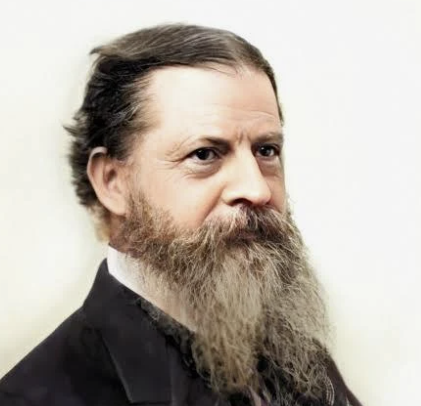
It is terrible to see how a single unclear idea, a single formula without meaning, lurking in a young man's head, will sometimes act like an obstruction ... in an artery, hindering the nutrition of the brain, and condemning its victim to pine away in the fullness of his intellectual vigor and in the midst of intellectual plenty.
▼
Source
source
How to make our ideas clear, Popular Science Monthly, Vol. 12

2 months 1 week ago
I must say, that the whole Scheme of the war is mistaken, (or appears to me to be so), for it ought to be, not for Dunkirk, or this or t'other Town-but to drive Jacobinism from the world.
▼
Source
source
Letter to Dr Charles Burney (14/15 September 1793), quoted in P. J. Marshall and John A. Woods (eds.)
2 months 1 week ago
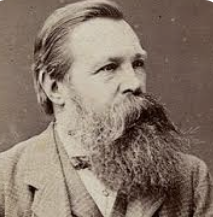
How do you think the transition from the present situation to community of Property is to be effected? The first, fundamental condition for the introduction of community of property is the political liberation of the proletariat through a democratic constitution.
▼
Source
source
Draft of a Communist Confession of Faith
2 months 1 week ago
One that confounds good and evil is an enemy to the good.
▼
Source
source
Speech in opening the impeachment of Warren Hastings (18 February 1788), quoted in The Works of the Right Honourable Edmund Burke, Volume the Tenth (1899), p. 48
3 months 6 days ago
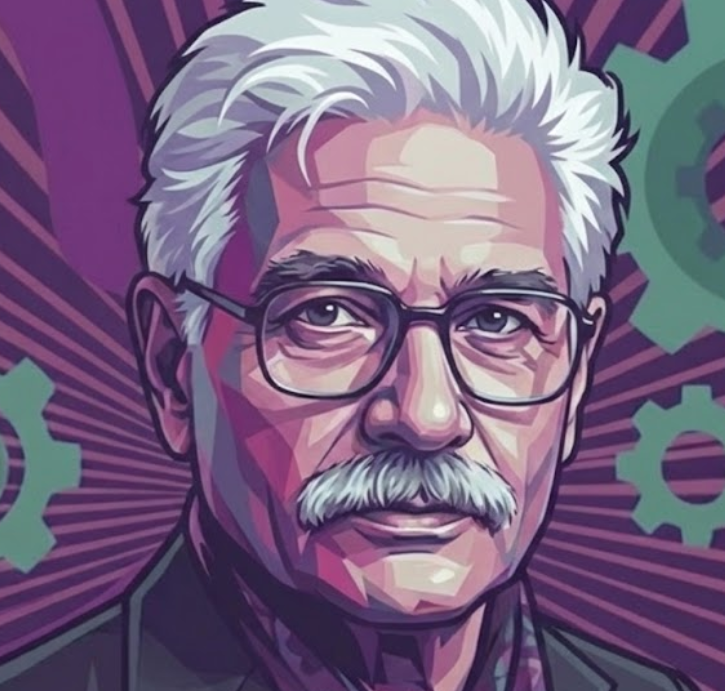
Deconstruction never had meaning or interest, at least in my eyes, than as a radicalization, that is to say, also within the tradition of a certain Marxism, in a certain spirit of Marxism.
▼
Source
source
Specters of Marx. Routledge, 1994. p. 115

3 days ago
It depends on what we read, after all manner of Professors have done their best for us.

3 months 1 week ago
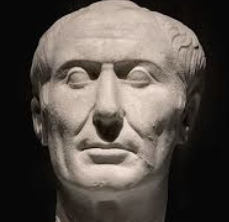
Death is the only thing we haven't succeeded in completely vulgarizing.
▼
Source
source
Eyeless in Gaza, 1936
1 month 1 week ago
Society in shipwreck is a comfort to all.
▼
Source
source
Maxim 144

3 months 2 weeks ago
In Matthew 12:23 Christ says: "Either make the tree good, and its fruit good; or make the tree bad and its fruit bad," as if to say: "Let the one who wishes to have good fruit begin by planting a good tree." Therefore, let the person who wishes to do good works being not with the works but with the believing, for this alone makes a person good.
▼
Source
source
p. 76

3 months 1 day ago
In peace, as a wise man, he should make suitable preparation for war.
▼
Source
source
Book II, satire ii, line 111

2 months 2 weeks ago
For the world, I count it not an Inn, but a Hospital, and a place, not to live, but to die in.
▼
Source
source
Section 11

2 months 1 week ago
On our earth we can only love with suffering and through suffering. We cannot love otherwise, and we know of no other sort of love. I want suffering in order to love. I long, I thirst, this very instant, to kiss with tears the earth that I have left, and I don't want, I won't accept life on any other!"
3 months 1 week ago
If, when a man writes a poem or commits a murder, the bodily movements involved in his act result solely from physical causes, it would seem absurd to put up a statue to him in the one case and to hang him in the other.
▼
Source
source
"The Doctrine of Free Will"
2 months 1 week ago
I suddenly stopped and looked out at the sea and thought, my God, how beautiful this is ... for 26 years I had never really looked at it before.
▼
Source
source
On his greater appreciation of the scenery of the world, after his near-death experience, as quoted in "Did atheist philosopher see God when he 'died'?" by William Cash, in National Post (3 March 2001).

3 months 2 weeks ago
In the natural state no concept of God can arise, and the false one which one makes for himself is harmful. Hence the theory of natural religion can be true only where there is no science; therefore it cannot bind all men together.
▼
Source
source
Part III : Selection on Education from Kant's other Writings, Ch. I Pedagogical Fragments, # 60
1 month 5 days ago
The book of the world, so richly studied by autodidacts, is being closed by the "learned," who are raising walls of opinions to shut the world out.
▼
Source
source
p. 15

3 months 1 week ago
It is strange that men will talk of miracles, revelations, inspiration, and the like, as things past, while love remains.
▼
Source
source
Pearls of Thought (1881) p. 163
3 months 1 week ago
Brief and powerless is Man's life; on him and all his race the slow, sure doom falls pitiless and dark.

2 months 1 week ago
Life is a disease of the spirit; a working incited by Passion. Rest is peculiar to the spirit.
3 days ago
Adversity is sometimes hard upon a man; but for one man who can stand prosperity, there are a hundred that will stand adversity. (Often shortened to "can't stand prosperity" as an unknown quote).

3 months 1 week ago
A man's thinking goes on within his consciousness in a seclusion in comparison with which any physical seclusion is an exhibition to public view.
▼
Source
source
Pt II, p. 189

3 months 2 weeks ago
What I had to say was so clear and I felt it so deeply that I am amazed by the tediousness, repetitiousness, verbiage, and disorder of this writing. What would have made it lively and vehement coming from another's pen is precisely what has made it dull and slack coming from mine. The subject was myself, and I no longer found on my own interest that zeal and vigor of courage which can exalt a generous soul only for another person's cause.
▼
Source
source
On the Subject and Form of This Writing; translated by Judith R. Bush, Christopher Kelly, Roger D. Masters

3 months 2 days ago
In speaking of the fear of religion, I don't mean to refer to the entirely reasonable hostility toward certain established religions and religious institutions, in virtue of their objectionable moral doctrines, social policies, and political influence. Nor am I referring to the association of many religious beliefs with superstition and the acceptance of evident empirical falsehoods. I am talking about something much deeper-namely, the fear of religion itself. I speak from experience, being strongly subject to this fear myself: I want atheism to be true and am made uneasy by the fact that some of the most intelligent and well-informed people I know are religious believers. It isn't just that I don't believe in God and, naturally, hope that I'm right in my belief. It's that I hope there is no God! I don't want there to be a God; I don't want the universe to be like that.
▼
Source
source
The Last Word, Oxford University Press, 1997, pp. 130-131.

1 month 3 weeks ago
There is no greater fallacy than the belief that aims and purposes are one thing, while methods and tactics are another, This conception is a potent menace to social regeneration. All human experience teaches that methods and means cannot be separated from the ultimate aim. The means employed become, through individual habit and social practice, part and parcel of the final purpose; they influence it, modify it, and presently the aims and means become identical.

3 months 2 weeks ago
"Optimism," said Cacambo, "What is that?" "Alas!" replied Candide, "It is the obstinacy of maintaining that everything is best when it is worst!

1 month 1 week ago
The newspaper is a corporate symbolist poem, environmental and invisible, as poem.

3 months 1 week ago
Children are all foreigners.
▼
Source
source
September 25, 1839

3 months 1 week ago
Since the working-class lives from hand to mouth,it buys as long as it has the means to buy.
▼
Source
source
Vol. II, Ch. XX, p. 449.
3 months 2 weeks ago
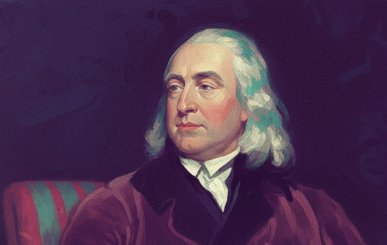
Liberty therefore not being more fit than other words in some of the instances in which it has been used, and not so fit in others, the less the use that is made of it the better. I would no more use the word liberty in my conversation when I could get another that would answer the purpose, than I would brandy in my diet, if my physician did not order me: both cloud the understanding and inflame the passions.
▼
Source
source
Jeremy Bentham, quoted in P. J. Kelly, Utilitarianism and Distributive Justice: Jeremy Bentham and the Civil Law, Oxford, 1990, p. 96
2 months 2 days ago
Long after Plato's time the concept of the Ideas still represented the sphere of aloofness, independence, and in a certain sense even freedom, an objectivity that did not submit to 'our' interests.
▼
Source
source
p. 46.
2 months 2 weeks ago
Foreknowledge is power.
▼
Source
source
As quoted in A Dictionary of Scientific Quotations (1991) by Alan Lindsay Mackay

1 month 2 weeks ago
We do not have to love one another to be obligated to build a world in which all lives are sustainable. The right to persist can only be understood as a social right, as the subjective instance of a social and global obligation we bear toward one another.
▼
Source
source
p. 64
3 months 1 week ago
Whoso walketh in solitude, And inhabiteth the wood, Choosing light, wave, rock, and bird, Before the money-loving herd, Into that forester shall pass From these companions power and grace.
▼
Source
source
Wood-notes, no. II, st. 4

1 month 3 weeks ago
Of all the inventions of man I doubt whether any was more easily accomplished than that of a Heaven.
▼
Source
source
L 34
3 months 1 week ago
In action, in desire, we must submit perpetually to the tyranny of outside forces; but in thought, in aspiration, we are free, free from our fellowmen, free from the petty planet on which our bodies impotently crawl, free even, while we live, from the tyranny of death.
3 months 2 weeks ago
This return of Republics back to their principles also results from the simple virtue of one man, without depending on any law that excites him to any execution: none the less, they are of such influence and example that good men desire to imitate him, and the wicked are ashamed to lead a life contrary to those examples.
▼
Source
source
Book 3, Ch. 1
1 month 3 weeks ago
The important thing is not the planning of an Index Verborum Prohibitorum of current noble nouns, but rather the examination of their linguistic function.
▼
Source
source
p. 6

2 months 1 week ago
Word - that invisible dagger.
4 days ago
A modern philosopher who has never once suspected himself of being a charlatan must be such a shallow mind that his work is probably not worth reading.
▼
Source
source
Metaphysical Horror

3 months 1 week ago
Society should treat all equally well who have deserved equally well of it, that is, who have deserved equally well absolutely. This is the highest abstract standard of social and distributive justice; towards which all institutions, and the efforts of all virtuous citizens, should be made in the utmost degree to converge.
▼
Source
source
Ch. 5
2 months 1 week ago
The strides of humanity are slow, they can only be counted in centuries.
▼
Source
source
Act II.
2 months 4 days ago
Fashion is something barbarous, for it produces innovation without reason and imitation without benefit.
▼
Source
source
Ch. VII
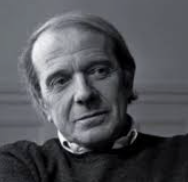
1 month 3 weeks ago
Schizophrenia is like love: there is no specifically schizophrenic phenomenon or entity; schizophrenia is the universe of productive and reproductive desiring machines, universal primary production as "the essential reality of man and nature".
▼
Source
source
The Desiring Machine

3 weeks ago
The reason for sketching what's technically feasible with the tools of synthetic biology is that only after human complicity in the persistence of suffering in the biosphere is acknowledged can we hope to have an informed socio-political debate on the morality of its perpetuation. No serious ethical discussion of free-living animal suffering can begin in the absence of recognition of human responsibility for nonhuman well-being.
▼
Source
source
Compassionate Biology: How CRISPR-based gene drives" could cheaply, rapidly and sustainably reduce suffering throughout the living world", BLTC Research, 2016
3 months 1 week ago
I have been writing & speaking what were once called novelties, for twenty five or thirty years, & have not now one disciple. Why? Not that what I said was not true; not that it has not found intelligent receivers but because it did not go from any wish in me to bring men to me, but to themselves. I delight in driving them from me. What could I do, if they came to me? - they would interrupt and encumber me. This is my boast that I have no school & no follower. I should account it a measure of the impurity of insight, if it did not create independence.
▼
Source
source
April 1859
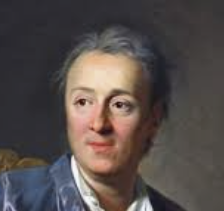
2 months 2 weeks ago
If there is one realm in which it is essential to be sublime, it is in wickedness. You spit on a petty thief, but you can't deny a kind of respect for the great criminal.
3 months 1 week ago
I wish to propose for the reader's favourable consideration a doctrine which may, I fear, appear wildly paradoxical and subversive. The doctrine in question is this: that it is undesirable to believe a proposition when there is no ground whatever for supposing it true.
▼
Source
source
Ch. 1: The Value of Scepticism
CivilSimian.com created by AxiomaticPanic, CivilSimian, Kalokagathia