

3 months 2 weeks ago
Faith is a living, bold trust in God's grace, so certain of God's favor that it would risk death a thousand times trusting in it. Such confidence and knowledge of God's grace makes you happy, joyful and bold in your relationship to God and all creatures. The Holy Spirit makes this happen through faith. Because of it, you freely, willingly and joyfully do good to everyone, serve everyone, suffer all kinds of things, love and praise the God who has shown you such grace.
▼
Source
source
An Introduction to St. Paul's Letter to the Romans fromDr. Martin Luthers Vermischte Deutsche Schriften. Johann K. Irmischer, ed. Vol. 63(Erlangen: Heyder and Zimmer, 1854), pp. 124-125. (EA 63:124-125)

3 months 1 week ago
The wise and virtuous man is at all times willing that his own private interests should be sacrificed to the public interest of his own particular society--that the interests of this order of society be sacrificed to the greater interest of the state. He should therefore he equally willing that all those inferior interests should be sacrificed to the greater society of all sensible and intelligent beings.
▼
Source
source
Section II, Chap. III; cited by Reinhold Niebuhr, The Children of Light and the Children of Darkness, New York: Charles Scribner's Sons, 1941, 24-25.

3 months 1 week ago
History is a bath of blood.
5 days ago
Whether or not birth control is eugenic, hygienic, and economic, it is the most revolutionary practice in the history of sexual morals.
▼
Source
source
Ch. XIV: "Love in the Great Society", §4, p. 291
1 month 3 weeks ago
What is it that distinguishes man from animals? It is not his upright posture. That was present in the apes long before the brain began to develop. Nor is it the use of tools. It is something altogether new, a previously unknown quality: self-awareness. Animals, too, have awareness. They are aware of objects; they know this is one thing and that another. But when the human being as such was born he had a new and different consciousness, a consciousness of himself; he knew that he existed and that he was something different, something apart from nature, apart from other people, too. He experienced himself. He was aware that he thought and felt. As far as we know, there is nothing analogous to this anywhere in the animal kingdom. That is the specific quality that makes human beings human.
▼
Source
source
Affluence and Ennui in Our Society in For the Love of Life (1986) translated by Robert and Rita Kimber

3 months 1 week ago
Human freedom is realised in the adoption of humanity as an end in itself, for the one thing that no-one can be compelled to do by another is to adopt a particular end.
▼
Source
source
Part Two : Metaphysical Principles of Virtue

1 month 3 weeks ago
Compared with the wholesale violence of capital and government, political acts of violence are but a drop in the ocean. That so few resist is the strongest proof how terrible must be the conflict between their souls and unbearable social iniquities.
3 months 1 week ago
Real power begins where secrecy begins.
▼
Source
source
Part 3, Ch. 12, § 1

2 months 5 days ago
As the years pass, the number of those we can communicate with diminishes. When there is no longer anyone to talk to, at last we will be as we were before stooping to a name.
2 months 1 day ago
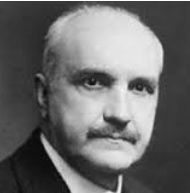
In the Gospels, for instance, we sometimes find the kingdom of heaven illustrated by principles drawn from observation of this world rather than from an ideal conception of justice; ... They remind us that the God we are seeking is present and active, that he is the living God; they are doubtless necessary if we are to keep religion from passing into a mere idealism and God into the vanishing point of our thought and endeavour.
▼
Source
source
Interpretations of Poetry and Religion (1900), p. 54
2 months ago
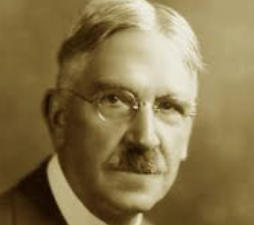
The mystery is that the world is at it is -- a mystery that is the source of all joy and all sorrow, of all hope and fear, and the source of development both creative and degenerative. The contingency of all into which time enters is the source of pathos, comedy, and tragedy.
1 month 4 weeks ago
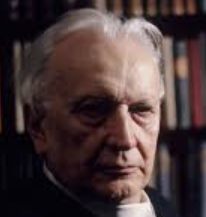
The would-be climber must be able to make himself liked ... please his superiors - avoid showing independence except in those matters wherein independence is expected of him by his chiefs... the winners in the race have qualities which disincline them to allow others to be their true selves. Hence the winners snub all those who aim at adequate self-expression, speaking of them as pretentious, eccentric, biased, unpractical, and measuring their achievements by insincere standards.

1 month 6 days ago
There is a real, living unity in our time, as in any other, but it lies submerged under a superficial hubbub of sensation.
▼
Source
source
Letter to Harold Adam Innis (14 March 1951), published in Letters of Marshall McLuhan (1987), p. 223
3 months 1 week ago
The mind intent upon resolving as well as compounding the concept of a composite demands and presumes boundaries in which it may acquiesce in the former as well as in the latter direction.

4 months 1 week ago
A man who for a long time has gone around hiding a secret becomes mentally deranged. At this point one would imagine that his secret would have to come out, but despite his derangement his soul still sticks to its hideout, and those around him become even more convinced that the false story he told to deceive them is the truth. He is healed of his insanity, knows everything that has gone on, and thereby perceives that nothing has been betrayed. Was this gratifying to him or not; he might wish to have disposed of his secret in his madness; it seems as if there were a fate which forced him to remain in his secret and would not let him go away from it. Or was it for the best, was there a guardian spirit who helped him keep his secret.

4 months 6 days ago
Of all the books I have ever worked on, I think Asimov's Guide to Shakespeare gave me the most pleasure, day in, day out. For months and months I lived and thought Shakespeare, and I don't see how there can be any greater pleasure in the world, any pleasure, that is, that one can indulge in for as much as ten hours without pause, day after day indefinitely.

3 months 2 weeks ago
No Man is wise at all Times, or is without his blind Side.
▼
Source
source
The Alchymyst, in Colloquies of Erasmus, Volume I.

3 months 1 week ago
In this third period (as it may be termed) of my mental progress, which now went hand in hand with hers, my opinions gained equally in breadth and depth, I understood more things, and those which I had understood before, I now understood more thoroughly. I had now completely turned back from what there had been of excess in my reaction against Benthamism. I had, at the height of that reaction, certainly become much more indulgent to the common opinions of society and the world, and more willing to be content with seconding the superficial improvement which had begun to take place in those common opinions, than became one whose convictions on so many points, differed fundamentally from them. I was much more inclined, than I can now approve, to put in abeyance the more decidedly heretical part of my opinions, which I now look upon as almost the only ones, the assertion of which tends in any way to regenerate society.
▼
Source
source
(p. 229)

2 months 2 weeks ago
Pray, O pray to God, dear friends, if you are not already asses - that he will cause you to become asses... There is none who praiseth not the golden age when men were asses: they knew not how to work the land. One knew not how to dominate another, one understood no more than another; caves and caverns were their refuge; they were not so well covered nor so jealous nor were they confections of lust and of greed. Everything was held in common.

4 days ago
A right exists in theory... All human beings have the same set of rights, but rights need to be enforced by the state. It needs to rely on the coercive power of the state... its army, its police force, to actually make those rights something real that citizens can enjoy, and the enforcement power is not universal. ...We wouldn't want to live in a world in which every liberal state wanted to enforce liberal rights in every other state in the world.
▼
Source
source
24:09
2 months 5 days ago
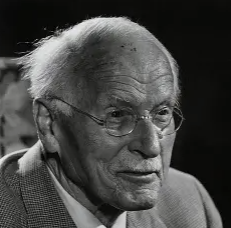
That higher and "complete" man is begotten by the "unknown" father and born from Wisdom, and it is he who, in the figure of the puer aeternus-"vultu mutabilis albus et ater"-represents our totality, which transcends consciousness. It was this boy into whom Faust had to change, abandoning his inflated onesidedness which saw the devil only outside. Christ's "Except ye become as little children" is a prefiguration of this, for in them the opposites lie close together; but what is meant is the boy who is born from the maturity of the adult man, and not the unconscious child we would like to remain.
▼
Source
source
Answer to Job, R. Hull, trans. (1984), pp. 157-158

2 months 1 week ago
The ultimate result of shielding men from the effects of folly, is to fill the world with fools.
▼
Source
source
Vol. 3, Ch. IX, State-Tamperings with Money and Banks

3 months 2 weeks ago
Not because Socrates said so, but because it is in truth my own disposition - and perchance to some excess - I look upon all men as my compatriots, and embrace a Pole as a Frenchman, making less account of the national than of the universal and common bond.
▼
Source
source
Ch. 9
3 weeks 6 days ago
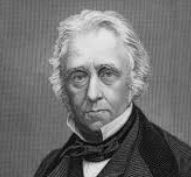
There were gentlemen and there were seamen in the navy of Charles II. But the seamen were not gentlemen, and the gentlemen were not seamen.
▼
Source
source
Vol. I, ch. 2
1 day ago
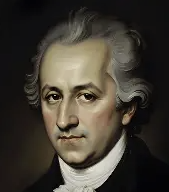
When young, one is confident to be able to build palaces for mankind, but when the time comes one has one's hands full just to be able to remove their trash.
▼
Source
source
Letter to Johann Kaspar Lavatar

2 months 5 days ago
A pair of statements may be taken conjunctively or disjunctively; for example, "It lightens and it thunders," is conjunctive, "It lightens or it thunders" is disjunctive. Each such individual act of connecting a pair of statements is a new monad for the mathematician.
▼
Source
source
p. 268
1 month 3 weeks ago
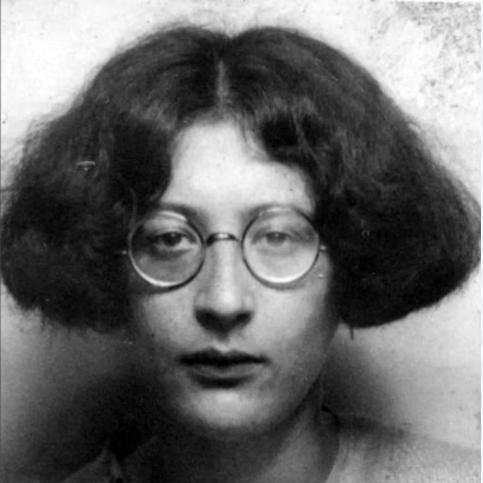
It is the aim of public life to arrange that all forms of power are entrusted, so far as possible, to men who effectively consent to be bound by the obligation towards all human beings which lies upon everyone, and who understand the obligation. Law is the quality of the permanent provisions for making this aim effective.
4 months 6 days ago
Writing is an addiction more powerful than alcohol, than nicotine, than crack. I could not conceive of not writing.
2 months 5 days ago
Suppose a surface to be part red and part blue; so that every point on it is either red or blue, and of course, no part can be both red and blue. What then, is the color of the surface in the immediate neighborhood of the point. ...it follows that the boundary is half red and half blue. In like manner, we find it necessary to hold that consciousness essentially occupies time... Thus, the present is half past and half time to come. ...Take another case: the velocity of a particle at any instant of time is its mean velocity during an infinitesimal instant in which that time is consumed. Just so, my immediate feeling is my feeling through an infinitesimal duration containing the present instant.
3 months 1 week ago
The case of the conscience of Eichmann, which is admittedly complicated but is by no means unique, is scarcely comparable to the case of the German generals, one of whom, when asked at Nuremberg, "How was it possible that all of you honorable generals could continue to serve a murderer with such unquestioning loyalty?," replied that it was "not the task of a soldier to act as judge over his supreme commander. Let history do that or God in Heaven."
▼
Source
source
Ch. VIII

2 months 1 week ago
No natural boundary seems to be set to the efforts of man; and what is not yet done is only what he has not yet attempted to do. Variant: What is not yet done is only what we have not yet attempted to do.
▼
Source
source
Chapter XVIII.

3 months 1 week ago
Poetry must be new as foam, and as old as the rock.
▼
Source
source
March 1845
3 months 2 weeks ago
The veneration of Mary is inscribed in the very depths of the human heart.
▼
Source
source
Weimar edition of Martin Luther's Works (Translation by William J. Cole) 10, III, p. 313

1 month 3 weeks ago
"And the upshot of all this," so I have been told more than once and by more than one person, "will be simply that all you will succeed in doing will be to drive people to the wildest Catholicism." And I have been accused of being a reactionary and even a Jesuit. Be it so! ...I know very well it is madness to seek to turn the waters of the river back to their source, and that it is only the ignorant who seek to find in the past a remedy for their present ills; but I know too that anyone who fights for any ideal whatever, although his ideal may seem to lie in the past, is driving the world on to the future, and that the only reactionaries are those who find themselves at home in the present. Every supposed restoration of the past is a creation of the future, and if the past which it is sought to restore is a dream, something imperfectly known, so much the better.

2 months 6 days ago
Love works magic. It is the final purpose Of the world story, The Amen of the universe.

2 months 1 day ago
Follow me, and I will make you fishers of men.
▼
Source
source
4:19 (KJV) Said to Peter and Andrew

2 months 1 week ago
To the Deity must be left the task of infinite perfection, while to us poor, weak, incapable mortals, there was no rule of conduct so safe as experience.
▼
Source
source
Speech in the House of Commons (6 May 1791), quoted in The Parliamentary History of England, From the Earliest Period to the Year 1803, Vol. XXIX (1817), column 388
1 month 3 weeks ago
"The bitterest sorrow that man can know is to aspire to do much and to achieve nothing"... so Herodotus relates that a Persian said to a Theban at a banquet (book ix., chap. xvi.). And it is true. With knowledge and desire we can embrace everything , or almost everything; with the will nothing, or almost nothing. And contemplation is not happiness - no! not if this contemplation implies impotence. And out of this collision between our knowledge and our power pity arises.
2 months 5 days ago
To suffer is the great modality of taking the world seriously.
3 months 4 weeks ago
When you have faults, do not fear to abandon them.
4 days ago
If children are a joy for the well-to-do, they are a torment for seven-eights of all civlizees, who cannot afford to maintain and educate them.
1 month 3 weeks ago
When we can't dream any longer we die.
▼
Source
source
Quoted by Margaret C. Anderson in "Emma Goldman in Chicago", Mother Earth magazine
3 months 1 week ago
First of all, principles should be general. That is, it must be possible to formulate them without use of what would be intuitively recognized as proper names, or rigged definite descriptions.
▼
Source
source
Chapter III, Section 23, pg. 131
3 months 3 days ago
The constitution of madness as mental illness, at the end of the eighteenth century, bears witness to a rupture in a dialogue, gives the separation as already enacted, and expels from the memory all those imperfect words, of no fixed syntax, spoken falteringly, in which the exchange between madness and reason was carried out. The language of psychiatry, which is a monologue by reason about madness, could only have come into existence in such a silence.
▼
Source
source
Preface to 1961 edition

3 months 1 week ago
If a man is offered a fact which goes against his instincts, he will scrutinize it closely, and unless the evidence is overwhelming, he will refuse to believe it. If, on the other hand, he is offered something which affords a reason for acting in accordance with his instincts, he will accept it even on the slenderest evidence. The origin of myths is explained in this way.
▼
Source
source
Ch. VI: International relations, p. 97
2 months 1 week ago
Better to be despised for too anxious apprehensions, than ruined by too confident a security.
2 months 1 day ago
And this Feare of things invisible, is the naturall Seed of that, which every one in himself calleth Religion; and in them that worship, or feare that Power otherwise than they do, Superstition.
▼
Source
source
The First Part, Chapter 11, p. 51
3 months 2 weeks ago
A man of understanding has lost nothing, if he has himself.
▼
Source
source
Ch. 39

1 month 2 weeks ago
Delight at having understood a very abstract and obscure system leads most people to believe in the truth of what it demonstrates.
▼
Source
source
J 77

3 months 1 week ago
Do not allow your dreams of a beautiful world to lure you away from the claims of men who suffer here and now.
▼
Source
source
p. 485
CivilSimian.com created by AxiomaticPanic, CivilSimian, Kalokagathia