


4 months 2 days ago
We inherit the warlike type; and for most of the capacities of heroism that the human race is full of we have to thank this cruel history. Dead men tell no tales, and if there were any tribes of other type than this they have left no survivors. Our ancestors have bred pugnacity into our bone and marrow, and thousands of years of peace won't breed it out of us. The popular imagination fairly fattens on the thought of wars. Let public opinion once reach a certain fighting pitch, and no ruler can withstand it. In the Boer war both governments began with bluff, but they couldn't stay there; the military tension was too much for them.
3 weeks 5 days ago
What has philosophy got to do with measuring anything? It's the mathematicians you have to trust, and they measure the skies like we measure a field.
▼
Source
source
Matteo in Concerning the New Star


3 months 1 week ago
The arbitrary rule of a just and enlightened prince is always bad. His virtues are the most dangerous and the surest form of seduction: they lull a people imperceptibly into the habit of loving, respecting, and serving his successor, whoever that successor may be, no matter how wicked or stupid.
▼
Source
source
Refutation of Helvétius
3 months 4 weeks ago
This is precisely what is decisive in Nietzsche's conception of art, that he sees it in its essential entirety in terms of the artist; this he does consciously and in explicit opposition to that conception of art which represents it in terms of those who "enjoy" and "experience" it.That is a guiding principle of Nietzsche's teaching on art: art must be grasped in terms of creators and producers, not recipients. Nietzsche expresses it unequivocally in the following words (WM, 811): "Our aesthetics heretofore has been a woman's aesthetics, inasmuch as only the recipients of art have formulated their experiences of 'what is beautiful.' In all philosophy to date the artist is missing." Philosophy of art means "aesthetics" for Nietzsche too-but masculine aesthetics, not feminine aesthetics. The question of art is the question of the artist as the productive, creative one; his experiences of what is beautiful must provide the standard.
▼
Source
source
p. 70

4 months 1 day ago
"Milton was right," said my Teacher. "The choice of every lost soul can be expressed in the words 'Better to reign in Hell than to serve in Heaven.' There is always something they insist on keeping even at the price of misery."
▼
Source
source
Ch. 9

2 months 4 weeks ago
The third argument, enclosing and defending the other two, consists in the development of those principles of logic according to which the humble argument is the first stage of a scientific inquiry into the origin of the three Universes, but of an inquiry which produces, not merely scientific belief, which is always provisional, but also a living, practical belief, logically justified in crossing the Rubicon with all the freightage of eternity.
▼
Source
source
V

5 months 5 days ago
All that exists that can be denied deserves to be denied; and being truthful means: to believe in an existence that can in no way be denied and which is itself true and without falsehood.
2 days ago
The teachers are everywhere. What is wanted is a learner.
▼
Source
source
"Healing"

4 months 3 days ago
It might be plausibly maintained, that in almost every one of the leading controversies, past or present, in social philosophy, both sides were in the right in what they affirmed, though wrong in what they denied.
▼
Source
source
J. S. Mill, Dissertations and discussions: political, philosophical, and historical, Volume 2, H. Holt, 1864, p. 11.
2 months 3 weeks ago
At the classical origins of philosophic thought, the transcending concepts remained committed to the prevailing separation between intellectual and manual labor to the established society of enslavement. ... Those who bore the brunt of the untrue reality and who, therefore, seemed to be most in need of attaining its subversion were not the concern of philosophy. It abstracted from them and continued to abstract from them.
▼
Source
source
pp. 134-135
3 months 1 week ago
How shall the dead arise, is no question of my faith; to believe only possibilities, is not faith, but mere philosophy.
▼
Source
source
Section 48
4 months 2 days ago
Habit is thus the enormous fly-wheel of society, its most precious conservative agent. It alone is what keeps us all within the bounds of ordinance, and saves the children of fortune from the envious uprisings of the poor.
▼
Source
source
Ch. 4

4 months 2 days ago
Propaganda in favor of action that is consonant with enlightened self-interest appeals to reason by means of logical arguments based upon the best available evidence fully and honestly set forth. Propaganda in favor of action dictated by the impulses that are below self-interest offers false, garbled or incomplete evidence, avoids logical argument and seeks to influence its victims by the mere repetition of catchwords, by the furious denunciation of foreign or domestic scapegoats, and by cunningly associating the lower passions with the highest ideals, so that atrocities come to be perpetrated in the name of God and the most cynical kind of Realpolitik is treated as a matter of religious principle and patriotic duty.
▼
Source
source
Chapter 4 (p. 33)
2 months 2 weeks ago
The lack of objectivity, as far as foreign nations are concerned, is notorious. From one day to another, another nation is made out to be utterly depraved and fiendish, while one's own nation stands for everything that is good and noble. Every action of the enemy is judged by one standard - every action of oneself by another. Even good deeds by the enemy are considered a sign of particular devilishness, meant to deceive us and the world, while our bad deeds are necessary and justified by our noble goals which they serve.

4 months 2 days ago
Born for success he seemed, With grace to win, with heart to hold, With shining gifts that took all eyes.
▼
Source
source
In Memoriam E. B. E.
4 months 3 days ago
I soon perceived that she possessed in combination, the qualities which in all other persons whom I had known I had been only too happy to find singly. In her, complete emancipation from every kind of superstition (including that which attributes a pretended perfection to the order of nature and the universe), and an earnest protest against many things which are still part of the established constitution of society, resulted not from the hard intellect, but from strength of noble and elevated feeling, and co-existed with a highly reverential nature.
▼
Source
source
(p. 186)
3 months 2 days ago
If therefore my work is negative, irreligious, atheistic, let it be remembered that atheism - at least in the sense of this work - is the secret of religion itself; that religion itself, not indeed on the surface, but fundamentally, not in intention or according to its own supposition, but in its heart, in its essence, believes in nothing else than the truth and divinity of human nature. Preface

2 months 2 days ago
Science may fall back on its stupid excuse that science works for science, and that when it has been developed by the scientists it will become accessible to the people also; but art, if it be art, should be accessible to all, and particularly to those for whom it is produced. And the position of our art strikingly arraigns the producers of art for not wishing, not knowing how, and being unable, to serve the people.
3 days ago
As long as our souls remain strong, that is all that matters; as long as they don't decline. Because with the fall of certain souls in this world, the world itself will collapse. These are the pillars which support it. They are few, but enough.
▼
Source
source
"My Friend Poet. Mount Athos.", Ch. 19, p. 215
2 months 4 weeks ago
Fifth, in what measure this unification acts, seems to be regulated only by special rules; or, at least, we cannot in our present knowledge say how far it goes. But it may be said that, judging by appearances, the amount of arbitrariness in the phenomenon of human minds is neither altogether trifling nor very prominent.

3 months 3 days ago
The formula 'two plus two equals five' is not without its attractions.
▼
Source
source
Part 1, Chapter 9 (tr. ?)

2 months 2 weeks ago
Not by way of reason, but only by way of love and suffering, do we come to the living God, the human God. Reason rather separates us from Him. We cannot first know Him in order that afterward we may love Him; we must begin by loving Him, longing for Him, hungering after Him, before knowing Him. The knowledge of God proceeds from the love of God, and this love has little or nothing of the rational in it. For God is indefinable. To seek to define Him is to seek to confine Him within the limits of our mind - that is to say, to kill Him. In so far as we attempt to define Him, there rises up before us - Nothingness.
8 months 1 week ago
The analysis achieves its end when the patient is able to recognize, in the Real of his symptom, the only support of his being. That is how we must read Freud's 'wo we war, soll ich werden:' you, the subject, must identify yourself with the place where your symptom already was; in its pathological particularity you must recognize the element which gives consistency to your being.
2 months 3 weeks ago
Philosophers are adults who persist in asking childish questions.
▼
Source
source
As quoted in The Listener

2 weeks 3 days ago
It is not the man who has too little, but the man who craves more, that is poor.
▼
Source
source
Line 6.
4 months 2 days ago
If the colleges were better, if they ... had the power of imparting valuable thought, creative principles, truths which become powers, thoughts which become talents, - if they could cause that a mind not profound should become profound, - we should all rush to their gates: instead of contriving inducements to draw students, you would need to set policy at the gates to keep order in the in-rushing multitude.
▼
Source
source
The Celebration of Intellect, 1861

4 months 5 days ago
The offender never forgives.
▼
Source
source
Émile et Sophie, ou Les Solitaires, "Lettre Première", 1781
2 months 2 weeks ago
Happiness is the proof that time can accommodate eternity.
4 months 1 day ago
Farewell to the monsters, farewell to the saints. Farewell to pride. All that is left is men.
▼
Source
source
Act 10, sc. 4
3 months ago
Privilege is a regulation rendering a few men, and those only, by the accident of their birth, eligible to certain situations. It kills all liberal ambition in the rest of mankind, by opposing to it an apparently insurmountable bar. It diminishes it in the favored class itself, by showing them the principal qualification as indefeasibly theirs. Privilege entitles a favored few to engross to themselves gratifications which the system of the universe left at large to all her sons; it puts into the hands of those few the means of oppression against the rest of their species; it fill them witth vain-glory, and affords them every incitement to insolence and a lofty disregard to the feeling and interests of others.
▼
Source
source
Book V, Chapter 11, "Moral Effects of Aristocracy"
5 months 3 days ago
From the Christian point of view it stands firm that the truly Christian venturing requires probability.
2 days ago
Timid men prefer the calm of despotism to the tempestuous sea of liberty.
▼
Source
source
Letter to his Italian friend, Philip Mazzei
1 week 6 days ago
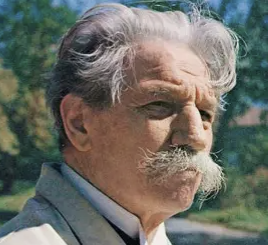
May the men who hold the destiny of peoples in their hands, studiously avoid anything that might cause the present situation to deteriorate and become even more dangerous. May they take to heart the words of the Apostle Paul: "If it be possible, as much as lieth in you, live peaceably with all men." These words are valid not only for individuals, but for nations as well. May these nations, in their efforts to maintain peace, do their utmost to give the spirit time to grow and to act.
2 months 2 weeks ago
I believe that the nature of man is a contradiction rooted in the conditions of human existence that requires a search for solutions, which in their turn create new contradictions and now the need for answers. I believe that every answer to these contradictions can really satisfy the condition of helping man to overcome the sense of separation and to achieve a sense of agreement, of unity, and of belonging. I believe that in every answer to these contradictions, man has the possibility of choosing only between going forward or going back; these choices, which are translated into specific actions, are means toward the regressing or toward the progressing of the humanity that is in us.
3 months 1 week ago
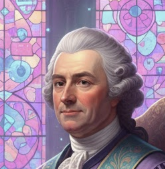
Abstract terms (however useful they may be in argument) should be discarded in meditation, and the mind should be fixed on the particular and the concrete, that is, on the things themselves.
▼
Source
source
Paragraph 4
3 days ago
God, what is all this talk put out by the popes? Paradise is here, my good man. God, give me no other paradise!
▼
Source
source
Freedom and Death
3 months 4 weeks ago
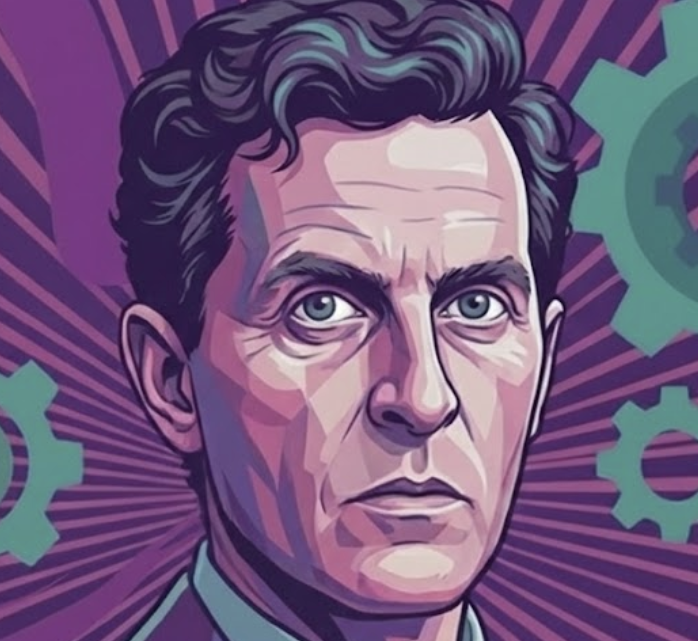
A philosopher is a man who has to cure many intellectual diseases in himself before he can arrive at the notions of common sense.
▼
Source
source
p. 44e
3 weeks 5 days ago
We seek not what God could have done but what He has done.... God could have caused birds to fly with bones of solid gold, with veins full of quicksilver, with flesh heavier than lead and very small and heavy wings, so as to better show His power ... but He wanted to make their bones, flesh and feathers very light ... to teach us that He likes simplicity and ease.
▼
Source
source
Notes in a copy of Jean-Baptiste Morin's "Famous and ancient problems of the earth's motion or rest, yet to be solved" (published 1631).
2 months 2 weeks ago
The theme of Cosmology, which is the basis of all religions, is the story of the dynamic effort of the World passing into everlasting unity, and of the static majesty of God's vision, accomplishing its purpose of completion by absorption of the World's multiplicity of effort.
▼
Source
source
Pt. V, ch. II, sec. V.
2 weeks 4 days ago
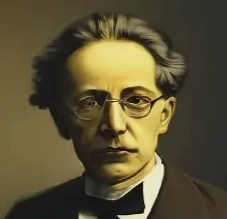
The divine is God's concern; the human, man's. My concern is neither the divine nor the human, not the true, good, just, free, etc., but solely what is mine, and it is not a general one, but is - unique, as I am unique. Nothing is more to me than myself!
▼
Source
source
Cambridge 1995, p. 7
3 months 4 weeks ago
A teacher who can show good, or indeed astounding results while he is teaching, is still not on that account a good teacher, for it may be that, while his pupils are under his immediate influence, he raises them to a level which is not natural to them, without developing their own capacities for work at this level, so that they immediately decline again once the teacher leaves the schoolroom.
▼
Source
source
p. 43e
2 months 4 weeks ago
Let me now try to gather up all these odds and ends of commentary and restate the law of mind, in a unitary way.

4 months 1 day ago
A rationalist, as I use the word, is a man who attempts to reach decisions by argument and perhaps, in certain cases, by compromise, rather than by violence. He is a man who would rather be unsuccessful in convincing another man by argument than successful in crushing him by force, by intimidation and threats, or even by persuasive propaganda.
1 month 1 week ago
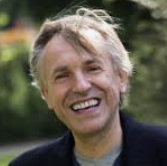
The reason for sketching what's technically feasible with the tools of synthetic biology is that only after human complicity in the persistence of suffering in the biosphere is acknowledged can we hope to have an informed socio-political debate on the morality of its perpetuation. No serious ethical discussion of free-living animal suffering can begin in the absence of recognition of human responsibility for nonhuman well-being.
▼
Source
source
Compassionate Biology: How CRISPR-based gene drives" could cheaply, rapidly and sustainably reduce suffering throughout the living world", BLTC Research, 2016
1 week 5 days ago
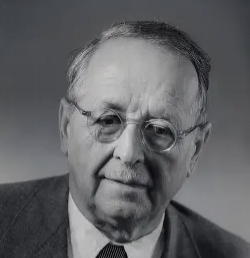
In these days the angel of topology and the devil of abstract algebra fight for the soul of each individual mathematical domain.
▼
Source
source
Weyl, Hermann. Invariants. Duke Math. J. 5 (1939), no. 3, 489--502. doi:10.1215/S0012-7094-39-00540-5. http://projecteuclid.org/euclid.dmj/1077491405.

2 months 4 weeks ago
My mission is to suffer for all those who suffer without knowing it. I must pay for them, expiate their unconsciousness, their luck to be ignorant of how unhappy they are.
1 week 6 days ago
Intellectuals ... advertise their superiority to political practice but are absolutely in its thrall. ... It is no accident that Marxist theory and practice use the intellectuals as tools and keep them in brutal subservience.
▼
Source
source
"Commerce and Culture," p. 281.

4 months 1 week ago
Animals only follow their natural instincts; but man, unless he has experienced the influence of learning and philosophy, is at the mercy of impulses that are worse than those of a wild beast. There is no beast more savage and dangerous than a human being who is swept along by the passions of ambition, greed, anger, envy, extravagance, and sensuality.
▼
Source
source
Translated by Beert C. Verstraete as On Education for Children, in The Erasmus Reader (University of Toronto Press: 1990), p. 73
CivilSimian.com created by AxiomaticPanic, CivilSimian, Kalokagathia