


2 months 2 days ago
Is not the reason of the confidence of the positive, critical, experimental scientists, and of the reverent attitude of the crowd towards their doctrines, still the same? At first it seems strange how the theory of evolution (which, like the redemption in theology, serves the majority as a popular expression of the whole new creed) can justify people in their injustice, and it seems as if the scientific theory dealt only with facts and did nothing but observe facts. But that only seems so. It seemed just the same in the case of theological doctrine: theology, it seemed, was only occupied with dogmas and had no relation to people's lives, and it seemed the same with regard to philosophy, which appeared to be occupied solely with transcendental reasonings. But that only seemed so. It was just the same with the Hegelian doctrine on a large scale and with the particular case of the Malthusian teaching.

4 months 1 day ago
In order to make himself thoroughly undesirable, he will speak.
▼
Source
source
p. 463

3 weeks 2 days ago
In the whole world, that day, there was not a more entirely unimportant-looking pair of people than this Miner and his Wife. And yet what were all Emperors, Popes and Potentates, in comparison? There was born here, once more, a Mighty Man; whose light was to flame as the beacon over long centuries and epochs of the world; the whole world and its history was waiting for this man. It is strange, it is great.
4 months 1 week ago
The law of nature teaches me to speak in my own defence: With respect to this charge of bribery I am as innocent as any man born on St. Innocents Day. I never had a bribe or reward in my eye or thought when pronouncing judgment or order. I am ready to make an oblation of myself to the King.
▼
Source
source
(17 April 1621) Quoted by Baron John Campbell (1818), J. Murray in "The Lives of the Lord Chancellors and Keepers of the Great Seal of England"
1 month 1 week ago
Philosophy is said to have taken the 'linguistic turn' in this century. One hundred years ago, a philosopher would think in terms of mind, spirit, experience, consciousness; now the by-word is language.
▼
Source
source
Chapter 2, Metaphysics and Metaphor, p. 26

2 months 4 weeks ago
Not one moment when I have not been conscious of being outside Paradise.
2 months 3 weeks ago
If by enlightenment and intellectual progress we mean the freeing of man from superstitious belief in evil forces, in demons and fairies, in blind fate-in short, emancipation of fear-then denunciation of what is currently called reason is the greatest service reason can render.
1 week 3 days ago
In a superior civilization, as, for example, that of the Indo-Aryans, the being who is without a characteristic form or caste (in the original meaning of the word), not even that of servant or shudra, would emerge as a pariah. In this respect America is a society of pariahs. There is a role for pariahs. It is to be subjected to beings whose form and internal laws are precisely defined. Instead the modern pariahs seek to become dominant themselves and to exercise their dominion over the entire world.
▼
Source
source
American "Civilization"

4 months 2 days ago
Perseus wore a magic cap that the monsters he hunted down might not see him.We draw the magic cap down over eyes and ears as a make-believe that there are no monsters.
▼
Source
source
Author's prefaces to the First Edition.

4 months 2 days ago
All gods are homemade, and it is we who pull their strings, and so, give them the power to pull ours Vijaya in Island.
▼
Source
source
1962
5 months 3 days ago
The single harmony produced by all the heavenly bodies singing and dancing together springs from one source and ends by achieving one purpose, and has rightly bestowed the name not of "disordered" but of "ordered universe" upon the whole.
4 months 3 days ago
The life of God - the life which the mind apprehends and enjoys as it rises to the absolute unity of all things - may be described as a play of love with itself; but this idea sinks to an edifying truism, or even to a platitude, when it does not embrace in it the earnestness, the pain, the patience, and labor, involved in the negative aspect of things.
▼
Source
source
§ 19
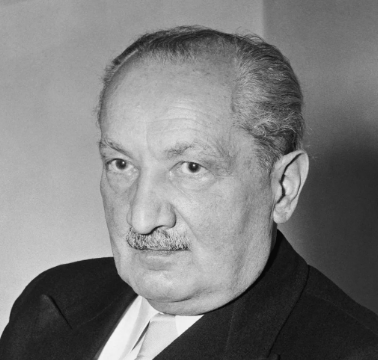
3 months 3 weeks ago
Mathematics is as little a natural science as philosophy is one of the humanities. Philosophy in its essence belongs as little in the philosophical faculty as mathematics belongs to natural science. To house philosophy and mathematics in this way today seems to be a blemish or a mistake in the catalog of the universities. Plato put over the entrance to his Academy the words: "Let no one who has not grasped the mathematical enter here!"
▼
Source
source
p. 69,75
3 weeks 2 days ago
Mahomet was only fourteen; had no language but his own: much in Syria must have been a strange unintelligible whirlpool to him. But the eyes of the lad were open; glimpses of many things would doubtless be taken in, and lie very enigmatic as yet, which were to ripen in a strange way into views, into beliefs and insights one day. These journeys to Syria were probably the beginning of much to Mahomet. One other circumstance we must not forget: that he had no school-learning; of the thing we call school-learning none at all.
4 weeks 1 day ago
The facts we see depend on where we are placed, and the habits of our eyes.
▼
Source
source
Ch. VI: "Stereotypes", p. 80
3 weeks 4 days ago
Culture, when it loses its sacred sense, loses all sense. With the disappearance of the sacred, which imposed limits to the perfection which could be attained by the profane, arises one of the most dangerous illusions of our civilization-the illusion that there are no limits to the changes that human life can undergo, that society is 'in principle' an endlessly flexible thing, and that to deny this flexibility and this perfectibility is to deny man's total autonomy and thus to deny man himself.
▼
Source
source
The Revenge of the Sacred in Secular Culture
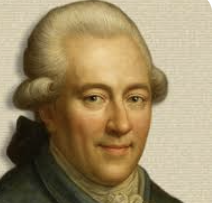
2 months 1 week ago
The human tendency to regard little things as important has produced very many great things. G 46 Variant translation: The inclination of people to consider small things as important has produced many great things.

2 months ago
The tribalizing power of the new electronic media, the way in which they return to us to the unified fields of the old oral cultures, to tribal cohesion and pre-individualist patterns of thought, is little understood. Tribalism is the sense of the deep bond of family, the closed society as the norm of community.
▼
Source
source
Tyuonyi, Volumes 1-2, 1985, p. 60

4 months 3 days ago
At the present stage in the development of the art of war, there is only way of coping with them, and that is to keep out of war. In all the densely populated countries of Western Europe, it seems almost certain that, within a few days of the outbreak of war, panic will seize the surviving inhabitants of the capitals and the industrial areas, leading to anarchy, starvation, and paralysis of all warlike effort. The only sensible course, therefore, is to prevent war if possible, and to remain neutral if war occurs.
▼
Source
source
Letter to The New Statesman and Nation (10 August 1935)

1 week 3 days ago
The truth stands regardless of the character of the one who speaks it.
3 weeks 5 days ago
Thought is only a flash between two long nights, but this flash is everything.
▼
Source
source
Quoted in H. L. Mencken, A New Dictionary of Quotations
4 months 3 days ago
I do not believe that I am now dreaming, but I cannot prove that I am not. I am, however, quite certain that I am having certain experiences, whether they be those of a dream or those of waking life.
▼
Source
source
Human Knowledge: Its Scope and Limits (1948), p. 172
3 months 3 days ago
Irony is the form of paradox. Paradox is what is good and great at the same time.
▼
Source
source
Aphorism 48, as translated in Dialogue on Poetry and Literary Aphorisms (1968), p. 151
4 months 4 days ago
There cannot any one moral Rule be propos'd, whereof a Man may not justly demand a Reason.
▼
Source
source
Book I, Ch. 3, sec. 4
2 months 2 weeks ago
A man really writes for an audience of about ten persons. Of course if others like it, that is clear gain. But if those ten are satisfied, he is content.
▼
Source
source
p. 66
5 months 3 days ago
Remember that time slurs over everything, let all deeds fade, blurs all writings and kills all memories. Except are only those which dig into the hearts of men by love.
2 months 3 weeks ago
The realer religion is, so much the more it means its own overcoming. It wills to cease to be the special domain "Religion" and wills to become life. It is concerned in the end not with specific religious acts, but with redemption from all that is specific.
▼
Source
source
p. 34
5 months 3 days ago
Now men seem, not unreasonably, to form their notions of the supreme good and of happiness from the lives of men.
2 days ago
Among the foundations of the Higher Mathematics is also the 'Idea of a Limit'. The Idea of a Limit cannot be superseded by any other definitions or Hypotheses.

4 months 4 weeks ago
Every revolutionary ends as an oppressor or a heretic.
4 months 2 weeks ago
In order to enter into a real knowledge of your condition, consider it in this image: A man was cast by a tempest upon an unknown island, the inhabitants of which were in trouble to find their king, who was lost; and having a strong resemblance both in form and face to this king, he was taken for him, and acknowledged in this capacity by all the people.

4 months 6 days ago
In all determinations of morality, this circumstance of public utility is ever principally in view; and wherever disputes arise, either in philosophy or common life, concerning the bounds of duty, the question cannot, by any means, be decided with greater certainty, than by ascertaining, on any side, the true interests of mankind. If any false opinion, embraced from appearances, has been found to prevail; as soon as farther experience and sounder reasoning have given us juster notions of human affairs, we retract our first sentiment, and adjust anew the boundaries of moral good and evil.
▼
Source
source
§ 2.17 : Of Benevolence, Pt. 2

2 months 3 weeks ago
You shall know the truth, and the truth shall set you free.
▼
Source
source
8:32

4 months 1 week ago
For a desperate disease a desperate cure.
▼
Source
source
Book II, Ch. 3. The Custom of the Isle of Cea
2 months 4 weeks ago
Knowledge is the plague of life, and consciousness, an open wound in its heart.
2 months 3 weeks ago
The nineteenth century, utilitarian throughout, set up a utilitarian interpretation of the phenomenon of life which has come down to us and may still be considered as the commonplace of everyday thinking. ... An innate blindness seems to have closed the eyes of this epoch to all but those facts which show life as a phenomenon of utility.
▼
Source
source
p. 16
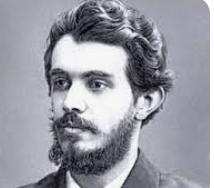
2 months 2 weeks ago
It is difficult to fit the work of Nikolai Berdyaev into any neat category. The label that was used most frequently to characterize him was that of an "existential Christian philosopher" but ... his voice is equally relevant to psychology and psychoanalysis and it also constitutes a uniquely original commentary on the very nature of the person in our postmodern world especially in relation to spirituality.
▼
Source
source
Renos K. Papadopoulos, in C.G. Jung and Nikolai Berdyaev: Individuation and the Person (2011) by Georg Nicolaus, Foreword, p. xiii
4 months 3 days ago
Ironclads and Maxim guns must be the ultimate arbiters of metaphysical truth.
▼
Source
source
Quoted in The Edinburgh Review: Or Critical Journal, Vol. 209 (1909), p. 387
4 months 1 week ago
And I myself, in Rome, heard it said openly in the streets, "If there is a hell, then Rome is built on it." That is, "After the devil himself, there is no worse folk than the pope and his followers."
▼
Source
source
Against the Roman Papacy, An Institution of the Devil
2 months ago
The new media are not bridges between man and nature: they are nature.
▼
Source
source
(p. 14)
5 months 3 days ago
After these matters we ought perhaps next to discuss pleasure. For it is thought to be most intimately connected with our human nature, which is the reason why in educating the young we steer them by the rudders of pleasure and pain; it is thought, too, that to enjoy the things we ought and to hate the things we ought has the greatest bearing on virtue of character. For these things extend right through life, with a weight and power of their own in respect both to virtue and to the happy life, since men choose what is pleasant and avoid what is painful; and such things, it will be thought, we should least of all omit to discuss, especially since they admit of much dispute.
4 months 3 weeks ago
If names be not correct, language is not in accordance with the truth of things. Paraphrased as a chinese proverb stating "The beginning of wisdom is to call things by their proper name."
1 month 4 weeks ago
You contain a trillion copies of a large, textual document written in a highly accurate, digital code, each copy as voluminous as a substantial book. I'm talking, of course, of the DNA in your cells.
1 month 3 weeks ago
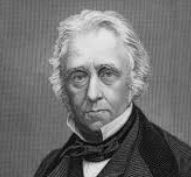
If we consider merely the subtlety of disquisition, the force of imagination, the perfect energy and elegance of expression, which characterise the great works of Athenian genius, we must pronounce them intrinsically most valuable; but what shall we say when we reflect that from hence have sprung, directly or indirectly, all the noblest creations of the human intellect; that from hence were the vast accomplishments, and the brilliant fancy of Cicero; the withering fire of Juvenal; the plastic imagination of Dante; the humour of Cervantes; the comprehension of Bacon; the wit of Butler; the supreme and universal excellence of Shakspeare? All the triumphs of truth and genius over prejudice and power, in every country and in every age, have been the triumphs of Athens. Wherever a few great minds have made a stand against violence and fraud, in the cause of liberty and reason, there has been her spirit in the midst of them; inspiring, encouraging, consoling.
▼
Source
source
p. 178
2 days ago
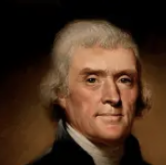
Some have made the love of God the foundation of morality. This, too, is but a branch of our moral duties, which are generally divided into duties to God and duties to man. If we did a good act merely from the love of God and a belief that it is pleasing to Him, whence arises the morality of the Atheist? It is idle to say, as some do, that no such being exists. We have the same evidence of the fact as of most of those we act on, to-wit: their own affirmations, and their reasonings in support of them. I have observed, indeed, generally, that while in protestant countries the defections from the Platonic Christianity of the priests is to Deism, in catholic countries they are to Atheism. Diderot, D'Alembert, D'Holbach, Condorcet, are known to have been among the most virtuous of men. Their virtue, then, must have had some other foundation than the love of God.
▼
Source
source
Letter to Thomas Law

2 days ago
A corporation, essentially, is a pile of money to which a number of persons have sold their moral allegiance. Unlike a person, a corporation does not age. It does not arrive, as most persons finally do, at a realization of the shortness and smallness of human lives; it does not come to see the future as the lifetime of the children and grandchildren of anybody in particular.
2 months 4 weeks ago
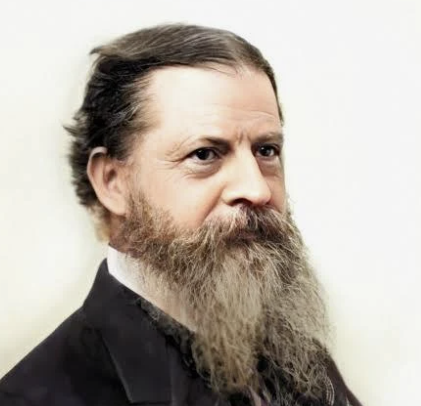
Thus far, gentlemen, I have been insisting very strenuously upon what the most vulgar common sense has every disposition to assent to and only ingenious philosophers have been able to deceive themselves about. But now I come to a category which only a more refined form of common sense is prepared willingly to allow, the category which of the three is the chief burden of Hegel's song, a category toward which the studies of the new logico-mathematicians, Georg Cantor and the like, are steadily pointing, but to which no modern writer of any stripe, unless it be some obscure student like myself, has ever done anything approaching to justice.
▼
Source
source
Lecture II : The Universal Categories, §3. Laws: Nominalism, CP 5.59
4 months 4 days ago
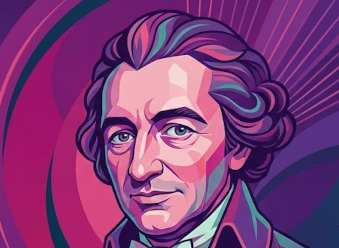
[W]e hold, that the moral obligation of providing for old age, helpless infancy, and poverty, is far superior to that of supplying the invented wants of courtly extravagance, ambition and intrigue.
▼
Source
source
Address and Declaration at a Select Meeting of the Friends of Universal Peace and Liberty (August 20, 1791) p. 3
CivilSimian.com created by AxiomaticPanic, CivilSimian, Kalokagathia