

3 months 4 weeks ago
Justice is happiness according to virtue.
▼
Source
source
Chapter V, Section 48, p. 310

3 months 4 weeks ago
Science is not a system of certain, or well established, statements; nor is it a statement which steadily advances towards state of finality. Our science is not knowledge (epistēmē): it can newer claim to have attained truth, or even substitute for it, such as probability. . . . We do not know; we can only guess.
▼
Source
source
Ch. 10 "Corroboration, or How a Theory Stands up to Tests", section 85: The Path of Science, p. 278.
4 months 3 weeks ago
Believe me, there is no such thing as great suffering, great regret, great memory...Everything is forgotten, even great love.
3 months 5 days ago
The good of the people must be the great purpose of government. By the laws of nature and of reason, the governors are invested with power to that end. And the greatest good of the people is liberty. It is to the state what health is to the individual.
▼
Source
source
Article on Government
1 day ago
I read no newspaper now but Ritchie's, and in that chiefly the advertisments, for they contain the only truths to be relied on in a newspaper.
▼
Source
source
Letter to Nathaniel Macon
4 months 2 weeks ago
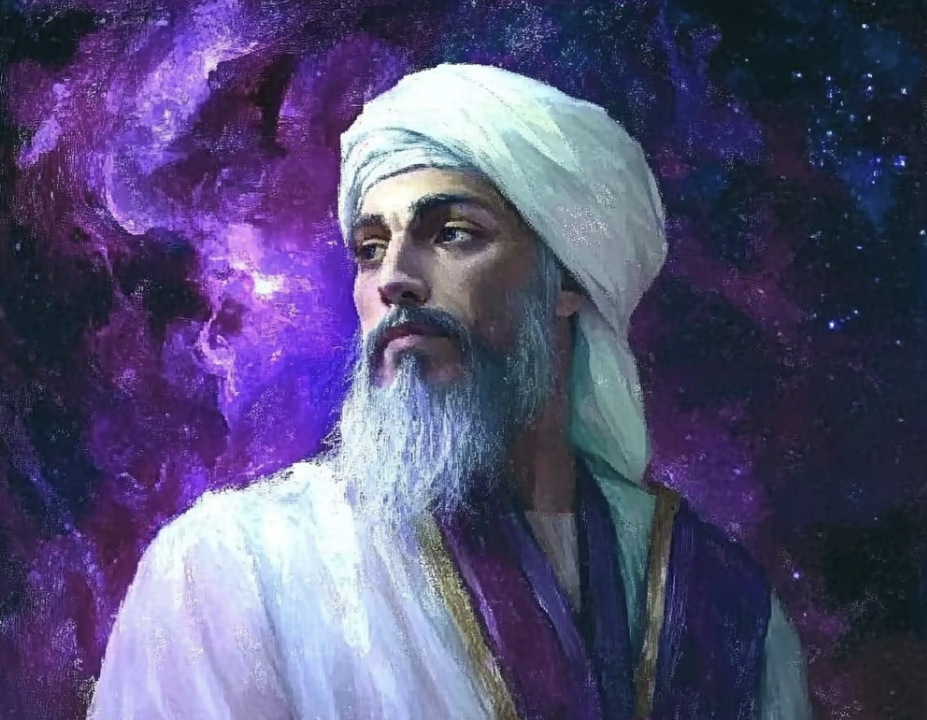
Religious law makes it illegal for the ignorant to drink wine, but intelligence makes it legal for the intellectual.
4 months 1 week ago
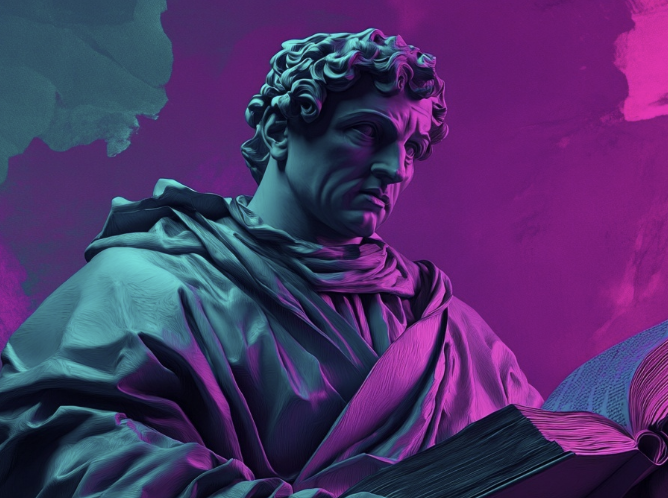
Women . . . have . . . small and narrow chests, and broad hips, to the end they should remain at home, sit still, keep house, and bear and bring up children. . . . A woman is, or at least should be, a friendly, courteous, and a merry companion in life . . . the honor and ornament of the house, and inclined to tenderness, for thereunto are they chiefly created, to bear children, and to be the pleasure, joy and solace of their husbands.
▼
Source
source
-- Table Talk, quoted in Luther On "Woman"

4 months 1 day ago
The Upanishads and the Vedas haunt me. In them I have found eternal compensation, unfathomable power, unbroken peace.
▼
Source
source
Quoted in S. Londhe, A Tribute to Hinduism, 2008

2 months 2 weeks ago
Man is said to be a reasoning animal. I do not know why he has not been defined as an affective or feeling animal. Perhaps that which differentiates him from other animals is feeling rather than reason. More often I have seen a cat reason than laugh or weep. Perhaps it weeps or laughs inwardly - but then perhaps, also inwardly, the crab resolves equations of the second degree.

3 months 3 weeks ago
Sweet exists by convention, bitter by convention, colour by convention; atoms and Void [alone] exist in reality.
▼
Source
source
(trans. Freeman 1948), p. 92.

4 months 1 day ago
The frontiers are not east or west, north or south, but wherever a man fronts a fact, though that fact be his neighbor, there is an unsettled wilderness between him and Canada, between him and the setting sun, or, farther still, between him and it.

4 months 2 days ago
Thank you for your letter and for the enclosure which I return herewith. I have been wondering whether there is any means of preventing the confusion between you and me, and I half-thought that we might write a joint letter to The Times in the following terms: Sir, To prevent the continuation of confusions which frequently occur, we beg to state that neither of us is the other. Do you think this would be a good plan?
▼
Source
source
Letter to Lord Russell of Liverpool, February 18, 1959
3 months 3 weeks ago
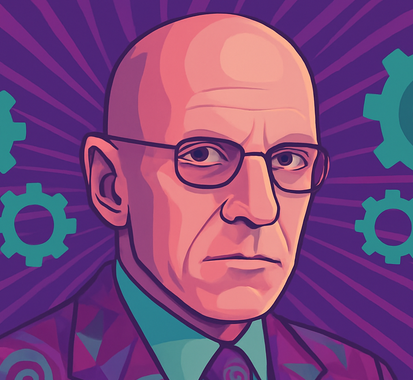
The public execution is to be understood not only as a judicial, but also as a political ritual. It belongs, even in minor cases, to the ceremonies by which power is manifested.
▼
Source
source
Chapter One, The body of the condemned

2 weeks 1 day ago
Virtue alone affords everlasting and peace-giving joy; even if some obstacle arise, it is but like an intervening cloud, which floats beneath the sun but never prevails against it.

3 months 5 days ago
If it be of the highest importance to man, as an individual, that his religion should be true, the case of society is not the same. Society has no future life to hope for or to fear; and provided the citizens profess a religion, the peculiar tenets of that religion are of very little importance to its interests. Variant translation: Though it is very important for man as an individual that his religion should be true, that is not the case for society. Society has nothing to fear or hope from another life; what is most important for it is not that all citizens profess the true religion but that they should profess religion.
▼
Source
source
Chapter XVII.

2 months 2 weeks ago
I have said that, in a sense, the parasites were a 'shadow' of man's cowardice and passivity. Their strength could increase in an atmosphere of defeat and panic, for it fed on human fear. In that case, the best way to combat them was to change the atmosphere to one of strength and purpose.
▼
Source
source
p. 188

2 months 2 weeks ago
If all men, by the act of being born, are destined to suffer violence, that is a truth to which the empire of circumstances closes their minds.
▼
Source
source
in The Simone Weil Reader, p. 163

2 months 1 week ago
What is the good of drawing conclusions from experience? I don't deny we sometimes draw the right conclusions, but don't we just as often draw the wrong ones?
▼
Source
source
F 123
2 months 2 weeks ago
One gloomy and pessimistic writer with a powerful style affects a whole generation of writers, who in turn affect almost every educated person in the country.
▼
Source
source
p. 79
3 weeks 2 days ago
One must be something in order to do something.
▼
Source
source
Conversations with Eckermann

2 months 1 week ago
Witness the tragic condition of Russia. The methods of State centralization have paralysed individual initiative and effort; the tyranny of the dictatorship has cowed the people into slavish submission and all but extinguished the fires of liberty; organized terrorism has depraved and brutalized the masses and stifled every idealistic aspiration; institutionalized murder has cheapened human life, and all sense of the dignity of man and the value of life has been eliminated; coercion at every step has made effort bitter, labour a punishment, has turned the whole of existence into a scheme of mutual deceit, and has revived the lowest and most brutal instincts of man. A sorry heritage to begin a new life of freedom and brotherhood.

1 month 4 weeks ago
When new technologies impose themselves on societies long habituated to older technologies, anxieties of all kinds result.
▼
Source
source
Location, Volume 1 Issues 1-2, 1963, p. 44

4 months 1 day ago
As a beast of toil an ox is fixed capital. If he is eaten, he no longer functions as an instrument of labour, nor as fixed capital either.
▼
Source
source
Vol. II, Ch. VIII, p. 163.
2 weeks 1 day ago
What would life be without arithmetic, but a scene of horrors?
▼
Source
source
Vol. II, letter to Miss Lucie Austin (22 July 1835), p. 364
4 months 2 days ago
We forfeit three-fourths of ourselves in order to be like other people.
▼
Source
source
As attributed in Dictionary of Quotations from Ancient and Modern English and Foreign Sources (1899) by James Wood, p. 624
2 months 3 weeks ago
There are in our minds in solution a vast number of emotional attitudes, feelings ready to be re-excited when the proper stimulus arrives, and more than anything else it is these forms, this residue of experience, which, fuller and richer than in the mind if the ordinary man, constitute the artist's capital. What is called the magic of the artist resides in his ability to transfer these values from one field of experience to another, to attach them to objects of our common life, and by his imaginative insight make these objects poignant and momentous. Not colors, not sense qualities as such, are either matter or form, but these qualities as thoroughly imbued, impregnated, with transferred value. And then they are either matter or form according to the direction of our interest.
▼
Source
source
p. 123

3 weeks 5 days ago
The possibility of democracy on a global scale is emerging today for the very first time.
▼
Source
source
(xi)


4 months 4 weeks ago
The machine is only a tool after all, which can help humanity progress faster by taking some of the burdens of calculations and interpretations off its back. The task of the human brain remains what it has always been; that of discovering new data to be analyzed, and of devising new concepts to be tested.

3 months 4 weeks ago
The past is the luxury of proprietors.

2 months ago
If one has no vanity in this life of ours, there is no sufficient reason for living.
▼
Source
source
Ch. 23. This is not, as it is often quoted, a stand-alone Tolstoy epigram, but part of the narration by the novella's jealousy-ridden protagonist Pozdnyshev.
4 months 1 week ago
So blind is the curiosity by which mortals are possessed, that they often conduct their minds along unexplored routes, having no reason to hope for success, but merely being willing to risk the experiment of finding whether the truth they seek lies there.
▼
Source
source
Rules for the Direction of the Mind: IV

3 months 1 week ago
How can even the lowest mind, if he reflects at all the marvels of this earth and sky, the brilliant fashioning of plants and animals, remain blind to the fact that this wonderful world with its settled order must have a maker to design, determine and direct it?
▼
Source
source
Tibawi, A.L. (ed. and tr.). (1965) Al-Risala al-Qudsiyya (The Jerusalem Epistle) "Al-Ghazali's Tract on Dogmatic Theology". In: The Islamic Quarterly, 9:3-4 (1965), 3-4.
4 months 3 days ago
Beating is the worst, and therefore the last means to be us'd in the correction of children, and that only in the cases of extremity, after all gently ways have been try'd, and proved unsuccessful; which, if well observ'd, there will very seldom be any need of blows.
▼
Source
source
Sec. 84
3 months 1 week ago
For no one's authority ought to rank so high as to set a value on his words and terms even though nothing clear and determinate lies behind them.
▼
Source
source
Paragraph 1
2 months 2 weeks ago
The unbeliever walks for a quadrillion miles, yet one moments of reality makes up for it.
▼
Source
source
Chapter Seven, The Great Synthesis…

4 months ago
The individual, so far as he suffers from his wrongness and criticizes it, is to that extent consciously beyond it, and in at least possible touch with something higher, if anything higher exist. Along with the wrong part there is thus a better part of him, even though it may be but a most helpless germ. With which part he should identify his real being is by no means obvious at this stage; but when stage 2 (the stage of solution or salvation) arrives, the man identifies his real being with the germinal higher part of himself; and does so in the following way. He becomes conscious that this higher part is coterminous and continuous with a more of the same quality, which is operative in the universe outside of him, and which he can keep in working touch with, and in a fashion get on board of and save himself when all his lower being has gone to pieces in the wreck.
▼
Source
source
Lecture XX, "Conclusions"
4 months 1 day ago
Let me never fall into the vulgar mistake of dreaming that I am persecuted whenever I am contradicted.
▼
Source
source
November 8, 1838
2 months 3 weeks ago
When all these things are lacking there is no culture; there is in the strictest sense of the word, barbarism. And let us not deceive ourselves, this is what is beginning to appear in Europe under the progressive rebellion of the masses. The traveller who arrives in a barbarous country knows that in that territory there are no ruling principles to which it is possible to appeal. Properly speaking, there are no barbarian standards. Barbarism is the absence of standards to which appeal can be made.
▼
Source
source
Chap. VIII: The Masses Intervene In Everything, And Why Their Intervention Is Solely By Violence

2 months 3 weeks ago
Everything is nothing, including the consciousness of nothing.

4 months 4 days ago
In vain, therefore, should we pretend to determine any single event, or infer any cause or effect, without the assistance of observation and experience.
▼
Source
source
§ 4.11

2 months 3 weeks ago
What is exalted among men is an abomination in the sight of God.
▼
Source
source
16:15 ESV
1 month 1 week ago
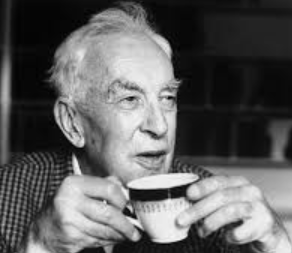
Every oasis is an island that has water inside it but not round it.
▼
Source
source
Between Niger and Nile (London: Oxford UP, 1965) 20. Cyrenaïca's Green Mountain
4 months 4 weeks ago
I wouldn't give an astrologer the time of day.
1 month 3 weeks ago
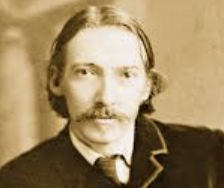
When things fall out opportunely for the person concerned, he is not apt to be critical about the how or why, his own immediate personal convenience seeming a sufficient reason for the strangest oddities and revolutions in our sublunary things.
▼
Source
source
The Sire de Maletroit's Door.
3 months 5 days ago
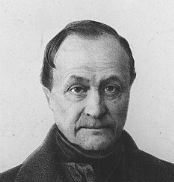
To understand a science it is necessary to know its history.
▼
Source
source
A Course of Positive Philosophy (1832 - 1842) [Six volumes]
2 months 3 weeks ago
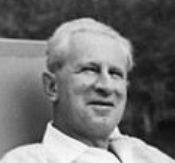
This language controls by reducing the linguistic forms and symbols of reflection, abstraction, development, contradiction; by substituting images for concepts. It denies or absorbs the transcendent vocabulary; it does not search for but establishes and imposes truth and falsehood.
▼
Source
source
p. 103
2 months ago
All state obligations are against the conscience of a Christian: the oath of allegiance, taxes, law proceedings and military service.
▼
Source
source
Chapter VII, Significance of Compulsory Service
2 months 3 days ago
Where questions of style and exposition are concerned I try to follow a simple maxim: if you can't say it clearly you don't understand it yourself.
▼
Source
source
P. x.
2 months 3 days ago
This is how one puts an end to totality. If all information can be found in each of its parts, the whole loses its meaning. It is also the end of the body, of this singularity called body, whose secret is precisely that it cannot be segmented into additional cells, that it is an indivisible configuration, to which its sexuation is witness (paradox: cloning will fabricate sexed beings in perpetuity, since they are similar to their model, whereas thereby sex becomes useless-but precisely sex is not a function, it is what makes a body a body, it is what exceeds all the parts, all the diverse functions of this body). Sex (or death: in this sense it is the same thing) is what exceeds all information that can be collected on a body. Well, where is all this information collected? In the genetic formula. This is why it must necessarily want to forge a path of autonomous reproduction, independent of sexuality and of death.
▼
Source
source
"Clone Story," p. 97
CivilSimian.com created by AxiomaticPanic, CivilSimian, Kalokagathia