


3 months 1 week ago
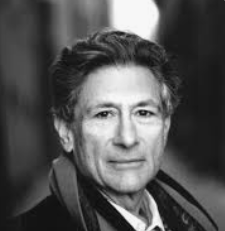
Undeterred by this examination, the French Revolution gave rise to ideas which led beyond the ideas of the entire old world order. The revolutionary movement which began in 1789 in the Cercle Social, which in the middle of its course had as its chief representatives Leclerc and Roux, and which finally with Babeuf's conspiracy was temporarily defeated, gave rise to the communist idea which Babeuf's friend Buonarroti re-introduced in France after the Revolution of 1830. This idea, consistently developed, is the idea of the new world order.
▼
Source
source
Chapter 6, 3
1 month 3 weeks ago
An elaborated culture has a density, complexity, and historical-semantic value that is so strong as to make politics possible... Gramsci's insight is to have recognised that subordination, fracturing, diffusion, reproducing, as much as producing, creating, forcing, guiding, are necessary aspects of elaboration.
▼
Source
source
Quoted in Richard Middleton, Studying Popular Music (Philadelphia: Open University Press, 1990, ISBN 0-335-15275-9), p. 248
3 months 1 week ago
In the metaphysical elements of aesthetics the various nonmoral feelings are to be made use of; in the elements of moral metaphysics the various moral feelings of men, according to the differences in sex, age, education, and government, of races and climates, are to be employed.
▼
Source
source
Part III : Selection on Education from Kant's other Writings, Ch. I Pedagogical Fragments, # 58
2 months 1 week ago
The evil of marriage, as is it practiced in the European countries, extends further than we have yet described. The method is for a thoughtless and romantic youth of each sex, to come together, to see each other, for a few times, and under circumstances full of delusion and then to vow eternal attachment. What is the consequence of this? In almost every instance they find themselves deceived. They are reduced to make the best of an irretrievable mistake. They are led to conceive it their wiser policy, to shut their eyes upon realities, happy, if by any perversion of intellect, they can persuade themselves that they were right in their first crude opinion of each other. Thus the institution of marriage is made a system of fraud; and men who carefully mislead their judgement in the daily affair of their life, must be expected to have a crippled judgement in every other concern.
1 month 3 weeks ago
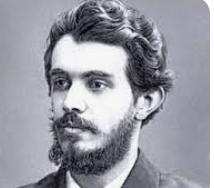
Berdyaev has been categorized as a Christian existentialist and a mystical philosopher. He never avoided the label of "mystic" since he felt it was the mystics of the world who came closest to understanding the role of spirit. Many of the philosophers he quoted were mystics - Meister Eckhart, Angelus Silesius and especially Jacob Boehme. The influence of Dostoevsky was central to his thought. Nevertheless, Berdyaev is not a naively irrational thinker; he brings an enormous fund of philosophical knowledge combined with the profundity of his own thought to support his view of existence. There are no dogmas in his writings to offend one's intellectual conscience.
▼
Source
source
Richard Schain, in In Love with Eternity : Philosophical Essays and Fragments (2005), Ch. 7 : Nikolai Alexandrovich Berdyaev - A Champion of the Spirit, p. 47

4 months 1 week ago
It is only afterward that a new idea seems reasonable. To begin with, it usually seems unreasonable.

2 months 1 week ago
Nothing is so fatal to Religion as indifference which is, at least, half Infidelity.
▼
Source
source
Letter to William Smith, Member of the Irish Parliament (29 January 1795), quoted in R. B. McDowell (ed.)

2 months 1 week ago
But we must not forget that only a very few people are artists in life; that the art of life is the most distinguished and rarest of all the arts. Modern Man in Search of a Soul.
▼
Source
source
Section - The Stages of Life
2 months 3 days ago
In the Gospels, for instance, we sometimes find the kingdom of heaven illustrated by principles drawn from observation of this world rather than from an ideal conception of justice; ... They remind us that the God we are seeking is present and active, that he is the living God; they are doubtless necessary if we are to keep religion from passing into a mere idealism and God into the vanishing point of our thought and endeavour.
▼
Source
source
Interpretations of Poetry and Religion (1900), p. 54

2 months 6 days ago
Philosophers write for professors; thinkers for writers.

3 months 5 days ago
The criticism of the reformers was directed not so much at the weakness or cruelty of those in authority, as at a bad economy of power.
▼
Source
source
Chapter Two, pp.. 79

3 months 1 week ago
No concrete test of what is really true has ever been agreed upon.
▼
Source
source
"The Will to Believe" p. 15
Just now
The principle of the family was mutual aid; but the principle of society is competition, the struggle for existence, the elimination of the weak and the survival of the strong.
▼
Source
source
Ch. 2 : On Youth
3 months 1 week ago
To him who looks upon the world rationally, the world in its turn presents a rational aspect. The relation is mutual.

3 months 1 week ago
Nothing is rich but the inexhaustible wealth of Nature. She shows us only surfaces, but she is million fathoms deep.
▼
Source
source
p. 183

3 months 1 week ago
I tell you in truth: all men are Prophets or else God does not exist.
▼
Source
source
Act 1
2 months 1 week ago
The same energy of character which renders a man a daring villain would have rendered him useful to society, had that society been well organized.
▼
Source
source
Letter 19

3 months 2 weeks ago
Beauty is no quality in things themselves: It exists merely in the mind which contemplates them; and each mind perceives a different beauty. One person may even perceive deformity, where another is sensible of beauty; and every individual ought to acquiesce in his own sentiment, without pretending to regulate those of others.
▼
Source
source
Part I, Essay 23: Of The Standard of Taste
2 months 1 week ago
In this choice of inheritance we have given to our frame of polity the image of a relation in blood, binding up the constitution of our country with our dearest domestic ties, adopting our fundamental laws into the bosom of our family affections, keeping inseparable and cherishing with the warmth of all their combined and mutually reflected charities our state, our hearths, our sepulchres, and our altars.

3 months 3 weeks ago
If you well apprehend and keep in mind these things, nature free at once and rid of her haughty lords is seen to do all things spontaneously of herself without the meddling of the gods.
▼
Source
source
Book II, lines 1090-1092 (tr. Munro)
3 months 1 week ago
Yes, I am so free. And what a superb absence is my soul.
▼
Source
source
Orestes, Act 1


3 months 1 week ago
You must picture me alone in that room in Magdalen, night after night, feeling, whenever my mind lifted even for a second from my work, the steady, unrelenting approach of Him whom I so earnestly desired not to meet. That which I greatly feared had at last come upon me. In the Trinity Term of 1929 I gave in, and admitted that God was God, and knelt and prayed: perhaps, that night, the most dejected and reluctant convert in all England.
4 months 1 week ago
There is a cult of ignorance in the United States, and there always has been. The strain of anti-intellectualism has been a constant thread winding its way through our political and cultural life, nurtured by the false notion that democracy means that "my ignorance is just as good as your knowledge."

2 months 1 week ago
Paper, they say, does not blush, but I assure you it's not true and that it's blushing just as I am now, all over.
3 months 1 week ago
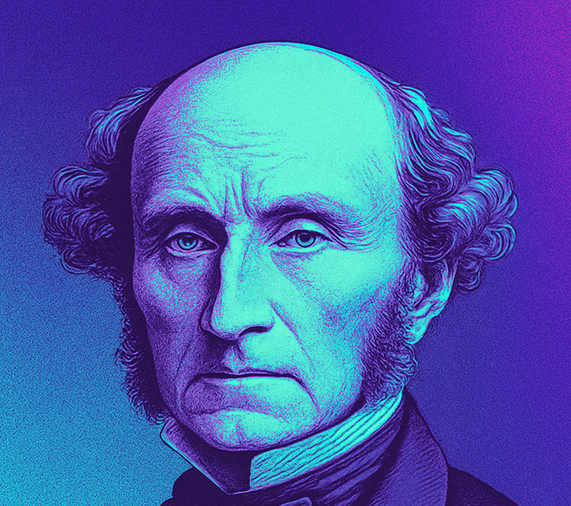
In these frequent talks about the books I read, he used, as opportunity offered, to give me explanations and ideas respecting civilization, government, morality, mental cultivation, which he required me afterwards to restate to him in my own words. He also made me read, and give him a verbal account of, many books which would not have interested me sufficiently to induce me to read them of myself: among others, Millar's Historical View of the English Government, a book of great merit for its time, and which he highly valued; Mosheim's Ecclesiastical History, McCrie's Life of John Knox, and even Sewel's and Rutty's Histories of the Quakers. He was fond of putting into my hands books which exhibited men of energy and resource in unusual circumstances, struggling against difficulties and overcoming them: of such works I remember Beaver's African Memoranda, and Collins's account of the first settlement of New South Wales.
▼
Source
source
(p. 8)

2 months 3 days ago
Get thee behind me, Satan: thou art an offence unto me: for thou savourest not the things that be of God, but those that be of men.
▼
Source
source
16:23 (KJV)
2 months 6 days ago
What an incitation to hilarity, hearing the word goal while following a funeral procession!
2 months 1 week ago
To make our position clearer, we may formulate it in another way. Let us call a proposition which records an actual or possible observation an experiential proposition. Then we may say that it is the mark of a genuine factual proposition, not that it should be equivalent to an experiential proposition, or any finite number of experiential propositions, but simply that some experiential propositions can be deduced from it in conjunction with certain other premises without being deducible from those other premises alone.
▼
Source
source
p. 20.
2 months 1 week ago
For it all depends on how we look at things, and not on how they are in themselves. The least of things with a meaning is worth more in life than the greatest of things without it.
▼
Source
source
p. 67

3 months 1 day ago
He who upholds Truth with all the might of his power, He who upholds Truth the utmost in his word and deed,He, indeed, is Thy most valued helper, O Mazda Ahura!
▼
Source
source
Ahunuvaiti Gatha; Yasna 31, 22.
2 months 6 days ago
When all capital, all production, all exchange have been brought together in the hands of the nation, private property will disappear of its own accord, money will become superfluous, and production will so expand and man so change that society will be able to slough off whatever of its old economic habits may remain.

3 months 2 weeks ago
We refuse to have our conscience bound by any work or law, so that by doing this or that we should be righteous, or leaving this or that undone we should be damned.
▼
Source
source
Chapter 2

4 months ago
Moderation, in the pursuit of honors or riches, is the only security against disappointment and vexation. A wise man, therefore, will prefer the simplicity of rustic life to the magnificence of courts.

1 month 1 week ago
All of the new media have enriched our perceptions of language and older media. They are to the man-made environment what species are to biology.
▼
Source
source
(p. 84)

3 months 1 week ago
Societies are composed of individuals and are good only insofar as they help individuals to realize their potentialities and to lead a happy and creative life.
▼
Source
source
Chapter 3 (p. 20)
2 months 6 days ago
Each of us believes, quite unconsciously of course, that we alone pursue the truth, which the rest are incapable of seeking out and unworthy of attaining. This madness is so deep-rooted and so useful that it is impossible to realize what would become of each of us if it were someday to disappear.

1 month 3 weeks ago
By committing a crime, a man places himself, of his own accord, outside the chain of eternal obligations which bind every human being to every other one. Punishment alone can weld him back again; fully so, if accompanied by consent on his part; otherwise only partially so. Just as the only way of showing respect for somebody suffering from hunger is to give him something to eat, so the only way of showing respect for somebody who has placed himself outside the law is to reinstate him inside the law by subjecting him to the punishment ordained by law.The need for punishment is not satisfied where, as is generally the case, the penal code is merely a method of exercising pressure through fear.
▼
Source
source
p. 103
4 months 1 week ago
Of things said without any combination, each signifies either substance or quantity or qualification or a relative or where or when or being-in-a-position or having or doing or being affected. To give a rough idea, examples of substance are man, horse; of quantity: four-foot, five-foot; of qualification: white, grammatical; of a relative: double, half, larger; of where: in the Lyceum, in the market-place; of when: yesterday, last-year; of being-in-a-position: is-lying, is sitting; of having: has-shoes-on, has-armour-on; of doing: cutting, burning; of being-affected: being-cut, being-burned.
3 months 1 week ago
As to [General Douglas] Macarthur, I don't feel in a position to have clear opinions about anyone I know only from newspapers. You see, whenever they deal with anyone (or anything) I know myself, I find they're always a mass of lies & misunderstandings: so I conclude they're no better in the places where I don't know.
▼
Source
source
Letter to Mrs. Mary Van Deusen, April 30, 1951. Collected Letters of C. S. Lewis, vol. 3, "Narnia, Cambridge, and Joy", 1950-1963. p. 114.
2 months 1 week ago
I suddenly dreamt that I picked up the revolver and aimed it straight at my heart - my heart, and not my head; and I had determined beforehand to fire at my head, at my right temple. After aiming at my chest I waited a second or two, and suddenly my candle, my table, and the wall in front of me began moving and heaving. I made haste to pull the trigger.

6 days ago
The possibility of democracy on a global scale is emerging today for the very first time.
▼
Source
source
(xi)

3 months 1 week ago
What is tolerance? It is the consequence of humanity. We are all formed of frailty and error; let us pardon reciprocally each other's folly - that is the first law of nature.
▼
Source
source
"Tolerance", 1764

4 months ago
The aged are cared for until death; adults are employed in jobs that make full use of their abilities; and children are nourished, educated, and fostered;...orphans... the disabled and the diseased are all well taken care of....
2 months 6 days ago
The more one has suffered, the less one demands. To protest is a sign one has traversed no hell.
4 months 1 week ago
Predicting the future is a hopeless, thankless task, with ridicule to begin with and, all too often, scorn to end with.
3 months 1 week ago
First, what do we mean by anguish? The existentialist frankly states that man is in anguish. His meaning is as follows-When a man commits himself to anything, fully realizing that he is not only choosing what he will be, but is thereby at the same time a legislator deciding for the whole of mankind-in such a moment a man cannot escape from the sense of complete and profound responsibility.
▼
Source
source
p. 30

3 months 1 week ago
It seems to me that the god that is commonly worshipped in civilized countries is not at all divine, though he bears a divine name, but is the overwhelming authority and respectability of mankind combined. Men reverence one another, not yet God. If I thought that I could speak with discrimination and impartiality of the nations of Christendom, I should praise them, but it tasks me too much. They seem to be the most civil and humane, but I may be mistaken.

1 month 1 week ago
Service of the people by sciences and arts will only exist when men live with the people and as the people live, and without presenting any claims will offer their scientific and artistic services, which the people will be free to accept or decline as they please.
3 months 1 day ago
Let us consider first the view that it is always wrong to take an innocent human life. We may call this the "sanctity of life" view. People who take this view oppose abortion and euthanasia. They do not usually, however, oppose the killing of nonhuman animals-so perhaps it would be more accurate to describe this view as the "sanctity of human life" view. The belief that human life, and only human life, is sacrosanct is a form of speciesism.
▼
Source
source
Ch. 1: All Animals Are Equal
CivilSimian.com created by AxiomaticPanic, CivilSimian, Kalokagathia