


1 month 3 weeks ago
Could it be that sexual perversion and romanticism sprang from the same longing for distant horizons?
▼
Source
source
p. 17
3 weeks 5 days ago
The consciousness of brutes would appear to be related to the mechanism of their body simply as a collateral product of its working, and to be as completely without any power of modifying that working as the steam-whistle which accompanies the work of a locomotive engine is without influence upon its machinery. Their volition, if they have any, is an emotion indicative of physical changes, not a cause of such changes.

3 months 1 week ago
In obedience to the feeling of reality, we shall insist that, in the analysis of propositions, nothing "unreal" is to be admitted. But, after all, if there is nothing unreal, how, it may be asked, could we admit anything unreal? The reply is that, in dealing with propositions, we are dealing in the first instance with symbols, and if we attribute significance to groups of symbols which have no significance, we shall fall into the error of admitting unrealities, in the only sense in which this is possible, namely, as objects described.
▼
Source
source
Ch. 16: Descriptions
1 month 1 week ago
With so many mind-bytes to be downloaded, so many mental codons to be replicated, it is no wonder that child brains are gullible, open to almost any suggestion, vulnerable to subversion, easy prey to Moonies, Scientologists and nuns. Like immune-deficient patients, children are wide open to mental infections that adults might brush off without effort.

1 month 3 weeks ago
Nothing can well be imagined more painful than the present position of woman, unless, on the one hand, she renounces all outward activity and keeps herself within the magic sphere, the bubble of her dreams; or, on the other, surrendering all aspiration, she gives herself to her real life, soul and body. For those to whom it is possible, the latter is best; for out of activity may come thought, out of mere aspiration can come nothing.

3 months 2 weeks ago
The same good sense, that directs men in the ordinary occurrences of life, is not hearkened to in religious matters, which are supposed to be placed altogether above the cognizance of human reason.
1 week 3 days ago
Of course, not everything old is beautiful, any more than everything black, or everything white, or everything young. But the notion that old means ugly is every bit as harmful as the prejudice that black is ugly. In one way it is even more pernicious. The notion that only what is new and young is beautiful poisons our relationship to the past and to our own future. It keeps us from understanding our roots and the greatest works of our culture and other cultures. It also makes us dread what lies ahead of us and leads many to shirk reality.
▼
Source
source
Time is an Artist (1978) Epilogue : Old is Beautiful

1 month 1 week ago
The hot radio medium used in cool or nonliterate cultures has a violent effect, quite unlike its effect, say in England or America, where radio is felt as entertainment.
▼
Source
source
(p. 30)
3 months 1 week ago
The presence of a thought is like the presence of a lover.
1 month 3 weeks ago
Objectification is above all exteriorization, the alienation of spirit from itself.
▼
Source
source
p. 63

3 months 1 week ago
In short, competition has to shoulder the responsibility of explaining all the meaningless ideas of the economists, whereas it should rather be the economists who explain competition.
▼
Source
source
Vol. III, Ch. L, Illusions Created by Competition, p. 866.
3 months 1 week ago
Among human beings, the subjection of women is much more complete at a certain level of civilization than it is among savages. And the subjection is always reinforced by morality.
▼
Source
source
Ch. 15: Power and moral codes
1 month 1 week ago
There is one mistake we got to avoid, and that is the mistake of supposing that if you simulate it, you duplicate it. This is a deep mistake embedded in our popular culture - that simulation is equivalent to duplication, but of course it isn't. A perfect simulation of the brain - say, on a computer - would no longer thereby be conscious than a perfect simulation of a rainstorm on a weather-predicting computer will leave us all wet.
6 days ago
The familial union presents as well a mixture of inconvenient ages and characters that inhibit conversation. Morality engenders a frigid atmosphere, as in all places where it reigns.
▼
Source
source
Oeuvres completetes de Charles Fourier
2 months 6 days ago
The proletariat is that class in society which lives entirely from the sale of its labor and does not draw profit from any kind of capital; whose weal and woe, whose life and death, whose sole existence depends on the demand for labor - hence, on the changing state of business, on the vagaries of unbridled competition.

2 months 3 days ago
Because the peculiarity of man is that his machinery for reaction on external things has involved an imaginative transcript of these things, which is preserved and suspended in his fancy; and the interest and beauty of this inward landscape, rather than any fortunes that may await his body in the outer world, constitute his proper happiness. By their mind, its scope, quality, and temper, we estimate men, for by the mind only do we exist as men, and are more than so many storage-batteries for material energy. Let us therefore be frankly human. Let us be content to live in the mind.
▼
Source
source
p. 64
3 months 1 day ago
To protest about bullfighting in Spain, the eating of dogs in South Korea, or the slaughter of baby seals in Canada while continuing to eat eggs from hens who have spent their lives crammed into cages, or veal from calves who have been deprived of their mothers, their proper diet, and the freedom to lie down with their legs extended, is like denouncing apartheid in South Africa while asking your neighbors not to sell their houses to blacks.
▼
Source
source
Ch. 4: Becoming a Vegetarian
2 months 6 days ago
In all probability, the proletarian revolution will transform existing society gradually and will be able to abolish private property only when the means of production are available in sufficient quantity. What will be the course of this revolution? Above all, it will establish a democratic constitution, and through this, the direct or indirect dominance of the proletariat.

4 months 1 week ago
The advantage of a bad memory is that one can enjoy the same good things for the first time several times.
1 month 2 weeks ago
If we make a couple of discoveries here and there we need not believe things will go on like this for ever.... Just as we hit water when we dig in the earth, so we discover the incomprehensible sooner or later.
▼
Source
source
F 82
3 months 1 week ago
The pursuit of knowledge is, I think, mainly actuated by love of power. And so are all advances in scientific technique. In politics, also, a reformer may have just as strong a love of power as a despot. It would be a complete mistake to decry love of power altogether as a motive. Whether you will be led by this motive to actions which are useful, or to actions which are pernicious, depends upon the social system, and upon your capacities.
3 months ago
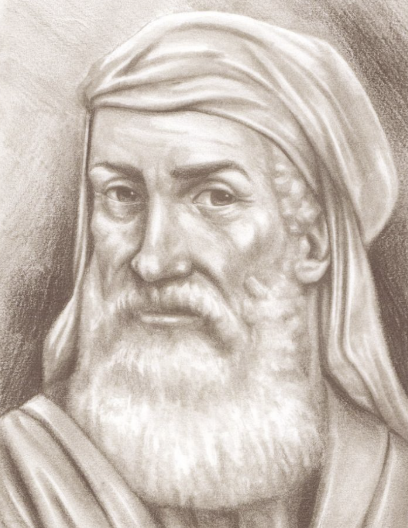
A law there is, an oracle of Doom, Of old enacted by the assembled gods, That if a Daemon-such as live for ages- Defile himself with foul and sinful murder, He must for seasons thrice ten thousand roam Far from the Blest; such is the path I tread, I too a wanderer and exile from heaven.
▼
Source
source
tr. Phillip H. De Lacy and Benedict Einarson. Cf. full quotation at Leonard p. 54-55 fr. 115, as paraphrased in Plutarch's Moralia

2 months 6 days ago
It is ...easy to be certain. One has only to be sufficiently vague.
▼
Source
source
Vol. IV, par. 237

3 months 1 week ago
To believe is to know you believe, and to know you believe is not to believe.

3 months 2 weeks ago
We are much beholden to Machiavel and others, that write what men do, and not what they ought to do.
▼
Source
source
Book II, xxi, 9
3 months 5 days ago
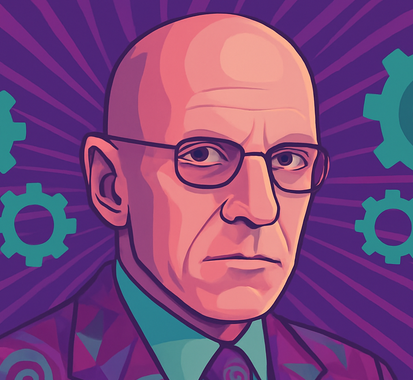
Sometimes, because my position has not been made clear enough, people think I'm a sort of radical anarchist who has an absolute hatred of power. No! What I am trying to do is to approach this extremely important and tangled phenomenon in our society, the exercise of power, with the most reflective, and I would say prudent attitude. Prudent in my analysis, in the moral and theoretical postulates I use: I try to figure out what's at stake. But to question the relations of power in the most scrupulous and attentive manner possible, looking into all the domains of its exercise, that's not the same thing as constructing a mythology of power as the beast of the apocalypse.
▼
Source
source
"Power, Moral Values, and the Intellectual", interview in History of the Present 4
2 months 4 weeks ago
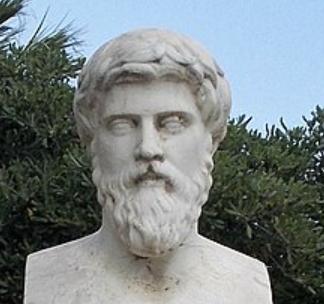
Alcibiades had a very handsome dog, that cost him seven thousand drachmas; and he cut off his tail, "that," said he, "the Athenians may have this story to tell of me, and may concern themselves no further with me."
▼
Source
source
50 Alcibiades
1 month 2 weeks ago
The great rule: If the little bit you have is nothing special in itself, at least find a way of saying it that is a little bit special.
▼
Source
source
E 55

2 months 3 weeks ago
Honor Wisdom; and deny it not to them that would learn; and shew it unto them that dispraise it! Sow not the sea fields!
2 months 1 week ago
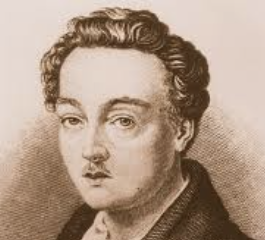
Death is the most blessed dream.
▼
Source
source
Act II.
2 months 2 days ago
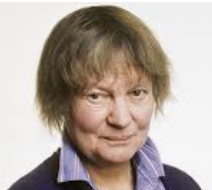
Stuart was not dismayed by his sexual feelings about the boy.
▼
Source
source
The Good Apprentice (1985), p. 247.

2 months 1 week ago
"No human laws are of any validity if contrary to the law of nature; and such of them as are valid derive all their force and all their authority mediately or immediately from this original." Thus writes Blackstone, to whom let all honour be given for having so far outseen the ideas of his time; and, indeed, we may say of our time. A good antidote, this, for those political superstitions which so widely prevail. A good check upon that sentiment of power-worship which still misleads us by magnifying the prerogatives of constitutional governments as it once did those of monarchs. Let men learn that a legislature is not "our God upon earth," though, by the authority they ascribe to it, and the things they expect from it, they would seem to think it is. Let them learn rather that it is an institution serving a purely temporary purpose, whose power, when not stolen, is at the best borrowed.
▼
Source
source
Pt. III, Ch. 19 : The Right to Ignore the State, § 2

3 months 1 day ago
He who upholds Truth with all the might of his power, He who upholds Truth the utmost in his word and deed,He, indeed, is Thy most valued helper, O Mazda Ahura!
▼
Source
source
Ahunuvaiti Gatha; Yasna 31, 22.
1 month 3 weeks ago
The real issue is not whether two and two make four or whether two and two make five, but whether life advances by men who love words or men who love living.
▼
Source
source
Chapter Nine, Breaking the Circuit

3 months 2 weeks ago
I have here only made a nosegay of culled flowers, and have brought nothing of my own but the thread that ties them together.
▼
Source
source
Book III, Ch. 12. Of Physiognomy

3 months 6 days ago
The way you use the word "God" does not show whom you mean - but, rather, what you mean.
▼
Source
source
p. 50e
1 month 2 weeks ago
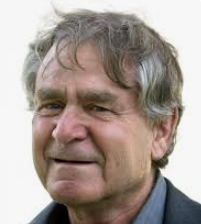
Many modern philosophers claim that probability is relation between an hypothesis and the evidence for it.
▼
Source
source
Chapter 4, Evidence, p. 31.

1 day ago
Nay, am not I also the humble James Carlyle's work? I owe him much more than existence, I owe him a noble inspiring example (now that I can read it in that rustic character). It was he exclusively that determined on educating me; that from his small hard-earned funds sent me to school and college, and made me whatever I am or may become. Let me not mourn for my father, let me do worthily of him. So shall he still live even here in me, and his worth plant itself honorably forth into new generations.

2 months 1 week ago
Even those who have renounced Christianity and attack it, in their inmost being still follow the Christian ideal, for hitherto neither their subtlety nor the ardor of their hearts has been able to create a higher ideal of man and of virtue than the ideal given by Christ.

4 months ago
Those animals which are incapable of making binding agreements with one another not to inflict nor suffer harm are without either justice or injustice; and likewise for those peoples who either could not or would not form binding agreements not to inflict nor suffer harm.
2 months 1 week ago
To be in love is not the same as loving. You can be in love with a woman and still hate her.
1 month 3 weeks ago
A girl, if she has any pride, is so ashamed of having anything she wishes to say out of the hearing of her own family, she thinks it must be something so very wrong, that it is ten to one, if she have the opportunity of saying it, that she will not. And yet she is spending her life, perhaps, in dreaming of accidental means of unrestrained communion.

3 weeks 2 days ago
I have learned by some experience, by many examples, and by the writings of countless others before me, also occupied in the search, that certain environments, certain modes of life, certain rules of conduct are more conducive to inner and outer harmony than others. There are, in fact, certain roads that one may follow. Simplification of life is one of them.

3 months 3 weeks ago
By faithfulness we are collected and wound up into unity within ourselves, whereas we had been scattered abroad in multiplicity.
▼
Source
source
As quoted in Footprints in Time : Fulfilling God's Destiny for Your Life (2007) by Jeff O'Leary, p. 223
1 month 1 week ago
The only cool PR is provided by one's enemies. They toil incessantly and for free.
3 months 6 days ago
At the core of all well-founded belief, lies belief that is unfounded.
1 month 3 weeks ago
Crowley wanted to be a magician because he wanted power -- power over other people.
▼
Source
source
p. 157
Just now
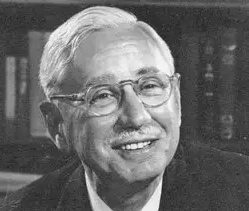
Life is that which is discontent, which struggles and seeks, which suffers and creates.
▼
Source
source
Ch. 1 : Our life begins
1 month 2 weeks ago
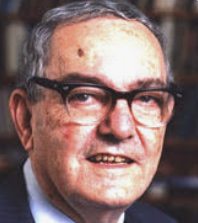
The true line is not between "hard" natural science and "soft" social sciences, but between precise science limited to highly abstract and simple phenomena in the laboratory and inexact science and technology dealing with complex problems in the real world.
▼
Source
source
p. 302.
CivilSimian.com created by AxiomaticPanic, CivilSimian, Kalokagathia