


3 months 1 week ago
The process of being brought up, however well it is done, cannot fail to offend.

2 months 6 days ago
"Neither this world, nor the next, nor happiness are for the being abandoned to doubt." - This point in the Gita is my death sentence.

1 month 3 weeks ago
Law is the continuous manifestation of God's presence - not reason for believing him absent. Great confusion arises from our using the same word law in two totally distinct senses ... as the cause and the effect. It is said that to "explain away" everything by law is to enable us to do without God. But law is no explanation of anything; law is simply a generalization, a category of facts. Law is neither a cause, nor a reason, nor a power, nor a coercive force. It is nothing but a general formula, a statistical table. Law brings us continually back to God instead of carrying us away from him.
▼
Source
source
Suggestions for Thought : Selections and Commentaries (1994), edited by Michael D. Calabria and Janet A. MacRae, p. 41
1 month 3 weeks ago
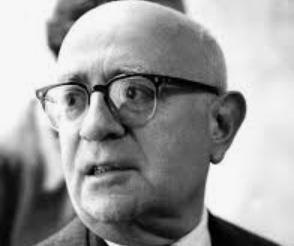
In the general tendency toward specialization, philosophy too has established itself as a specialized discipline, one purified of all specific content. In so doing, philosophy has denied its own constitutive concept: the intellectual freedom that does not obey the dictates of specialized knowledge.
▼
Source
source
p. 6

1 month 3 weeks ago
I now come to the second reason for the modern fading of interest in religion. Religion is the reaction of human nature to its search for God. The presentation of God under the aspect of power awakens every modern instinct of critical reaction. This is fatal; for religion collapses unless its main positions command immediacy of assent. In this respect the old phraseology is at variance with the psychology of modern civilisations. This change in psychology is largely due to science, and is one of the chief ways in which the advance of science has weakened the hold of the old religious forms of expression.
▼
Source
source
Ch. 12: "Religion and Science", pp. 266-267


1 month 3 weeks ago
By relieving the brain of all unnecessary work, a good notation sets it free to concentrate on more advanced problems, and in effect increases the mental power of the race..
▼
Source
source
ch. 5
3 months 6 days ago
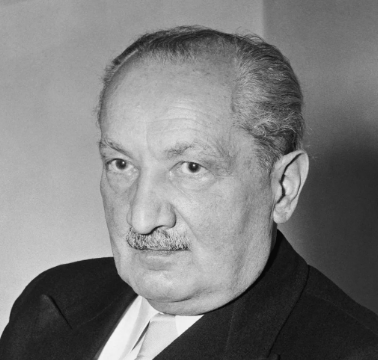
The Geschick of being: a child that plays... Why does it play, the great child of the world-play Heraclitus brought into view in the aiôn? It plays, because it plays. The "because" withers away in the play. The play is without "why." It plays since it plays. It simply remains a play: the most elevated and the most profound. But this "simply" is everything, the one, the only... The question remains whether and how we, hearing the movements of this play, play along and accommodate ourselves to the play.
▼
Source
source
The Principle of Reason (1955-1956) as translated by Reginald Lilly

3 months 3 weeks ago
To avoid falling into the toils of love is not so hard as, after you are caught, to get out of the nets you are in and to break through the strong meshes of Venus.
▼
Source
source
Book IV, lines 1146-1148 (tr. Munro)

4 months 1 week ago
Old age realizes the dreams of youth: look at Dean Swift; in his youth he built an asylum for the insane, in his old age he was himself an inmate.

1 month 3 weeks ago
One cannot ignore half of life for the purposes of science, and then claim that the results of science give a full and adequate picture of the meaning of life. All discussions of 'life' which begin with a description of man's place on a speck of matter in space, in an endless evolutionary scale, are bound to be half-measures, because they leave out most of the experiences which are important to use as human beings.
▼
Source
source
p. 309
2 weeks 5 days ago
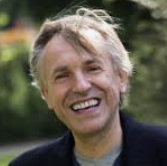
So what is the alternative to traditional anthropocentric ethics? Antispeciesism is not the claim that "All Animals Are Equal", or that all species are of equal value, or that a human or a pig is equivalent to a mosquito. Rather the antispeciesist claims that, other things being equal, equally strong interests should count equally. Experiences that are subjectively negative or positive in hedonic tone to the same degree must count for the same.
▼
Source
source
"The Antispeciesist Revolution", Institute for Ethics and Emerging Technologies, 26 Jul. 2013

2 months 3 days ago
The kingdom of heaven is like to a grain of mustard seed, which a man took, and sowed in his field: Which indeed is the least of all seeds: but when it is grown, it is the greatest among herbs, and becometh a tree, so that the birds of the air come and lodge in the branches thereof.
▼
Source
source
13:31-32 (KJV)
Just now
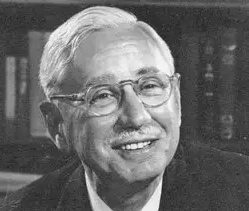
This, evidently was not a minor civilization, produced by inferior people. It ranks with the highest civilizations of history, and some, like Keyserling, would place it at the head and summit of all. The British conquest of India was the invasion and destruction of a high civilization by a trading company utterly without scruple or principle, careless of art, greedy of gain, overrunning with fire and sword a country temporarily disordered and helpless, bribing and murdering, annexing and stealing, and beginning that career of illegal and "legal" plunder which has now gone on ruthlessly for one hundred and seventy-three years, and goes on at this moment while in our secure comfort we write and read. Those who have seen the unspeakable poverty and physiological weakness of the Hindus today will hardly believe that it was the wealth of eighteenth century India which attracted the commercial pirates of England and France.

1 month 3 weeks ago
Hegel made famous his aphorism that all the rational is real and all the real rational; but there are many of us who, unconvinced by Hegel, continue to believe that the real, the really real, is irrational, that reason builds upon irrationalities. Hegel, a great framer of definitions, attempted with definitions to reconstruct the universe, like that artillery sergeant who said that cannon were made by taking a hole and enclosing it with steel.
2 months 2 days ago
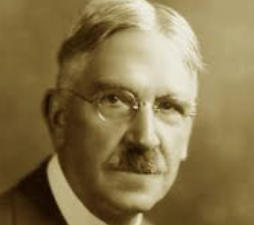
While they denounce as subversive anarchy signs of independent thought, of thinking for themselves on the part of others lest such thought disturb the conditions by which they profit, they think quite literally for themselves, that is of themselves.
▼
Source
source
Human Nature and Conduct (1921) Part 1 Section IV.
3 days ago
The cultural atmosphere of Russia in those years had an adolescent quality, common to all periods of revolution: the belief that life is just beginning, that the future is unlimited, and that mankind is no longer bound by the shackles of history.
▼
Source
source
(pg. 47)
1 month 6 days ago
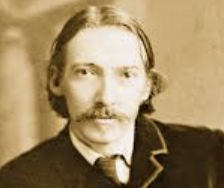
This is still the strangest thing in all man's travelling, that he should carry about with him incongruous memories.
▼
Source
source
Pt. II, ch. III.
1 month 1 week ago
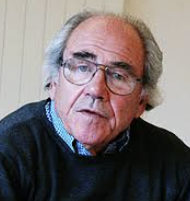
There are cultures that can only picture their origins and not their ends. Some are obsessed by both. Two other positions are possible: only picturing one's end - our own culture; picturing neither beginning nor end - the coming culture.
▼
Source
source
Chapter 1

3 months 1 week ago
Nature is too thin a screen; the glory of the One breaks in everywhere.
▼
Source
source
p. 182
2 months 1 day ago
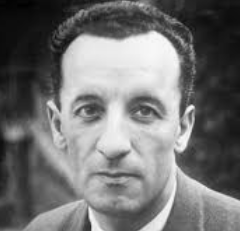
Hardness and softness, roughness and smoothness, moonlight and sunlight present themselves in our recollection not preeminently as sensory contents but as certain kinds of symbioses, certain ways outside has of invading us and certain ways we have of meets this invasion...
▼
Source
source
p. 317

2 months 1 week ago
Corrupt influence, which is itself the perennial spring of all prodigality, and of all disorder; which loads us, more than millions of debt; which takes away vigor from our arms, wisdom from our councils, and every shadow of authority and credit from the most venerable parts of our constitution.
4 months 1 week ago
I have just now come from a party where I was its life and soul; witticisms streamed from my lips, everyone laughed and admired me, but I went away - yes, the dash should be as long as the radius of the earth's orbit ----------- and wanted to shoot myself.

4 months ago
Luxurious food and drinks, in no way protect you from harm. Wealth beyond what is natural, is no more use than an overflowing container. Real value is not generated by theaters, and baths, perfumes or ointments, but by philosophy.

1 day ago
Money is miraculous. What miraculous facilities has it yielded, will it yield us; but also what never-imagined confusions, obscurations has it brought in; down almost to total extinction of the moral-sense in large masses of mankind!

3 months 2 weeks ago
Even opinion is of force enough to make itself to be espoused at the expense of life.
▼
Source
source
Book I, Ch. 40. Of Good and Evil, tr. Cotton, rev. W. Hazlitt, 1842
2 months 1 week ago
No man can mortgage his injustice as a pawn for his fidelity.
2 months 1 week ago
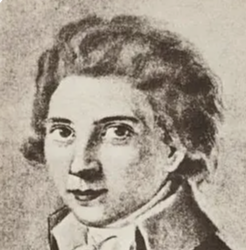
Every uneducated person is a caricature of himself.
▼
Source
source
"Selected Aphorisms from the Athenaeum (1798)", Dialogue on Poetry and Literary Aphorisms, Ernst Behler and Roman Struc, trans. (Pennsylvania University Press:1968) #63

3 months 2 weeks ago
Origen, of course, is also a great advocate of the allegorical approach. Yet I think you will have to admit that our modem theologians either despise this method of interpretation or are completely ignorant of it. As a matter of fact they surpass the pagans of antiquity in the subtlety of their distinctions.
▼
Source
source
p. 63

3 months 2 weeks ago
Concerning the female sorcerer. Roman law also prescribes this. Why does the law name women more than men here, even though men are also guilty of this? Because women are more susceptible to those superstitions of Satan; take Eve, for example. They are commonly called "wise women." Let them be killed.
▼
Source
source
Sermon on Exodus, 1526, WA XVI, p. 551 as quoted in Luther on Women: A Sourcebook, edited by Susan C. Karant-Nunn, Merry E. Wiesner-Hanks, (2003), p. 231

2 months 2 weeks ago
In no other country in the world is the love of property keener or more alert than in the United States, and nowhere else does the majority display less inclination toward doctrines which in any way threaten the way property is owned.
▼
Source
source
Book Three, Chapter XXI.

2 months 3 days ago
The people are led to find in the productive apparatus the effective agent of thought and action to which their personal thought and action can and must be surrendered. And in this transfer, the apparatus also assumes the role of a moral agent.
▼
Source
source
Conscience is absolved by reification. p. 79
1 week ago
It requires wisdom to understand wisdom: the music is nothing if the audience is deaf.
▼
Source
source
Ch. XV: "The Moralist in an Unbelieving World", §2, p. 324.
2 months 2 days ago
The difference between the artificial and the artful in the artistic lies on the surface in the former there is a split between what is overly done and what is intended. The appearance is one of cordiality; the intent is that of gaining favor. Whenever this split between what is done and its purpose exists, there is insincerity, a trick, a simulation of an act that intrinsically has another effect. When the natural and the cultivated blend into one, acts of social intercourse are works of art. The animating impulsion of genial friendship and the deed performed completely coincide without intrusion of ulterior motive. Awkwardness may prevent adequacy of expression.
3 months ago
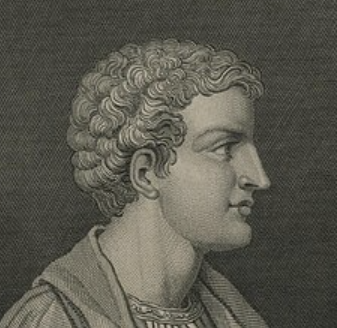
Life's short span forbids us to enter on far reaching hopes.
▼
Source
source
Book I, ode iv, line 15
1 month 3 weeks ago
We are really no longer ourselves a part of nature at the moment when we notice, when we recognize, that we are a part of nature.
▼
Source
source
Probleme der Moralphilosophie (Frankfurt: Suhrkamp, 1996), p. 154; as quoted in Andrew Bowie, Adorno and the Ends of Philosophy (Cambridge: Polity, 2013), p. 94
3 months 1 week ago
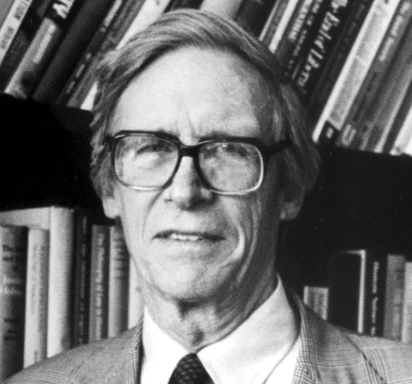
The circumstances of justice may be described as the normal conditions under which human cooperation is both possible and necessary.
▼
Source
source
Chapter III, Section 22, pg. 126
2 months 1 day ago
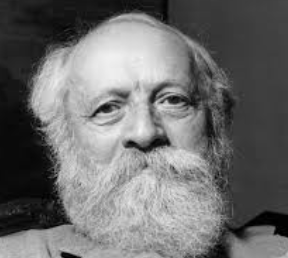
The Thou encounters me by grace - it cannot be found by seeking. But that I speak the basic word to it is a deed of my whole being, is my essential deed.
1 month 3 weeks ago
The deliberate aim at Peace very easily passes into its bastard substitute, Anesthesia.
▼
Source
source
p. 284.
2 months 6 days ago
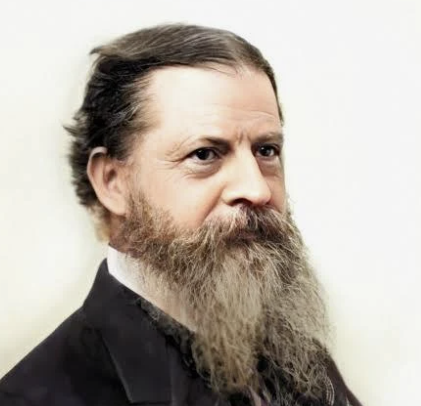
Fifth, in what measure this unification acts, seems to be regulated only by special rules; or, at least, we cannot in our present knowledge say how far it goes. But it may be said that, judging by appearances, the amount of arbitrariness in the phenomenon of human minds is neither altogether trifling nor very prominent.
2 months 1 week ago
We reason deeply, when we forcibly feel.
▼
Source
source
Letter 19
4 months ago
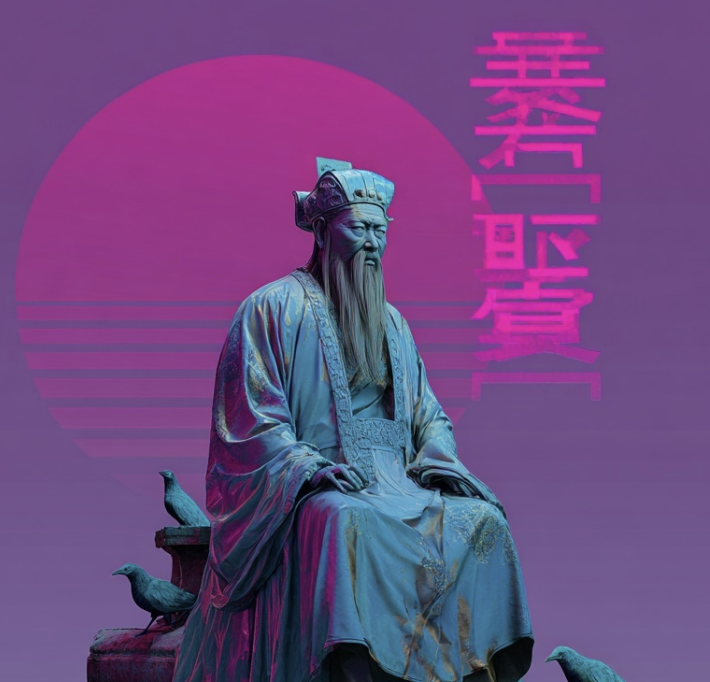
It is said in the Book of Poetry, "In silence is the offering presented, and the spirit approached to; there is not the slightest contention." Therefore the superior man does not use rewards, and the people are stimulated to virtue. He does not show anger, and the people are awed more than by hatchets and battle-axes.

4 months 1 week ago
Thus I progressed on the surface of life, in the realm of words as it were, never in reality. All those books barely read, those friends barely loved, those cities barely visited, those women barely possessed! I went through the gestures out of boredom or absent-mindedness. Then came the human beings, they wanted to cling, but there was nothing to cling to, and that was unfortunate for them. As for me, I forgot. I never remembered anything but myself.
4 months ago
The institutions of the Ruler are rooted in his own character and conduct, and sufficient attestation of them is given by the masses of the people. He examines them by comparison with those of the three kings, and finds them without mistake. He sets them up before Heaven and Earth, and finds nothing in them contrary to their mode of operation. He presents himself with them before spiritual beings, and no doubts about them arise. He is prepared to wait for the rise of a sage a hundred ages after, and has no misgivings. His presenting himself with his institutions before spiritual beings, without any doubts arising about them, shows that he knows Heaven. His being prepared, without any misgivings, to wait for the rise of a sage a hundred ages after, shows that he knows men.

3 months 1 week ago
In the name of national security, the Commission's hearings were held in secret, thereby continuing the policy which has marked the entire course of the case. This prompts my second question: If, as we are told, Oswald was the lone assassin, where is the issue of national security? Indeed, precisely the same question must be put here as was posed in France during the Dreyfus case: If the Government is so certain of its case, why has it conducted all its inquiries in the strictest secrecy? "
▼
Source
source
16 Questions on the Assassination" in The Minority of One, ed. M.S. Arnoni (1964-09-06), pp. 6-8
1 month 1 week ago
We often attribute "understanding" and other cognitive predicates by metaphor and analogy to cars, adding machines, and other artifacts, but nothing is proved by such attributions.

2 months 2 weeks ago
No man can justly censure or condemn another, because indeed no man truly knows another.
▼
Source
source
Section 4
3 months 2 weeks ago
Let me mention another requirement for a better understanding of Holy Scripture. I would suggest that you read those commentators who do not stick so closely to the literal sense. The ones I would recommend most highly after St. Paul himself are Origen, Ambrose, Jerome, and Augustine. Too many of our modern theologians are prone to a literal interpretation, which they subtly misconstrue.
▼
Source
source
p.37
2 months 6 days ago
Detachment from the world as an attachment to the ego... Who can realize the detachment in which you are as far away from yourself as you are from the world?
2 months 3 days ago
The truth is cruel, but it can be loved, and it makes free those who have loved it.
▼
Source
source
p. 107
CivilSimian.com created by AxiomaticPanic, CivilSimian, Kalokagathia