

2 months 2 weeks ago
I do not think that the dancing and singing of even little children can be explained wholly on the basis of unlearned and unformed responses to then existing objective conditions. Clearly there must be something in the present to evoke happiness. But the act is expressive only a there is in it a unison of something stored from past experience, something therefore generalized, with present conditions. In the case of expressions of happy children the marriage of past values and present incidents takes place easily; there are few obstructions to be overcome, few wounds to heal, few conflicts to resolve. With maturer persons, the reverse is the case. Accordingly the achievement of complete unison is rare; but when it occurs it is so on a deeper level and with a fuller content of meaning. And then, even though after long incubation and after precedent pangs of labor, the final expression may issue with the spontaneity of the cadenced speech or rhythmic movement of happy childhood.
▼
Source
source
p. 74

2 months 3 weeks ago
Touch me not; for I am not yet ascended to my Father: but go to my brethren, and say unto them, I ascend unto my Father, and your Father; and to my God, and your God.
▼
Source
source
John 20:17 (KJV)
2 months ago
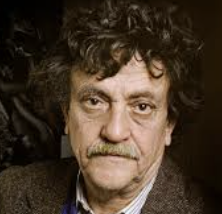
We're terrible animals. I think that the Earth's immune system is trying to get rid of us, as well it should.
▼
Source
source
On humans, interviewed by Jon Stewart, The Daily Show

4 months 2 weeks ago
For when every judgement is the act of hym that judgeth, it behoveth that every man performe hys worke and purpose, not by any forayne or straunge power or facultie, but by his owne proper power, and strength.

2 months 4 weeks ago
Religion, always a principle of energy, in this new people, is no way worn out or impaired; and their mode of professing it is also one main cause of this free spirit. The people are Protestants; and of that kind which is the most adverse to all implicit submission of mind and opinion. This is a persuasion not only favourable to liberty, but built upon it.

1 month 3 weeks ago
Computers can do better than ever what needn't be done at all. Making sense is still a human monopoly.
▼
Source
source
(p. 109)

2 months 2 weeks ago
Every time that a man has, with a pure heart, called upon Osiris, Dionysus, Buddha, the Tao, etc., the Son of God has answered him by sending the Holy Spirit. And the Holy Spirit has acted upon his soul, not by inciting him to abandon his religious tradition, but by bestowing upon him light - and in the best of cases the fullness of light - in the heart of that same religious tradition. ... It is, therefore, useless to send out missions to prevail upon the peoples of Asia, Africa or Oceania to enter the Church.
▼
Source
source
Section 8

4 months 2 weeks ago
People travel to wonder at the height of mountains, at the huge waves of the sea, at the long courses of rivers, at the vast compass of the ocean, at the circular motion of the stars; and they pass by themselves without wondering.
▼
Source
source
Variant: Men go abroad to admire the heights of mountains, the mighty billows of the sea, the broad tides of rivers, the compass of the ocean, and the circuits of the stars, and pass themselves by. X
1 month 3 weeks ago
A man, Mr. Scrymgeour, may fall into a thousand perplexities, but if his heart be upright and his intelligence unclouded, he will issue from them all without dishonour.
▼
Source
source
The Rajah's Diamond, Story of the House with the Green Blinds.

3 months 3 weeks ago
So in the end when one is doing philosophy one gets to the point where one would like just to emit an inarticulate sound.
▼
Source
source
§ 261

4 months 3 weeks ago
At any street corner the feeling of absurdity can strike any man in the face.

1 month 3 weeks ago
To be overwise is to ossify; and the scruple-monger ends by standing stockstill.
▼
Source
source
314

3 months 4 weeks ago
Undoubtedly we have no questions to ask which are unanswerable. We must trust the perfection of the creation so far, as to believe that whatever curiosity the order of things has awakened in our minds, the order of things can satisfy. Every man's condition is a solution in hieroglyphic to those inquiries he would put. He acts it as life, before he apprehends it as truth.
▼
Source
source
Introduction

4 months 1 day ago
All that time is lost which might be better employed.
▼
Source
source
As quoted in A Dictionary of Quotations in Most Frequent Use: Taken Chiefly from the Latin and French, but comprising many from the Greek, Spanish, and Italian Languages, translated into English (1809) by David Evans Macdonnel
4 months ago
They should always be heard, and fairly and kindly answer'd, when they ask after any thing they would know, and desire to be informed about. Curiosity should be as carefully cherish'd in children, as other appetites suppress'd.
▼
Source
source
Sec. 108
2 months 2 weeks ago
It is not in a person's nature to desire what he already has. Desire is a tendency, the start of a movement toward something, toward a point from which one is absent. If, at the very outset, this movement doubles back on itself toward its point of departure, a person turns round and round like a squirrel in a cage or a prisoner in a condemned cell. Constant turning soon produces revulsion. All workers, especially though not exclusively those who work under inhumane conditions, are easily the victims of revulsion, exhaustion and disgust and the strongest are often the worst affected.
▼
Source
source
p. 245
1 month 3 weeks ago
By involving all men in all men, by the electric extension of their own nervous systems, the new technology turns the figure of the primitive society into a universal ground that buries all previous figures.
▼
Source
source
(p. 25)

3 months 3 weeks ago
The French bourgeois doesn't dislike shit, provided it is served up to him at the right time.
▼
Source
source
Book 2, "To Succeed in Being All, Strive to be Nothing in Anything"

3 months 2 weeks ago
Choose a wife who is of character, because that one is good who in the end is more respected.
▼
Source
source
(p. 60)

2 months 4 weeks ago
If they drive God from the earth, we shall shelter Him underground.
2 weeks 4 days ago
Here and everywhere is the struggle for existence, life inextricably enmeshed with war. All life living at the expense of life, every organism eating other organisms forever.
▼
Source
source
Ch. 4 : On Old Age

4 months 1 day ago
The more one presupposes that his own power will suffice him to realize what he desires the more practical is that desire. When I treat a man contemptuously, I can inspire him with no practical desire to appreciate my grounds of truth. When I treat any one as worthless, I can inspire him with no desire to do right.
▼
Source
source
Part III : Selection on Education from Kant's other Writings, Ch. I Pedagogical Fragments, # 15
4 months 6 days ago
Women are the most charitable creatures, and the most troublesome. He who shuns women passes up the trouble, but also the benefits. He who puts up with them gains the benefits, but also the trouble. As the saying goes, there's no honey without bees.
▼
Source
source
Act III, scene iv
1 month 3 weeks ago
The metropolis today is a classroom; the ads are its teachers. The traditional classroom is an obsolete detention home, a feudal dungeon.
▼
Source
source
(p. 12)
2 months 1 week ago
Thinking is more erotic than calculating.

4 months 3 weeks ago
Scientific theories can always be improved and are improved. That is one of the glories of science. It is the authoritarian view of the Universe that is frozen in stone and cannot be changed, so that once it is wrong, it is wrong forever.

2 months 2 weeks ago
And what is its moral proof? We may formulate it thus: Act so that in your own judgment and in the judgment of others you may merit eternity, act so that you may become irreplaceable, act so that you may not merit death. Or perhaps thus: Act as if you were to die tomorrow, but to die in order to survive and be eternalized. The end of morality is to give personal, human finality to the Universe; to discover the finality that belongs to it - if indeed it has any finality - and to discover it by acting.
3 weeks ago
The concept of original sin gives us a penetrating insight into human destiny.
▼
Source
source
On the Dilemmas of the Christian Legacy
2 months 3 weeks ago
Thou shalt love the Lord thy God with all thy heart, and with all thy soul, and with all thy mind. This is the first and great commandment. And the second is like unto it, Thou shalt love thy neighbour as thyself. On these two commandments hang all the law and the prophets.
▼
Source
source
22:37-40 (KJV)

3 months 4 weeks ago
The fate of the country does not depend on how you vote at the polls - the worst man is as strong as the best at that game; it does not depend on what kind of paper you drop into the ballot-box once a year, but on what kind of man you drop from your chamber into the street every morning.
▼
Source
source
"Slavery in Massachusetts", 1854

4 months ago
It is very strange that men should deny a creator and yet attribute to themselves the power of creating eels.
▼
Source
source
From the Philosophic Dictionary, as quoted in The life of Pasteur, 1902

2 months 1 week ago
Our habitual experience is a complex of failure and success in the enterprise of interpretation. If we desire a record of uninterpreted experience, we must ask a stone to record its autobiography.
▼
Source
source
Pt. I, ch. 1, sec. 6.

4 months 2 weeks ago
The cautious seldom err.

2 months 2 days ago
Bullialdus wrote that all force respecting the Sun as its center & depending on matter must be reciprocally in a duplicate ratio of the distance from the center.
▼
Source
source
Letter to Edmund Halley (June 20, 1686) quoted in I. Bernard Cohen and George E. Smith, ed.s, The Cambridge Companion to Newton (2002) p. 204
3 months 4 weeks ago
I hung my verse in the wind Time and tide their faults will find.
▼
Source
source
"The Test", as quoted in Emerson As A Poet (1883) by Joel Benton, p. 40

1 month 4 weeks ago
To attain this end we must secure a preponderance of virtue over vice and must endeavor to secure that the honest man may, even in this world, receive a lasting reward for his virtue. But in these great endeavors we are gravely hampered by the political institutions of today. What is to be done in these circumstances? To favor revolutions, overthrow everything, repel force by force?... No! We are very far from that. Every violent reform deserves censure, for it quite fails to remedy evil while men remain what they are, and also because wisdom needs no violence.
▼
Source
source
Book V, Ch. 7

3 months 4 weeks ago
Why did it occur to anyone to believe in only one God? And conversely why did it ever occur to anyone to believe in many gods? To both these questions we must return the same answer: Because that is how the human mind happens to work. For the human mind is both diverse and simple, simultaneously many and one. We have an immediate perception of our own diversity and of that of the outside world. And at the same time we have immediate perceptions of our own oneness.
▼
Source
source
"One and Many," p. 12


4 months ago
Love is of all the passions the strongest, for it attacks simultaneously the head, the heart, and the body.
▼
Source
source
Le Dernier Volume Des Œuvres De Voltaire: Contes - Comédie - Pensées - Poésies - Lettres, 1862
3 weeks 1 day ago
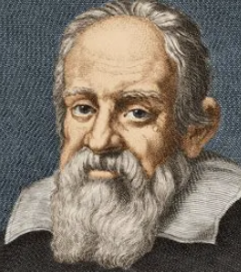
Copernicus never discusses matters of religion or faith, nor does he use argument that depend in any way upon the authority of sacred writings which he might have interpreted erroneously. ... He did not ignore the Bible, but he knew very well that if his doctrine were proved, then it could not contradict the Scriptures when they were rightly understood.

4 months 4 weeks ago
There is no one at the Communion table who retains against you even the least of your sins, no one, unless you yourself do it. So cast them away from yourself, and the recollection of them, lest in it your retain them; and cast the recollection of your having cast your sins away, lest in it you retain them.

3 months 4 weeks ago
No nation was ever so virtuous as each believes itself, and none was ever so wicked as each believes the other.
▼
Source
source
Justice in War-Time (1916), p. 70
3 months 4 weeks ago
Talents differ; all is well and wisely put; If I cannot carry forests on my back, Neither can you crack a nut.
▼
Source
source
Fable
2 months 3 weeks ago
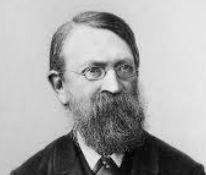
I know of nothing more terrible than the poor creatures who have learned too much. Instead of the sound powerful judgement which would probably have grown up if they had learned nothing, their thoughts creep timidly and hypnotically after words, principles and formulae, constantly by the same paths. What they have acquired is a spider's web of thoughts too weak to furnish sure supports, but complicated enough to provide confusion.
▼
Source
source
On the Relative Educational Value of the Classics and the Mathematico-Physical Sciences in Colleges and High Schools, an address in (16 April 1886)
3 weeks 3 days ago
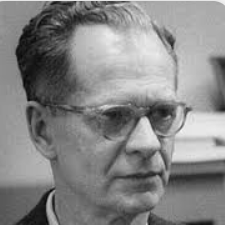
I did not direct my life. I didn't design it. I never made decisions. Things always came up and made them for me. That's what life is.
▼
Source
source
As quoted in "Unpacking the Skinner Box : Revisiting B. F. Skinner through a Postformal Lens" by Dana Salter in The Praeger Handbook of Education and Psychology Vol. 4 (2008) edited by Joe L. Kincheloe and Raymond A. Horn, Ch. 99, p. 872

3 months 4 weeks ago
The pivot round which the religious life... revolves, is the interest of the individual in his private personal destiny. Religion, in short, is a monumental chapter in the history of human egotism. The gods believed in-whether by crude savages or by men disciplined intellectually-agree with each other in recognizing personal calls. Religious thought is carried on in terms of personality, this being, in the world of religion, the one fundamental fact. To-day, quite as much as at any previous age, the religious individual tells you that the divine meets him on the basis of his personal concerns.
▼
Source
source
Lecture XX, "Conclusions"

2 months 3 weeks ago
Nothing deserves to be undone, doubtless because nothing deserved to be done.
2 months 1 day ago
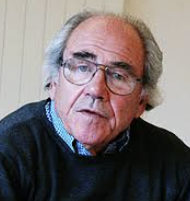
Not only does reality resist those who still criticize it, but it also abandons those who defend it. Maybe it is a way for reality to get its revenge from those who claim to believe in it for the sole purpose of eventually transforming it: sending back its supporters to their own desires.

5 months 1 day ago
Is Wagner a human being at all? Is he not rather a disease? He contaminates everything he touches - he has made music sick.
CivilSimian.com created by AxiomaticPanic, CivilSimian, Kalokagathia