


3 months 3 weeks ago
The hardness of God is kinder than the softness of men, and His compulsion is our liberation.
2 months 1 week ago
A culture is in its finest flower before it begins to analyze itself.
▼
Source
source
Ch. 22, August 17, 1941.

4 months 3 weeks ago
It pays to be obvious, especially if you have a reputation for subtlety.
3 months 2 weeks ago
The universe itself is God and the universal outpouring of its soul.
▼
Source
source
As quoted in De Natura Deorum by Cicero, i. 15.
1 month 2 weeks ago
Men are never so likely to settle a question rightly as when they discuss it freely.
▼
Source
source
p. 248

3 months 3 days ago
We are all instruments endowed with feeling and memory. Our senses are so many strings that are struck by surrounding objects and that also frequently strike themselves.
▼
Source
source
"Conversation Between D'Alembert and Diderot"
2 months 1 week ago
In erotic love, two people who were separate become one. In motherly love, two people who were one become separate. The mother must not only tolerate, she must wish and support the child's separation.
▼
Source
source
Ch. 2
1 month 1 week ago
The wave of the future is coming and there is no fighting it.
▼
Source
source
The Wave of the Future

4 months 1 day ago
I freely admit that the remembrance of David Hume was the very thing that many years ago first interrupted my dogmatic slumber and gave a completely different direction to my researches in the field of speculative philosophy.
3 months 3 weeks ago
We must not be enticed by mathematically attractive assumptions into pretending that the contingencies of men's social positions and the asymmetries of their situations somehow even out in the end. Rather we must choose our conception of justice fully recognizing that this is not and cannot be the case.
▼
Source
source
Chapter III, Section 28, pg. 171
3 months 3 days ago
The arbitrary rule of a just and enlightened prince is always bad. His virtues are the most dangerous and the surest form of seduction: they lull a people imperceptibly into the habit of loving, respecting, and serving his successor, whoever that successor may be, no matter how wicked or stupid.
▼
Source
source
Refutation of Helvétius
3 months 3 weeks ago
I think that if God forgives us we must forgive ourselves. Otherwise it is almost like setting up ourselves as a higher tribunal than Him.
▼
Source
source
Letter (19 April 1951); published in Letters of C. S. Lewis (1966), p. 230

3 months 4 weeks ago
If you are describing any occurrence... make two or more distinct reports at different times... We discriminate at first only a few features, and we need to reconsider our experience from many points of view and in various moods in order to perceive the whole.
▼
Source
source
March 24, 1857
1 month 3 weeks ago
If wine is to withdraw its most poetic countenance, the sun of the white dinner-cloth, a deity to be invoked by two or three, all fervent, hushing their talk, degusting tenderly, and storing reminiscences-for a bottle of good wine, like a good act, shines ever in the retrospect-if wine is to desert us, go thy ways, old Jack!
▼
Source
source
Pt. I, ch. III
3 months 3 weeks ago
There is no spiritual sustenance in flat equality. It is a dim recognition of this fact which makes much of our political propaganda sound so thin. We are trying to be enraptured by something which is merely the negative condition of the good life. That is why the imagination of people is so easily captured by appeals to the craving for inequality, whether in a romantic form of films about loyal courtiers or in the brutal form of Nazi ideology. The tempter always works on some real weakness in our own system of values - offers food to some need which we have starved.

5 months 1 day ago
He who lives as children live who does not struggle for his bread and does not believe that his actions possess any ultimate significance remains childlike.
4 months 1 day ago
Religion should be .... successively freed from all statutes based on history, and one purely moral religion rule over all, in order that God might be all in all. The veil must fall. The leading-string of sacred tradition with all its appendices becomes by degrees useless, and at last a fetter ... The humiliating difference between laymen and clergymen must disappear, and equality spring from true liberty. All this, however, must not be expected from an exterior revolution, which acts violently, and depends upon fortune In the principle of pure moral religion, which is a sort of divine revelation constantly taking place in the soul of man, must be sought the ground for a passage to the new order of things, which will be accomplished by slow and successive reforms.
▼
Source
source
As quoted in German Thought, From The Seven Years' War To Goethe's Death : Six Lectures (1880) by Karl Hillebrand, p. 208
2 months 1 week ago
While it is in no way racist for any author to write a book exclusively about white women, it is fundamentally racist for books to be published that focus solely on the American white woman's experience in which that experience is assumed to be the American woman's experience.

2 months 3 weeks ago
Lord, give me the capacity of never praying, spare me the insanity of all worship, let this temptation of love pass from me which would deliver me forever unto You. Let the void spread between my heart and heaven! I have no desire to people my deserts by Your presence, to tyrannize my nights by Your light, to dissolve my Siberias beneath Your sun.
4 months ago
I doubt not, but from self-evident Propositions, by necessary Consequences, as incontestable as those in Mathematics, the measures of right and wrong might be made out.
▼
Source
source
Book IV, Ch. 3, sec. 18

3 months 3 weeks ago
The moment we no longer have a free press, anything can happen. What makes it possible for a totalitarian or any other dictatorship to rule is that people are not informed; how can you have an opinion if you are not informed? If everybody always lies to you, the consequence is not that you believe the lies, but rather that nobody believes anything any longer. This is because lies, by their very nature, have to be changed, and a lying government has constantly to rewrite its own history. On the receiving end you get not only one lie - a lie which you could go on for the rest of your days - but you get a great number of lies, depending on how the political wind blows. And a people that no longer can believe anything cannot make up its mind. It is deprived not only of its capacity to act but also of its capacity to think and to judge. And with such a people you can then do what you please.
▼
Source
source
p. 70


1 month 3 weeks ago
Mutation may be random, but selection definitely is not.
▼
Source
source
Chapter 3, "The Message from the Mountain" (p. 82)
2 months 3 weeks ago
Being true is different from being taken as true, whether by one or by many or everybody, and in no case is it to be reduced to it. There is no contradiction in something's being true which everybody takes to be false. I understand by 'laws of logic' not psychological laws of takings-to-be-true, but laws of truth. ...If being true is thus independent of being acknowledged by somebody or other, then the laws of truth are not psychological laws: they are boundary stones set in an eternal foundation, which our thought can overflow, but never displace. It is because of this that they have authority for our thought if it would attain truth. They do not bear the relation to thought that the laws of grammar bear to language; they do not make explicit the nature of our human thinking and change as it changes.
▼
Source
source
Introduction, Tr. Montgomery Furth

4 months 1 day ago
Let's not be dazzled by the sententious glitter with which error and lying often cover themselves. Society is not created by the crowd, and bodies come together in vain when hearts reject each other. The truly sociable man is more difficult in his relationships than others; those which consist only in false appearances cannot suit him. He prefers to live far from wicked men without thinking about them, than to see them and hate them. He prefers to flee his enemy rather than seek him out to harm him. A person who knows no other society than that of the heart will not seek his society in your circles. That is How J.J. must have thought and behaved before the conspiracy of which he is the object.
▼
Source
source
Second Dialogue; translated by Judith R. Bush, Christopher Kelly, Roger D. Masters
4 months 2 weeks ago
The members of Christ, many though they be, are bound to one another by the ties of charity and peace under the one Head, who is our Saviour Himself, and form one man. Often their voice is heard in the Psalms as the voice of one man; the cry of one is as the cry of all, for all are one in One.
▼
Source
source
p.430
1 week 2 days ago
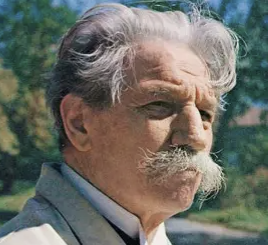
Very little of the great cruelty shown by men can really be attributed to cruel instinct. Most of it comes from thoughtlessness or inherited habit. The roots of cruelty, therefore, are not so much strong as widespread. But the time must come when inhumanity protected by custom and thoughtlessness will succumb before humanity championed by thought. Let us work that this time may come.

1 month 4 weeks ago
War is not a courtesy but the most horrible thing in life; and we ought to understand that, and not play at war. We ought to accept this terrible necessity sternly and seriously. It all lies in that: get rid of falsehood and let war be war and not a game. As it is now, war is the favourite pastime of the idle and frivolous.
▼
Source
source
Bk. X, ch. 25

3 months 4 weeks ago
The union of the mathematician with the poet, fervor with measure, passion with correctness, this surely is the ideal.
▼
Source
source
Ch. 11 - Clifford's Lectures and Essays, 1879

3 months 2 weeks ago
One should emulate works and deeds of virtue, not arguments about it.
2 months 1 week ago
It is obvious that many women have appropriated feminism to serve their own ends, especially those white women who have been at the forefront of the movement; but rather than resigning myself to this appropriation I choose to re-appropriate the term "feminism," to focus on the fact that to be "feminist" in any authentic sense of the term is to want for all people, female and male, liberation from sexist role patterns, domination, and oppression.
2 months 2 weeks ago
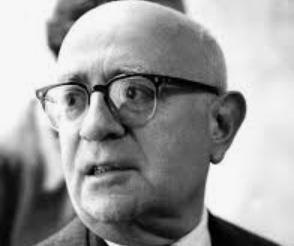
Jazz is the false liquidation of art - instead of utopia becoming reality it disappears from the picture.
▼
Source
source
Perennial fashion - Jazz, as quoted in The Sociology of Rock (1978) by Simon Frith
4 months 1 week ago
If the public thought elevates you above the generality of men, let the other humble you, and hold you in a perfect equality with all mankind, for this is your natural condition.
1 week 2 days ago
From time immemorial man has been made in such a way that his vision of the world, so long as it has not been instilled under hypnosis, his motivations and scale of values, his actions and intentions are determined by his personal and group experience of life.
2 months 2 weeks ago
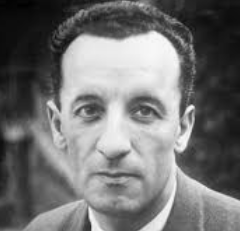
The function of objective thinking is to reduce all phenomena which bear witness to the union of subject and world, putting in their place the clear idea of the object as in itself and of the subject as pure consciousness. It therefore severs the links which unite the thing and the embodied subject, leaving only sensible qualities to make up our world (to the exclusion of the modes of appearance which we have described), and preferably visual qualities, because these give the impression of being autonomous, and because they are less directly linked to our body and present us with an object rather than introducing us into an atmosphere. But in reality all things are concretions of a setting, and any explicit perception of a thing survives in virtue of a previous communication with a certain atmosphere.
▼
Source
source
p. 374

1 month 5 days ago
Today those who peer into the future want only relief from anxiety. Unable to face the prospect that the cycles of war will continue, they are desperate to find a pattern of improvement in history. It is only natural that believers in reason, lacking any deeper faith and too feeble to tolerate doubt, should turn to the sorcery of numbers. Happily there are some who are ready to assist them. Just as the Elizabethan magus transcribed tables shown to him by angels, the modern scientific scryer deciphers numerical auguries of angels hidden in ourselves.
▼
Source
source
In the Puppet Theatre: Dark mirrors, Hidden Angels and an Algorithmic Prayer-Wheel (p. 99)
2 months 1 day ago
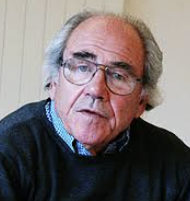
To challenge and to cope with this paradoxical state of things, we need a paradoxical way of thinking; since the world drifts into delirium, we must adopt a delirious point of view. We must no longer assume any principle of truth, of causality, or any discursive norm. Instead, we must grant both the poetic singularity of events and the radical uncertainty of events. It is not easy. We usually think that holding to the protocols of experimentation and verification is the most difficult thing. But in fact the most difficult thing is to renounce the truth and the possibility of verification, to remain as long as possible on the enigmatic, ambivalent, and reversible side of thought.
▼
Source
source
The Vital Illusion (2000) "The Murder of the Real". Wellek Library Lectures given May 1999 at the University of California, Irvine
2 months 3 weeks ago
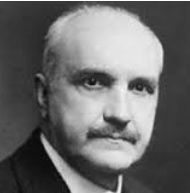
On fact, the whole machinery of our intelligence, our general ideas and laws, fixed and external objects, principles, persons, and gods, are so many symbolic, algebraic expressions. They stand for experience; experience which we are incapable of retaining and surveying in its multitudinous immediacy. We should flounder hopelessly, like the animals, did we not keep ourselves afloat and direct our course by these intellectual devices.
▼
Source
source
Theory helps us to bear our ignorance of fact. Pt. III, Form; § 30: "The average modified in the direction of pleasure.", p. 125
3 months 3 weeks ago
Yet it seems extraordinary that the justice of increasing the expectations of the better placed by a billion dollars, say, should turn on whether the prospects of the least favored increase or decrease by a penny.
▼
Source
source
Chapter III, Section 26, pg. 157

2 weeks 5 days ago
Every noble crown is, and on earth will forever be, a crown of thorns.
▼
Source
source
Bk. III, ch. 7.
1 month 4 weeks ago
The savage recognizes life only in himself and his personal desires. His interest in life is concentrated on himself alone. The highest happiness for him is the fullest satisfaction of his desires. The motive power of his life is personal enjoyment. His religion consists in propitiating his deity and in worshiping his gods, whom he imagines as persons living only for their personal aims.
▼
Source
source
Chapter IV, Christianity Misunderstood by Men of ScienceChapter IV, Christianity Misunderstood by Men of Science

2 months 4 weeks ago
Thus poetry, regarded as a vehicle of thought, is especially impressive partly because it obeys all the laws of effective speech, and partly because in so doing it imitates the natural utterances of excitement.
▼
Source
source
Pt. I, sec. 6, "The Effect of Poetry Explained"

4 months 6 days ago
Certainly it is true that Christians, so far as they themselves are concerned, are subject neither to law nor sword, and have need of neither. But take heed and first fill the world with real Christians before you attempt to rule it in a Christian and evangelical manner. This you will never accomplish; for the world and the masses are and always will be un-Christian, even if they are all baptized and Christian in name.
▼
Source
source
p. 91
1 month 3 weeks ago
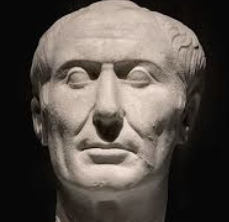
Be your money's master, not its slave.
▼
Source
source
Maxim 657
2 weeks 5 days ago
Again, and again, we say, the great, the creative and enduring is ever a secret to itself; only the small, the barren and transient is otherwise.
▼
Source
source
Characteristics.
4 months 3 weeks ago
The fall of Empire, gentlemen, is a massive thing, however, and not easily fought. It is dictated by a rising bureaucracy, a receding initiative, a freezing of caste, a damming of curiosity, a hundred other factors. It has been going on, as I have said, for centuries, and it is too majestic and massive a movement to stop.
3 months 4 weeks ago
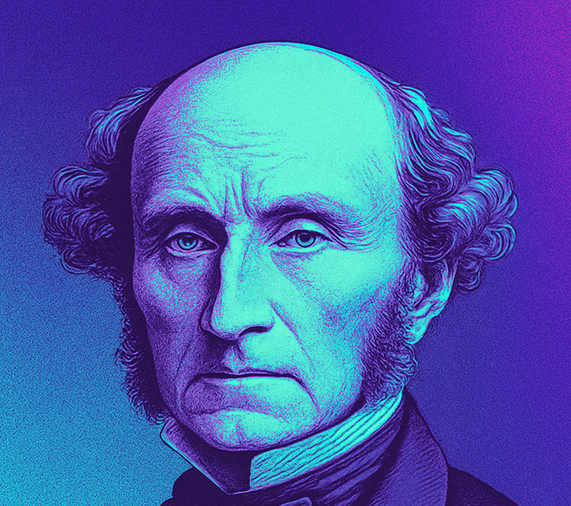
In these frequent talks about the books I read, he used, as opportunity offered, to give me explanations and ideas respecting civilization, government, morality, mental cultivation, which he required me afterwards to restate to him in my own words. He also made me read, and give him a verbal account of, many books which would not have interested me sufficiently to induce me to read them of myself: among others, Millar's Historical View of the English Government, a book of great merit for its time, and which he highly valued; Mosheim's Ecclesiastical History, McCrie's Life of John Knox, and even Sewel's and Rutty's Histories of the Quakers. He was fond of putting into my hands books which exhibited men of energy and resource in unusual circumstances, struggling against difficulties and overcoming them: of such works I remember Beaver's African Memoranda, and Collins's account of the first settlement of New South Wales.
▼
Source
source
(p. 8)

1 month 3 weeks ago
The meaning of experience is typically one generation behind the experience. The content of new situations, both private and corporate, is typically the preceding situation.
▼
Source
source
quoted in "The Prospects of Recording" by Glenn Gould, The Glenn Gould reader, 1984, p. 345
1 month 2 weeks ago
We hold that the most wonderful and splendid proof of genius is a great poem produced in a civilized age.
▼
Source
source
p. 5

2 months 1 week ago
No artist can develop without increasing his self-knowledge; but self-knowledge supposes a certain preoccupation with the meaning of human life and the destiny of man. A definite set of beliefs - Methodist Christianity, for example - may only be a hindrance to development; but it is not more so than Beckett's refusal to think at all. Shaw says somewhere that all intelligent men must be preoccupied with either religion, politics, or sex. (He seems to attribute T. E. Lawrence's tragedy to his refusal to come to grips with any of them.) It is hard to see how an artist could hope to achieve any degree of self-knowledge without being deeply concerned with at least one of the three.
▼
Source
source
p. 197
CivilSimian.com created by AxiomaticPanic, CivilSimian, Kalokagathia