


4 months 1 day ago
Tis evident, that sympathy, or the communication of passions, takes place among animals, no less than among men. Fear, anger, courage and other affections are frequently communicated from one animal to another [...] And 'tis remarkable, that tho' almost all animals use in play the same member, and nearly the same action as in fighting; a lion, a tyger, a cat their paws; an ox his homs; a dog his teeth; a horse his heels: Yet they most carefully avoid harming their companion, even tho' they have nothing to fear from his resentment; which is an evident proof of the sense brutes have of each other's pain and pleasure.
▼
Source
source
Part 2, Section 12
1 month 6 days ago
What I would like to show is that there is a vital dimension of their writing, which I call performative reflexivity, which if ignored or misunderstood will impede an adequate response to it.
▼
Source
source
Chapter 8, Performative Reflexivity, p. 134
5 days ago
Those who are wise won't be busy, and those who are too busy can't be wise.
▼
Source
source
p. 150
1 week 5 days ago
Now, on the contrary, when every one is to cultivate himself into man, condemning a man to machine-like labor amounts to the same thing as slavery. If a factory-worker must tire himself to death twelve hours and more, he is cut off from becoming man. Every labor is to have the intent that the man be satisfied. His labor is nothing taken by itself, has no object in itself, is nothing complete in itself; he labors only into another's hands, and is used (exploited) by this other.
▼
Source
source
Cambridge 1995, p. 108
2 months 3 weeks ago
The proper method for hastening the decay of error is not by brute force, or by regulation which is one of the classes of force, to endeavour to reduce men to intellectual uniformity; but on the contrary by teaching every man to think for himself.
▼
Source
source
Vol. 2, bk. 8, ch. 6
2 weeks 4 days ago
By now it may be clear that the position I'm developing is a sort of post-Darwinian Kantianism.
▼
Source
source
p. 104; from "The Road since Structure"
4 months 3 weeks ago
For some identify happiness with virtue, some with practical wisdom, others with a kind of philosophic wisdom, others with these, or one of these, accompanied by pleasure or not without pleasure; while others include also external prosperity. Now ... it is not probable that these should be entirely mistaken, but rather that they should be right in at least some one respect or even in most respects.

2 months 3 weeks ago
All morning, I did nothing but repeat: "Man is an abyss, man is an abyss." - I could not, alas, find anything better.

4 months 5 days ago
The oldest and best known evil was ever more supportable than one that was new and untried.
▼
Source
source
Book III, Ch. 9. Of Vanity
3 months 4 weeks ago
That the human mind has a certain order of possible progress, in which some things must precede others, an order which governments and public instructors can modify to some, but not to an unlimited extent: that all questions of political institutions are relative, not absolute, and that different stages of human progress not only will have, but ought to have, different institutions: That government is always either in the hands, or passing into the hands, of whatever is the strongest power in society, and that what this power is, does not depend on institutions, but institutions on it: That any general theory or philosophy of politics supposes a previous theory of human progress, and that this is the same thing with a philosophy of history.
▼
Source
source
(p. 162)

3 months 4 weeks ago
Perhaps I am more than usually jealous with respect to my freedom. I feel that my connection with and obligation to society are still very slight and transient. Those slight labors which afford me a livelihood, and by which it is allowed that I am to some extent serviceable to my contemporaries, are as yet commonly a pleasure to me, and I am not often reminded that they are a necessity. So far I am successful. But I foresee, that, if my wants should be much increased, the labor required to supply them would become a drudgery. If I should sell both my forenoons and afternoons to society, as most appear to do, I am sure, that, for me, there would be nothing left worth living for. I trust that I shall never thus sell my birthright for a mess of pottage.
▼
Source
source
p. 486
2 months 2 weeks ago
As for [...] Of all passions, that which inclineth men least to break the laws is fear.
▼
Source
source
The Second Part, Chapter 27

2 months 1 week ago
A race preserves its vigour so long as it harbours a real contrast between what has been and what may be, and so long as it is nerved by the vigour to adventure beyond the safeties of the past. Without adventure, civilization is in full decay.
▼
Source
source
p. 360.

3 months 4 weeks ago
There are some simple maxims [...] which I think might be commanded to writers of expository prose. First: never use a long word if a short word will do. Second: if you want to make a statement with a great many qualifications, put some of the qualifications in separate sentences. Third: do not let the beginning of your sentence lead the reader to an expectation which is contradicted by the end.
▼
Source
source
"How I Write", The Writer, September 1954

2 months 4 weeks ago
These principles it is necessary strictly to attend to, because they will serve much to explain the whole course both of government and real property, wherever the German nations obtained a settlement; the whole of their government depending for the most part upon two principles in our nature,-ambition, that makes one man desirous, at any hazard or expense, of taking the lead amongst others; and admiration, which makes others equally desirous of following him from the mere pleasure of admiration, and a sort of secondary ambition, one of the most universal passions among men. These two principles, strong both of them in our nature, create a voluntary inequality and dependence.
▼
Source
source
An Essay towards an Abridgment of English History (1757-c. 1763), quoted in The Works of the Right Honourable Edmund Burke, Vol. VI (1856), p. 282
2 months 4 weeks ago
All government - indeed, every human benefit and enjoyment, every virtue and every prudent act - is founded on compromise and barter.
4 months 1 week ago
It is difficulties that show what men are.
▼
Source
source
Book I, ch. 24, 1.

3 weeks 1 day ago
Never has any one been less a priest than Jesus, never a greater enemy of forms, which stifle religion under the pretext of protecting it. By this we are all his disciples and his successors; by this he has laid the eternal foundation-stone of true religion; and if religion is essential to humanity, he has by this deserved the Divine rank the world has accorded him.
▼
Source
source
Ch. 5.

3 months 2 days ago
Nothing seems at first sight less important than the outward form of human actions, yet there is nothing upon which men set more store: they grow used to everything except to living in a society which has not their own manners.
▼
Source
source
Book Three, Chapter XIV.

2 months 1 week ago
Our institutions and conditions rest upon deep-seated ideas. To change those conditions and at the same time leave the underlying ideas and values intact means only a superficial transformation, one that cannot be permanent or bring real betterment. It is a change of form only, not of substance, as so tragically proven by Russia.
2 months 1 week ago
The two most far-reaching critical theories at the beginning of the latest phase of industrial society were those of Marx and Freud. Marx showed the moving powers and the conflicts in the social-historical process. Freud aimed at the critical uncovering of the inner conflicts. Both worked for the liberation of man, even though Marx's concept was more comprehensive and less time-bound than Freud's.
▼
Source
source
The Art of Being" Pt. 3
2 months 4 weeks ago
There was a time when religion was kept secret from popular belief within the mystery cults like a holy fire, sharing a common sanctuary with philosophy. The legends of antiquity name the earliest philosophers as the originators of these mystery cults, from which the most enlightened among the later philosophers, notably Plato, liked to educe their divine teachings. At that time philosophers still had the courage and the right to discuss the singly great themes, the only ones worthy of philosophizing and rising above common knowledge.
▼
Source
source
P. 7
2 months 1 week ago
What would become of the rich, if not for the poor? What would become of these idle, parasitic ladies, who squander more in a week than their victims earn in a year, if not for the eighty million wage-workers? Equality, who ever heard of such a thing?
4 months 1 week ago
On Ps 60:3: To Thee have I cried from the ends of the earth.
3 months 1 day ago
Justice is the end of government. It is the end of civil society. It ever has been, and ever will be, pursued until it be obtained, or until liberty be lost in the pursuit.
▼
Source
source
Chapter XV.
1 month 4 weeks ago
The state monopolizes violence by calling its critics "violent". [...] Hence, we should be wary about those who claim that violence is necessary to curb or check violence; those who praise the forces of law, including the police and the prisons, as the final arbiters. To oppose violence is to understand that violence does not always take the form of the blow.
▼
Source
source
p. 63
3 months 4 weeks ago
Ethics is in origin the art of recommending to others the sacrifices required for co-operation with oneself.
▼
Source
source
Ch. 6: On the Scientific Method in Philosophy

3 months 4 weeks ago
Faith consists in believing what reason cannot.
▼
Source
source
"The Flood", 1764
1 month 6 days ago
Lakshmi, the Goddess of wealth, comes of Her own accord where fools are not respected, grain is well stored up, and the husband and wife do not quarrel.

1 month 3 weeks ago
No longer able to believe in the Church religion, whose falsehood they had detected, and incapable of accepting true Christian teaching, which denounced their whole manner of life, these rich and powerful people, stranded without any religious conception of life, involuntarily returned to that pagan view of things which places life's meaning in personal enjoyment. And then among the upper classes what is called the "Renaissance of science and art" took place, which was really not only a denial of every religion, but also an assertion that religion was unnecessary.
2 months 1 week ago
Every single empire in its official discourse has said that it is not like all the others, that its circumstances are special, that it has a mission to enlighten, civilize, bring order and democracy, and that it uses force only as a last resort. And, sadder still, there always is a chorus of willing intellectuals to say calming words about benign or altruistic empires, as if one shouldn't trust the evidence of one's eyes watching the destruction and the misery and death brought by the latest mission civilizatrice.
▼
Source
source
"Preface (2003)"
3 months 3 weeks ago
The only knowledge that can truly orient action is knowledge that frees itself from mere human interests and is based in Ideas-in other words knowledge that has taken a theoretical attitude.
▼
Source
source
p. 301
3 weeks ago
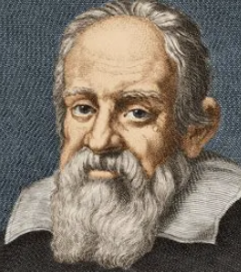
Names and attributes must be accommodated to the essence of things, and not the essence to the names, since things come first and names afterwards.
▼
Source
source
As quoted in Discoveries and Opinions of Galileo (1957) by Stillman Drake, p. 92
2 months 2 weeks ago
The RIGHT OF NATURE, which Writers commonly call Jus Naturale, is the Liberty each man hath, to use his own power, as he will himself, for the preservation of his own Nature; that is to say, of his own Life; and consequently, of doing any thing, which in his own Judgement, and Reason, he shall conceive to be the aptest means thereunto.
▼
Source
source
The First Part, Chapter 14, p. 64
2 months 2 weeks ago
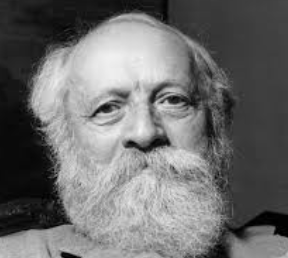
Man must be free of it all, of his bad conscience and of the bad salvation from this conscience in order to become in truth the way. Now, he no longer promises others the fulfillment of his duties, but promises himself the fulfillment of man.
▼
Source
source
p. 178

3 months 3 weeks ago
The hardness of God is kinder than the softness of men, and His compulsion is our liberation.

1 month 3 weeks ago
The "message" of any medium or technology is the change of scale or pace or pattern that it introduces into human affairs.
▼
Source
source
(p. 8)
2 months 3 weeks ago
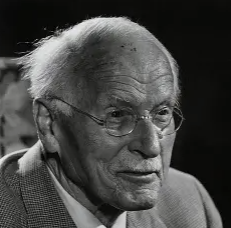
People will do anything, no matter how absurd, in order to avoid facing their own souls. They will practice Indian yoga and all its exercises, observe a strict regimen of diet, learn the literature of the whole world-all because they cannot get on with themselves and have not the slightest faith that anything useful could ever come out of their own souls. Thus the soul has gradually been turned into a Nazareth from which nothing good can come.
▼
Source
source
CW 12, par. 126 (p 99)

3 months 3 weeks ago
I saw men go up and down, In the country and the town, With this tablet on their neck,- 'Judgement and a judge we seek.' Not to monarchs they repair, Nor to learned jurist's chair; But they hurry to their peers, To their kinsfolk and their dears; Louder than with speech they pray,- 'What am I? companion, say.'
▼
Source
source
Astræa
2 months 3 weeks ago
A gifted humanity can only produce skeptics, never saints.
2 months 1 week ago
It is a conceded fact that woman is being reared as a sex commodity, and yet she is kept in absolute ignorance of the meaning and importance of sex.

2 weeks 4 days ago
It has ever been held the highest wisdom for a man not merely to submit to Necessity,-Necessity will make him submit,-but to know and believe well that the stern thing which Necessity had ordered was the wisest, the best, the thing wanted there. To cease his frantic pretension of scanning this great God's-World in his small fraction of a brain; to know that it had verily, though deep beyond his soundings, a Just Law, that the soul of it was Good;-that his part in it was to conform to the Law of the Whole, and in devout silence follow that; not questioning it, obeying it as unquestionable.
3 months 2 weeks ago
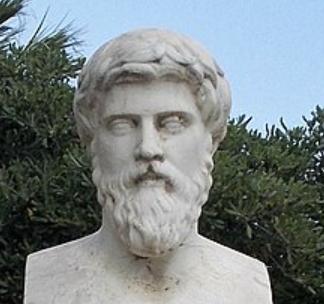
Agesilaus was very fond of his children; and it is reported that once toying with them he got astride upon a reed as upon a horse, and rode about the room; and being seen by one of his friends, he desired him not to speak of it till he had children of his own.
▼
Source
source
Of Agesilaus the Great

4 months 1 day ago
The necessaries of life occasion the great expense of the poor. They find it difficult to get food, and the greater part of their little revenue is spent in getting it. The luxuries and vanities of life occasion the principal expense of the rich, and a magnificent house embellishes and sets off to the best advantage all the other luxuries and vanities which they possess. A tax upon house-rents, therefore, would in general fall heaviest upon the rich; and in this sort of inequality there would not, perhaps, be anything very unreasonable. It is not very unreasonable that the rich should contribute to the public expense, not only in proportion to their revenue, but something more than in that proportion.
▼
Source
source
Chapter II, Part II, Article I, p. 911.

3 months 3 weeks ago
It is certain that we cannot escape anguish, for we are anguish.

8 months 3 weeks ago
No subgroup, race, nationalism, religious group, gender based groups or other identity essence based groups will ever be more important than, and should never ethically take precedence over the existence based universal group, the human group. Universal identity takes precedence over subgroup identity, and when we are forced to subgroup in reaction to injustice, that is the only ethical subgroup.
2 months 2 weeks ago
Scientific truth is characterized by its exactness and the certainty of its predictions. But these admirable qualities are contrived by science at the cost of remaining on a plane of secondary problems. leaving intact the ultimate and decisive questions. ... Yet science is but a small part of the human mind and organism. Where it stops, man does not stop.
▼
Source
source
p. 13

2 months 2 weeks ago
If you know these things, happy you are if you do them.
▼
Source
source
13:17, New World Translation of the Holy Scriptures
2 months 3 weeks ago
Life creates itself in delirium and is undone in ennui.
CivilSimian.com created by AxiomaticPanic, CivilSimian, Kalokagathia