


1 month 3 weeks ago
The name of a man is a numbing blow from which he never recovers.

2 months 3 weeks ago
Melancholy redeems this universe, and yet it is melancholy that separates us from it.

2 months 1 week ago
But the capacity to enjoy is impossible without the capacity to suffer; and the faculty of enjoyment is one with that of pain. Whosoever does not suffer does not enjoy, just as whosoever is insensible to cold is insensible to heat.
1 week 5 days ago
The capitalist system of production is an economic democracy in which every penny gives a right to vote. The consumers are the sovereign people. The capitalists, the entrepreneurs, and the farmers are the people's mandatories. If they do not obey, if they fail to produce, at the lowest possible cost, what the consumers are asking for, they lose their office. Their task is service to the consumer. Profit and loss are the instruments by means of which the consumers keep a tight rein on all business activities.
▼
Source
source
Chapter I: Profit Management, § 1: The Operation of The Market Mechanism

2 weeks 3 days ago
When the oak-tree is felled, the whole forest echoes with it; but a hundred acorns are planted silently by some unnoticed breeze.
▼
Source
source
On History.

3 months 3 weeks ago
The good is the idea, or unity of the conception of the will with the particular will. Abstract right, well-being, the subjectivity of consciousness, and the contingency of external reality, are in their independent and separate existences superseded in this unity, although in their real essence they are contained in it and preserved. This unity is realized freedom, the absolute final cause of the world. Addition.-Every stage is properly the idea, but the earlier steps contain the idea only in more abstract form. The I, as person, is already the idea, although in its most abstract guise. The good is the idea more completely determined; it is the unity of the conception of will with the particular will. It is not something abstractly right, but has a real content, whose substance constitutes both right and well-being.
▼
Source
source
Georg Wilhelm Friedrich Hegel, Philosophy of Right translated by SW Dyde Queen's University Canada 1896 p. 123
2 months 2 weeks ago
The real struggle is not between East and West, or capitalism and communism, but between education and propaganda.
▼
Source
source
As quoted in Encounter with Martin Buber (1972) by Aubrey Hodes, p. 135

1 month 3 weeks ago
No feats of heroism are needed to achieve the greatest and most important changes in the existence of humanity; neither the armament of millions of soldiers, nor the construction of new roads and machines, nor the arrangement of exhibitions, nor the organization of workmen's unions, nor revolutions, nor barricades, nor explosions, nor the perfection of aerial navigation; but a change in public opinion. And to accomplish this change no exertions of the mind are needed, nor the refutation of anything in existence, nor the invention of any extraordinary novelty; it is only needful that we should not succumb to the erroneous, already defunct, public opinion of the past, which governments have induced artificially; it is only needful that each individual should say what he really feels or thinks, or at least that he should not say what he does not think.
▼
Source
source
Ch. 17

3 months 1 day ago
To prove the Gospels by a miracle is to prove an absurdity by something contrary to nature.
▼
Source
source
As quoted in The Anchor Book of French Quotations with English Translations (1963) by Norbert Gutermam
1 month 3 weeks ago
He did not, and could not, understand the meaning of words apart from their context. Every word and action of his was the manifestation of an activity unknown to him, which was his life.
▼
Source
source
About Platon Karataev in Bk. XII, ch. 13
2 months 3 weeks ago
When one considers the sublime disposition underlying the tmly universal educatiOn (of traditional India) ... then what IS or has been called religion in Europe seems to us to be scarcely deserving of that name. And one feels compelled to advise those who Wish to witness religion to travel to India for that purpose ....
▼
Source
source
quoted in Londhe, S. (2008). A tribute to Hinduism: Thoughts and wisdom spanning continents and time about India and her culture. New Delhi: Pragun Publication.

3 months 3 weeks ago
If I could put my hand on the north star, would it be as beautiful? The sea is lovely, but when we bathe in it, the beauty forsakes all the near water. For the imagination and senses cannot be gratified at the same time.
▼
Source
source
Beauty
3 months 4 weeks ago
We are all a sort of camelions, that still take a tincture from things near us; nor is it to be wonder'd at in children, who better understand what they see than what they hear.
▼
Source
source
Sec. 67
2 months 3 weeks ago
The Creation was the first act of sabotage.
2 months 1 week ago
There is absolute truth in anarchism and it is to be seen in its attitude to the sovereignty of the state and to every form of state absolutism. ... The religious truth of anarchism consists in this, that power over man is bound up with sin and evil, that a state of perfection is a state where there is no power of man over man, that is to say, anarchy. The Kingdom of God is freedom and the absence of such power... the Kingdom of God is anarchy.
▼
Source
source
Slavery and Freedom (1939), p. 147

4 months 4 weeks ago
So far no one had had enough courage and intelligence to reveal me to my dear Germans. My problems are new, my psychological horizon frighteningly comprehensive, my language bold and clear; there may well be no books written in German which are richer in ideas and more independent than mine.
1 month 1 week ago
I think we have reached a stage now where we need to find solutions to economic injustice in the same place and in the same ways that we find solutions to sustainability. Sustainability on environmental grounds and justice in terms of everyone having a place in the production and consumption system - these are two aspects of the same issue. They have been artificially separated and have to be put back again in the Western way of thinking.
▼
Source
source
1998

3 months 3 weeks ago
The individual produces an object and, by consuming it, returns to himself, but returns as a productive and self reproducing individual. Consumption thus appears as a moment of production.
▼
Source
source
Introduction, p. 14.
3 months 3 weeks ago
Four snakes gliding up and down a hollow for no purpose that I could see - not to eat, not for love, but only gliding.
▼
Source
source
April 11, 1834
2 months 2 weeks ago
If this superstitious fear of Spirits were taken away, and with it, Prognostiques from Dreams, false Prophecies, and many other things depending thereon, by which, crafty ambitious persons abuse the simple people, men would be much more fitted then they are for civill Obedience.
▼
Source
source
The First Part, Chapter 2, p. 8

1 month 3 days ago
If there is anything unique about the human animal it is that it has the ability to grow knowledge at an accelerating rate while being chronically incapable of learning from experience. Science and technology are cumulative, whereas ethics and politics deal with recurring dilemmas. Whatever they are called, torture and slavery are universal evils; but these evils cannot be consigned to the past like redundant theories in science. They return under different names: torture as enhanced interrogation techniques, slavery as human trafficking. Any reduction in universal evils is an advance in civilization. But, unlike scientific knowledge, the restraints of civilized life cannot be stored on a computer disc. They are habits of behaviour, which once broken are hard to mend. Civilization is natural for humans, but so is barbarism.
▼
Source
source
An Old Chaos: Humanism and Flying Saucers (p. 75)
3 months 3 weeks ago
I trust a good deal to common fame, as we all must. If a man has good corn, or wood, or boards, or pigs, to sell, or can make better chairs or knives, crucibles or church organs, than anybody else, you will find a broad hard-beaten road to his house, though it be in the woods.
▼
Source
source
February 1855

1 week 4 days ago
No man can have a peaceful life who thinks too much about lengthening it.
▼
Source
source
Line 4.
2 months 3 weeks ago
So it is that after each night, facing a new day, the impossible necessity of dealing with it fills us with dread; exiled in light as if the world had just started, inventing the sun, we flee from tears-just one of which would be enough to wash us out of time.
1 month 2 weeks ago
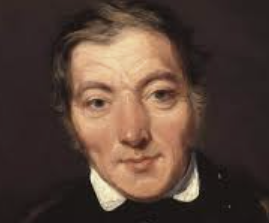
Believe me, my friends, you are yet very deficient with regard to the best modes of training your children, or of arranging your domestic concerns.

4 months 3 days ago
You're either excluding the right people or including the wrong people.
▼
Source
source
ComfortDragon
1 month 3 weeks ago
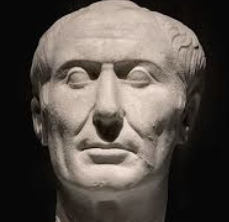
Either be silent or say something better than silence.
▼
Source
source
Maxim 960

3 weeks ago
We aspire not to equality but to domination. Countries inhabited by foreign races must become again countries of serfs, farm laborers, and factory workers. The goal is not to suppress inequities, but, rather, to amplify them and to make of them a matter of course.
▼
Source
source
as translated by Asselin Charles, in "Colonial Discourse Since Christopher Columbus," Journal of Black Studies, Vol. 26, No. 2 (November 1995), p. 147

4 months 1 week ago
All those of you who rejoice in peace, now it is time to judge the truth....Undoubtedly in days gone by there were holy men as Scripture tells,For God stated that he left behind seven thousand men in safety,And there are many priests and kings who are righteous under the law,There you find so many of the prophets, and many of the people too.Tell me which of the righteous of that time claimed an altar for himself?That wicked nation perpetrated a very large number of crimes,They sacrificed to idols and may prophets were put to death,Yet not a single one of the righteous withdrew from unity.The righteous endured the unrighteous while waiting for the winnower:They all mingled in one temple but were not mingled in their hearts;They said such things against them yet they had a single altar.
▼
Source
source
Early Christian Latin Poets, 2000, Carolinne White, Routledge, London, ISBN 0415187826 ISBN 9780415187824 p. 55.
2 months 3 weeks ago
I long to be free - desperately free. Free as the stillborn are free.
2 weeks 4 days ago
At forty, I had attained the unperturbed mind.
▼
Source
source
"Discipline and Character", no. 41
3 weeks ago
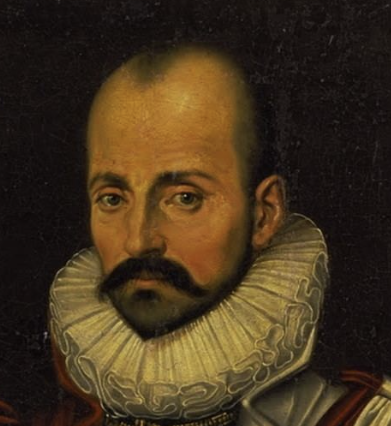
The mob has always behaved in this way-eagerly open to bribes that cannot be honorably accepted, and dissolutely callous to degradation and insult that cannot be honorably endured.
▼
Source
source
Part 2

3 months 3 weeks ago
The greatest compliment that was ever paid me was when one asked me what I thought, and attended to my answer. I am surprised, as well as delighted, when this happens, it is such a rare use he would make of me, as if he were acquainted with the tool.
▼
Source
source
p. 484

3 months 3 weeks ago
The doctrine that there is as much science in a subject as... mathematics in it, or as much... measurement or 'precision' in it, rests upon... misunderstanding.
3 months 3 weeks ago
The goal to be reached is the mind's insight into what knowing is. Impatience asks for the impossible, wants to reach the goal without the means of getting there. The length of the journey has to be borne with, for every moment is necessary, ... because by nothing less could that all-pervading mind ever manage to become conscious of what itself is - for that reason, the individual mind, in the nature of the case, cannot expect by less toil to grasp what its own substance contains.
▼
Source
source
Preface (J. B. Baillie translation), § 29
4 months 1 week ago
Inasmuch as love grows in you, in so much beauty grows; for love is itself the beauty of the soul.
▼
Source
source
as translated by H. Browne and J. H. Meyers, The Nicene and Post Nicene Fathers (1995)

2 weeks 3 days ago
Only when they must choose between competing theories do scientists behave like philosophers.
▼
Source
source
Logic of Discovery or Psychology of Research?, Criticism and the growth of knowledge edited by Imre Lakatos and Alan Musgrave

3 months 3 weeks ago
To his dog, every man is Napoleon; hence the constant popularity of dogs.
▼
Source
source
Reader's Digest, 1934
2 weeks 5 days ago
It would be silly, of course, to be either 'for' or 'against' modernity tout court, not only because it is pointless to try to stop the development of technology, science, and economic rationality, but because both modernity and antimodernity may be expressed in barbarous and antihuman terms.
▼
Source
source
"Modernity on Endless Trial"
2 weeks 3 days ago
We are to remember what an umpire Nature is; what a greatness, composure of depth and tolerance there is in her. You take wheat to cast into the Earth's bosom; your wheat may be mixed with chaff, chopped straw, barn-sweepings, dust and all imaginable rubbish; no matter: you cast it into the kind just Earth; she grows the wheat, - the whole rubbish she silently absorbs, shrouds it in, says nothing of the rubbish. The yellow wheat is growing there; the good Earth is silent about all the rest, - has silently turned all the rest to some benefit too, and makes no complaint about it! So everywhere in Nature! She is true and not a lie; and yet so great, and just, and motherly in her truth. She requires of a thing only that it be genuine of heart; she will protect it if so; will not, if not so. There is a soul of truth in all the things she ever gave harbor to. Alas, is not this the history of all highest Truth that comes or ever came into the world?
2 months 3 weeks ago
Great and enduring civilizations like those of the Hindus and the Chinese were built upon this foundation and developed from it a discipline of self-knowledge which they brought to a high pitch of refinement both in philosophy and practice.
▼
Source
source
Carl Jung, Modern Man in Search of a Soul. quoted in Hindu Culture, K. Guru Dutt, and quoted in Gewali, Salil (2013). Great Minds on India. New Delhi: Penguin Random House.

4 months 3 weeks ago
Doing what is for the good of the people, this must be the truest criterion of right government, in accordance with which the wise and good man will govern the affairs of his subjects. Just as the captain of a ship keeps watch for what is at any moment for the good of the vessel and the sailors, not by writing rules, but by making his science his law, and thus preserves his fellow voyagers, so may not a right government be established in the same way by men who could rule by this principle, making science more powerful than the laws? And whatever the wise rulers do, they can commit no error, so long as they maintain one great principle and by always dispensing absolute justice to them with wisdom and science are able to preserve the citizens and make them better than they were, so far as that is possible.

3 months 3 weeks ago
The pursuit of philosophy is founded on the belief that knowledge is good, even if what is known is painful. A man imbued with the philosophic spirit, whether a professional philosopher or not, will wish his beliefs to be as true as he can make them, and will, in equal measure, love to know and hate to be in error. This principle has a wider scope than may be apparent at first sight.

3 months 3 weeks ago
Ha! to forget. How childish! I feel you in my bones. Your silence screams in my ears. You may nail your mouth shut, you may cut out your tongue, can you keep yourself from existing? Will you stop your thoughts.
▼
Source
source
Inès reiterating to Garcin that they cannot ignore one another, Act 1, sc. 5

2 months 3 weeks ago
I think that the principal and most basic spiritual need of the Russian People is the need for suffering, incessant and unslakeable suffering, everywhere and in everything. I think the Russian People have been infused with this need to suffer from time immemorial. A current of martyrdom runs through their entire history, and it flows not only from external misfortunes and disasters but springs from the very heart of the People themselves. There is always an element of suffering even in the happiness of the Russian People, and without it their happiness is incomplete.
▼
Source
source
A Writer's Diary, Vol. 1: 1873-1876 (1994), pp. 161-162
3 months 3 weeks ago
We all remember how many religious wars were fought for a religion of love and gentleness; how many bodies were burned alive with the genuinely kind intention of saving souls from the eternal fire of hell. Only if we give up our authoritarian attitude in the realm of opinion, only if we establish the attitude of give and take, of readiness to learn from other people, can we hope to control acts of violence inspired by piety and duty.
2 months 2 weeks ago
I often asked myself the following question. There is no doubt that at all times for many men one of the greatest tortures of their lives has been the contact, the collision with the folly of their neighbours. And yet how is it that there has never been attempted - I think this is so - a study on this matter, an Essay on Folly? For the pages of Erasmus do not treat of this aspect of the matter.
▼
Source
source
Chap. VIII: The Masses Intervene In Everything, And Why Their Intervention Is Solely By Violence

4 months 2 weeks ago
Force overcome by force.
▼
Source
source
Pro Milone, Chapter XI, section 30 Variant translation: Violence conquered by violence.
CivilSimian.com created by AxiomaticPanic, CivilSimian, Kalokagathia