


4 months 1 week ago
So clearly will truths kindle light for truths.
▼
Source
source
Book I, line 1117 (tr. W. H. D. Rouse and M. F. Smith)

2 months 3 weeks ago
Except for music, everything is a lie, even solitude, even ecstasy. Music, in fact, is the one and the other, only better.

2 weeks 3 days ago
His Religion is not an easy one: with rigorous fasts, lavations, strict complex formulas, prayers five times a day, and abstinence from wine, it did not "succeed by being an easy religion." As if indeed any religion, or cause holding of religion, could succeed by that! It is a calumny on men to say that they are roused to heroic action by ease, hope of pleasure, recompense, - sugar-plums of any kind, in this world or the next! In the meanest mortal there lies something nobler.
3 months 4 weeks ago
Where knowledge is a duty, ignorance is a crime.
▼
Source
source
Public Good, Philadelphia: John Dunlap, 1780

3 months 3 weeks ago
Habit is thus the enormous fly-wheel of society, its most precious conservative agent. It alone is what keeps us all within the bounds of ordinance, and saves the children of fortune from the envious uprisings of the poor.
▼
Source
source
Ch. 4

1 month 3 weeks ago
The second requirement of a virus-friendly environment - that it should obey a program of coded instructions - is again only quantitatively less true for brains than for cells or computers. We sometimes obey orders from one another, but also we sometimes don't. Nevertheless, it is a telling fact that, the world over, the vast majority of children follow the religion of their parents rather than any of the other available religions. Instructions to genuflect, to bow towards Mecca, to nod one's head rhythmically towards the wall, to shake like a maniac, to "speak in tongues" - the list of such arbitrary and pointless motor patterns offered by religion alone is extensive - are obeyed, if not slavishly, at least with some reasonably high statistical probability.
1 month 2 weeks ago
Without the background of a remembered faith modernism loses its conviction: it becomes routinised. For a long time now it has been assumed that there can be no authentic creation in the sphere of high art which is not is some way a 'challenge' to the ordinary public. Art must give offence, stepping out of the future fully armed against the bourgeois taste for kitsch and cliché. But the result of this is that offence becomes a cliché.
▼
Source
source
Avant-garde and Kitsch (p. 86)

3 months 3 weeks ago
[My father] impressed upon me from the first, that the manner in which the world came into existence was a subject on which nothing was known: that the question, "Who made me?" cannot be answered, because we have no experience or authentic information from which to answer it; and that any answer only throws the difficulty a step further back, since the question immediately presents itself, "Who made God?"
▼
Source
source
(pp. 42-43)

2 months 1 week ago
And here, facing this supreme religious sacrifice, we reach the summit of the tragedy, the very heart of it - the sacrifice of our own individual consciousness upon the alter of the perfected Human Consciousness, of the Divine Consciousness. But is there really a tragedy? ...if we could succeed in understanding and feeling that we were going to enrich Christ, should we hesitate for a moment in surrendering ourselves to Him? Would the stream that flows into the sea, and feels in the freshness of its waters the bitterness of the salt of the ocean, wish to flow back to its source? would it wish to return to the cloud which drew it life from the sea? is it not joy to feel itself absorbed?

4 months 5 days ago
As we divided natural philosophy in general into the inquiry of causes, and productions of effects: so that part which concerneth the inquiry of causes we do subdivide according to the received and sound division of causes. The one part, which is physic, inquireth and handleth the material and efficient causes; and the other, which is metaphysic, handleth the formal and final causes.
▼
Source
source
Book VII, 3

2 months 6 days ago
It is in the gift for employing all the vicissitudes of life to one's own advantage and to that of one's craft that a large part of genius consists.
▼
Source
source
K 48

3 months 3 weeks ago
The heroic cannot be the common, nor can the common be heroic.
▼
Source
source
Quotation and Originality

2 months 3 weeks ago
So to be patriots as not to forget we are gentlemen.

2 months 3 weeks ago
I am an orphan, alone; nevertheless I am found everywhere. I am one, but opposed to myself. I am youth and old man at one and the same time. I have known neither father nor mother, because I have had to be fetched out of the deep like a fish, or fell like a white stone from heaven. In woods and mountains I roam, but I am hidden in the innermost soul of man. I am mortal for everyone, yet I am not touched by the cycle of aeons.
▼
Source
source
Combining alchemical assertions

2 months 3 weeks ago
Inventors and geniuses have almost always been looked on as no better than fools at the beginning of their career, and very frequently at the end of it also.
▼
Source
source
Part 3, Chapter 1

3 months 3 weeks ago
Christianity does not involve the belief that all things were made for man. It does involve the belief that God loves man and for his sake became man and died.
▼
Source
source
Ch. 7: "A Chapter of Red Herrings"
3 months 3 weeks ago
Every man is a divinity in disguise, a god playing the fool. It seems as if heaven had sent its insane angels into our world as to an asylum. And here they will break out into their native music, and utter at intervals the words they have heard in heaven; then the mad fit returns, and they mope and wallow like dogs!
▼
Source
source
p. 165
2 months 1 week ago
Man is born as a freak of nature, being within nature and yet transcending it. He has to find principles of action and decision-making which replace the principles of instincts. He has to have a frame of orientation which permits him to organize a consistent picture of the world as a condition for consistent actions. He has to fight not only against the dangers of dying, starving, and being hurt, but also against another danger which is specifically human: that of becoming insane. In other words, he has to protect himself not only against the danger of losing his life but also against the danger of losing his mind.
▼
Source
source
The Revolution of Hope: Toward a Humanized Technology (1968), p. 61
3 months 3 weeks ago
We do not count a man's years until he has nothing else to count.
▼
Source
source
Old Age

4 months 2 weeks ago
Gentleness, as opposed to an irascible temper, greatly contributes to the tranquility and happiness of life, by preserving the mind from perturbation, and arming it against the assaults of calumny and malice.

8 months 1 week ago
We cannot stand by while the social contract is broken by those who chose conflict over equality. Those that want equal treatment for themselves have to treat others equally. They cannot lead with exclusion, then turn around and demand equal treatment. It is a double standard. If they are going to exclude first, then justice demands that we, the group that stands with universality, follow our duty to react and exclude those that exclude.
3 months 3 weeks ago
There is but one good; that is God. Everything else is good when it looks to Him and bad when it turns from Him.
▼
Source
source
Ch. 11
4 months 3 weeks ago
The greatest and noblest conceptions have no image wrought plainly for human vision, which he who wishes to satisfy the mind of the inquirer can apply to some one of his senses and by mere exhibition satisfy the mind. We must therefore endeavor by practice to acquire the power of giving and understanding a rational definition of each one of them; for immaterial things, which are the noblest and greatest, can be exhibited by reason only, and it is for their sake that all we are saying is said. But it is always easier to practice in small matters than in greater ones.

3 months 3 weeks ago
The Beatific Vision, Sat Chit Ananda, Being-Awareness-Bliss-for the first time I understood, not on the verbal level, not by inchoate hints or at a distance, but precisely and completely what those prodigious syllables referred to. And then I remembered a passage I had read in one of Suzuki's essays. "What is the Dharma-Body of the Buddha?" ('"the Dharma-Body of the Buddha" is another way of saying Mind, Suchness, the Void, the Godhead.) The question is asked in a Zen monastery by an earnest and bewildered novice. And with the prompt irrelevance of one of the Marx Brothers, the Master answers, "The hedge at the bottom of the garden." "And the man who realizes this truth," the novice dubiously inquires, "what, may I ask, is he?" Groucho gives him a whack over the shoulders with his staff and answers, "A golden-haired lion."
2 months 3 weeks ago
Flattery corrupts both the receiver and the giver.
3 weeks 2 days ago
Learning proceeds until death and only then does it stop. ... Its purpose cannot be given up for even a moment. To pursue it is to be human, to give it up to be a beast.
▼
Source
source
Readings in Classical Chinese Philosophy (2001), p. 258
2 months 2 weeks ago
The animating purpose of James was, on the other hand, primarily moral and artistic. It is expressed in his phrase, "block universe," employed as a term of adverse criticism. Mechanism and idealism were abhorrent to him because they both hold to a closed universe in which there is no room for novelty and adventure. Both sacrifice individuality and all the values, moral and aesthetic, which hang upon individuality; for according to absolute idealism, as to mechanistic materialism, the individual is simply a part determined by the whole of which he is a part. Only a philosophy of pluralism, of genuine indetermination, and of change which is real and intrinsic gives significance to individuality. It alone justifies struggle in creative activity and gives opportunity for the emergence of the genuinely new.
2 months 3 weeks ago
To have committed every crime but that of being a father.
3 months 3 weeks ago
All the great speakers were bad speakers at first.
▼
Source
source
Power
1 month 2 weeks ago
What a singular destiny has been that of this remarkable man! To be regarded in his own age as a classic, and in ours as a companion! To receive from his contemporaries that full homage which men of genius have in general received only from posterity! To be more intimately known to posterity than other men are known to their contemporaries!
▼
Source
source
'Samuel Johnson', The Edinburgh Review (September 1831), quoted in T. B. Macaulay, Critical and Historical Essays Contributed to The Edinburgh Review, Vol. I (1843), p. 407
3 months 3 weeks ago
We are, like Nebuchadnezzar, dethroned, bereft of reason, and eating grass like an ox.
▼
Source
source
Prospects

2 months 2 weeks ago
Verily I say unto you, All sins shall be forgiven unto the sons of men, and blasphemies wherewith soever they shall blaspheme: But he that shall blaspheme against the Holy Ghost hath never forgiveness, but is in danger of eternal damnation.
▼
Source
source
Mark 3:28-29 (KJV)


2 months 1 week ago
With all our boasted reforms, our great social changes, and our far-reaching discoveries, human beings continue to be sent to the worst of hells, wherein they are outraged, degraded, and tortured, that society may be "protected" from the phantoms of its own making.

2 months 1 week ago
Philosophy finds religion, and modifies it; and conversely religion is among the data of experience which philosophy must weave into its own scheme. Religion is an ultimate craving to infuse into the insistent particularity of emotion that non-temporal generality which primarily belongs to conceptual thought alone. In the higher organisms the differences of tempo between the mere emotions and the conceptual experiences produce a life-tedium, unless this supreme fusion has been effected. The two sides of the organism require a reconciliation in which emotional experiences illustrate a conceptual justification, and conceptual experiences find an emotional illustration.
▼
Source
source
Pt. I, ch. 1, sec. 6.

1 month 3 weeks ago
The sculptural qualities of the image dim down the purely personal identity.
▼
Source
source
(p. 369)

3 months 3 weeks ago
There are uncertain truths - even true statements that we may take to be false - but there are no uncertain certainties. Since we can never know anything for sure, it is simply not worth searching for certainty; but it is well worth searching for truth; and we do this chiefly by searching for mistakes, so that we have to correct them.
2 months 3 weeks ago
As the animus is partial to argument, he can best be seen at work in disputes where both parties know they are right. Men can argue in a very womanish way, too, when they are anima-possessed and have thus been transformed into the animus of their own anima.
▼
Source
source
Aion (1951). CW 9, Part II: P.29

3 months 3 weeks ago
Knowledge is in the end based on acknowledgement.

4 months 3 weeks ago
There is no one at the Communion table who retains against you even the least of your sins, no one, unless you yourself do it. So cast them away from yourself, and the recollection of them, lest in it your retain them; and cast the recollection of your having cast your sins away, lest in it you retain them.

1 month 3 weeks ago
Books are good enough in their own way, but they are a mighty bloodless substitute for life.
▼
Source
source
An Apology for Idlers.

2 months 3 weeks ago
True anarchy is the generative element of religion. Out of the annihilation of all existing institutions she raises her glorious head, as the new foundress of the world.
▼
Source
source
English translation as quoted in The Dublin Review Vol. III (July-October 1837)
8 months 2 days ago
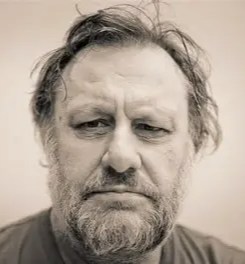
The general reference of the philosophical discussion is usually the triangle world: world-language-subject, the relation of the subject to the world of objects, mediated through language.

3 months 3 weeks ago
The people who are regarded as moral luminaries are those who forego ordinary pleasures themselves and find compensation in interfering with the pleasures of others.
▼
Source
source
Ch. 8: Eastern and Western Ideals of Happiness

3 months 4 weeks ago
If at times I have thought myself unfortunate, it is because of a confusion, an error. I have mistaken myself for someone else... Who am I really? I am the author of The World as Will and Representation, I am the one who has given an answer to the mystery of Being that will occupy the thinkers of future centuries. That is what I am, and who can dispute it in the years of life that still remain for me?
▼
Source
source
From The Total Library by Jorge Luis Borges, 1999

3 months 4 weeks ago
It is dangerous to be right in matters where established men are wrong.
▼
Source
source
Le Siècle de Louis XIV (1752) Fontenelle Note: The most frequently attributed variant of this quote is: It is dangerous to be right when the government is wrong.
3 months 3 weeks ago
Mr. Galton ...in his English Men of Science, has given ...cases showing individual variations in the type of memory... Some have it verbal. Others... for facts and figures, others for form. Most say... [it] must first be rationally conceived and assimilated.
▼
Source
source
Ch. 16
1 month 3 weeks ago
The criminal, like the artist, is a social explorer.
▼
Source
source
quoted in "Marshall McLuhan, Author, Dies; Declared 'Medium Is the Message'" by Alden Whitman, The New York Times, January 1, 1981
2 months 3 weeks ago
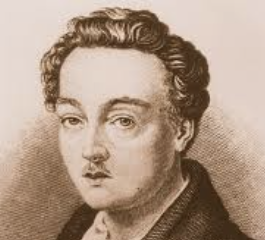
Peace to the shacks! War on the palaces!
3 months 2 weeks ago
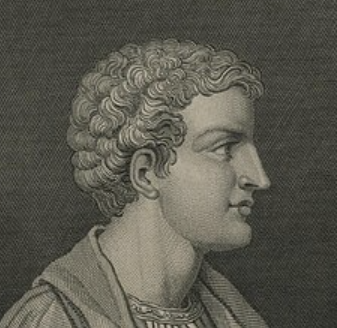
Let's put a limit to the scramble for money. ... Having got what you wanted, you ought to begin to bring that struggle to an end.
▼
Source
source
Book I, satire i, lines 92-94, as translated by N. Rudd
CivilSimian.com created by AxiomaticPanic, CivilSimian, Kalokagathia