


4 months 3 weeks ago
It seems to be almost an invariable rule that as real power declines, the symbols of power multiply and intensify in compensation.
2 months 1 week ago
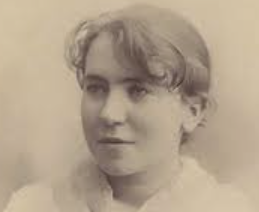
Parents will strip themselves of everything, will sacrifice everything for the physical well-being of their child, will wake nights and stand in fear and agony before some physical ailment of their beloved one; but will remain cold and indifferent, without the slightest understanding before the soul cravings and the yearnings of their child, neither hearing nor wishing to hear the loud knocking of the young spirit that demands recognition. On the contrary, they will stifle the beautiful voice of spring, of a new life of beauty and splendor of love; they will put the long lean finger of authority upon the tender throat and not allow vent to the silvery song of the individual growth, of the beauty of character, of the strength of love and human relation, which alone make life worth living.
4 months 4 days ago
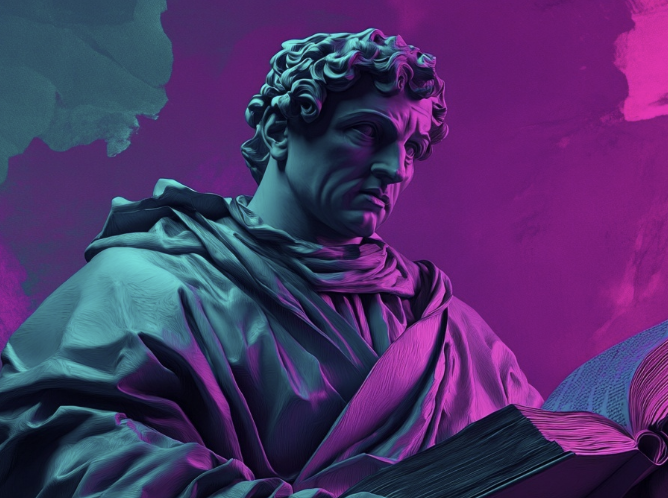
If women get tired and die of bearing, there is no harm in that; let them die as long as they bear; they are made for that.
▼
Source
source
-- Essays, quoted in Luther On "Woman"
2 months 3 weeks ago
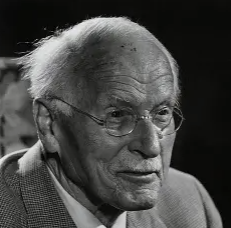
Seldom, or perhaps never, does a marriage develop into an individual relationship smoothly and without crises; there is no coming to consciousness without pain.
▼
Source
source
p. 193
2 months 3 weeks ago
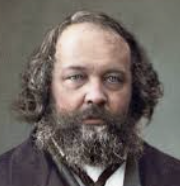
The people should never be deceived, under any pretext or for any purpose. It would not only be criminal but detrimental to the revolutionary cause, for deception of any kind, by its very nature, is shortsighted, petty, narrow, always sewn with rotten threads, so that it inevitably tears and is exposed.
▼
Source
source
"Appendix A"
1 week ago
There is nothing wrong with meditating just to meditate, in the same way that you listen to music just for the music. If you go to concerts to "get culture" or to improve your mind, you will sit there as deaf as a doorpost.
▼
Source
source
p. 90
2 months 3 weeks ago
Every political good carried to the extreme must be productive of evil.
▼
Source
source
The French Revolution, Bk. V, ch. 4
2 months 3 weeks ago
Big industry, freed from the pressure of private property, will undergo such an expansion that what we now see will seem as petty in comparison as manufacture seems when put beside the big industry of our own day. This development of industry will make available to society a sufficient mass of products to satisfy the needs of everyone. The same will be true of agriculture, which also suffers from the pressure of private property and is held back by the division of privately owned land into small parcels. Here, existing improvements and scientific procedures will be put into practice, with a resulting leap forward which will assure to society all the products it needs. In this way, such an abundance of goods will be able to satisfy the needs of all its members.
1 week ago
Faith which refuses to face indisputable facts is but little faith. Truth is always gain, however hard it is to accommodate ourselves to it. To linger in any kind of untruth proves to be a departure from the straight way of faith.
▼
Source
source
p. 290
2 months 3 weeks ago
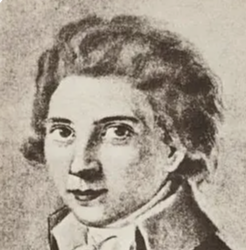
Irony is the form of paradox. Paradox is what is good and great at the same time.
▼
Source
source
Aphorism 48, as translated in Dialogue on Poetry and Literary Aphorisms (1968), p. 151
1 month 2 weeks ago
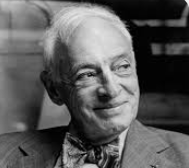
No realistic, sane person goes around Chicago without protection.
▼
Source
source
Humboldt's Gift (1975), p. 452
2 months 2 weeks ago
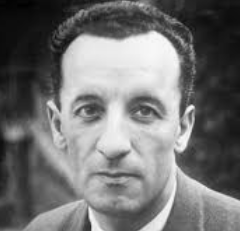
Theology recognizes the contingency of human existence only to derive it from a necessary being, that is, to remove it. Theology makes use of philosophical wonder only for the purpose of motivating an affirmation which ends it. Philosophy, on the other hand, arouses us to what is problematic in our own existence and in that of the world, to such a point that we shall never be cured of searching for a solution.
▼
Source
source
p. 44
1 month 3 weeks ago
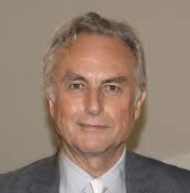
It is fashionable to wax apocalyptic about the threat to humanity posed by the AIDS virus, "mad cow" disease, and many others, but I think a case can be made that faith is one of the world's great evils, comparable to the smallpox virus but harder to eradicate.
▼
Source
source
Is Science a Religion?, The Humanist

2 months 1 week ago
A Pharisee is someone who is virtuous out of obedience to the Great Beast.
▼
Source
source
p. 125
3 months 4 weeks ago
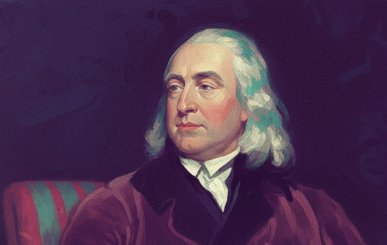
Pleasure is in itself a good; nay, even setting aside immunity from pain, the only good: pain is in itself an evil; and, indeed, without exception, the only evil; or else the words good and evil have no meaning. And this is alike true of every sort of pain, and of every sort of pleasure.
▼
Source
source
Ch. 10: Of Motives

3 months 3 weeks ago
I say a murder is abstract. You pull the trigger and after that you do not understand anything that happens.
▼
Source
source
Act 5, sc. 2
3 months 3 weeks ago
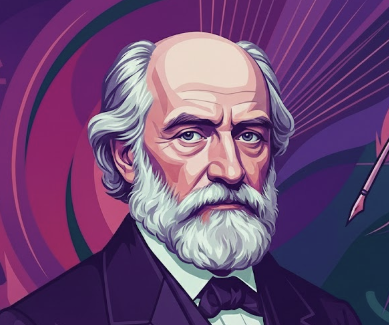
In youth it is the outward aspect of things that most engages us; while in age, thought or reflection is the predominating quality of the mind. Hence, youth is the time for poetry, and age is more inclined to philosophy. In practical affairs it is the same: a man shapes his resolutions in youth more by the impression that the outward world makes upon him; whereas, when he is old, it is thought that determines his actions.

3 months 3 weeks ago
I think so badly of philosophy that I don't like to talk about it. ... I do not want to say anything bad about my dear colleagues, but the profession of teacher of philosophy is a ridiculous one. We don't need a thousand of trained, and badly trained, philosophers - it is very silly. Actually most of them have nothing to say.
▼
Source
source
As quoted in "At 90, and Still Dynamic : Revisiting Sir Karl Popper and Attending His Birthday Party" by Eugene Yue-Ching Ho, in Intellectus 23
2 months 5 days ago
Schizophrenia is like love: there is no specifically schizophrenic phenomenon or entity; schizophrenia is the universe of productive and reproductive desiring machines, universal primary production as "the essential reality of man and nature".
▼
Source
source
The Desiring Machine
2 months 2 weeks ago
To regiment artists, to make them servants of some particular cause does violence to the very springs of artistic creation. But it does more than that. It betrays the very cause of a better future it would serve, for in its subjugation of the individuality of the artist it annihilates the source of that which is genuinely new. Where the regimentation is successful, it would cause the future to be but a rearrangement of the past.

3 months 4 weeks ago
I shall need only myself to be happy.
▼
Source
source
As quoted in The prophetic voice, 1758-1778 by Lester G. Crocke, p. 148.

3 months 3 weeks ago
None shall rule but the humble, And none but Toil shall have.
▼
Source
source
Boston Hymn
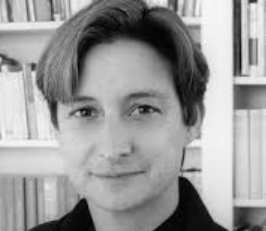
1 month 4 weeks ago
To say that a life is grievable is to claim that a life, even before it is lost, is, or will be, worthy of being grieved on the occasion of its loss; the life has value in relation to mortality. One treats a person differently if one brings the sense of the grievability of the other to one's ethical bearing toward the other. If an other's loss would register as a loss, would be marked and mourned, and if the prospect of loss is feared, and precautions are thus taken to safeguard that life from harm or destruction, then our very ability to value and safeguard a life depends upon an ongoing sense of its grievability-the conjectured future of a life as an indefinite potential that would be mourned were it cut short or lost.
▼
Source
source
p. 75
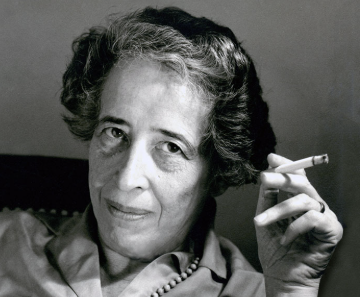
3 months 3 weeks ago
The need of reason is not inspired by the quest for truth but by the quest for meaning. And truth and meaning are not the same. The basic fallacy, taking precedence over all specific metaphysical fallacies, is to interpret meaning on the model of truth.
▼
Source
source
p. 15
1 week ago
The highest activities are always essentially lonely and private, and these men had a robust sense of their independence and the ultimate self-sufficiency of the mind. In this they were just like Socrates. The only change they operated was to bring philosophy out of the closet into the open, instead of seeking protection behind a little wall like men in a storm. Of course, in so doing they made philosophy, on the one hand, more vulnerable to the public if the hopes of controlling the public are not fulfilled, and, on the other, put at risk that inner intransigence which is the necessary condition of the quest for truth. Not only the rewards but the new responsibilities might prove irresistible temptations to compromise.
▼
Source
source
"Commerce and Culture," p. 290.
2 months 2 weeks ago
Equally there is no rhythm when variations are not placed. There is a wealth of suggestions in the phrase "takes place". The change not only comes but it belongs; it had its definite place in a larger whole.
▼
Source
source
p. 160
1 month 2 weeks ago
Schopenhauer argues that the empirical world exists only as a representation: 'every object, whatever its origin, is, as object, already conditioned by the subject, and thus is essentially only the subject's representation.' A representation is a subjective state that has been ordered according to space, time and causality - the primary forms of sensibility and understanding. So long as we turn our thoughts towards the natural world, and search for the thing-in-itself behind the representation is futile. Every argument and every experience leads only to the same end: the system of representations, standing like a veil between the subject and the thing-in-itself. No scientific investigation can penetrate the veil; and yet it is only a veil, Schopenhauer affirms, a tissue of illusions which we can, if we choose, penetrate by other means. The way to penetrate the veil was stumbled upon by Kant.
▼
Source
source
A Short History of Modern Philosophy (1981; 2nd ed. 1995), p. 177
4 months 3 weeks ago
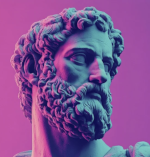
What is the essence of life? To serve others and to do good. Often given as a saying of Aristotle with no reference.
3 months 3 weeks ago
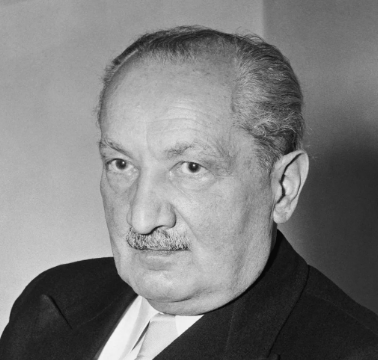
We think of beauty as being most worthy of reverence. But what is most worthy of reverence lights up only where the magnificent strength to revere is alive. To revere is not a thing for the petty and lowly, the incapacitated and underdeveloped. It is a matter of tremendous passion; only what flows from such passion is in the grand style.
▼
Source
source
p. 125
1 month 4 weeks ago
This is how one puts an end to totality. If all information can be found in each of its parts, the whole loses its meaning. It is also the end of the body, of this singularity called body, whose secret is precisely that it cannot be segmented into additional cells, that it is an indivisible configuration, to which its sexuation is witness (paradox: cloning will fabricate sexed beings in perpetuity, since they are similar to their model, whereas thereby sex becomes useless-but precisely sex is not a function, it is what makes a body a body, it is what exceeds all the parts, all the diverse functions of this body). Sex (or death: in this sense it is the same thing) is what exceeds all information that can be collected on a body. Well, where is all this information collected? In the genetic formula. This is why it must necessarily want to forge a path of autonomous reproduction, independent of sexuality and of death.
▼
Source
source
"Clone Story," p. 97
2 months 1 week ago
You cannot think without abstractions; accordingly, it is of the utmost importance to be vigilant in critically revising your modes of abstraction. It is here that philosophy finds its niche as essential to the healthy progress of society. It is the critic of abstractions. A civilisation which cannot burst through its current abstractions is doomed to sterility.
▼
Source
source
Ch. 4: "The Eighteenth Century", pp. 82-83
2 weeks 6 days ago
It always seems to me extreme rashness on the part of some when they want to make human abilities the measure of what nature can do. On the contrary, there is not a single effect in nature, even the least that exists, such that the most ingenious theorists can arrive at a complete understanding of it. This vain presumption of understanding everything can have no other basis than never understanding anything. For anyone who had experienced just once the perfect understanding of one single thing, and had truly tasted how knowledge is accomplished, would recognize that of the infinity of other truths he understands nothing.
▼
Source
source
Day One

3 months 2 weeks ago
Now his principal doctrines were these. That atoms and the vacuum were the beginning of the universe; and that everything else existed only in opinion. (trans. Yonge 1853) The first principles of the universe are atoms and empty space; everything else is merely thought to exist.
▼
Source
source
(trans. by Robert Drew Hicks 1925) Often paraphrased as "Nothing exists except atoms and empty space; everything else is opinion."

3 months 3 days ago
It is manifest that every soul has a certain continuity with the soul of the Universe, so that it must be understood to exist and to be included not only there where it liveth and feeleth, but it is also by its essence and substance diffused throughout immensity. The power of each soul is itself somehow present afar in the Universe. It is not mixed, yet is there in some presence.
4 months 3 weeks ago
Rhetoric is the counterpart of Dialectic. Both alike are concerned with such things as come, more or less, within the general ken of all men and belong to no definite science. Accordingly, all men make use, more or less, of both; for to a certain extent all men attempt to discuss statements and to maintain them, to defend themselves and to attack others.
2 months 2 weeks ago
The pint would call the quart a dualist, if you tried to pour the quart into him.
▼
Source
source
p. 60
2 months 3 weeks ago
The unconscious is not just evil by nature, it is also the source of the highest good: not only dark but also light, not only bestial, semihuman, and demonic but superhuman, spiritual, and, in the classical sense of the word, "divine."
▼
Source
source
The Practice of Psychotherapy, p. 364
4 months 3 weeks ago
In that daily effort in which intelligence and passion mingle and delight each other, the absurd man discovers a discipline that will make up the greatest of his strengths. The required diligence and doggedness and lucidity thus resemble the conqueror's attitude. To create is likewise to give a shape to one's fate. For all these characters, their work defines them at least as much as it is defined by them. The actor taught us this: There is no frontier between being and appearing.

4 months ago
The administration of the great system of the universe, however, the care of the universal happiness of all rational and sensible beings, is the business of God and not of man. To man is allotted a much humbler department, but one much more suitable to the weakness of his powers, and to the narrowness of his comprehension; the care of his own happiness, of that of his family, his friends, his country: that he is occupied in contemplating the more sublime, can never be an excuse for his neglecting the more humble department.
▼
Source
source
Section II, Chap. III.

2 months 1 week ago
It is the fallacy of all intellectuals to believe that intellect can grasp life. It cannot, because it works in terms of symbols and language. There is another factor involved: consciousness. If the flame of consciousness is low, a symbol has no power to evoke reality, and intellect is helpless.
▼
Source
source
p. 112
2 months 1 week ago
Among most Christians the Old Testament is little read in comparison to the New Testament. Furthermore, much of what is read is often distorted by prejudice. Frequently the Old Testament is believed to express exclusively the principles of justice and revenge, in contrast to the New Testament, which represents those of love and mercy; even the sentence, "Love your neighbor as yourself," is thought by many to derive from the New, not the Old Testament. Or the Old Testament is believed to have been written exclusively in the spirit of narrow nationalism and to contain nothing of supranational universalism so characteristic of the New Testament.
▼
Source
source
You Shall Be as Gods: A Radical Interpretation of the Old Testament and Its Tradition (1966) "Introduction"
2 weeks 4 days ago
As for one-party rule, it was questioned neither by the Left Opposition nor by the Right [wing of the Communist party]. All were prisoners of their own doctrine and their own past: all had worked with a will to create the apparatus of violence that crushed them. Bukharin's hopeless attempt to form a league with Kamenev was no more than a pitiful epilogue to his career. In November 1929 the deviationists performed a public act of penance, but even this did not save them. Stalin's victory was complete; the collapse of the Bukharinite opposition meant the triumph of autocracy in the party and in the country. In December 1929 Stalin's fiftieth birthday was celebrated as a major historical event, and from this point we may date the "cult of personality". Trotsky's prophecy of 1903 had come true: party rule had become Central Committee rule, and this in turn had becorne the personal tyranny of a dictator.
▼
Source
source
(pp. 42-3)
4 months 4 days ago
Since the law is good, the will, which is hostile to it, cannot be good.
▼
Source
source
Thesis 87

1 week 4 days ago
There are more things, Lucilius, likely to frighten us than there are to crush us; we suffer more often in imagination than in reality.
2 months 3 weeks ago
There is nothing enduring, permanent, either in me or out of me, nothing but everlasting change. I know of no existence, not even of my own. I know nothing and am nothing. Images - pictures - only are, pictures which wander by without anything existing past which they wander, without any corresponding reality which they might represent, without significance and without aim. I myself am one of these images, or rather a confused image of these images. All reality is transformed into a strange dream, without a world of which the dream might be, or a mind that might dream it. Contemplation is a dream; thought, the source of all existence and of all that I fancied reality, of my own existence, my own capacities, is a dream of that dream.
▼
Source
source
Jane Sinnett, trans 1846 p. 60
4 days ago
For a long time there have been no true sovereigns, monarchs by divine right capable of wielding sword and scepter, and symbols of a higher human ideal. More than a century ago, Juan Donoso Cortés stated that no kings existed capable of proclaiming themselves as such except "by the will of the nation," adding that, even if any had existed, they would not have been recognized. The few monarchies still surviving are notoriously impotent and empty, while the traditional nobility has lost its essential character as a political class and any existential prestige and rank along with it. Its current representatives may still interest our contemporaries when put on the same plane as film actors and actresses, sport heroes and opera stars, and when through some private, sentimental, or scandalous chance, they serve as fodder for magazine articles.
▼
Source
source
p. 172

3 months 3 weeks ago
In a logically perfect language, there will be one word and no more for every simple object, and everything that is not simple will be expressed by a combination of words, by a combination derived, of course, from the words for the simple things that enter in, one word for each simple component.

3 months 1 week ago
Again, Amyclas the Heracleotean, one of Plato's familiars, and Menæchmus, the disciple, indeed, of Eudoxus, but conversant with Plato, and his brother Dinostratus, rendered the whole of geometry as yet more perfect. But Theudius, the Magnian, appears to have excelled, as well in mathematical disciplines, as in the rest of philosophy. For he constructed elements egregiously, and rendered many particulars more universal. Besides, Cyzicinus the Athenian, flourished at the same period, and became illustrious in other mathematical disciplines, but especially in geometry. These, therefore, resorted by turns to the Academy, and employed themselves in proposing common questions.
▼
Source
source
Ch. IV.

4 months 2 weeks ago
We must consider both the ultimate end and all clear sensory evidence, to which we refer our opinions; for otherwise everything will be full of uncertainty and confusion.
2 months 3 weeks ago
Fate and temperament are the names of a concept.
▼
Source
source
As quoted in Demian (1972) by Hermann Hesse, trans. W.J. Strachan
CivilSimian.com created by AxiomaticPanic, CivilSimian, Kalokagathia