

2 months 2 weeks ago
Liberalism - it is well to recall this today-is the supreme form of generosity; it is the right which the majority concedes to minorities and hence it is the noblest cry that has ever resounded in this planet. It announces the determination to share existence with the enemy; more than that, with an enemy which is weak. It was incredible that the human species should have arrived at so noble an attitude, so paradoxical, so refined, so acrobatic, so anti-natural. Hence, it is not to be wondered at that this same humanity should soon appear anxious to get rid of it. It is a discipline too difficult and complex to take firm root on earth.
▼
Source
source
Chap. VIII: The Masses Intervene In Everything, And Why Their Intervention Is Solely By Violence

2 weeks 3 days ago
Nature admits no lie.
▼
Source
source
Latter Day Pamphlet, No. 5.
3 months 3 weeks ago
The happiness which forms the utilitarian standard of what is right in conduct, is not the agent's own happiness, but that of all concerned. As between his own happiness and that of others, utilitarianism requires him to be as strictly impartial as a disinterested and benevolent spectator. In the golden rule of Jesus of Nazareth, we read the complete spirit of the ethics of utility. To do as one would be done by, and to love one's neighbour as oneself, constitute the ideal perfection of utilitarian morality.
▼
Source
source
Ch. 2
3 weeks 5 days ago
What makes The Present Age and The Difference Between a Genius and an Apostle important is not so much that the former essay anticipates Heidegger and the latter, Barth: it would be more accurate to say that Heidegger's originality is widely overestimated, and that many things he says at great length in his highly obscure German were said earlier by various writers who had made the same points much more elegantly, and that some of these writers, including Kierkegaard, were known to Heidegger. Why should Kierkegaard's significance depend on someone else's, quite especially when many points that others copied from him may be wrong?
▼
Source
source
Walter Kaufmann, Preface to The Present Age, by Soren Kierkegaard, Dru translation 1962 p. 15-16
2 weeks 3 days ago
The uttered part of a man's life, let us always repeat, bears to the unuttered, unconscious part a small unknown proportion. He himself never knows it, much less do others.
2 months 3 weeks ago
The general co-operation of all members of society for the purpose of planned exploitation of the forces of production, the expansion of production to the point where it will satisfy the needs of all, the abolition of a situation in which the needs of some are satisfied at the expense of the needs of others, the complete liquidation of classes and their conflicts, the rounded development of the capacities of all members of society through the elimination of the present division of labor, through industrial education, through engaging in varying activities, through the participation by all in the enjoyments produced by all, through the combination of city and country - these are the main consequences of the abolition of private property.

2 months 1 week ago
The vanity of the passing world and love are the two fundamental and heart-penetrating notes of true poetry. And they are two notes of which neither can be sounded without causing the other to vibrate. The feeling of the vanity of the passing world kindles love in us, the only thing that triumphs over the vain and transitory, the only thing that fills life again and eternalizes it.
2 months 3 weeks ago
Consciousness must essentially cover an interval of time; for if it did not, we could gain no knowledge of time, and not merely no veracious cognition of it, but no conception whatever. We are therefore, forced to say that we are immediately conscious through an infinitesimal interval of time.

2 weeks 3 days ago
Enjoying things which are pleasant; that is not the evil: it is the reducing of our moral self to slavery by them that is.
2 months 3 weeks ago
Revolution is like Saturn, it devours its own children.
▼
Source
source
Act I.

1 month 1 week ago
When Bill Gates pours money into Africa for feeding the poor in Africa and preventing famine, he's pushing the failed Green Revolution, he's pushing chemicals, pushing GMOs, pushing patterns.
▼
Source
source
On Bill Gate's philanthropic activities, from "Bill Gates is continuing the work of Monsanto, Vandana Shiva tells France24" France24
3 months 3 days ago
The Universe is one, infinite, immobile. The absolute potential is one, the act is one, the form or soul is one, the material or body is one, the thing is one, the being in one, one is the maximum and the best... It is not generated, because there is no other being it could desire or hope for, since it comprises all being. It does not grow corrupt. because there is nothing else into which it could change, given that it is itself all things. It cannot diminish or grow, since it is infinite.
▼
Source
source
As translated by Paul Harrison
2 months 1 week ago
And what has Don Quixote left, do you ask? I answer, he has left himself, and a man, a living and eternal man, is worth all the theories and all the philosophies. Other peoples have left chiefly institutions, books; we have left souls; St. Teresa is worth any institution, any Critique of Pure Reason.
1 month 2 weeks ago
Soon fades the spell, soon comes the night: Say will it not be then the same, Whether we played the black or white,Whether we lost or won the game?
▼
Source
source
Sermon in a Churchyard, st. 8 (1825), quoted in The Miscellaneous Writings of Lord Macaulay, Vol. II (1860), p. 390
4 months 4 days ago
Man is certainly stark mad; he cannot make a worm, and yet he will be making gods by dozens.
▼
Source
source
Book II, Ch. 12. Apology for Raimond Sebond

4 months 3 weeks ago
Yes, there was an element of abstraction and unreality in misfortune. But when an abstraction starts to kill you, you have to get to work on it.

2 months 3 weeks ago
Religion comforts us for the defeat of our will to power. It adds new worlds to ours, and thus brings us hope of new conquests and new victories. We are converted to religion out of fear of suffocating within the narrow confines of this world.
4 months 5 days ago
It would be an unsound fancy and self-contradictory to expect that things which have never yet been done can be done except by means which have never yet been tried.
▼
Source
source
Aphorism 6
1 month 3 weeks ago
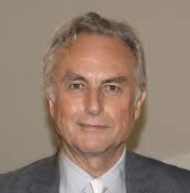
The fact that life evolved out of nearly nothing, some 10 billion years after the universe evolved out of literally nothing, is a fact so staggering that I would be mad to attempt words to do it justice.
▼
Source
source
From tail to tale on the path of pilgrims in life, The Scotsman

2 months 3 weeks ago
Vice itself lost half its evil by losing all its grossness.
▼
Source
source
Volume iii, p. 332
2 months 3 weeks ago
Self-pity is not as sterile as we suppose. Once we feel its mere onset, we assume a thinker's attitude, and come to think of it, we come to think!

2 months 2 weeks ago
Bourgeois political economy ... never gets to see man who is its real subject. It disregards the essence of man and his history and is thus in the profoundest sense not a 'science of people' but of non-people and of an inhuman world of objects and commodities.
▼
Source
source
"The Foundations of Historical Materialism," Studies in Critical Philosophy (1972), p. 9

1 month 3 weeks ago
By phonemic transformation into visual terms, the alphabet became a universal, abstract, static container of meaningless sounds.

1 month 4 weeks ago
I'm prepared to teach acceptance of religion, but, religion has to agree to the social contract. If we have to do it church by church, I'm ready.
3 months 3 weeks ago
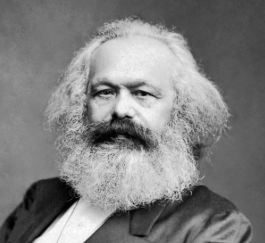
From another side: is Achilles possible with powder and lead? Or the Iliad with the printing press, not to mention the printing machine? Do not the song and saga of the muse necessarily come to an end with the printer's bar, hence do not the necessary conditions of epic poetry vanish?
▼
Source
source
Introduction, p. 31.
1 month 3 weeks ago
Contrary to earlier prejudices, there is nothing inherently progressive about evolution.
▼
Source
source
Chapter 7 "Constructive Evolution" (p. 178)
2 months 2 weeks ago
The intellectual is called on the carpet. ... Don't you conceal something? You talk a language which is suspect. You don't talk like the rest of us, like the man in the street, but rather like a foreigner who does not belong here. We have to cut you down to size, expose your tricks, purge you.
▼
Source
source
p. 192
4 months 3 weeks ago
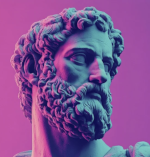
The natural way of doing this [seeking scientific knowledge or explanation of fact] is to start from the things which are more knowable and obvious to us and proceed towards those which are clearer and more knowable by nature; for the same things are not 'knowable relatively to us' and 'knowable' without qualification. So in the present inquiry we must follow this method and advance from what is more obscure by nature, but clearer to us, towards what is more clear and more knowable by nature. Now what is to us plain and obvious at first is rather confused masses, the elements and principles of which became known to us by later analysis...
2 months 3 weeks ago
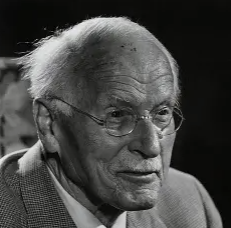
If one does not understand a person, one tends to regard him as a fool.
▼
Source
source
Mysterium Coniunctionis, from The Collected Works of C. G. Jung
3 months 3 days ago
Of the eternal corporeal substance (which is not producible ex nihilo, nor reducible ad nihilum, but rarefiable, condensable, formable, arrangeable, and "fashionable") the composition is dissolved, the complexion is changed, the figure is modified, the being is altered, the fortune is varied, only the elements remaining what they are in substance, that same principle persevering which was always the one material principle, which is the true substance of things, eternal, ingenerable and incorruptible.
▼
Source
source
As translated by Arthur Imerti
3 months 3 weeks ago
Compassion for animals is intimately connected with goodness of character, and it may be confidently asserted that he, who is cruel to living creatures, cannot be a good man. Moreover, this compassion manifestly flows from the same source whence arise the virtues of justice and loving-kindness towards men.
▼
Source
source
Part III, Ch. VIII, 7, p. 223
4 months 4 days ago
Who loves not woman, wine, and song / Remains a fool his whole life long.
▼
Source
source
As quoted by Anonymous, "On Luther's Love for and Knowledge of Music" in The Musical World. Vol VII, No. 83 (Oct 13, 1837).
2 months 3 weeks ago
Reason alone does not suffice.
▼
Source
source
p 98

2 months 2 weeks ago
Whosoever will come after me, let him deny himself, and take up his cross, and follow me. For whosoever will save his life shall lose it; but whosoever shall lose his life for my sake and the gospel's, the same shall save it. For what shall it profit a man, if he shall gain the whole world, and lose his own soul?
▼
Source
source
8:34b-36 (KJV)
1 month 3 weeks ago
I'm not clever enough to be a physicist. When asked about why he chose to become a biologist.
▼
Source
source
UR Samtiden - Verklighetens magi 27 October 2012.

2 months 3 weeks ago
A fool with a heart and no sense is just as unhappy as a fool with sense and no heart.
▼
Source
source
Part 1, Chapter 7
3 months 4 weeks ago
Abbot Terrasson tells us that if the size of a book were measured not by the number of its pages but by the time required to understand it, then we could say about many books that they would be much shorter were they not so short.
▼
Source
source
A xix
6 days ago
Space and time are commonly regarded as the forms of existence of the real world, matter as its substance. A definite portion of matter occupies a definite part of space at a definite moment of time. It is in the composite idea of motion that these three fundamental conceptions enter into intimate relationship.
▼
Source
source
Introduction
2 months 1 week ago
Men and women meet now to be idle. Is it extraordinary that they do not know each other, and that, in their mutual ignorance, they form no surer friendships? Did they meet to do something together, then indeed they might form some real tie. But, as it is, they are not there, it is only a mask which is there - a mouth-piece of ready-made sentences about the "topics of the day"; and then people rail against men for choosing a woman "for her face" - why, what else do they see?

3 months 3 weeks ago
In the long run the answer to all those who object to the doctrine of hell, is itself a question: What are you asking God to do? To wipe out their past sins and, at all costs, to give them a fresh start, smoothing every difficulty and offering every miraculous help? But He has done so, on Calvary. To forgive them? They will not be forgiven. To leave them alone? Alas, I am afraid that is what He does.
2 months 3 weeks ago
Should it be proved that woman is naturally weaker than man, from whence does it follow that it is natural for her to labour to become still weaker than nature intended her to be? Arguments of this cast are an insult to common sense, and savour of passion. The divine right of husbands, like the divine right of kings, may, it is to be hoped, in this enlightened age, be contested without danger, and though conviction may not silence many boisterous disputants, yet, when any prevailing prejudice is attacked, the wise will consider, and leave the narrow-minded to rail with thoughtless vehemence at innovation.
▼
Source
source
Ch. 3

3 months 3 weeks ago
We all remember how many religious wars were fought for a religion of love and gentleness; how many bodies were burned alive with the genuinely kind intention of saving souls from the eternal fire of hell. Only if we give up our authoritarian attitude in the realm of opinion, only if we establish the attitude of give and take, of readiness to learn from other people, can we hope to control acts of violence inspired by piety and duty.

3 months 3 weeks ago
Do we call this the land of the free? What is it to be free from King George and continue the slaves of King Prejudice? What is it to be born free and not to live free? What is the value of any political freedom, but as a means to moral freedom? Is it a freedom to be slaves, or a freedom to be free, of which we boast? We are a nation of politicians, concerned about the outmost defences only of freedom. It is our children's children who may perchance be really free.
▼
Source
source
p. 493
2 months 1 week ago
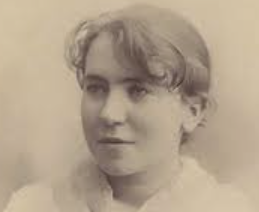
Every daring attempt to make a great change in existing conditions, every lofty vision of new possibilities for the human race, has been labelled Utopian.
▼
Source
source
"Socialism: Caught in the Political Trap", a lecture (c. 1912), published in Red Emma Speaks, Part 1 (1972) edited by Alix Kates Shulman
2 months 2 weeks ago
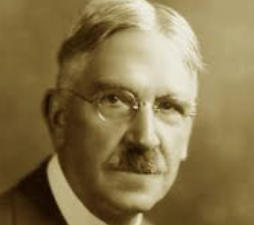
The animating purpose of James was, on the other hand, primarily moral and artistic. It is expressed in his phrase, "block universe," employed as a term of adverse criticism. Mechanism and idealism were abhorrent to him because they both hold to a closed universe in which there is no room for novelty and adventure. Both sacrifice individuality and all the values, moral and aesthetic, which hang upon individuality; for according to absolute idealism, as to mechanistic materialism, the individual is simply a part determined by the whole of which he is a part. Only a philosophy of pluralism, of genuine indetermination, and of change which is real and intrinsic gives significance to individuality. It alone justifies struggle in creative activity and gives opportunity for the emergence of the genuinely new.
CivilSimian.com created by AxiomaticPanic, CivilSimian, Kalokagathia