
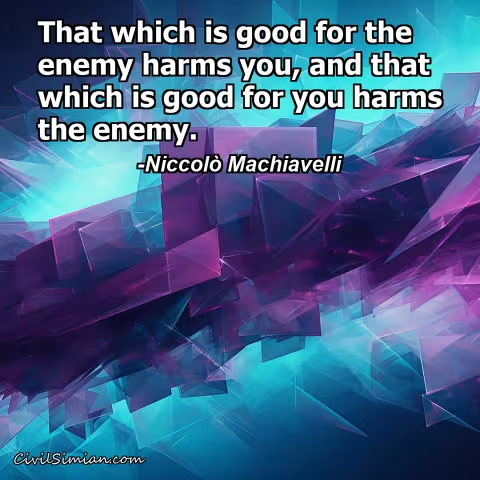
The Prince: https://www.gutenberg.org/ebooks/10827



It is not, what a lawyer tells me I may do; but what humanity, reason, and justice, tell me I ought to do.

There's something about a pious man such as he. He will cheerfully cut your throat if it suits him, but he will hesitate to endanger the welfare of your immaterial and problematical soul.

Eight hours daily labour is enough for any human being, and under proper arrangements sufficient to afford an ample supply of food, raiment and shelter, or the necessaries and comforts of life, and for the remainder of his time, every person is entitled to education, recreation and sleep.
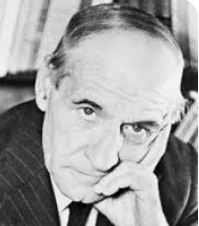
I know well that many of my readers do not think as I do. This also is most natural and confirms the theorem. For although my opinion turn out erroneous, there will always remain the fact that many of those dissentient readers have never given five minutes' thought to this complex matter. How are they going to think as I do? But by believing that they have a right to an opinion on the matter without previous effort to work one out for themselves, they prove patently that they belong to that absurd type of human being which I have called the "rebel mass." It is precisely what I mean by having one's soul obliterated, hermetically closed. Here it would be the special case of intellectual hermetism.
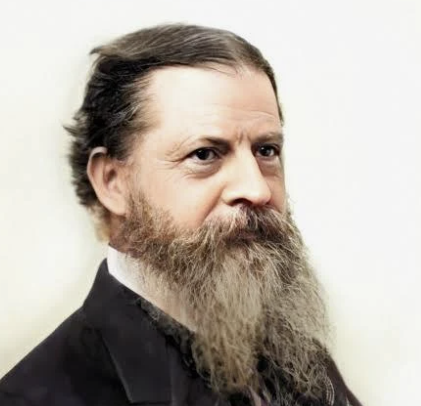
We have here a question of difficulty, analogous to the question of nominalism and realism.

In vain, therefore, should we pretend to determine any single event, or infer any cause or effect, without the assistance of observation and experience.

A great fortune is a great slavery.

The last peculiarity of consciousness to which attention is to be drawn in this first rough description of its stream is that it is always interested more in one part of its object than in another, and welcomes and rejects, or chooses, all the while it thinks.

Practice no sloth, so that the duty and good work, which it is necessary for thee to do, may not remain undone.

Effects are perceived, whereas causes are conceived. Effects always preceed causes in the actual developmental order.
In television, images are projected at you. You are the screen. The images wrap around you. You are the vanishing point.

It is better to suffer, than to do, wrong.

"...the church of England, when she baptizes any one, makes him not a Christian [...] the church of England is mistaken, and makes none but socinians Christians"

Moderation is the spirit of castrated narrow-mindedness.

We must live, you used to say, as if we were never going to die. - Didn't you know that's how everyone lives, including those obsessed with Death?

Today's mic-hogging, fast-talking, contentious young (and old) lefties continue to hawk little books and pamphlets on revolution, always with choice words or documents from Marx, Mao, even Malcolm. But I've never seen a broadside with "A Black Feminist Statement or even the writings of Angela Davis or June Jordan or Barbara Omolade or Flo Kennedy or Audre Lorde or bell hooks or Michelle Wallace, at least not from the groups who call themselves leftist. These women's collective wisdom has provided the richest insights into American radicalism's most fundamental questions: How can we build a multiracial movement? Who are the working class and what do they desire? How do we resolve the Negro Question and the Woman Question? What is freedom?
Example is the school of mankind, and they will learn at no other.

Behold a God more powerful than I who comes to rule over me.
Man's being is made of such strange stuff as to be partly akin to nature and partly not, at once natural and extranatural, a kind of ontological centaur, half immersed in nature, half transcending it.
Do not mistake yourself by believing that your being has something in it more exalted than that of others.

I do not open up the truth to one who is not eager to get knowledge, nor help out any one who is not anxious to explain himself. When I have presented one corner of a subject to any one, and he cannot from it learn the other three, I do not repeat my lesson.
What is more affectionate to others than man? Yet what is more savage against them than anger?
You need only look around you, replied PHILO, to satisfy yourself with regard to this question. A tree bestows order and organisation on that tree which springs from it, without knowing the order; an animal in the same manner on its offspring; a bird on its nest; and instances of this kind are even more frequent in the world than those of order, which arise from reason and contrivance. To say, that all this order in animals and vegetables proceeds ultimately from design, is begging the question; nor can that great point be ascertained otherwise than by proving, a priori, both that order is, from its nature, inseparably attached to thought; and that it can never of itself, or from original unknown principles, belong to matter.
The cry of equality pulls everyone down.
Much must also be withdrawn into oneself: for a well-composed conversation of differences disturbs and renews the affections, and infuriates whatever is weak in the mind and has not been cared for...Loneliness will cure the hatred of the crowd, the boredom of solitude will be cured by the crowd.... A certain dullness and languor of the mind is born from constant toil....Nor would the desire of men so much tend to this, unless play and fun had a kind of natural voluptuousness. The frequent use of which will relieve all the weight of the soul and all the vigor.For sleep is also necessary for refreshment, but if you continue it day and night, death will result.
There is no self-knowledge except historical self-knowledge. No one knows what he is if he doesn't know what his contemporaries are.
Vanity dies hard; in some obstinate cases it outlives the man.
Obstinacy is the result of the will forcing itself into the place of the intellect.

I suddenly dreamt that I picked up the revolver and aimed it straight at my heart - my heart, and not my head; and I had determined beforehand to fire at my head, at my right temple. After aiming at my chest I waited a second or two, and suddenly my candle, my table, and the wall in front of me began moving and heaving. I made haste to pull the trigger.

Prejudice is an opinion without judgement.
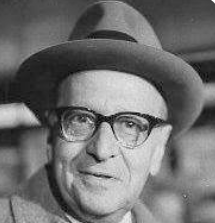
Once the philosophical foundation of democracy has collapsed, the statement that dictatorship is bad is rationally valid only for those who are not its beneficiaries, and there is no theoretical obstacle to the transformation of this statement into its opposite.
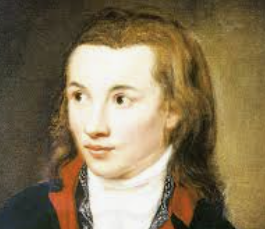
Every beloved object is the center point of a paradise.

It is remarkable that, notwithstanding the universal favor with which the New Testament is outwardly received, and even the bigotry with which it is defended, there is no hospitality shown to, there is no appreciation of, the order of truth with which it deals.

Those who read and rightly understand my teaching will not start an insurrection; they have not learned that from me.
Every poet has trembled on the verge of science.

We indeed, who are beings of finite powers, are forced to make use of instruments. And the use of an instrument sheweth the agent to be limited by rules of another's prescription, and that he cannot obtain his end but in such a way, and by such conditions. Whence it seems a clear consequence, that the supreme unlimited agent useth no tool or instrument at all. The will of an Omnipotent Spirit is no sooner exerted than executed, without the application of means; which, if they are employed by inferior agents, it is not upon account of any real efficacy that is in them, or necessary aptitude to produce any effect, but merely in compliance with the laws of nature, or those conditions prescribed to them by the First Cause, who is Himself above all limitation or prescription whatsoever.
Remember that time slurs over everything, let all deeds fade, blurs all writings and kills all memories. Except are only those which dig into the hearts of men by love.
Suffer no anxiety, for he who is a sufferer of anxiety becomes regardless of enjoyment of the world and the spirit, and contraction happens to his body and soul.
The hot radio medium used in cool or nonliterate cultures has a violent effect, quite unlike its effect, say in England or America, where radio is felt as entertainment.

Philosophers of science have repeatedly demonstrated that more than one theoretical construction can always be placed upon a given collection of data. History of science indicates that, particularly in the early developmental stages of a new paradigm, it is not even very difficult to invent such alternates. But that invention of alternates is just what scientists seldom undertake except during the pre-paradigm stage of their science's development and at very special occasions during its subsequent evolution. So long as the tools a paradigm supplies continue to prove capable of solving the problems it defines, science moves fastest and penetrates most deeply through confident employment of those tools. The reason is clear. As in manufacture so in science-retooling is an extravagance to be reserved for the occasion that demands it. The significance of crises is the indication they provide that an occasion for retooling has arrived.

If I have exhausted the justifications, I have reached bedrock and my spade is turned. Then I am inclined to say: "This is simply what I do."

Militarism, the destroyer of youth, the raper of women, the annihilator of the best in the race, the very mower of life.

How good is it to remember one's insignificance: that of a man among billions of men, of an animal amid billions of animals; and one's abode, the earth, a little grain of sand in comparison with Sirius and others, and one's life span in comparison with billions on billions of ages. There is only one significance, you are a worker. The assignment is inscribed in your reason and heart and expressed clearly and comprehensibly by the best among the beings similar to you. The reward for doing the assignment is immediately within you. But what the significance of the assignment is or of its completion, that you are not given to know, nor do you need to know it. It is good enough as it is. What else could you desire?

He was extremely important to his contemporaries, who wanted nothing more than to see in him the Expected One; they wanted almost to press it upon him and and to force him into the role - but that he then refuses to be that!

To two men living the same number of years, the world always provides the same sum of experiences. It is up to us to be conscious of them.

Adversity is sometimes hard upon a man; but for one man who can stand prosperity, there are a hundred that will stand adversity. (Often shortened to "can't stand prosperity" as an unknown quote).

Jesus said that God was not the God of the dead, but of the living. And the other life is not, in fact, thinkable to us except under the same forms as those of this earthly and transitory life.
Skepticism is the sadism of embittered souls.
CivilSimian.com created by AxiomaticPanic, CivilSimian, Kalokagathia