


3 months 1 week ago
But there is a devil of a difference between barbarians who are fit by nature to be used for anything, and civilized people who apply them selves to everything.
▼
Source
source
Introduction, p. 25.

3 months 1 week ago
...it [is] possible to suppose that, if Russia is allowed to have peace, an amazing industrial development may take place, making Russia a rival of the United States.
▼
Source
source
Part I, Ch. 5: Communism and the Soviet Constitution
3 months 3 weeks ago
The essence of the good is a certain kind of moral purpose, and that of the evil is a certain kind of moral purpose.
▼
Source
source
Book I, ch. 29, 1

1 month 3 weeks ago
It is clearly absurd to say that if you go on adding atoms together until they have fused into a complex molecule, that molecule will become capable of self-reproduction. It is like saying that a skyscraper is more capable of reproduction than a bungalow. And suppose life did come into being through some accidental interaction of molecules, sun and cosmic rays; why should it not be content to rest passively? Why should it have been possessed of a desire to persist and evolve?
▼
Source
source
p. 259

3 months 1 week ago
Imagine yourself as a living house. God comes in to rebuild that house. At first, perhaps, you can understand what He is doing. He is getting the drains right and stopping the leaks in the roof and so on: you knew that those jobs needed doing and so you are not surprised. But presently he starts knocking the house about in a way that hurts abominably and does not seem to make sense. What on earth is He up to? The explanation is that He is building quite a different house from the one you thought of-throwing out a new wing here, putting on an extra floor there, running up towers, making courtyards. You thought you were going to be made into a decent little cottage: but He is building a palace. He intends to come and live in it Himself.
▼
Source
source
Book IV, Chapter 9, "Counting the Cost"
3 weeks 6 days ago
It seems that the creative faculty, and the critical faculty, cannot exist together in their highest perfection.
▼
Source
source
p. 186

7 months 2 weeks ago
What is really disturbing about The Name of the Rose, however, is the underlying belief in the liberating, anti-totalitarain force of laughter, of ironic distance. Our thesis here is almost the exact opposite of the underlying premise of Eco's novel: in contemporary socities, democratic or totalitarian, that cynical distance, laughter, irony, are so to speak, part of the game. The ruling ideology is not meant to be taken seriously or literally. Perhaps the greatest danger for totalitarianism is people who take ideology seriously.
3 months 1 week ago
Human beings have faculties more elevated than the animal appetites, and when once made conscious of them, do not regard anything as happiness which does not include their gratification. I do not, indeed, consider the Epicureans to have been by any means faultless in drawing out their scheme of consequences from the utilitarian principle. To do this in any sufficient manner, many Stoic, as well as Christian elements require to be included. But there is no known Epicurean theory of life which does not assign to the pleasures of the intellect, of the feelings and imagination, and of the moral sentiments, a much higher value as pleasures than to those of mere sensation.
▼
Source
source
Ch. 2

4 months 6 days ago
A robot, the man had said, is logical but not reasonable.

3 months 4 days ago
Kierkegaard writes: If Christianity were so easy and cozy, why should God in his Scriptures have set Heaven and Earth in motion and threatened eternal punishments? - Question: But then in that case why is this Scriptures so unclear?
▼
Source
source
p. 31e
3 months 1 week ago
Judges of elegance and taste consider themselves as benefactors to the human race, whilst they are really only the interrupters of their pleasure ... There is no taste which deserves the epithet good, unless it be the taste for such employments which, to the pleasure actually produced by them, conjoin some contingent or future utility: there is no taste which deserves to be characterized as bad, unless it be a taste for some occupation which has mischievous tendency.
▼
Source
source
Théorie des peines et des récompenses (1811); translation by Richard Smith, The Rationale of Reward, J. & H. L. Hunt, London, 1825, Bk. 3, Ch. 1

3 days ago
Fundamentally we are highly social creatures. We feel a big sense of anomie and discomfort when we are isolated from our fellow human beings. …We seek community in different ways. There's a right wing... and... a left wing version of this.
▼
Source
source
15:58
1 month 1 week ago
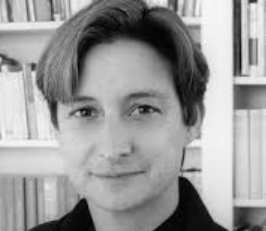
The ethical and political practice of nonviolence can rely neither exclusively on the dyadic encounter, nor on the bolstering of a prohibition; it requires a political opposition to the biopolitical forms of racism and war logics that rely on phantasmagoric inversions that occlude the binding and interdependent character of the social bond. It requires, as well, an account of why, and under what conditions, the frameworks for understanding violence and nonviolence, or violence and self-defense, seem to invert into one another, causing confusion about how best to pin down those terms.
▼
Source
source
p. 62
4 months 1 week ago
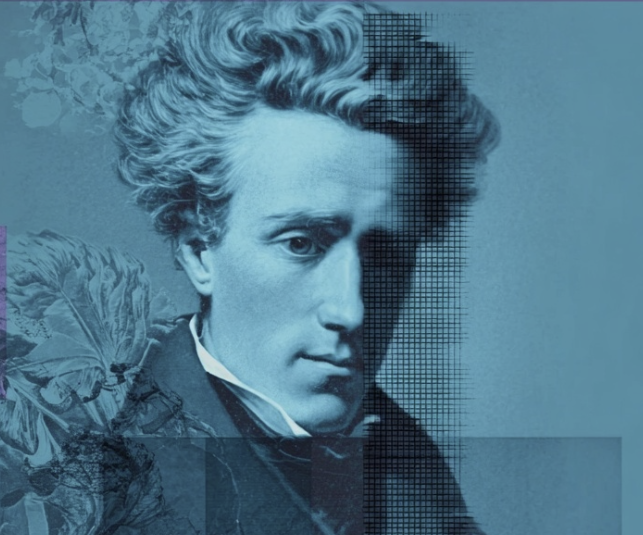
Deep within every human being there still lives the anxiety over the possibility of being alone in the world, forgotten by God, overlooked among the millions and millions in this enormous household. One keeps this anxiety at a distance by looking at the many round about who are related to him as kin and friends, but the anxiety is still there, nevertheless, and one hardly dares think of how he would feel if all this were taken away.

3 months 1 week ago
I think they do it to pass the time, nothing more. But time is too large, it can't be filled up. Everything you plunge into it is stretched and disintegrates.
▼
Source
source
Diary entry of Friday (2 February), concerning a card game
2 months 1 week ago
God, I have said, is the fulfiller, or the reality, of the human desires for happiness, perfection, and immortality. From this it may be inferred that to deprive man of God is to tear the heart out of his breast. But I contest the premises from which religion and theology deduce the necessity and existence of God, or of immortality, which is the same thing. I maintain that desires which are fulfilled only in the imagination, or from which the existence of an imaginary being is deduced, are imaginary desires, and not the real desires of the human heart; I maintain that the limitations which the religious imagination annuls in the idea of God or immortality, are necessary determinations of the human essence, which cannot be dissociated from it, and therefore no limitations at all, except precisely in man's imagination.
▼
Source
source
Lecture XXX, Atheism alone a Positive View
2 months 4 days ago
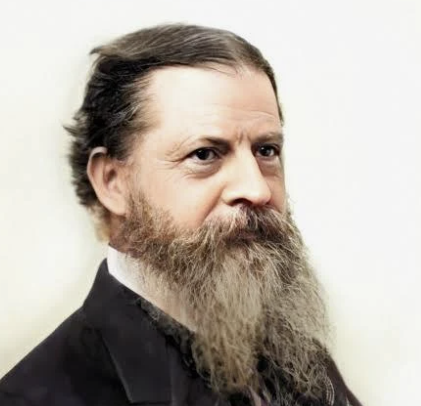
The third argument, enclosing and defending the other two, consists in the development of those principles of logic according to which the humble argument is the first stage of a scientific inquiry into the origin of the three Universes, but of an inquiry which produces, not merely scientific belief, which is always provisional, but also a living, practical belief, logically justified in crossing the Rubicon with all the freightage of eternity.
▼
Source
source
V

2 weeks 1 day ago
The evil of totalitarianism is not only that it fails to protect specific liberties but that it extinguishes the very possibility of freedom.
▼
Source
source
'Isaiah Berlin: The Value of Decency' (p.104)
4 months 1 week ago
Homer has taught all other poets the art of telling lies skillfully.
3 months 4 days ago
A philosopher who is not taking part in discussions is like a boxer who never goes into the ring.
▼
Source
source
Conversation of 1930
1 month 4 days ago
A man, Mr. Scrymgeour, may fall into a thousand perplexities, but if his heart be upright and his intelligence unclouded, he will issue from them all without dishonour.
▼
Source
source
The Rajah's Diamond, Story of the House with the Green Blinds.

2 months 4 days ago
Paradise was unendurable, otherwise the first man would have adapted to it; this world is no less so, since here we regret paradise or anticipate another one. What to do? Where to go? Do nothing and go nowhere, easy enough.
3 months 1 week ago
If literature isn't everything, it's not worth a single hour of someone's trouble.
▼
Source
source
Interview (1960), Quoted in Susan Sontag's introduction to Barthes: Selected Writings, "Writing Itself: On Roland Barthes,"

1 month 1 week ago
And therefore just as a brigand caught in broad daylight in the act cannot persuade us that he did not lift his knife in order to rob his victim of his purse, and had no thought of killing him, we too, it would seem, cannot persuade ourselves or others that the soldiers and policemen around us are not to guard us, but only for defense against foreign foes, and to regulate traffic and fetes and reviews; we cannot persuade ourselves and others that we do not know that the men do not like dying of hunger, bereft of the right to gain their subsistence from the earth on which they live; that they do not like working underground, in the water, or in the stifling heat, for ten to fourteen hours a day, at night in factories to manufacture objects for our pleasure. One would imagine it impossible to deny what is so obvious. Yet it is denied.
▼
Source
source
Chapter XII, Conclusion-Repent Ye, for the Kingdom of Heaven is at Hand

3 months 1 week ago
I have heard with admiring submission the experience of the lady who declared "that the sense of being perfectly well-dressed gives a feeling of inward tranquility which religion is powerless to bestow".
▼
Source
source
Social Aims
3 weeks 6 days ago
Free trade, one of the greatest blessings which a government can confer on a people, is in almost every country unpopular.
▼
Source
source
p. 161

2 months 2 weeks ago
There is no man alone, because every man is a Microcosm, and carries the whole world about him.
▼
Source
source
Section 10

3 months 1 week ago
The Ideal Man of the eighteenth century was the Rationalist; of the seventeenth, the Christian Stoic; of the Renaissance, the Free Individual; of the Middle Ages, the Contemplative Saint. And what is our Ideal Man? On what grand and luminous mythological figure does contemporary humanity attempt to model itself? The question is embarrassing. Nobody knows. And, in spite of all the laudable efforts of the Institute for Intellectual Co-operation to fabricate an acceptable Ideal Man for the use of Ministers of Education, nobody, I suspect, will know until such time as a major poet appears upon the scene with the unmistakable revelation. Meanwhile, one must be content to go on piping up for reason and realism and a certain decency.
▼
Source
source
p. 5

1 month 3 weeks ago
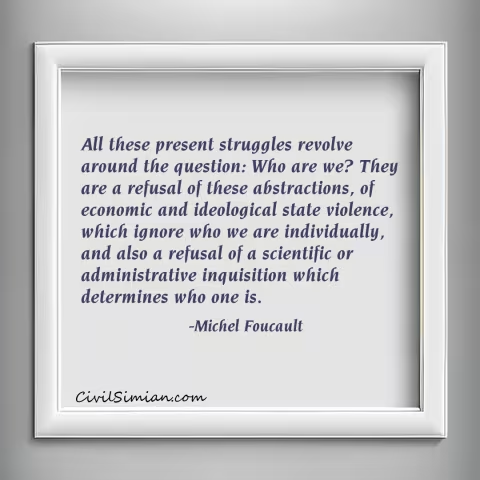
The important thing is not the planning of an Index Verborum Prohibitorum of current noble nouns, but rather the examination of their linguistic function.
▼
Source
source
p. 6

3 months 2 weeks ago
The beginning is from God: for the business which is in hand, having the character of good so strongly impressed upon it, appears manifestly to proceed from God, who is the author of good, and the Father of Lights. Now in divine operations even the smallest beginnings lead of a certainty to their end. And as it was said of spiritual things, "The kingdom of God cometh not with observation," so is it in all the greater works of Divine Providence; everything glides on smoothly and noiselessly, and the work is fairly going on "before men are aware that it has begun. Nor should the prophecy of Daniel be forgotten, touching the last ages of the world: -"Many shall go to and fro, and knowledge shall be increased;" clearly intimating that the thorough passage of the world (which now by so many distant voyages seems to be accomplished, or in course of accomplishment), and the advancement of the sciences, are destined by fate, that is, by Divine Providence, to meet in the same age.
▼
Source
source
Aphorism 93
3 months 1 week ago
If the stars should appear one night in a thousand years, how would men believe and adore, and preserve for many generations the remembrance of the city of God which had been shown! But every night come out these envoys of beauty, and light the universe with their admonishing smile.
▼
Source
source
Nature
5 days ago
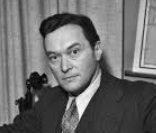
Ours is a problem in which deception has become organized and strong; where truth is poisoned at its source; one in which the skill of the shrewdest brains is devoted to misleading a bewildered people.
▼
Source
source
Ch. IV: "The Golden Rule and After", p. 105.

2 months 1 week ago
It is not as a child that I believe and confess Jesus Christ. My hosanna is born of a furnace of doubt.
▼
Source
source
As quoted in Kierkegaard, the Melancholy Dane (1950) by Harold Victor Martin.
3 months 1 week ago
It is not to be supposed that she was, or that any one, at the age at which I first saw her, could be, all that she afterwards became. Least of all could this be true of her, with whom self-improvement, progress in the highest and in all senses, was a law of her nature; a necessity equally from the ardour with which she sought it, and from the spontaneous tendency of faculties which could not receive an impression or an experience without making it the source or the occasion of an accession of wisdom. Up to the time when I first saw her, her rich and powerful nature had chiefly unfolded itself according to the received type of feminine genius. To her outer circle she was a beauty and a wit, with an air of natural distinction, felt by all who approached her: to the inner, a woman of deep and strong feeling, of penetrating and intuitive intelligence, and of an eminently meditative and poetic nature.
▼
Source
source
(p. 185)

1 month 3 weeks ago
To believe in God is to yearn for His existence and, furthermore, it is to act as if He did exist.
3 months 1 week ago
Friendship, I have said, is born at the moment when one man says to another "What! You too? I thought that no one but myself..."

2 months 2 weeks ago
It is better wither to be silent, or to say things of more value than silence. Sooner throw a pearl at hazard than an idle or useless word; and do not say a little in many words, but a great deal in a few.
▼
Source
source
As quoted in A Dictionary of Thoughts: Being a Cyclopedia of Laconic Quotations from the Best Authors of the World, both Ancient and Modern (1908) by Tyron Edwards, p. 525
1 month 3 weeks ago
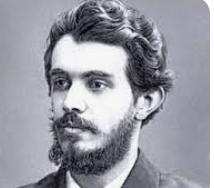
Surprisingly, Berdyaev was able to write, lecture and publish for five years after the October Revolution of 1917. He was once detained and interviewed by the fearsome head of the Cheka, Felix Dzerzhinsky. Although he was released, the Bolsheviks gradually realized that Berdyaev was unassimilable to their cause and gave him a choice, along with a group of other intellectuals, of exile or execution. Reluctantly, Berdyaev chose exile to Berlin. He was never again to return to Russia.
▼
Source
source
Richard Schain, in In Love with Eternity : Philosophical Essays and Fragments (2005), Ch. 7 : Nikolai Alexandrovich Berdyaev - A Champion of the Spirit, p. 44

2 weeks 4 days ago
If a king is energetic, his subjects will be equally energetic. If he is reckless, they will not only be reckless likewise, but also eat into his works. Besides, a reckless king will easily fall into the hands of his enemies. Hence the king shall ever be wakeful.
▼
Source
source
Book I : "Concerning Discipline" Chapter 19 "The Duties of a King"
3 months 1 week ago
Conversation is an art in which a man has all mankind for his competitors, for it is that which all are practising every day while they live.
▼
Source
source
Considerations by the Way

3 months 1 week ago
I have seen something of the project of M. de St. Pierre, for maintaining a perpetual peace in Europe. I am reminded of a device in a cemetery, with the words: Pax perpetua; for the dead do not fight any longer: but the living are of another humor; and the most powerful do not respect tribunals at all. Letter 11 to Grimarest: Passages Concerning the Abbe de St. Pierre's 'Project for Perpetual Peace' (June 1712).
▼
Source
source
Taken from Leibniz: Political Writings (2nd Edition, 1988), Edited by Patrick Riley.
3 months 1 week ago
There are two laws discrete Not reconciled, Law for man, and law for thing.
▼
Source
source
Ode: Inscribed to W. H. Channing, st. 9
3 months 1 week ago
Too much consistency is as bad for the mind as it is for the body. Consistency is contrary to nature, contrary to life. The only completely consistent people are the dead. Consistent intellectualism and spirituality may be socially valuable, up to a point; but they make, gradually, for individual death.
▼
Source
source
"Wordsworth in the Tropics" in Do What You Will, 1929
3 months 1 week ago
Earth laughs in flowers to see her boastful boys Earth-proud, proud of the earth which is not theirs; Who steer the plough, but can not steer their feet Clear of the grave.
▼
Source
source
Hamatreya
3 months 1 week ago
We are obviously heading for revolution-something I have never once doubted since 1850. The first act will include a by no means gratifying rehash of the stupidities of '48-'49. However, that's how world history runs its course, and one has to take it as one finds it.
▼
Source
source
Letter to Ludwig Kugelmann (28 December 1862), quoted in The Collected Works of Karl Marx and Friedrich Engels: Volume 41. Letters 1860-64 (2010), p. 437
2 months 4 days ago
In a single second we do away with all seconds; God himself could not do as much.
3 months 3 weeks ago
They [men] have corrupted this [God's supernatural] order by making profane things what they should make of holy things, because in fact, we believe scarcely any thing except which pleases us.
2 months 2 weeks ago
Neither will the horse be adjudged to be generous, that is sumptuously adorned, but the horse whose nature is illustrious; nor is the man worthy who possesses great wealth, but he whose soul is generous.
▼
Source
source
Pythagorean Ethical Sentences From Stobæus
3 months 4 days ago
If someone asked us 'but is that true?' we might say "yes" to him; and if he demanded grounds we might say "I can't give you any grounds, but if you learn more you too will think the same."
CivilSimian.com created by AxiomaticPanic, CivilSimian, Kalokagathia