


2 months 2 weeks ago
The source of an emotion is very difficult to grasp, but it comes to just that. That holds for all phenomena, for faith, etc. Why did it begin, how did it develop? and so forth-only he who has the gift of divination can perceive where it really comes from. But it is not accessible to reflection.
2 months 2 weeks ago
I dream of wanting - and all I want seems to me worthless.

3 months 3 weeks ago
Let him sensibly perceive, that the kindness he shews to others, is no ill husbandry for himself; but that it brings a return in kindness both from those that receive it, and those who look on. Make this a contest among children, who shall out-do one another in this way: and by this means, by a constant practise, children having made it easy to themselves to part with what they have, good nature may be settled in them into a habit, and they may take pleasure, and pique themselves in being kind, liberal and civil, to others.
▼
Source
source
Sec. 110
2 months 2 weeks ago
His power to adore is responsible for all his crimes: a man who loves a god unduly forces other men to love his god, eager to exterminate them if they refuse.
2 days ago
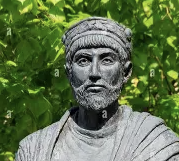
The good effects that emanate from the same source are equally diffused upon the earth. Different regions become partakers in these benefits in different ways; so that neither their production comes to an end, nor does the Deity confer his blessings upon the recipient world with any degree of variation. For where the substance is the same, so is the action thereof, in the case of Divine Powers; especially with him who is king of them all, namely, the Sun; of whom the motion is the most simple amongst all the bodies that move in a contrary direction to the world, which fact that most excellent philosopher, Aristotle, adduces to prove the superiority of that luminary to the others.
1 month 1 week ago
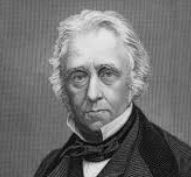
If...we look at the essential characteristics of the Whig and the Tory, we may consider each of them as the representative of a great principle, essential to the welfare of nations. One is, in an especial manner, the guardian of liberty, and the other, of order. One is the moving power, and the other the steadying power of the state. One is the sail, without which society would make no progress, the other the ballast, without which there would be small safety in a tempest.
▼
Source
source
The Earl of Chatham', The Edinburgh Review (October 1844), quoted in T. B. Macaulay, Critical and Historical Essays Contributed to The Edinburgh Review: A New Edition (1852), p. 725

3 months 3 weeks ago
Next to enjoying ourselves, the next greatest pleasure consists in preventing others from enjoying themselves, or, more generally, in the acquisition of power.
▼
Source
source
Ch. 10: Recrudescence of Puritanism
3 months 3 weeks ago
I quite understand the principle of confining employment as far as possible to the British without regard for efficiency. I think, however, that the Ministry is not applying the principle sufficiently widely. I know many Englishmen who have married foreigners, and many English potential wives who are out of a job. Would not a year be long enough to train an English wife to replace the existing foreign one in such cases?
▼
Source
source
Enclosed reply to the Ministry of Labour, in defense of A. S. Neill (who declined to send it), 27 January, 1931

4 months 1 week ago
What the great learning teaches, is to illustrate illustrious virtue; to renovate the people; and to rest in the highest excellence. The point where to rest being known, the object of pursuit is then determined; and, that being determined, a calm unperturbedness may be attained to. To that calmness there will succeed a tranquil repose. In that repose there may be careful deliberation, and that deliberation will be followed by the attainment of the desired end.
2 months 2 weeks ago
The need for novelty is the characteristic of an alienated gorilla.

4 months 3 weeks ago
For once touched by love, everyone becomes a poet.
1 day ago
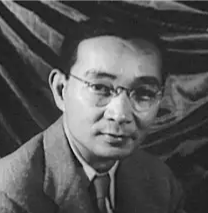
No, the enjoyment of an idle life doesn't cost any money. The capacity for true enjoyment of idleness is lost in the moneyed class and can be found only among people who have a supreme contempt for wealth. It must come from an inner richness of the soul in a man who loves the simple ways of life and who is somewhat impatient with the business of making money.
▼
Source
source
p. 155
4 days ago
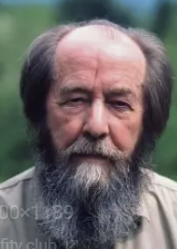
Macbeth's self-justifications were feeble - and his conscience devoured him. Yes, even Iago was a little lamb too. The imagination and the spiritual strength of Shakespeare's evildoers stopped short at a dozen corpses. Because they had no ideology.
▼
Source
source
The Gulag Archipelago
1 week 2 days ago
The men of the future will yet fight their way to many a liberty that we do not even miss.
▼
Source
source
Cambridge 1995, p. 114
2 months 2 weeks ago
It is sometimes difficult to avoid the impression that there is a sort of foreknowledge of the coming series of events.
▼
Source
source
p. 94
4 months 1 week ago
All things are nourished together without their injuring one another. The courses of the seasons, and of the sun and moon, are pursued without any collision among them. The smaller energies are like river currents; the greater energies are seen in mighty transformations. It is this which makes heaven and earth so great.



2 weeks 5 days ago
Even when labor is subjugated by capital it always necessarily maintains its own autonomy, and this ever more clearly true today with respect to the new immaterial, cooperative and collaborative forms of labor. This relationship is not isolated to the economic terrain but, as we will argue later, spills over into the biopolitical terrain of society as a hole, including military conflicts. In any case, we should recognize here that even in asymmetrical conflicts victory in terms of complete domination is not possible. All that can be achieved is a provisional and limited maintenance of control and order that must constantly be policed and preserved. Counterinsurgency is a full-time job.
▼
Source
source
54

4 months 3 weeks ago
An old proverb fetched from the outward and visible world says: "Only the man that works gets the bread." Strangely enough this proverb does not aptly apply in that world to which it expressly belongs. For the outward world is subjected to the law of imperfection, and again and again the experience is repeated that he too who does not work gets the bread, and that he who sleeps gets it more abundantly than the man who works. In the outward world everything is made payable to the bearer, this world is in bondage to the law of indifference, and to him who has the ring, the spirit of the ring is obedient, whether he be Noureddin or Aladdin, and he who has the world's treasure, has it, however he got it.
3 months 3 weeks ago
If throughout your life you abstain from murder, theft, fornication, perjury, blasphemy, and disrespect toward your parents, your church, and your king, you are conventionally held to deserve moral admiration even if you have never done a single kind or generous or useful action. This very inadequate notion of virtue is an outcome of taboo morality, and has done untold harm.
▼
Source
source
p. 32

3 months 3 weeks ago
If the whole of natural theology, as some people seem to maintain, resolves itself into one simple, though somewhat ambiguous, at least undefined proposition, that the cause or causes of order in the universe probably bear some remote analogy to human intelligence: If this proposition be not capable of extension, variation, or more particular explication: If it affords no inference that affects human life, or can be the source of any action or forbearance: And if the analogy, imperfect as it is, can be carried no farther than to the human intelligence, and cannot be transferred, with any appearance of probability, to the other qualities of the mind; if this really be the case, what can the most inquisitive, contemplative, and religious man do more than give a plain, philosophical assent to the proposition, as often as it occurs, and believe that the arguments on which it is established exceed the objections which lie against it?
▼
Source
source
Philo to Cleanthes, Part XII
3 months 3 weeks ago
Correct and accurate conclusions may be arrived at if we carefully observe the relation of the spheres of concepts, and only conclude that one sphere is contained in a third sphere, when we have clearly seen that this first sphere is contained in a second, which in its turn is contained in the third. On the other hand, the art of sophistry lies in casting only a superficial glance at the relations of the spheres of the concepts, and then manipulating these relations to suit our purposes, generally in the following way: - When the sphere of an observed concept lies partly within that of another concept, and partly within a third altogether different sphere, we treat it as if it lay entirely within the one or the other, as may suit our purpose.
▼
Source
source
Vol. I, Ch. 10, as translated by R. B. Haldane
2 months 2 weeks ago
The need to devour oneself absolves one of the need to believe.
3 days ago
Recognition of the subjectivity of the qualities of sense is found in Galilei (and also in Descartes and Hobbes) in a form closely related to the principle underlying the constructive mathematical method of our modern physics which repudiates" qualities".
▼
Source
source
Introduction
1 month 2 weeks ago
There is simply too much to think about. It is hopeless - too many kinds of special preparation are required. In electronics, in economics, in social analysis, in history, in psychology, in international politics, most of us are, given the oceanic proliferating complexity of things, paralyzed by the very suggestion that we assume responsibility for so much. This is what makes packaged opinion so attractive.
▼
Source
source
There Is Simply Too Much to Think About (1992), pp. 173-174
2 months 3 weeks ago
The pleasures of self-approbation, together with the right cultivation of all our pleasures, require individual independence. Without independence men cannot become either wise, or useful, or happy.
▼
Source
source
"Summary of Principles" 1.3

3 months 3 weeks ago
Shall I tell you the secret of the true scholar? It is this: Every man I meet is my master at some point, and in that, I learn of him.
▼
Source
source
Greatness

2 weeks 4 days ago
Liberalism... has a left of center meaning in the United States. It has a slightly right of center meaning in much of continental Europe.

1 month 3 weeks ago
The universal hypocrisy has so entered into the flesh and blood of all classes of our modern society, it has reached such a pitch that nothing in that way can rouse indignation. Hypocrisy in the Greek means "acting," and acting-playing a part-is always possible. Chapter XII, Conclusion-Repent Ye, for the Kingdom of Heaven is at Hand Variant Translation: Hypocrisy with good reason means the same as acting, and anybody can pretend - act a part.

2 weeks ago
It is the very joy of man's heart to admire, where he can; nothing so lifts him from all his mean imprisonments, were it but for moments, as true admiration.
3 months 2 weeks ago
What is peddled about nowadays as philosophy, especially that of N.S. [National Socialism], but has nothing to do with the inner truth and greatness of that movement [namely the encounter between global technology and modern humanity] is nothing but fishing in that troubled sea of values and totalities.
▼
Source
source
Introduction to Metaphysics (1953) - a publication of lectures of 1935.
2 months 2 weeks ago
Before his death, Rabbi Zusya said, "In the coming world, they will not ask me: 'Why were you not Moses?' They will ask me: 'Why were you not Zusya?'"
▼
Source
source
Tales of the Hasidim (1947), 1991 Ebook edition, p.251, as quoted in Jewish Currents.
2 months 2 weeks ago
The source of our actions resides in an unconscious propensity to regard ourselves as the center, the cause, and the conclusion of time. Our reflexes and our pride transform into a planet the parcel of flesh and consciousness we are. If we had the right sense of our position in the world, if to compare were inseparable from to live, the revelation of our infinitesimal presence would crush us. But to live is to blind ourselves to our own dimensions. . . .
3 months 3 weeks ago
Our condition is like that of the poor wolves: if one of the flock wound himself, or so much as limp, the rest eat him up incontinently. That serene Power interposes the check upon the caprices and officiousness of our wills.
1 month 1 week ago
Those who compare the age in which their lot has fallen with a golden age which exists only in imagination, may talk of degeneracy and decay; but no man who is correctly informed as to the past, will be disposed to take a morose or desponding view of the present.
▼
Source
source
Vol. I, ch. 1
2 weeks 2 days ago
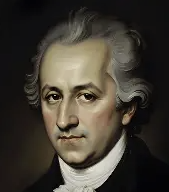
But among all the discoveries and corrections probably none has resulted in a deeper influence on the human spirit than the doctrine of Copernicus.... Possibly mankind has never been demanded to do more, for considering all that went up in smoke as a result of realizing this change: a second Paradise, a world of innocence, poetry and piety: the witness of the senses, the conviction of a poetical and religious faith. No wonder his contemporaries did not wish to let all this go and offered every possible resistance to a doctrine which in its converts authorized and demanded a freedom of view and greatness of thought so far unknown indeed not even dreamed of.
▼
Source
source
Zur Farbenlehre, Materialien zur Geschichte der Farbenlehre (1810), Frankfurt am Main, 1991, Seite 666.
4 days ago
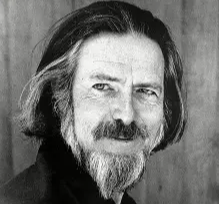
The transformation of human consciousness through meditation is frustrated, as long as we think of it in terms as something that I, my self can bring about. because it leads to endless games of spiritual oneupmanship, and Guru competitions.

4 months 3 weeks ago
Art furnishes us with eyes and hands and above all the good conscience to be able to turn ourselves into such a phenomenon.
2 weeks ago
The uttered part of a man's life, let us always repeat, bears to the unuttered, unconscious part a small unknown proportion. He himself never knows it, much less do others.

4 months 1 day ago
My appetite comes to me while eating.
▼
Source
source
Book III, Ch. 9. Of Vanity
4 months 3 weeks ago
He who is punished is never he who performed the deed. He is always the scapegoat.

2 months 2 weeks ago
Get thee behind me, Satan: thou art an offence unto me: for thou savourest not the things that be of God, but those that be of men.
▼
Source
source
16:23 (KJV)

2 months 4 weeks ago
The surface of American society is covered with a layer of democratic paint, but from time to time one can see the old aristocratic colours breaking through.
▼
Source
source
Chapter II.
4 months 3 weeks ago
Christ speaks of two debtors, one of whom owed much and the other little, and who both found forgiveness. He asks: Which of these two ought to love more? The answer: The one who has forgiven much. When you love much, you are forgiven much-and when you are forgiven much, you love much. See here the blessed recurrence of salvation in love!

3 months 2 weeks ago
This aristocratic thesis is... the demos, the people, are the most numerous... also comprised of the most ordinary, and... even the worst, citizens. Therefore... what is best for the demos cannot be what is best for the polis... the city.
2 months 1 week ago
A precise language awaits a completed metaphysics.
2 weeks ago
Thus Mr. Sale informs me, the old Arab Tribes would gather in liveliest gaudeamus, and sing, and kindle bonfires, and wreathe crowns of honour, and solemnly thank the gods that, in their Tribe too, a Poet had shewn himself. As indeed they well might; for what usefuller, I say not nobler and heavenlier thing could the gods, doing their very kindest, send to any Tribe or Nation, in any time or circumstances?
3 months 3 weeks ago
I was a solitary, shy, priggish youth. I had no experience of the social pleasures of boyhood and did not miss them. But I liked mathematics, and mathematics was suspect because it has no ethical content. I came also to disagree with the theological opinions of my family, and as I grew up I became increasingly interested in philosophy, of which they profoundly disapproved. Every time the subject came up they repeated with unfailing regularity, 'What is mind? No matter. What is matter? Never mind.' After some fifty or sixty repetitions, this remark ceased to amuse me.
▼
Source
source
p. 9

1 month 3 weeks ago
The hardware world tends to move into software form at the speed of light.
3 months 3 weeks ago
... it may be hoped that the white population of the world will soon cease to increase. The Asiatic races will be longer, and the negroes still longer, before their birth rate falls sufficiently to make their numbers stable without help of war and pestilence. But it is to be hoped that the religious prejudices which have hitherto hampered the spread of birth control will die out, and that ... the whole world will learn not to be unduly prolific. Until that happens, the benefits aimed at by socialism can only be partially realized, and the less prolific races will have to defend themselves against the more prolific by methods which are disgusting even if they are necessary.
CivilSimian.com created by AxiomaticPanic, CivilSimian, Kalokagathia