


4 months 2 weeks ago
Zeno: The many do not know that except by this devious passage through all things the mind cannot attain to the truth. Zeno: Most people are not aware that this roundabout progress through all things is the only way in which the mind can attain truth and wisdom.
2 months 2 weeks ago
The political freedom of conscience and of the press, so far from being as it is commonly supposed an extension, is a new case of the limitation of rights and discretion. Conscience and the press ought to be unrestrained, not because men have a right to deviate from the exact line that duty prescribes, but because society, the aggregate of individuals, has no right to assume the prerogative of an infallible judge, and to undertake authoritatively to prescribe to its members in matters of pure speculation.
▼
Source
source
Vol. 1, bk 2 : Principles of Society , Ch. 5 : Of Rights

4 months 2 weeks ago
I was assailed by memories of a life that wasn't mine anymore, but one in which I'd found the simplest and most lasting joys.

1 week ago
They have been spoken by Plato, spoken by Zeno, spoken by Chrysippus or by Posidonius, and by a whole host of Stoics as numerous as excellent. I shall show you how men can prove their words to be their own: it is by doing what they have been talking about.

3 months 3 weeks ago
But if the labourers could live on air they could not be bought at any price.
▼
Source
source
Vol. I, Ch. 24, Section 4, pg. 657.
2 months 1 week ago
[I]t would be a piece of ingenuousness to accuse the man of to-day of his lack of moral code. The accusation would leave him cold, or rather, would flatter him. Immoralism has become a commonplace, and anybody and everybody boasts of practising it.
▼
Source
source
Chapter XV: We Arrive At The Real Question

4 months ago
You must not murder. (Exodus 20:13) Q. What does this mean? A. We should fear and love God so that we may not hurt or harm our neighbor in his body, but help and befriend him in every bodily need [in every need and danger of life and body].
1 month 3 weeks ago
Precisely by inculcating a critical attitude, the "canon" served to demythologize the conventional pieties of the American bourgeoisie and provided the student with a perspective from which to critically analyze American culture and institutions. Ironically, the same tradition is now regarded as oppressive. The texts once served an unmasking function; now we are told that it is the texts which must be unmasked.
▼
Source
source
"The Storm Over the University", The New York Review of Books, December 6, 1990

3 months 1 week ago
To have a great man for an intimate friend seems pleasant to those who have never tried it; those who have, fear it.
▼
Source
source
Book I, epistle xviii, line 86
2 months 1 week ago
The more the concept of reason becomes emasculated, the more easily it lends itself to ideological manipulation and to propagation of even the most blatant lies. ... Subjective reason conforms to anything.
▼
Source
source
pp. 24-25.
3 months 3 weeks ago
As a beast of toil an ox is fixed capital. If he is eaten, he no longer functions as an instrument of labour, nor as fixed capital either.
▼
Source
source
Vol. II, Ch. VIII, p. 163.
1 week 1 day ago
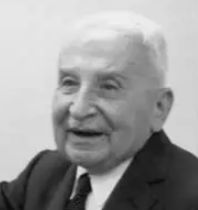
A man who chooses between drinking a glass of milk and a glass of a solution of potassium cyanide does not choose between two beverages; he chooses between life and death. A society that chooses between capitalism and socialism does not choose between two social systems; it chooses between social cooperation and the disintegration of society. Socialism is not an alternative to capitalism; it is an alternative to any system under which men can live as human beings.
▼
Source
source
1963 edition, p. 680
2 months 2 weeks ago
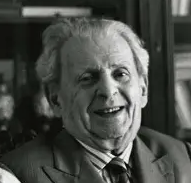
The moral consciousness can sustain the mocking gaze of the political man only if the certitude of peace dominates the evidence of war. Such a certitude is not obtained by a simple play of antitheses. The peace of empires issued from war rests on war. It does not restore to the alienated beings their lost identity. For that a primordial and original relation with being is needed.
▼
Source
source
Totality and Infinity

2 months 5 days ago
There can be no freedom in the large sense of the word, no harmonious development, so long as mercenary and commercial considerations play an important part in the determination of personal conduct.
4 months ago
Christ ought to be preached with this goal in mind - that we might be moved to faith in him so that he is not just a distant historical figure but actually Christ for you and me.
▼
Source
source
p. 69
1 week 1 day ago
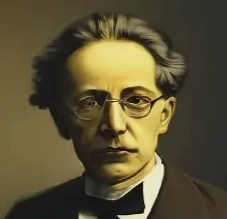
Do I write out of love to men? No, I write because I want to procure for my thoughts an existence in the world; and, even if I foresaw that these thoughts would deprive you of your rest and your peace, even if I saw the bloodiest wars and the fall of many generations springing up from this seed of thought - I would nevertheless scatter it. Do with it what you will and can, that is your affair and does not trouble me.
▼
Source
source
Cambridge 1995, p. 262, 263
3 months 3 weeks ago
We are obviously heading for revolution-something I have never once doubted since 1850. The first act will include a by no means gratifying rehash of the stupidities of '48-'49. However, that's how world history runs its course, and one has to take it as one finds it.
▼
Source
source
Letter to Ludwig Kugelmann (28 December 1862), quoted in The Collected Works of Karl Marx and Friedrich Engels: Volume 41. Letters 1860-64 (2010), p. 437

4 months 3 weeks ago
It is as useless for a person to want first of all to decide the externals and after that the fundamentals as it is for a cosmic body, thinking to form itself, first of all to decide the nature of its surface, to what bodies it should turn its light, which its dark side, without first letting the harmony of centrifugal and centripetal forces realize its existence and letting the rest come of itself. One must learn to know oneself before knowing anything else (gnothi seauton). Not until a person has inwardly understood himself and then sees the course he is to take does his life gain peace and meaning.

3 months 4 days ago
Attempt nothing above thy strength!

2 months 2 weeks ago
Someday the old shack we call the world will fall apart. How, we don't know, and we don't really care either. Since nothing has real substance, and life is a twirl in the void, its beginning and its end are meaningless.
4 months 3 weeks ago
My dear reader, read aloud, if possible! If you do so, allow me to thank you for it: if you not only do it yourself, if you also influence others to do it, allow me to thank each one of them, and you again and again!
3 months 3 weeks ago
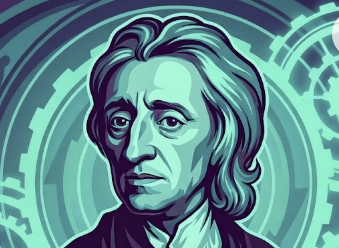
All men are liable to error; and most men are, in many points, by passion or interest, under temptation to it.
▼
Source
source
Book IV, Ch. 20, sec. 17

4 months 1 week ago
Moderation, in the pursuit of honors or riches, is the only security against disappointment and vexation. A wise man, therefore, will prefer the simplicity of rustic life to the magnificence of courts.
2 months 2 weeks ago
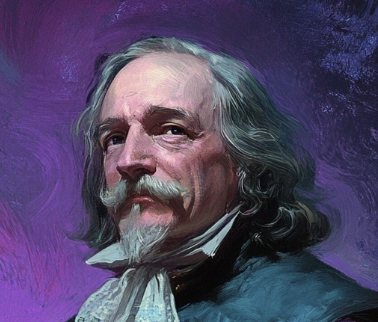
Whatsoever therefore is consequent to a time of Warre, where every man is Enemy to every man; the same is consequent to the time, wherein men live without other security, than what their own strength, and their own invention shall furnish them withall. In such condition, there is no place for Industry; because the fruit thereof is uncertain: and consequently no Culture of the Earth; no Navigation, nor use of the commodities that may be imported by Sea; no commodious Building; no Instruments of moving, and removing things as require much force; no Knowledge of the face of the Earth; no account of Time; no Arts; no Letters; no Society; and which is worst of all, continuall feare, and danger of violent death; And the life of man solitary, poore, nasty, brutish, and short.
▼
Source
source
The First Part, Chapter 13, p. 62
2 months 1 week ago
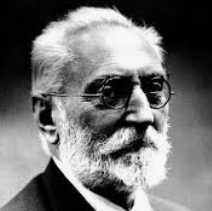
Science is a cemetery of dead ideas, even though life may issue from them.

3 months 1 week ago
Now as of old the gods give men all good things, excepting only those that are baneful and injurious and useless. These, now as of old, are not gifts of the gods: men stumble into them themselves because of their own blindness and folly.
3 days ago
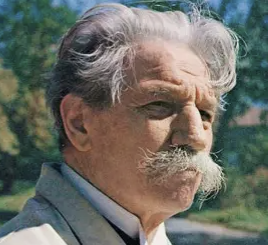
Defined from outside and quite empirically, complete civilization consists in realizing all possible progress in discovery and invention and in the arrangements of human society, and seeing that they work together for the spiritual perfecting of individuals, which is the real and final object of civilization. Reverence for life is in a position to complete this conception of civilization and to build its foundations on what lies at the core of our being. This it does by defining what is meant by the spiritual perfecting of man and making it consist in reaching the spirituality of an ever-deepening reverence for life.
▼
Source
source
quoted in Georg Feuerstein, Subhash Kak, and David Frawley. - In search of the cradle of civilization _ new light on ancient India-Quest Books
3 months 3 weeks ago
Preference of vice to virtue, a manifest wrong judgment.
▼
Source
source
Book II, Ch. 21, sec. 70
1 day ago
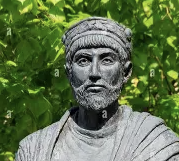
Are you not aware that all offerings whether great or small that are brought to the gods with piety have equal value, whereas without piety, I will not say hecatombs, but, by the gods, even the Olympian sacrifice of a thousand oxen is merely empty expenditure and nothing else?
▼
Source
source
Oration to the Cynic Heracleios
2 months 2 weeks ago
The pessimist has to invent new reasons to exist every day: he is a victim of the "meaning" of life.

4 months ago
I care not so much what I am to others as what I am to myself. I will be rich by myself, and not by borrowing.
▼
Source
source
Book II, Ch. 16
3 months 1 week ago
As Cæsar was at supper the discourse was of death,-which sort was the best. "That," said he, "which is unexpected."
▼
Source
source
Cæsar
3 months 1 week ago
To abjure the notion of the "truly human" is to abjure the attempt to divinize the self as a replacement for a divinized world.
▼
Source
source
Contingency, Irony, and Solidarity (1989), p. 35
2 months 5 days ago
With all our boasted reforms, our great social changes, and our far-reaching discoveries, human beings continue to be sent to the worst of hells, wherein they are outraged, degraded, and tortured, that society may be "protected" from the phantoms of its own making.

4 months 1 week ago
The Word takes to Himself one man, for He takes unity. He does not take schisms to Himself, nor does He take heresies. So it is one man who is taken, and his Head is Christ. This is that "blessed man who hath not walked in the council of the ungodly" (Ps. 1:1); this is he that is assumed. He is not outside of us. Let us be in Him, and we shall be assumed; let us be in Him, and we shall be chosen. Therefore this one man that is taken to become the temple of God, is at once many and one.
▼
Source
source
p.430
2 months 3 weeks ago
Only through blind Instinct, in which the only possible guidance of the Imperative is awanting, does the Power in Intuition remain undetermined; where it is schematised as absolute it becomes infinite; and where it is presented in a determinate form, as a principle, it becomes at least manifold. By the above-mentioned act of Intelligising, the Power liberates itself from Instinct, to direct itself towards Unity.
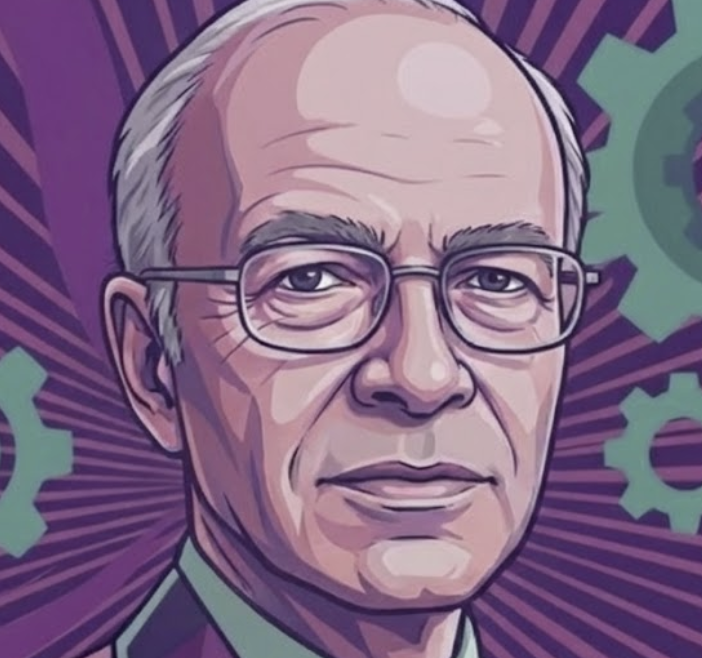
3 months 1 week ago
To be honest, I was somewhat disappointed... It's had effects around the margins, of course, but they have mostly been minor. When I wrote it, I really thought the book would change the world. I know it sounds a little grand now, but at the time the sixties still existed for us. It looked as if real changes were possible, and I let myself believe that this would be one of them. All you have to do is walk around the corner to McDonald's to see how successful I have been.
▼
Source
source
Quoted by Michael Specter on the impact of the book Animal Liberation, "The Dangerous Philosopher", The New Yorker, 6 September 1999.

2 weeks 4 days ago
The political program of nation building in countries like Afghanistan and Iraq is one central example of the productive project of biopower and war. Nothing could be more postmodernist and antiessentialist than this notion of nation building.

4 months 2 weeks ago
The military mind remains unparalleled as a vehicle of creative stupidity.
4 months 1 week ago
Charity is no substitute for justice withheld.
▼
Source
source
As quoted in Majority of One (1957) by Sydney J. Harris, p. 283
4 months 2 weeks ago
It's better to bet on this life than on the next.
2 months 3 weeks ago
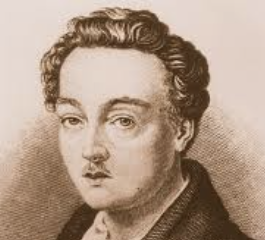
The statue of Freedom has not been cast yet, the furnace is hot, we can all still burn our fingers.
▼
Source
source
Act I.
4 months 3 weeks ago
Concerning the generation of animals akin to them, as hornets and wasps, the facts in all cases are similar to a certain extent, but are devoid of the extraordinary features which characterize bees; this we should expect, for they have nothing divine about them as the bees have.

3 months 3 weeks ago
I do wish I believed in the life eternal, for it makes me quite miserable to think man is merely a kind of machine endowed, unhappily for himself, with consciousness.
▼
Source
source
Greek Exercises (1888); at the age of fifteen, Russell used to write down his reflections in this book, for fear that his people should find out what he was thinking.

4 weeks 1 day ago
Their minds befogged by fashionable nonsense about globalisation, western leaders believe liberal democracy is spreading unstoppably. The reality is continuing political diversity. Republics, empires, liberal and illiberal democracies, and a wide variety of authoritarian regimes will be with us for the foreseeable future. Globalisation is nothing more than the industrialisation of the planet, and increasing resource nationalism is an integral part of the process. (So is accelerating climate change, but that's another story.) As industrialisation spreads, countries that control natural resources use these resources to advance their strategic objectives.
▼
Source
source
Folly of the progressive fairytale, The Observer
4 months 6 days ago
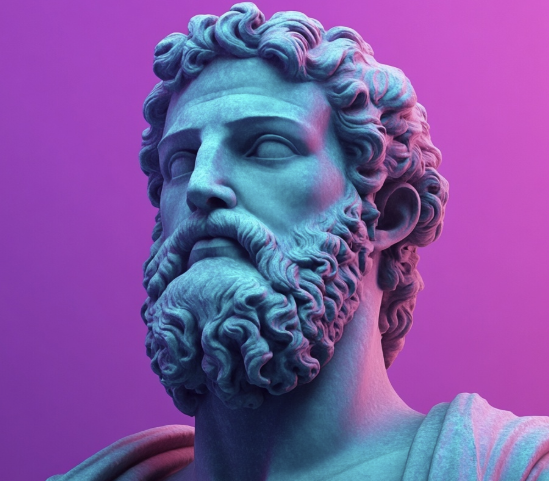
For what is it that everyone is seeking? To live securely, to be happy, to do everything as they wish to do, not to be hindered, not to be subject to compulsion.
▼
Source
source
Book IV, ch. 1, 46.

1 week 6 days ago
Can there be a more horrible object in existence than an eloquent man not speaking the truth?
▼
Source
source
Address as Lord Rector of Edinburgh University, (1866), reported in Bartlett's Familiar Quotations, 10th ed. (1919).

2 months 3 weeks ago
...what the freedom is that I love, and that to which I think all men intitled. It is not solitary, unconnected, individual, selfish Liberty. As if every Man was to regulate the whole of his Conduct by his own will. The Liberty I mean is social freedom. It is that state of things in which Liberty is secured by the equality of Restraint; A Constitution of things in which the liberty of no one Man, and no body of Men and no Number of men, can find Means to trespass on the liberty of any Person, or any description of Persons in the Society. This kind of liberty is indeed but another name for Justice, as ascertained by wise Laws, and secured by well-constructed institutions.
▼
Source
source
Letter to Charles-Jean-François Depont (November 1789), quoted in Alfred Cobban and Robert A. Smith (eds.), The Correspondence of Edmund Burke, Volume VI: July 1789-December 1791 (1967), p. 42
1 week 1 day ago
Government spending cannot create additional jobs. If the government provides the funds required by taxing the citizens or by borrowing from the public, it abolishes on the one hand as many jobs as it creates on the other. If government spending is financed by borrowing from the commercial banks, it means credit expansion and inflation. If in the course of such an inflation the rise in commodity prices exceeds the rise in nominal wage rates, unemployment will drop. But what makes unemployment shrink is precisely the fact that real wage rates are falling.
CivilSimian.com created by AxiomaticPanic, CivilSimian, Kalokagathia