

3 months 4 weeks ago
When speaking of the spiritual nature or the soul, we are referring to that which is "inner" or "new." When speaking of the bodily nature, or that which is flesh and blood, we are referring to that which is called "sensual," "outward," or "old." Paul writes in 2 Corinthians 4:16: "Even though our outer nature is wasting away, our inner nature is being renewed day by day."
▼
Source
source
p. 51

3 months 3 weeks ago
The trouble with fiction... is that it makes too much sense. Reality never makes sense.
▼
Source
source
"John Rivers" in The Genius and the Goddess, 1955
3 months 4 weeks ago
To turn one's eyes away from Jesus means to turn them to the Law.
▼
Source
source
Chapter 2
1 month 2 weeks ago
Faith exalts the human heart, by removing it from the market-place, making it sacred and unexchangeable. Under the jurisdiction of religion our deeper feelings are sacralized, so as to become raw material for the ethical life: the life lived in judgement.
▼
Source
source
"Avant-garde and Kitsch" (p. 91)
1 week ago
Just as the schoolmen philosophized only inside the belief of the church, ... without ever throwing a doubt upon this belief; as authors fill whole folios on the State without calling in question the fixed idea of the State itself; as our newspapers are crammed with politics because they are conjured into the fancy that man was created to be a zoon politicon,-so also subjects vegetate in subjection, virtuous people in virtue, liberals in humanity, etc., without ever putting to these fixed ideas of theirs the searching knife of criticism. Undislodgeable, like a madman's delusion, those thoughts stand on a firm footing, and he who doubts them-lays hands on the sacred!
▼
Source
source
Cambridge 1995, p. 44
2 months 2 weeks ago
Whereas logic and objectivity are usually the predominant features of a man's outer attitude, or are at least regarded as ideals, in the case of a woman it is feeling. But in the soul it is the other way round: inwardly it is the man who feels, and the woman who reflects. Hence a man's greater liability to total despair, while a woman can always find comfort and hope; accordingly a man is more likely to put an end to himself than a woman. However much a victim of social circumstances a woman may be, as a prostitute for instance, a man is no less a victim of impulses from the unconscious, taking the form of alcoholism and other vices.
▼
Source
source
Psychological Types (1921). CW 6. P.805
4 months 2 weeks ago
You know what charm is: a way of getting the answer 'yes' without having asked any clear question.
2 months 3 weeks ago
Since it cannot be overlooked by the Doctrine of Knowledge that Actual Knowledge does by no means present itself as a Unity, such as is assumed above but as a multiplicity, there is consequently a second task imposed upon it, - that of setting forth the ground of this apparent Multiplicity. It is of course understood that this ground is not to be derived from any outward source, but must be shown to be contained in the essential Nature of Knowledge itself as such; - and that therefore this problem, although apparently two-fold, is yet but one and the same, - namely, to set forth the essential Nature of Knowledge.

4 months 2 weeks ago
To succeed, planning alone is insufficient. One must improvise as well.

6 days ago
Besides, he who is feared, fears also; no one has been able to arouse terror and live in peace of mind.

2 months 2 weeks ago
I am enraptured by Hindu philosophy, whose essential endeavor is to surmount the self; and everything I do, everything I think is only myself and the selfs humiliations.
3 months 3 weeks ago
The happiness which forms the utilitarian standard of what is right in conduct, is not the agent's own happiness, but that of all concerned. As between his own happiness and that of others, utilitarianism requires him to be as strictly impartial as a disinterested and benevolent spectator. In the golden rule of Jesus of Nazareth, we read the complete spirit of the ethics of utility. To do as one would be done by, and to love one's neighbour as oneself, constitute the ideal perfection of utilitarian morality.
▼
Source
source
Ch. 2

3 months 4 weeks ago
He who fears he shall suffer, already suffers what he fears.
▼
Source
source
Book III, Ch. 13
2 months 2 weeks ago
To understand oneself is the classic form of consolation; to elude oneself is the romantic.
▼
Source
source
p. 51



3 months 2 weeks ago
For Genet, reflective states of mind are the rule. And although they are of an unstable nature in everyone, in him...reflection is always contrary to the reflected feeling.
▼
Source
source
p. 278

3 months 3 weeks ago
The labour-power is a commodity, not capital, in the hands of the labourer, and it constitutes for him a revenue so long as he can continuously repeat its sale; it functions as capital after its sale, in the hands of the capitalist, during the process of production itself.
▼
Source
source
Vol. II, Ch. XIX, p. 384.
4 months 1 week ago
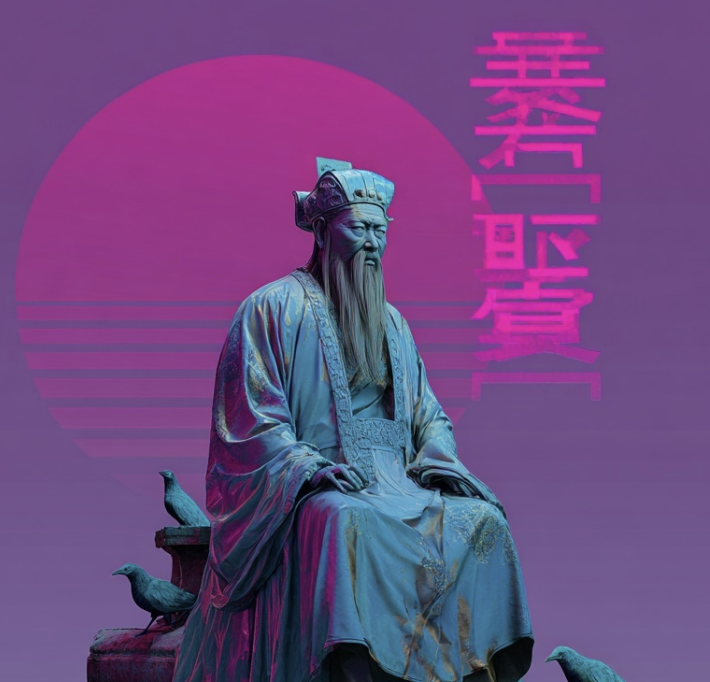
The administration of government lies in getting proper men. Such men are to be got by means of the ruler's own character. That character is to be cultivated by his treading in the ways of duty. And the treading those ways of duty is to be cultivated by the cherishing of benevolence.
2 months 1 week ago
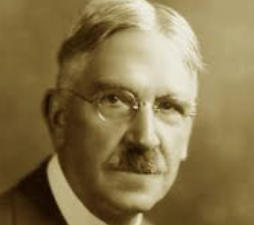
It is no accident that all democracies have put a high estimate upon education; that schooling has been their first care and enduring charge. Only through education can equality of opportunity be anything more than a phrase. Accidental inequalities of birth, wealth, and learning are always tending to restrict the opportunities of some as compared with those of others. Only free and continued education can counteract those forces which are always at work to restore, in however changed a form, feudal oligarchy. Democracy has to be born anew every generation, and education is its midwife.
▼
Source
source
"The Need of an Industrial Education in an Industrial Democracy," Manual Training and Vocational Education17 (1916); also Middle Works 10: 137-143.
1 day ago
Engels feared that the Socialists, in order to gain adherents in the electoral struggles rapidly, would make promises which were contrary to Marxist doctrine. The antisemites told the peasants and the small shopkeepers that they would protect them from the development of capitalism. Engels thought that an imitation of this procedure would be dangerous, since, in his opinion, the social revolution could only be realised when capitalism had almost completely destroyed the small proprietors and small industries; if the Socialists, then, endeavoured to hinder this evolution, they would ultimately compromise their own cause.
▼
Source
source
Reflections on Violence, London: UK, George Allen & Unwin, (reprinted in Saxony 1925) p. 180
3 months 3 weeks ago
If conquest constitutes a natural right on the part of the few, the many have only to gather sufficient strength in order to acquire the natural right of reconquering what has been taken from them.
▼
Source
source
The Abolition of Landed Property Letter to Robert Applegarth, 3 December 1869

2 weeks 3 days ago
Disobedience to authority is one of the most natural and healthy acts.
▼
Source
source
210
1 month ago
I discovered that what's really important for a creator isn't what we vaguely define as inspiration or even what it is we want to say, recall, regret, or rebel against. No, what's important is the way we say it. Art is all about craftsmanship. Others can interpret craftsmanship as style if they wish. Style is what unites memory or recollection, ideology, sentiment, nostalgia, presentiment, to the way we express all that. It's not what we say but how we say it that matters.
▼
Source
source
Craftsmanship
2 months 2 weeks ago
It is false that kings are entitled to the eminence they obtain. They possess no intrinsic superiority over their subjects. The line of distinction that is drawn is the offspring of pretense, an indirect means employed for effecting certain purposes, and not the language of truth. It tramples upon the genuine nature of things, and depends for its support upon this argument, 'that, were it not for impositions of a similar nature, mankind would be miserable.'
▼
Source
source
Book V, Ch. 6, "Of Subjects"

3 months 3 weeks ago
The world is upheld by the veracity of good men: they make the earth wholesome.
▼
Source
source
Uses of Great Men
1 month 1 week ago
Joe Hume talked to me very earnestly about the necessity of an union of Liberals. He said much about Ballot and the Franchise. I told him that I could easily come to some compromise with him and his friends on these matters, but that there were other questions about which I feared that there was an irreconcileable difference, particularly the vital question of national defence. He seemed quite confounded, and had absolutely nothing to say. I am fully determined to make them eat their words on that point, or to have no political connection with them.
▼
Source
source
Journal entry (November 1852), quoted in George Otto Trevelyan, The Life and Letters of Lord Macaulay, Volume II (1876), p. 368

2 months 3 weeks ago
In the United States, except for slaves, servants and the destitute fed by townships, everyone has the vote and this is an indirect contributor to law-making. Anyone wishing to attack the law is thus reduced to adopting one of two obvious courses: they must either change the nation's opinion or trample its wishes under foot.
▼
Source
source
Chapter XIV.
2 months 3 weeks ago
With much care and skill power has been broken into fragments in the American township, so that the maximum possible number of people have some concern with public affairs.
▼
Source
source
Chapter V.
3 months 3 weeks ago
Capacity for the nobler feelings is in most natures a very tender plant, easily killed, not only by hostile influences, but by the mere want of sustenance; and in the majority of young persons it speedily dies away if the occupations to which their position in life has devoted them, and the society into which it has thrown them, are not favourable to keeping that higher capacity in existence.
▼
Source
source
Ch. 2

1 month 2 weeks ago
The sculptural qualities of the image dim down the purely personal identity.
▼
Source
source
(p. 369)

4 months 2 weeks ago
I shall have to test the theory of my father Parmenides, and contend forcibly that after a fashion not-being is and on the other hand in a sense being is not. For unless these statements are either disproved or accepted, no one who speaks about false words, or false opinion whether images or likenesses or imitations or appearances about the arts which have to do with them, can ever help being forced to contradict himself and make himself ridiculous.
2 months 1 day ago
Instead of gambling on the eternal impossibility of the revolution and on the fascist return of a war-machine in general, why not think that a new type of revolution is in the course of becoming possible, and that all kinds of mutating, living machines conduct wars, are combined and trace out a plane of consistence which undermines the plane of organization of the World and the States?
▼
Source
source
from Dialogues with Claire Parnet, p. 147 [emphasis in original].
4 months 1 week ago
There is nothing more visible than what is secret, and nothing more manifest than what is minute. Therefore the superior man is watchful over himself, when he is alone.
1 week ago
The will is not fundamentally right, as the practical ones would like very much to assure us; one may not pass over the desire for knowledge in order to stand immediately in the will, but knowledge perfects itself to will when it desensualizes itself and creates itself as a spirit "which builds its own body."
▼
Source
source
p. 21
3 months 1 week ago
Virtue is the same for a man and for a woman.
▼
Source
source
§ 5

3 months 3 days ago
None but a Craftsman can judge of a craft.

1 week 5 days ago
They indicate the saddest spiritual paralysis, and mere death-life of the souls of men: more godless theory, I think, was never promulgated in this Earth. A false man found a religion? Why, a false man cannot build a brick house!
6 days ago
Fortune has taken away, but Fortune has given.
4 months 3 weeks ago
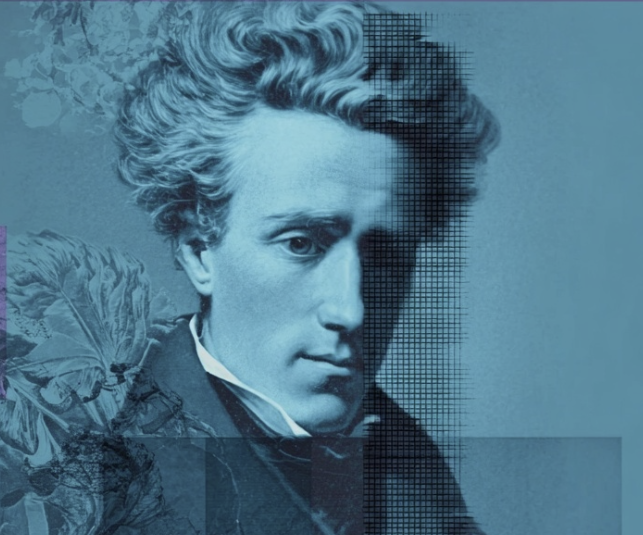
The life-giving Spirit is the very one who slays you; the first thing the life-giving Spirit says is that you must enter into death, that you must die to, it is this way in order that you many not take Christianity in vain. A life-giving Spirit, that is the invitation; who would not willingly take hold of it! But die first, that is the halt!
2 months 1 week ago
No work of art can be instantaneously perceived because there is the no opportunity for conservation and increase in tension, and hence none for that release and unfolding which gives volume to a work of art.
▼
Source
source
p. 189
3 months 3 weeks ago
That the human mind has a certain order of possible progress, in which some things must precede others, an order which governments and public instructors can modify to some, but not to an unlimited extent: that all questions of political institutions are relative, not absolute, and that different stages of human progress not only will have, but ought to have, different institutions: That government is always either in the hands, or passing into the hands, of whatever is the strongest power in society, and that what this power is, does not depend on institutions, but institutions on it: That any general theory or philosophy of politics supposes a previous theory of human progress, and that this is the same thing with a philosophy of history.
▼
Source
source
(p. 162)

2 months 2 weeks ago
He that dippeth his hand with me in the dish, the same shall betray me. The Son of man goeth as it is written of him: but woe unto that man by whom the Son of man is betrayed! it had been good for that man if he had not been born.
▼
Source
source
26:23-24 (KJV)
1 month 4 weeks ago
To conclude: there are two well-known minor ways in which language has mattered to philosophy. On the one hand there is a belief that if only we produce good definitions, often marking out different senses of words that are confused in common speech, we will avoid the conceptual traps that ensnared our forefathers. On the other hand is a belief that if only we attend sufficiently closely to our mother tongue and make explicit the distinctions there implicit, we shall avoid the conceptual traps. One or the other of these curiously contrary beliefs may nowadays be most often thought of as an answer to the question Why does language matter to philosophy? Neither seems to me enough.
▼
Source
source
Ian Hacking (1975), Why Does Language Matter to Philosophy?, p. 7.
1 month 1 week ago
Time, and reflection, and discussion, have produced their natural effect on minds eminently intelligent and candid. No intermediate shades of opinion are now left. There is no twilight. The light has been divided from the darkness. Two parties are ranged in battle array against each other. There is the standard of monopoly. Here is the standard of free trade; and by the standard of free trade I pledge myself to stand firmly.
▼
Source
source
Speech in Edinburgh (2 December 1845), quoted in Speeches of the Right Honourable T. B. Macaulay, M.P. (1854), p. 423

3 months 3 weeks ago
Objective evidence and certitude are doubtless very fine ideals to play with, but where on this moonlit and dream-visited planet are they found?
▼
Source
source
"The Will to Believe" p. 14

3 months 3 weeks ago
Ignorance is the mother of Devotion: A maxim that is proverbial, and confirmed by general experience. Look out for a people, entirely destitute of religion: If you find them at all, be assured, that they are but few degrees removed from brutes. What so pure as some of the morals, included in some theological system? What so corrupt as some of the practices, to which these systems give rise?
▼
Source
source
Part XV - General corollary
2 months 3 weeks ago
What chiefly diverts the men of democracies from lofty ambition is not the scantiness of their fortunes, but the vehemence of the exertions they daily make to improve them.
▼
Source
source
Book Three, Chapter XIX.
4 months ago
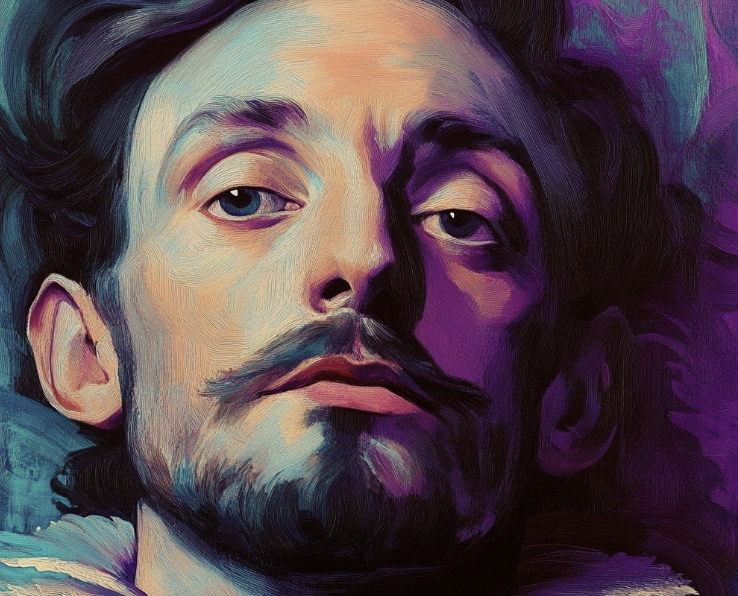
It is not possible to run a course aright when the goal itself has not been rightly placed.
▼
Source
source
Aphorism 81
2 months 6 days ago
The main importance of Francis Bacon's influence does not lie in any peculiar theory of inductive reasoning which he happened to express, but in the revolt against second-hand information of which he was a leader.
2 months 2 weeks ago
Suicide is a sudden accomplishment, a lightning-like deliverance: it is nirvana by violence.
CivilSimian.com created by AxiomaticPanic, CivilSimian, Kalokagathia