


3 months 2 weeks ago
Some people talk as if meeting the gaze of absolute goodness would be fun. They need to think again. They are still only playing with religion. Goodness is either the great safety or the great danger-according to the way you react to it.
▼
Source
source
Book I, Chapter 5, "We Have Cause to Be Uneasy"

2 months 3 weeks ago
When the leaders choose to make themselves bidders at an auction of popularity, their talents, in the construction of the state, will be of no service. They will become flatterers instead of legislators; the instruments, not the guides, of the people.
2 months 1 week ago
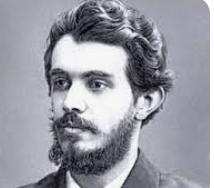
There is no objective reality. But there is only an illusion of consciousness, there is only an objectivication of reality, which was created by the spirit. The origin of life is creativity, freedom; and the personality, subject, and spirit are the representatives of that origin, but not the nature, not the object.
▼
Source
source
As translated at Gallery of Russian Thinkers ... selected by Dmitry Olshansky


7 months 3 weeks ago
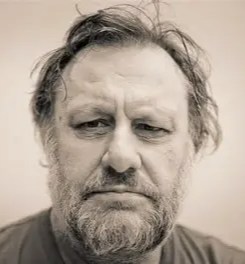
The age of philosophy in the sense again that we are confronted more and more often with philosophical problems at an everyday level. It is not that you withdraw from daily life into a world of philosophical contemplation. On the contrary, you cannot find your way around daily life itself without answering certain philosophical questions. It is a unique time when everyone is, in a way, forced to be some kind of philosopher.
1 week ago
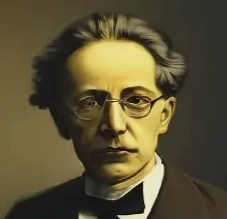
Feuerbach ... recognizes ... "even love, in itself the truest, most inward sentiment, becomes an obscure, illusory one through religiousness, since religious love loves man only for God's sake, therefore loves man only apparently, but in truth God only." Is this different with moral love? Does it love the man, this man for this man's sake, or for morality's sake, for Man's sake, and so-for homo homini Deus-for God's sake?
▼
Source
source
Cambridge 1995, p. 56

1 month 2 weeks ago
Each of our senses makes its own space, but no sense can function in isolation. Only as sight relates the touch, or kinaesthesia, or sound, can the eye see.

3 months 3 weeks ago
It is better to risk sparing a guilty person than to condemn an innocent one.
▼
Source
source
Zadig, 1747
3 months 3 weeks ago
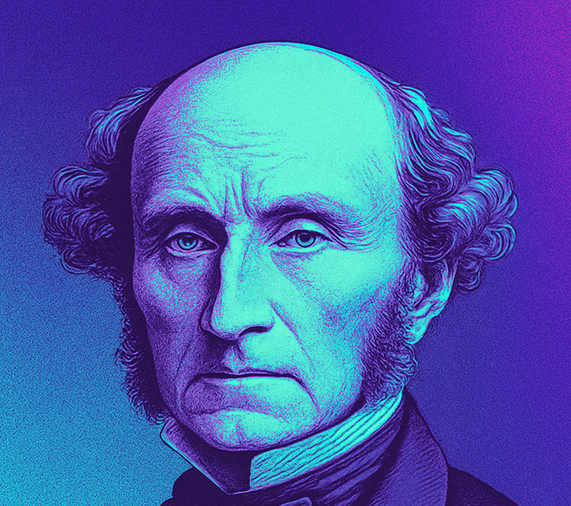
In this frame of mind it occurred to me to put the question directly to myself: "Suppose that all your objects in life were realized; that all the changes in institutions and opinions which you are looking forward to, could be completely effected at this very instant: would this be a great joy and happiness to you?" And an irrepressible self-consciousness distinctly answered, "No!" At this my heart sank within me: the whole foundation on which my life was constructed fell down. All my happiness was to have been found in the continual pursuit of this end. The end had ceased to charm, and how could there ever again be any interest in the means? I seemed to have nothing left to live for.
▼
Source
source
(pp. 133-134)
1 week 4 days ago
Children and fools speak the truth; and somehow they find happiness in their sincerity.
▼
Source
source
Ch. 1 : Our life begins
2 months 2 weeks ago
The notion contradicts reality when the latter has become self-contradictory. Hegel says that a prevailing social form can be successfully attacked by thought only if this form has come into open contradiction with its own 'truth,' in other words, if it can no longer fulfill the demands of its own contents.
2 months 2 weeks ago
I see not the shadow of a reason to conclude that their [the sexes'] virtues should differ in respect to their nature. In fact, how can they, if virtue has only one eternal standard? I must therefore, if I reason consequentially, as strenuously maintain that they must have the same simple direction as that there is a God.
▼
Source
source
-26
2 months 3 weeks ago
I hate tyranny, at least I think I do; but I hate it most of all where most are concerned in it. The tyranny of a multitude is a multiplied tyranny. If, as society is constituted in these large countries of France and England, full of unequal property, I must make my choice (which God avert!) between the despotism of a single person, or of the many, my election is made. As much injustice and tyranny has been practised in a few months by a French democracy, as in all the arbitrary monarchies in Europe in the forty years of my observation.
▼
Source
source
Letter to Captain Thomas Mercer (26 February 1790), quoted in Alfred Cobban and Robert A. Smith (eds.), The Correspondence of Edmund Burke, Volume VI: July 1789-December 1791 (1967), p. 96

3 months 4 weeks ago
The day of your birth is one day's advance towards the grave.
▼
Source
source
Ch. 20. Of the Force of Imagination (tr. Cotton, rev. W. Carew Hazlitt, 1877) Cf. Dávid Baróti Szabó, Nem kímíl meg senkit halál, wr. 1786; ed. 1914
4 months 2 weeks ago
He believes in that mummery a good deal less than I do, and I don't believe in it at all.
2 months 3 weeks ago
If the people are happy, united, wealthy, and powerful, we presume the rest. We conclude that to be good from whence good is derived.

2 months 2 weeks ago
To detach yourself elegantly from the world; to give contour and grace to sadness; a solitude in style; a walk that gives cadence to memories; stepping towards the intangible; with the breath in the trembling margins of things; the past reborn in the overflow of fragrances; the smell, through which we conquer time; the contour of the invisible things; the forms of the immaterial; to deepen yourself in the intangible; to touch the world airborne by smell; aerial dialogue and gliding dissolution; to bathe in your own reflecting fragmentation...
1 month 1 day ago
Our bodies are perishable, wealth is not at all permanent and death is always nearby. Therefore we must immediately engage in acts of merit.
2 days ago
The only way out of today's misery is for people to become worthy of each other's trust.

3 months 2 weeks ago
I will not be modest. Humble, as much as you like, but not modest. Modesty is the virtue of the lukewarm.
▼
Source
source
Act 4, sc. 5
2 months 1 day ago
The "second sight" possessed by the Highlanders in Scotland is actually a foreknowledge of future events. I believe they possess this gift because they don't wear trousers... That is also why in all countries women are more prone to utter prophecies.
▼
Source
source
L 26
2 months 6 days ago
A philosopher of imposing stature doesn't think in a vacuum. Even his most abstract ideas are, to some extent, conditioned by what is or is not known in the time when he lives.
▼
Source
source
Ch. 29, June 10, 1943.

3 months 2 weeks ago
"I never believed in God before." - that I understand. But not: "I never really believed in Him before."
▼
Source
source
p. 53e

2 months 4 days ago
The Outsider's miseries are the prophet's teething pains. He retreats into his room, like a spider in a dark corner; he lives alone, wishes to avoid people.
▼
Source
source
Chapter Four The Attempt to Gain Control
2 months 2 weeks ago
It is not society's fault that most men seem to miss their vocation. Most men have no vocation.
▼
Source
source
Ch. IV: The Aristocratic Ideal

3 months 3 weeks ago
It is never to be expected in a revolution that every man is to change his opinion at the same moment. There never yet was any truth or any principle so irresistibly obvious that all men believed it at once. Time and reason must cooperate with each other to the final establishment of any principle; and therefore those who may happen to be first convinced have not a right to persecute others, on whom conviction operates more slowly. The moral principle of revolutions is to instruct, not to destroy.
1 month 2 weeks ago
Sentimentality, like pornography, is fragmented emotion; a natural consequence of a high visual gradient in any culture.
3 months 4 weeks ago
Is it not a noble farce, wherein kings, republics, and emperors have for so many ages played their parts, and to which the whole vast universe serves for a theatre?
▼
Source
source
Book II, Ch. 36. Of the most Excellent Men
3 months 4 weeks ago
Women are the most charitable creatures, and the most troublesome. He who shuns women passes up the trouble, but also the benefits. He who puts up with them gains the benefits, but also the trouble. As the saying goes, there's no honey without bees.
▼
Source
source
Act III, scene iv

3 months 3 weeks ago
We feel and know that we are eternal.
▼
Source
source
Part V, Prop. XXIII, Scholium

2 months 1 week ago
It is the aim of public life to arrange that all forms of power are entrusted, so far as possible, to men who effectively consent to be bound by the obligation towards all human beings which lies upon everyone, and who understand the obligation. Law is the quality of the permanent provisions for making this aim effective.

3 months 3 days ago
Patience cometh by the grace of the Soul.

4 months 5 days ago
Therefore death is nothing to us, it matters not one jot, since the nature of the mind is understood to be mortal.
▼
Source
source
Book III, lines 830-831 (tr. Rouse)

1 week 5 days ago
History a distillation of Rumour.
▼
Source
source
Pt. I, Bk. VII, ch. 5.
2 months 3 weeks ago
Man has many wishes that he does not really wish to fulfil, and it would be a misunderstanding to suppose the contrary. He wants them to remain wishes, they have value only in his imagination; their fulfilment would be a bitter disappointment to him. Such a desire is the desire for eternal life. If it were fulfilled, man would become thoroughly sick of living eternally, and yearn for death. In reality man wishes merely to avoid a premature, violent or gruesome death. Everything has its measure, says a pagan philosopher; in the end we weary of everything, even of life; a time comes when man desires death. Consequently there is nothing frightening about a normal, natural death, the death of a man who has fulfilled himself and lived out his life.
▼
Source
source
Lecture XXX, Atheism alone a Positive View
Just now
We celebrate the most solemn of our Games, dedicating it to the honour of the "Invincible Sun," during which it is not lawful for anything cruel (although necessary), which the previous month presented in its Shows, should be perpetrated on this occasion. The Saturnalia, being the concluding festival, are closely followed in cyclic order by the Festival of the Sun; the which I hope that the Powers above will grant me frequently to chaunt, and to celebrate; and above all others may the Sovereign Sun, lord of the universe! He who proceeding from all eternity in the generative being of the Good, stationed as the central one amidst the central intelligible deities, and replenishing them all with concord, infinite beauty, generative superabundance, and perfect intelligence, and with all blessings collectively without limit of time; and in time present illuminating his station which moves as the centre of all the heavens, his own possession from all eternity!
2 months 4 days ago
The characteristic of the really great writer is the ability of his mind to to suddenly leap beyond his ordinary human values, into sudden perception of universal values.
▼
Source
source
p. 33
2 months 4 days ago
What can characterize the Outsider is a sense of strangeness, or unreality.
▼
Source
source
Chapter one, The Country of the Blind
4 months 5 days ago
Nothing is ever gotten out of nothing by divine power.
▼
Source
source
Book I, line 150 (tr. Munro)
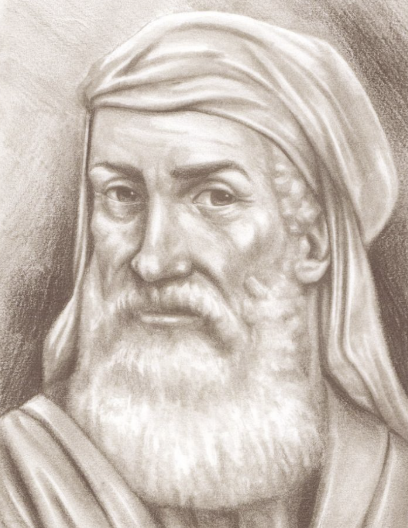
3 months 1 week ago
With deep roots Ether plunged into earth.
▼
Source
source
fr. 54
3 months 3 weeks ago
Among the Romans in Christian times Mithras-worship as very widely spread, and so late as the Middle Ages we meet with a secret Mithras-worship ostensibly connected with the order of the Knights-Templars. Mithras thrusting the knife into the neck of the ox is a figurative representation belonging essentially to the cult of Mithras, of which examples have been frequently found in Europe. Hegel, Georg Wilhelm Friedrich, Lectures on the philosophy of religion, together with a work on the proofs of the existence of God.
▼
Source
source
Vol 2 Translated from the 2d German ed. 1895 Ebenezer Brown Speirs 1854-1900, and J Burdon Sanderson p. 81-82

3 months 3 weeks ago
The necessaries of life occasion the great expense of the poor. They find it difficult to get food, and the greater part of their little revenue is spent in getting it. The luxuries and vanities of life occasion the principal expense of the rich, and a magnificent house embellishes and sets off to the best advantage all the other luxuries and vanities which they possess. A tax upon house-rents, therefore, would in general fall heaviest upon the rich; and in this sort of inequality there would not, perhaps, be anything very unreasonable. It is not very unreasonable that the rich should contribute to the public expense, not only in proportion to their revenue, but something more than in that proportion.
▼
Source
source
Chapter II, Part II, Article I, p. 911.
2 weeks ago
Bukharin, like Lenin, regarded the system of basing economic life on mass terror not as a transient necessity but as a permanent principle of socialist organization. He did not shrink from justifying all means of coercion and held, like Trotsky at the same period, that the new system called essentially for the militarization of labour - i.e. the use of police and military force to compel the whole population to work in such places and conditions as the state might arbitrarily decree. Indeed, once the market is abolished there is no longer any free sale of labour or competition between workers, and police coercion is therefore the only means of allocating "human resources". If hired labour is eliminated, only compulsory labour remains. In other words, socialism - as conceived by both Trotsky and Bukharin at this time - is a permanent, nation-wide labour camp.
▼
Source
source
(pg. 28-9)

1 month 3 weeks ago
Wealth brings a heavy purse; poverty, a light spirit.
▼
Source
source
p. 88
3 months 2 weeks ago
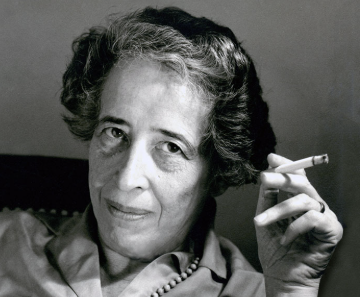
Political questions are far too serious to be left to the politicians.
▼
Source
source
Men in Dark Times
3 months 2 weeks ago
Being in love is a good thing, but it is not the best thing. There are many things below it, but there are also things above it. You cannot make it the basis of a whole life. It is a noble feeling, but it is still a feeling... Knowledge can last, principles can last, habits can last; but feelings come and go... But, of course, ceasing to be "in love" need not mean ceasing to love. Love in this second sense-love as distinct from "being in love"-is not merely a feeling. It is a deep unity, maintained by the will and deliberately strengthened by habit; reinforced by (in Christian marriages) the grace which both partners ask, and receive, from God... "Being in love" first moved them to promise fidelity: this quieter love enables them to keep the promise. It is on this love that the engine of marriage is run: being in love was the explosion that started it.
▼
Source
source
Book III, Chapter 6, "Christian Marriage"
3 months 3 days ago
There is geometry in the humming of the strings, there is music in the spacing of the spheres.
▼
Source
source
As quoted in The Mystery of Matter (1965) edited by Louise B. Young, p. 113
4 months 1 week ago
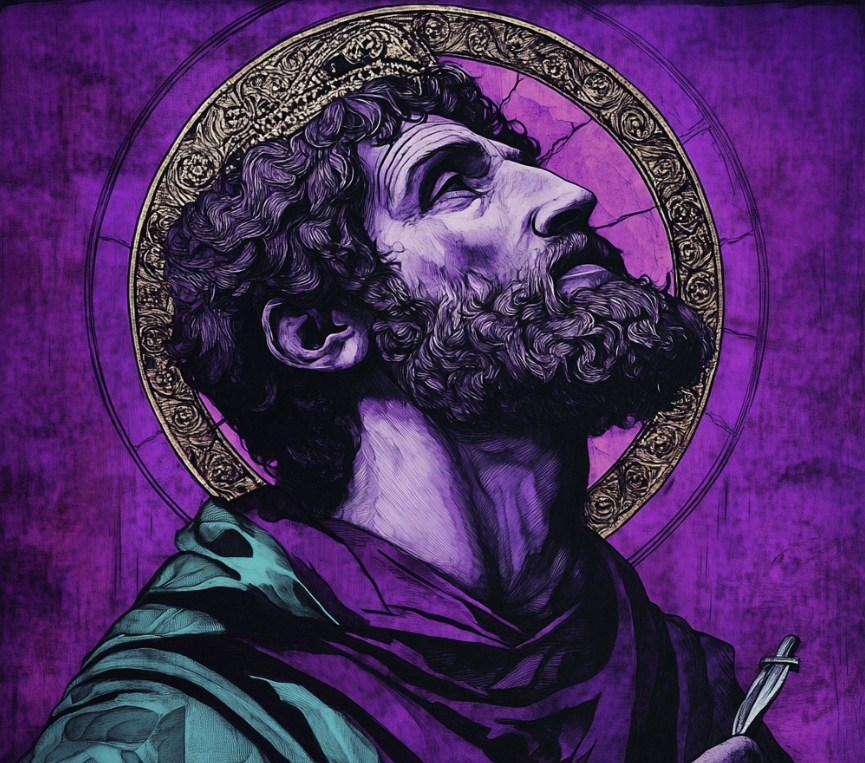
If thou shouldst say, 'It is enough, I have reached perfection,' all is lost. For it is the function of perfection to make one know one's imperfection.
▼
Source
source
Quoted by Aldous Huxley, in The Perennial Philosophy (1945)
1 week 5 days ago
Ever since prehistoric antiquity one field of study after another has crossed the divide between what the historian might call its prehistory as a science and its history proper. These transitions to maturity have seldom been so sudden or so unequivocal as my necessarily schematic discussion may have implied. But neither have they been historically gradual, coextensive, that is to say, with the entire development of the fields within which they occurred.
▼
Source
source
p. 22
CivilSimian.com created by AxiomaticPanic, CivilSimian, Kalokagathia