


5 days ago
You will die, not because you are ill, but because you are alive; even when you have been cured, thesame end awaits you; when you have recovered, it will be not death, but ill health, that you have escaped.

3 months 4 days ago
But Eudoxus the Cnidian, who was somewhat junior to Leon, and the companion of Plato, first of all rendered the multitude of those theorems which are called universals more abundant; and to three proportions added three others; and things relative to a section, which received their commencement from Plato, he diffused into a richer multitude, employing also resolutions in the prosecution of these.
▼
Source
source
Ch. IV.
3 months 2 weeks ago
The practical consequence of such a[n individualistic] philosophy is the well-known democratic respect for the sacredness of individuality,-is, at any rate, the outward tolerance of whatever is not itself intolerant. These phrases are so familiar that they sound now rather dead in our ears. Once they had a passionate inner meaning. Such a passionate inner meaning they may easily acquire again if the pretension of our nation to inflict its own inner ideals and institutions vi et armis upon Orientals should meet with a resistance as obdurate as so far it has been gallant and spirited. Religiously and philosophically, our ancient national doctrine of live and let live may prove to have a far deeper meaning than our people now seem to imagine it to possess.
▼
Source
source
"Preface"


Just now
Physicists and philosophers stick stubbornly to the principles of a mechanistic interpretation of the world after physics has, in its factual structure, already outgrown the latter. They have the same excuse as the inhabitant of the mainland who for the first time travels on the open sea: he will desperately try to stay in sight of the vanishing coast line, as long as there is no other coast in sight, towards which he steers.
▼
Source
source
"Wissenschaft als symbolische Konstruktion des Menschen" Eranos-Jahrbuch (1948) GA IV, as quoted/translated by Erhard Scholz, "Philosophy as a Cultural Resource and Medium of Reflection for Hermann Weyl"

3 months 4 weeks ago
For my own part, I may desire in general to be other than I am; I may condemn and dislike my whole form, and beg of Almighty God for an entire reformation, and that He will please to pardon my natural infirmity: but I ought not to call this repentance, methinks, no more than the being dissatisfied that I am not an angel or Cato. My actions are regular, and conformable to what I am and to my condition; I can do no better; and repentance does not properly touch things that are not in our power; sorrow does.. I imagine an infinite number of natures more elevated and regular than mine; and yet I do not for all that improve my faculties, no more than my arm or will grow more strong and vigorous for conceiving those of another to be so.
▼
Source
source
Ch. 2
1 month 4 weeks ago
We are organization watchers in our role as citizens. Increasing attention has been fixed in recent years upon the functioning of society's organizations: its large corporations and its governments. Hence this could also be described as a book for Everyman-for it proposes a way of thinking about organizational issues that concern us all.
▼
Source
source
Simon (1975, p. ix); As cited in Stefano Franchi(2006) "Herbert simon, anti-philosopher." Computing and Philosophy. p. 34.

4 months 1 week ago
There is no body but eats and drinks. But they are few who can distinguish flavors.
3 months 2 weeks ago
If it recedes one day, leaving behind its works and signs on the shores of our civilization, the structuralist invasion might become a question or the historian of ideas, or perhaps even an object. But the historian would be deceived if he came to this pass: by the very act of considering the structuralist invasion as an object he would forget its meaning and would forget that what is at stake, first of all, is an adventure of vision, a conversion of the way of putting questions to any object posed before us, to historical objects-his own- in particular. And, unexpectedly among these, the literary objects.
▼
Source
source
Force and Signification
3 months 2 weeks ago
The mere word 'design' by itself has no consequences and explains nothing. It is the barrenest of principles. The old question of whether there is design is idle. The real question is what is the world, whether or not it have a designer - and that can be revealed only by the study of all nature's particulars.
▼
Source
source
Lecture III, Some Metaphysical Problems Pragmatically Considered

3 months 3 weeks ago
Two very different ideas are usually confounded under the name democracy. The pure idea of democracy, according to its definition, is the government of the whole people by the whole people, equally represented. Democracy, as commonly conceived and hitherto practiced, is the government of the whole people by a mere majority of the people exclusively represented. The former is synonymous with the equality of all citizens; the latter, strangely confounded with it, is a government of privilege in favor of the numerical majority, who alone possess practically any voice in the state. This is the inevitable consequence of the manner in which the votes are now taken, to the complete disfranchisement of minorities.
▼
Source
source
Ch. VII: Of True and False Democracy; Representation of All, and Representation of the Majority only (p. 247)

3 months 3 weeks ago
In England, and in all Roman Catholic countries, the lottery of the church is in reality much more advantageous than is necessary.
▼
Source
source
Chapter X, Part II, p. 155.

3 months 2 weeks ago
Don't get involved in partial problems, but always take flight to where there is a free view over the whole single great problem.

2 months 3 weeks ago
In the United States a man builds a house to spend his latter years in it and he sells it before the roof is on. He plants a garden and lets it just as the trees are coming into bearing. He brings a field into tillage and leaves other men to gather the crops. He embraces a profession and gives it up. He settles in a place which he soon afterward leaves to carry his changeable longings elsewhere. If his private affairs leave him any leisure he instantly plunges into the vortex of politics and if at the end of a year of unremitting labour he finds he has a few days' vacation, his eager curiosity whirls him over the vast extent of the United States, and he will travel fifteen hundred miles in a few days to shake off his happiness.
▼
Source
source
Chapter XXIX.

2 months 3 days ago
The Outsider cannot accept life as it is, who cannot consider his own existence or anyone else's necessary. He sees 'too deep and too much'. It is still a question of self-expression.
▼
Source
source
Chapter Four The Attempt to Gain Control

3 months 3 weeks ago
To those who inquire as to the purpose of mathematics, the usual answer will be that it facilitates the making of machines, the travelling from place to place, and the victory over foreign nations, whether in war or commerce. ... The reasoning faculty itself is generally conceived, by those who urge its cultivation, as merely a means for the avoidance of pitfalls and a help in the discovery of rules for the guidance of practical life.

3 months 3 weeks ago
Morality is a subject that interests us above all others: We fancy the peace of society to be at stake in every decision concerning it; and 'tis evident, that this concern must make our speculations appear more real and solid, than where the subject is, in a great measure, indifferent to us. What affects us, we conclude can never be a chimera; and as our passion is engag'd on the one side or the other, we naturally think that the question lies within human comprehension; which, in other cases of this nature, we are apt to entertain some doubt of. Without this advantage I never should have ventur'd upon a third volume of such abstruse philosophy, in an age, wherein the greatest part of men seem agreed to convert reading into an amusement, and to reject every thing that requires any considerable degree of attention to be comprehended.
▼
Source
source
Part 1, Section 1

3 months 1 week ago
When you wish to instruct, be brief; that men's minds may take in quickly what you say, learn its lesson, and retain it faithfully. Every word that is unnecessary only pours over the side of a brimming mind.
▼
Source
source
Lines 335-337; Edward Charles Wickham translation

3 months 2 weeks ago
Rational and kindly behavior tends to produce good results and these results remain good even when the behavior which produced them was itself produced by a pill.
▼
Source
source
"Brave New World Revisited" (1956), in Moksha: Writings on Psychedelics and the Visionary Experience (1977), p. 99
3 months 4 weeks ago
As all those have shown who have discussed civil institutions, and as every history is full of examples, it is necessary to whoever arranges to found a Republic and establish laws in it, to presuppose that all men are bad and that they will use their malignity of mind every time they have the opportunity; and if such malignity is hidden for a time, it proceeds from the unknown reason that would not be known because the experience of the contrary had not been seen, but time, which is said to be the father of every truth, will cause it to be discovered.
▼
Source
source
Book 1, Ch. 3

1 month 2 weeks ago
Newton, and 'proper scientific method' after him, conducted attention to 'continuous description' of experimental phenomena instead of to causes.
▼
Source
source
p. 50

4 months 3 weeks ago
And surely to know what this good is, is of great importance for the conduct of life, for in that case we shall be like archers shooting at a definite mark, and shall be more likely to do what is right. But, if this is the case, we must try to comprehend, in outline at least, what it is and to which of the sciences it belongs.

4 months 2 weeks ago
There were many special laws affecting the several kings inscribed about the temples, but the most important was the following: They were not to take up arms against one another, and they were all to come to the rescue if any one in any of their cities attempted to overthrow the royal house; like their ancestors, they were to deliberate in common about war and other matters, giving the supremacy to the descendants of Atlas. And the king was not to have the power of life and death over any of his kinsmen unless he had the assent of the majority of the ten.
2 months 3 weeks ago
Men sometimes submit to shame, to tyranny, to conquest, but they never long suffer anarchy. There is no people so barbarous that they escape this general law of humanity.
▼
Source
source
Second letter on Algeria (1837), Travels in Algeria p. 38
3 months 3 weeks ago
The fact that a belief has a good moral effect upon a man is no evidence whatsoever in favor of its truth.
▼
Source
source
BBC Radio Debate on the Existence of God, Russell vs. Copleston, 1948
1 month 2 weeks ago
Acoustic space is totally discontinuous, like touch. It is a sphere without centers or margins.

4 months 2 weeks ago
Art, at least, teaches us that man cannot be explained by history alone and that he also finds a reason for his existence in the order of nature.
1 month 4 weeks ago
To conclude: there are two well-known minor ways in which language has mattered to philosophy. On the one hand there is a belief that if only we produce good definitions, often marking out different senses of words that are confused in common speech, we will avoid the conceptual traps that ensnared our forefathers. On the other hand is a belief that if only we attend sufficiently closely to our mother tongue and make explicit the distinctions there implicit, we shall avoid the conceptual traps. One or the other of these curiously contrary beliefs may nowadays be most often thought of as an answer to the question Why does language matter to philosophy? Neither seems to me enough.
▼
Source
source
Ian Hacking (1975), Why Does Language Matter to Philosophy?, p. 7.
2 months 1 week ago
Ideas are invented only as correctives to the past. Through repeated rectifications of this kind one may hope to disengage an idea that is valid.
▼
Source
source
A Retrospective Glance at the Lifework of a Master of Books

2 months 2 weeks ago
Detachment from the world as an attachment to the ego... Who can realize the detachment in which you are as far away from yourself as you are from the world?
3 months 3 weeks ago
The pursuit of philosophy is founded on the belief that knowledge is good, even if what is known is painful. A man imbued with the philosophic spirit, whether a professional philosopher or not, will wish his beliefs to be as true as he can make them, and will, in equal measure, love to know and hate to be in error. This principle has a wider scope than may be apparent at first sight.
3 months 3 weeks ago
As to the Approbation or Esteem of those Blockheads who call themselves the Public, & whom a Bookseller, a Lord, a Priest, or a Party can guide, I do most heartily despise it.
▼
Source
source
Letter 138, To Gilbert Elliot of Minto; August 9, 1757
3 months 3 weeks ago
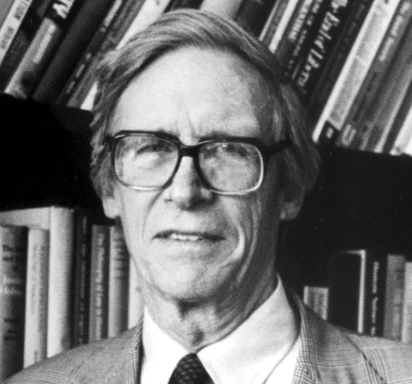
Life has a value only when it has something valuable as its object.
3 months 2 weeks ago
At best the principles that economists have supposed the choices of rational individuals to satisfy can be presented as guidelines for us to consider when we make our decisions.
▼
Source
source
Chapter IX, Section 84, p. 558

2 months 3 days ago
Rather, power is most powerful, most stable, where it creates a feeling of freedom and where it does not need to resort to violence.
1 week 6 days ago
The concept of original sin gives us a penetrating insight into human destiny.
▼
Source
source
On the Dilemmas of the Christian Legacy

3 months 2 weeks ago
Ha! to forget. How childish! I feel you in my bones. Your silence screams in my ears. You may nail your mouth shut, you may cut out your tongue, can you keep yourself from existing? Will you stop your thoughts.
▼
Source
source
Inès reiterating to Garcin that they cannot ignore one another, Act 1, sc. 5


3 months 3 weeks ago
The foundations on which several duties are built, and the foundations of right and wrong from which they spring, are not perhaps easily to be let into the minds of grown men, not us'd to abstract their thoughts from common received opinions. Much less are children capable of reasonings from remote principles. They cannot conceive the force of long deductions. The reasons that move them must be obvious, and level to their thoughts, and such as may be felt and touched. But yet, if their age, temper, and inclination be consider'd, they will never want such motives as may be sufficient to convince them.
▼
Source
source
Sec. 81
3 months 2 weeks ago
The difficulty in philosophy is to say no more than we know.
▼
Source
source
p. 45
2 months ago
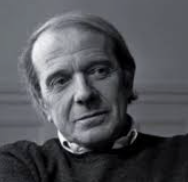
A leftist government doesn't exist because being on the left has nothing to do with governments.
▼
Source
source
from L'Abécédaire de Gilles Deleuze: G comme Gauche ("Gilles Deleuze's Alphabet Book: Left-wing Politics"), 1988-1989.
3 months 1 week ago
It is your concern when your neighbor's wall is on fire.
▼
Source
source
Book I, epistle xviii, line 84
4 months 3 weeks ago
But the greatest thing by far is to have a command of metaphor. This alone cannot be imparted by another; it is the mark of genius, for to make good metaphors implies an eye for resemblances.

2 months 1 week ago
Kierkegaard's individualistic interpretation of 'the negation of philosophy' inevitably developed a fierce opposition to Western rationalism. .... According to Kierkegaard, the individual is not the knowing but only the 'ethically existing subjectivity.' The sole reality that matters to him is his own 'ethical existence'.
▼
Source
source
P. 263-264

1 month 3 weeks ago
If nonviolence is to make sense as an ethical and political position, it cannot simply repress aggression or do away with its reality; rather, nonviolence emerges as a meaningful concept precisely when destruction is most likely or seems most certain.
▼
Source
source
p. 39

2 months 5 days ago
The new tinge to modern minds is a vehement and passionate interest in the relation of general principles to irreducible and stubborn facts. All the world over and at all times there have been practical men, absorbed in 'irreducible and stubborn facts'; all the world over and at all times there have been men of philosophic temperament, who have been absorbed in the weaving of general principles. It is this union of passionate interest in the detailed facts with equal devotion to abstract generalisation which forms the novelty of our present society.
▼
Source
source
Ch. 1: "The Origins of Modern Science", pp. 3-4

3 months 3 weeks ago
I do not wish to kill nor to be killed, but I can foresee circumstances in which both these things would be by me unavoidable. We preserve the so-called peace of our community by deeds of petty violence every day. Look at the policeman's billy and handcuffs! Look at the jail! Look at the gallows! Look at the chaplain of the regiment! We are hoping only to live safely on the outskirts of this provisional army. So we defend ourselves and our hen-roosts, and maintain slavery. I know that the mass of my countrymen think that the only righteous use that can be made of Sharp's rifles and revolvers is to fight duels with them, when we are insulted by other nations, or to hunt Indians, or shoot fugitive slaves with them, or the like. I think that for once the Sharp's rifles and the revolvers were employed in a righteous cause. The tools were in the hands of one who could use them.
1 day ago
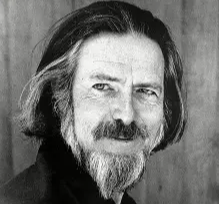
The psychotherapist ... tries to help the individual to be himself and to go it alone without giving unnecessary offense to his community, to be in the world (of social convention) but not of the world.
▼
Source
source
p. 7

2 weeks 2 days ago
The groups are not unified under any single authority but rather relate to each other in a network structure. Social forums, affinity groups, and other forms of democratic decision-making are the basis of the movements, and they manage to act together based on what they have in common. ... These globalization protest movements are obviously limited in many regards. First of all, although their vision and desire is global in scope, they have thus far only involved significant numbers in North America and Europe. Second, so long, as they remain merely protests movements, traveling from one summit meeting to the next, they will be incapable of becoming a foundational struggle and of articulating an alternative to social relations. These limitations may only be temporary obstacles, and the movements may discover ways to overcome them.
▼
Source
source
86-87
2 months 1 week ago
The way in which a society organizes the life of its members ... is one "project" of realization among others. But once the project has become operative in the basic institutions and relations, it tends to become exclusive and to determine the development of the society as a whole.
▼
Source
source
p. xlviii
CivilSimian.com created by AxiomaticPanic, CivilSimian, Kalokagathia