

2 months 2 weeks ago
The proper method for hastening the decay of error is not by brute force, or by regulation which is one of the classes of force, to endeavour to reduce men to intellectual uniformity; but on the contrary by teaching every man to think for himself.
▼
Source
source
Vol. 2, bk. 8, ch. 6

3 months 3 weeks ago
Howitt says of the man who found the great nugget which weighed twenty-eight pounds, at the Bendigo diggings in Australia: - "He soon began to drink; got a horse, and rode all about, generally at full gallop, and, when he met people, called out to inquire if they knew who he was, and then kindly informed them that he was 'the bloody wretch that had found the nugget.' At last he rode full speed against a tree, and nearly knocked his brains out." I think, however, there was no danger of that, for he had already knocked his brains out against the nugget.
▼
Source
source
p. 489
1 day ago
Additionally, in the United States, we define manliness in terms of aggression. I think it must be because we're frightened. We put on a show of being tough guys, but it's completely unnecessary, you know. If you have what it takes, you don't need to put on an act, and you certainly don't need to beat nature into submission. Why be hostile to nature?
▼
Source
source
p. 8

3 months 2 weeks ago
The measure of action is the sentiment from which it proceeds. The greatest action may easily be one of the most private circumstance.
▼
Source
source
Goethe; or, The Writer

3 months 2 weeks ago
"I wish I had never been born," she said. "What are we born for?" "For infinite happiness," said the Spirit. "You can step out into it at any moment..."
▼
Source
source
Ch. 8
2 weeks ago
Behold... the only... rule we can follow: when a phenomenon appears... as the cause of another, we regard it as anterior. ...Therefore by cause... we define time; but...how do we recognize which is the cause and which the effect? We assume... the anterior fact, the antecedent, is the cause of the... consequent. It is then by time that we define cause. ...Shall we escape from this vicious circle?
3 months 3 weeks ago
Thoughts without content are empty, intuitions without concepts are blind. The understanding can intuit nothing, the senses can think nothing. Only through their unison can knowledge arise.
▼
Source
source
A 51, B 75

1 month 2 weeks ago
The new overkill is simply an extension of our nervous system into a total ecological service environment. Such a service environment can liquidate or terminate its beneficiaries as naturally as it sustains them.
▼
Source
source
(p. 152)

5 days ago
I propose to value them according to their character, and not according to their duties. Each man acquires his character for himself, but accident assigns his duties.
1 month 2 weeks ago
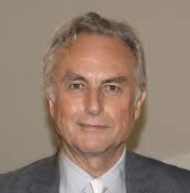
You see, if you say something positive like the whole of life - all living things - is descended from a single common ancestor which lived about 4,000 million years ago and that we are all cousins, well that is an exceedingly important and true thing to say and that is what I want to say. Somebody who is religious sees that as threatening and so I am represented as attacking religion, and I am forced into responding to their reaction. But you do not have to see my main purpose as attacking religion. Certainly I see the scientific view of the world as incompatible with religion, but that is not what is interesting about it. It is also incompatible with magic, but that also is not worth stressing. What is interesting about the scientific world view is that it is true, inspiring, remarkable and that it unites a whole lot of phenomena under a single heading. And that is what is so exciting for me.
▼
Source
source
Kam Patel (28 April 1995) . "Going the whole hog". Times Higher Education.

2 months 1 week ago
Nobody really thinks who does not abstract from that which is given, who does not relate the facts to the factors which have made them, who does not - in his mind - undo the facts. Abstractness is the very life of thought, the token of its authenticity.
▼
Source
source
p. 134
3 months 3 weeks ago
For instance, if you have by a lie hindered a man who is even now planning a murder, you are legally responsible for all the consequences. But if you have strictly adhered to the truth, public justice can find no fault with you, be the unforeseen consequence what it may. It is possible that whilst you have honestly answered Yes to the murderer's question, whether his intended victim is in the house, the latter may have gone out unobserved, and so not have come in the way of the murderer, and the deed therefore have not been done; whereas, if you lied and said he was not in the house, and he had really gone out (though unknown to you) so that the murderer met him as he went, and executed his purpose on him, then you might with justice be accused as the cause of his death. For, if you had spoken the truth as well as you knew it, perhaps the murderer while seeking for his enemy in the house might have been caught by neighbours coming up and the deed been prevented.
3 months 2 weeks ago
He [God] lends us a little of His reasoning powers and that is how we think: He puts a little of His love into us and that is how we love one another. When you teach a child writing, you hold its hand while it forms the letters: that is, it forms the letters because you are forming them. We love and reason because God loves and reasons and holds our hand while we do it.
▼
Source
source
Book II, Chapter 4, "The Perfect Penitent"
2 months 1 week ago
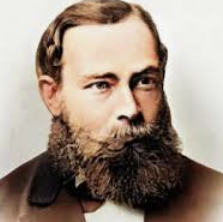
A scientist can hardly meet with anything more undesirable than to have the foundations give way just as the work is finished. I was put in this position by a letter from Mr. Bertrand Russell when the work was nearly through the press.
▼
Source
source
Note in the appendix of Grundlagen der Arithmetik (Vol. 2) after Frege had received a letter of Bertrand Russell in which Russell had explained his discovery of, what is now known as, Russell's paradox.

4 months 2 weeks ago
A punishment that penalizes without forestalling is indeed called revenge.

4 months 6 days ago
What is the Church? She is the body of Christ. Join to it the Head, and you have one man: The Head and the body make up one man. Who is the head? He who was born of the Virgin Mary. And what is His body? It is His Spouse, that is, the Church.... The Father willed that these two, the God Christ and the Church, should be one man. All men are one man in Christ, and the unity of the Christians constitutes but one man. And this man is all men, all men are this man; for all are one, since Christ is one.
▼
Source
source
p. 414

1 week 4 days ago
"A fair day's wages for a fair day's work": it is as just a demand as governed men ever made of governing. It is the everlasting right of man.
▼
Source
source
Bk. I, ch. 3.
4 months 5 days ago
When I see someone in anxiety, I say to myself, What can it be that this fellow wants? For if he did not want something that was outside of his control, how could he still remain in anxiety?
▼
Source
source
Book II, ch. 13, 1.
2 months 2 weeks ago
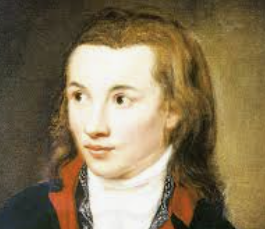
Blood will stream over Europe until the nations become aware of the frightful madness which drives them in circles. And then, struck by celestial music and made gentle, they approach their former altars all together, hear about the works of peace, and hold a great celebration of peace with fervent tears before the smoking altars.
▼
Source
source
As quoted in the Fourth Leaflet of the White Rose
2 months 1 week ago
The hypostasis of the particular methods of procedure employed by natural science ... results in the view that all theoretical differences which rest on historically conditioned antagonisms of interest are to be settles by a "crucial experiment" rather than by struggle and counter-struggle. The harmonious relation of individuals to one another becomes a fact, therefore, that has even more general character than a law of nature.
▼
Source
source
p. 148.
2 months 6 days ago
Implication is thus the very texture of our web of belief, and logic is the theory that traces it.
▼
Source
source
S. 41
1 week 6 days ago
Young Schopenhauer, a zealous and thorough-going Kantian, tried to explain that light would cease to exist along with the seeing eye. "What!" he said, according to Schopenhauer's own report, "looking at him with his Jove-like eyes,"-"You should rather say that you would not exist if the light could not see you?"
▼
Source
source
As quoted by Friedrich Jodl, "Goethe and Kant," The Monist (1901) f. Edward C. Hegeler, ed. Paul Carus, Vol. 11, p. 264. As translated from Professor Jodl's MS. by W. H. Carruth, of the University of Kansas.
2 months ago
Man is always partial and is quite right to be. Even impartiality is partial.
▼
Source
source
F 78

3 months 3 weeks ago
I quite understand the principle of confining employment as far as possible to the British without regard for efficiency. I think, however, that the Ministry is not applying the principle sufficiently widely. I know many Englishmen who have married foreigners, and many English potential wives who are out of a job. Would not a year be long enough to train an English wife to replace the existing foreign one in such cases?
▼
Source
source
Enclosed reply to the Ministry of Labour, in defense of A. S. Neill (who declined to send it), 27 January, 1931
2 months 2 weeks ago
Christianity set itself the goal of fulfilling man's unattainable desires, but for that very reason ignored his attainable desires. By promising man eternal life, it deprived him of temporal life, by teaching him to trust in God's help it took away his trust in his own powers; by giving him faith in a better life in heaven, it destroyed his faith in a better life on earth and his striving to attain such a life. Christianity gave man what his imagination desires, but for that very reason failed to give him what he really and truly desires.
▼
Source
source
Lecture XXX, Atheism alone a Positive View
1 week 6 days ago
And now the sagacious reader, who is capable of reading into these lines what does not stand written in them, but is nevertheless implied, will be able to form some conception of the serious feelings with which I then set foot in Emmendingen.
▼
Source
source
Autobiography: Truth and Poetry Book xviii. London 1884 p. 115 books.google.de



3 months 2 weeks ago
Justice is what love looks like in public.
▼
Source
source
Brother West (2009), p. 232
1 month 1 week ago
There is only one way to defeat the enemy, and that is to write as well as one can. The best argument is an undeniably good book.
▼
Source
source
Quoted by Granville Hicks in The Living Novel: A Symposium (Macmillan, 1957; digitized version in 2006), p. ix

2 months 2 weeks ago
We have repeatedly observed that while any whole is evolving, there is always going on an evolution of the parts into which it divides itself; but we have not observed that this equally holds of the totality of things, which is made up of parts within parts from the greatest down to the smallest.
▼
Source
source
Pt. II, The Knowable; Ch. XV, The Law of Evolution (continued)
4 months 1 week ago
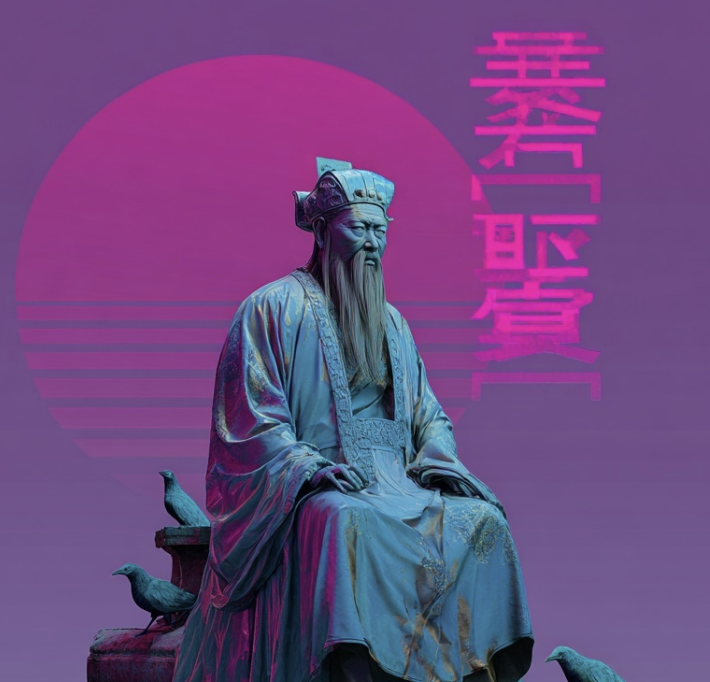
A man's character is formed by the Odes, developed by the Rites and perfected by music.
3 months 3 weeks ago
It is so rare to meet with a man out-doors who cherishes a worthy thought in his mind, which is independent of the labor of his hands.
3 months 1 week ago
And I will tell you something else: there is no birth of all mortal things, nor any end in wretched death, but only a mixing and dissolution of mixtures; 'birth' is so called on the part of mankind.
▼
Source
source
fr. 8

2 months 3 weeks ago
I have no hesitation in saying that although the American woman never leaves her domestic sphere and is in some respects very dependent within it, nowhere does she enjoy a higher station. And if anyone asks me what I think the chief cause of the extraordinary prosperity and growing power of this nation, I should answer that it is due to the superiority of their women.
▼
Source
source
Book Three, Chapter XII.

2 months 2 weeks ago
So long as man is protected by madness he functions and flourishes, but when he frees himself from the fruitful tyranny of fixed ideas, he is lost, ruined.
3 months 2 weeks ago
Justice does not require that men must stand idly by while others destroy the basis of their existence.
▼
Source
source
Chapter IV, Section 35, p. 218
1 month 3 weeks ago
There is no gender identity behind the expressions of gender; that identity is performatively constituted by the very "expressions" that are said to be its results.
▼
Source
source
Gender Trouble: Feminism and the Subversion of Identity

3 months 2 days ago
Educate the children and it won't be necessary to punish the men.
▼
Source
source
As quoted in Geary's Guide to the World's Great Aphorists (2007) by James Geary
1 week 4 days ago
Our grand business undoubtedly is, not to see what lies dimly at a distance, but to do what lies clearly at hand.

4 months 2 weeks ago
Science is a systematic method for studying and working out those generalizations that seem to describe the behavior of the universe. It could exist as a purely intellectual game that would never affect the practical life of human beings either for good or evil, and that was very nearly the case in ancient Greece, for instance. Technology is the application of scientific findings to the tools of everyday life, and that application can be wise or unwise, useful or harmful. Very often, those who govern technological decisions are not scientists and know little about science.
3 months 4 weeks ago
For as when much superfluous matter has gathered in simple bodies, nature makes repeated efforts to remove and purge it away, thereby promoting the health of these bodies, so likewise as regards that composite body the human race, when every province of the world so teems with inhabitants that they can neither subsist where they are nor remove elsewhere, every region being equally crowded and over-peopled, and when human craft and wickedness have reached their highest pitch, it must needs come about that the world will purge herself in one or another of these three ways, to the end that men, becoming few and contrite, may amend their lives and live with more convenience.
▼
Source
source
Book 1 Ch. 5 (as translated by Ninian Hill Thomson)

3 months 2 weeks ago
What do you want to do with the [Communist] Party? A racing stable? What good is it to sharpen a knife every day if you never use it for slicing? A party is never more than a means. There is only one objective: power.
▼
Source
source
Hoederer to Hugo, Act 5, sc. 3
3 months 3 weeks ago
There is a connected set of events (light-waves) travelling outward from a centre... there are some respects in which all events are alike, and others in which they differ... We must not think of a light-wave as a 'thing', but as a connected group of rhythmical events. The mathematical characteristics of such a group can be inferred by physics, but the intrinsic character of the component events cannot be inferred.
▼
Source
source
An Outline of Philosophy Ch.15 The Nature of our Knowledge of Physics, 1927
2 months 2 weeks ago
It is vain to expect virtue from women till they are in some degree independent of men; nay, it is vain to expect that strength of natural affection which would make them good wives and mothers. Whilst they are absolutely dependent on their husbands they will be cunning, mean, and selfish.
▼
Source
source
Ch. 9
2 months 1 week ago
When even the dictators of today appeal to reason, they mean that they possess the most tanks. They were rational enough to build them; others should be rational enough to yield to them.
▼
Source
source
p. 28.
4 months 3 weeks ago
Wit is cultured insolence.

3 months 3 weeks ago
The act of navigation is not favourable to foreign commerce, or to the growth of that opulence which can arise from it. ... As defence, however, is of much more importance than opulence, the act of navigation is, perhaps, the wisest of all the commercial regulations of England.
▼
Source
source
Chapter II
2 months 5 days ago
Nature is a structure of evolving processes. The reality is the process.
▼
Source
source
Ch. 4: "The Eighteenth Century", p. 102
2 months 1 week ago
To the mind of the ancients, who knew something of such matters, liberty and prosperity seemed hardly compatible, yet modern liberalism wants them together.
▼
Source
source
"The Irony of Liberalism"
4 months 5 days ago
Men are disturbed, not by things, but by the principles and notions which they form concerning things.
▼
Source
source
(5). (Enchiridion 5)
CivilSimian.com created by AxiomaticPanic, CivilSimian, Kalokagathia