

2 months 2 weeks ago
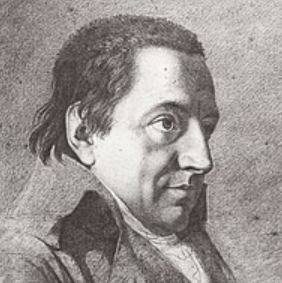
Time is taking giant strides with us more than with any other age since the history of the world began. At some point within the three years that have gone by since my interpretation of the present age that epoch has come to an end. At some point self-seeking has destroyed itself, because by its own complete development it has lost its self and the independence of that self; and since it would not voluntarily set itself any other aim but self, an external power has forced upon it another and a foreign purpose.
▼
Source
source
Introduction p. 1
3 months 2 weeks ago
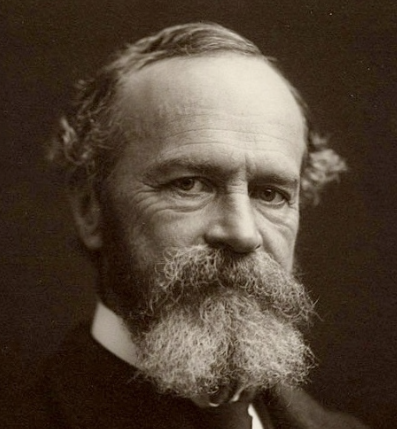
But petitional prayer is only one department of prayer; and if we take the word in the wider sense as meaning every kind of inward communion or conversation with the power recognized as divine, we can easily see that scientific criticism leaves it untouched. Prayer in this wide sense is the very soul and essence of religion.
▼
Source
source
Lecture XIX, "Other Characteristics"

3 months 3 weeks ago
The harm that is done by a religion is of two sorts, the one depending on the kind of belief which it is thought ought to be given to it, and the other upon the particular tenets believed. As regards the kind of belief: it is thought virtuous to have faith-that is to say, to have a conviction which cannot be shaken by contrary evidence. Or, if contrary evidence might induce doubt, it is held that contrary evidence must be suppressed.
▼
Source
source
preface xxiii

2 months 2 weeks ago
The ideal form for a poem, essay, or fiction, is that which the ideal writer would evolve spontaneously. One in whom the powers of expression fully responded to the state of feeling, would unconsciously use that variety in the mode of presenting his thoughts, which Art demands.
▼
Source
source
Pt. II, sec. 4, "The Ideal Writer"

3 months 3 weeks ago
All styles are good except the boring kind.
▼
Source
source
L'Enfant prodigue: comédie en vers dissillabes (1736), Preface
1 day ago
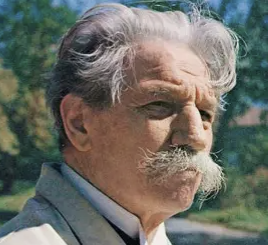
I was convinced - and I am so still - that the fundamental principles of Christianity have to be proved true by reasoning, and by no other method. Reason, I said to myself, is given us that we may bring everything within the range of its action, even the most exalted ideas of religion. And this certainty filled me with joy.

5 days ago
The point is, not how long you live, but how nobly you live. And often this living nobly means that you cannot live long.
3 months 2 weeks ago
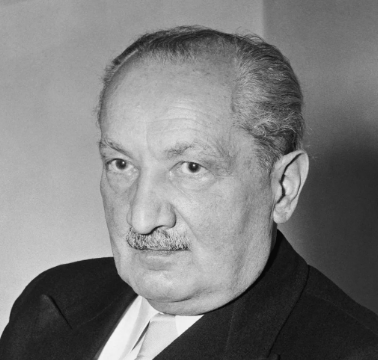
For anyone who at the end of Western philosophy can and must still question philosophically, the decisive question is no longer merely "What basic character do beings manifest?" or "How may the being of beings be characterized?" but "What is this 'being' itself?" The decisive question is that of "the meaning of being," not merely that of the being of beings.
▼
Source
source
p. 18

2 months 2 weeks ago
The multiplication of our kind borders on the obscene; the duty to love them, on the preposterous.

1 month 2 weeks ago
Computers can do better than ever what needn't be done at all. Making sense is still a human monopoly.
▼
Source
source
(p. 109)

2 months 1 week ago
One of those leaders of what they call the social revolution has said that religion is the opiate of the people. Opium...opium...opium, yes. Let us give them opium so that they can sleep and dream.
2 months 6 days ago
The struggle between the opponents and defenders of capitalism is a struggle between innovators who do not know what innovation to make and conservatives who do not know what to conserve.
▼
Source
source
p. 233
1 month 2 weeks ago
The bible belt is oral territory and therefore despised by the literati.
▼
Source
source
The Critic, Volume 33, Thomas More Association, 1974, p. 12

4 weeks 1 day ago
Everyone knows that time is Death, that Death hides in clocks. Imposing another time powered by the Clock of the Imagination, however, can refuse his law. Here, freed of the Grim Reaper's scythe, we learn that pain is knowledge and all knowledge pain.
▼
Source
source
"Death"

3 months 2 weeks ago
Marxism exists in nineteenth-century thought as a fish exists in water; that is, it ceases to breathe anywhere else.
▼
Source
source
As quoted by David Macey, The lives of Michel Foucault (1993) p. 177. Citing 'Les Intellectuels et le Pouvoir', Le'Arc 49, 1972, pp. 3-10.

1 week 4 days ago
It is all work and forgotten work, this peopled, clothed, articulate-speaking, high-towered, wide-acred World. The hands of forgotten brave men have made it a World for us; they,- honour to them; they, in spite of the idle and the dastard. This English Land, here and now, is the summary of what was found of wise, and noble, and accordant with God's Truth, in all the generations of English Men. Our English Speech is speakable because there were Hero-Poets of our blood and lineage; speakable in proportion to the number of these. This Land of England has its conquerors, possessors, which change from epoch to epoch, from day to day; but its real conquerors, creators, and eternal proprietors are these following, and their representatives if you can find them: All the Heroic Souls that ever were in England, each in their degree; all the men that ever cut a thistle, drained a puddle out of England, contrived a wise scheme in England, did or said a true and valiant thing in England.
2 months 3 days ago
Information has no scent.
1 month 3 weeks ago
Today's terrorism is not the product of a traditional history of anarchism, nihilism, or fanaticism. It is instead the contemporary partner of globalization.
▼
Source
source
The Spirit of Terrorism (2003) "The Violence of the Global"
3 months 2 weeks ago
The concentration camps, by making death itself anonymous (making it impossible to find out whether a prisoner is dead or alive), robbed death of its meaning as the end of a fulfilled life. In a sense they took away the individual's own death, proving that henceforth nothing belonged to him and he belonged to no one. His death merely set a seal on the fact that he had never existed.
▼
Source
source
Part 3, Ch. 12, § 3
2 months 1 week ago
The Kantian philosophy left a gulf between thought and being, or between subject and object, which the Hegelian philosophy sought to bridge. The bridge was to be made by positing one universal structure of all being. Being was to be a process wherein a thing 'comprehends' or 'grasps' the various states of existence and draws them into the more or less enduring unity of its 'self,' thus actively constituting itself as 'the same' throughout all change. Everything, in other words, exists more or less as a 'subject.'
▼
Source
source
P. 64
4 months 5 days ago
For on these matters we should not trust the multitude who say that none ought to be educated but the free, but rather to philosophers, who say that the educated alone are free.
▼
Source
source
Book II, ch. 1, 22.

3 months 3 weeks ago
Although usury is itself a form of credit in its bourgeoisified form, the form adapted to capital, in its pre-bourgeois form it is rather the expression of the lack of credit.
▼
Source
source
Notebook V, The Chapter on Capital, p. 455.
2 months 2 weeks ago
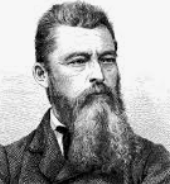
Feuerbach is saying: No, wait a minute - if you are going to be allowed to go on living as you are living, then you also have to admit that you are not Christians. Feuerbach has understood the requirements but cannot force himself to submit to them - ergo, he prefers to renounce being a Christian. And now, no matter how great a responsibility he must bear, he takes a position that is not unsound, that is, it is wrong of established Christendom to say that Feuerbach is attacking Christianity; it is not true, he is attacking the Christians by demonstrating that their lives do not correspond to the teachings of Christianity.
▼
Source
source
Soren Kierkegaard, Journals X2A 163
3 months 2 days ago
Nothing is more ancient than God, for He was never created; nothing more beautiful than the world, it is the work of that same God; nothing is more active than thought, for it flies over the whole universe; nothing is stronger than necessity, for all must submit to it.
▼
Source
source
As quoted in Love and Live Or Kill and Die: Realities of the Destruction of Human Life (2009) by James H. Wilson, p. 72

3 months 3 weeks ago
The finest workers in stone are not copper or steel tools, but the gentle touches of air and water working at their leisure with a liberal allowance of time.

4 months 2 weeks ago
I get a certain pleasure in knowing that I live not merely in a city but in Manhattan, the center of New York City, a region so unique in many ways that I honestly believe that Earth is divided into halves: Manhattan and non-Manhattan.

3 months 3 weeks ago
The remedies for all our diseases will be discovered long after we are dead; and the world will be made a fit place to live in, after the death of most of those by whose exertions it will have been made so. It is to be hoped that those who live in those days will look back with sympathy to their known and unknown benefactors.
▼
Source
source
Diary, April 15, 1854, in The Collected Works of John Stuart Mill, Toronto, 1988, vol. 27, p. 668
4 months 2 weeks ago
An atom blaster is a good weapon, but it can point both ways.
3 months 2 weeks ago
The gods we stand by are the gods we need and can use, the gods whose demands on us are reinforcements of our demands on ourselves and on one another. What I then propose to do is, briefly stated, to test saintliness by common sense, to use human standards to help us decide how far the religious life commends itself as an ideal kind of human activity . ... It is but the elimination of the humanly unfit, and the survival of the humanly fittest, applied to religious beliefs; and if we look at history candidly and without prejudice, we have to admit that no religion has ever in the long run established or proved itself in any other way. Religions have approved themselves; they have ministered to sundry vital needs which they found reigning. When they violated other needs too strongly, or when other faiths came which served the same needs better, the first religions were supplanted.
▼
Source
source
Lectures XIV and XV, "The Value of Saintliness"

2 weeks 1 day ago
That liberal world that emerged after 1945 led to one of the most spectacularly successful periods in human history. There was material progress. There was stability. There was human freedom. There was the flourishing of many human activities that can only take place in a liberal, and therefore free society...
▼
Source
source
10:06
1 month 3 weeks ago
The simulacrum is never what hides the truth-it is truth that hides the fact that there is none. The simulacrum is true.
▼
Source
source
- Ecclesiastes "The Precession of Simulacra," p. 1
2 months 2 weeks ago
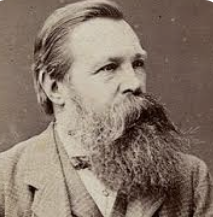
What each individual wills is obstructed by everyone else, and what emerges is something that no one willed.
▼
Source
source
Letter to Jean-Richard Bloch
2 months ago
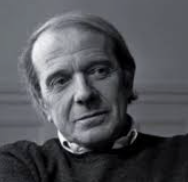
Second, we make no distinction between man and nature: the human essence of nature and the natural essence of man become one within nature in the form of production or industry, just as they do within the life of man as a species. Industry is then no longer considered from the extrinsic point of view of utility, but rather from the point of view of its fundamental identity with nature as production of man and by man.
▼
Source
source
The Desiring Machine
1 week 4 days ago
Civil government does by its nature include much that is mechanical, and must be treated accordingly. We term it indeed, in ordinary language, the Machine of Society, and talk of it as the grand working wheel from which all private machines must derive, or to which they must adapt, their movements.
4 months 3 weeks ago
All things as subsist from nature appear to contain in themselves a principle of motion and permanency; some according to place, others according to increase and diminuation; and others according to change in quality.
▼
Source
source
Book II, Ch. I, p. 88.

3 months 2 weeks ago
Every book is a quotation; and every house is a quotation out of all forests and mines and stone-quarries; and every man is a quotation from all his ancestors.
▼
Source
source
Quotation and Originality
3 months 3 weeks ago
A poem is one undivided unimpeded expression fallen ripe into literature, and it is undividedly and unimpededly received by those for whom it was matured.
2 months 2 weeks ago
Till mankind be satisfied with the naked statement of what they really perceive, till they confess virtue to be then most illustrious, when she more disdains the aid of ornament, they will never arrive at that manly justice of sentiment at which they seem destined one day to arrive. By his scheme of naked virtue will be every day a gainer; every succeeding observer willl more fully do her justice, while vice, deprived of that varnish with which she delighted to glow her actions of that gaudy exhibition which may be made alike by every pretender will speedily sink into unheeded contempt.
▼
Source
source
Book V, Chapter 12, "Of Titles"
1 month 3 weeks ago
We are in a logic of simulation, which no longer has anything to do with a logic of facts and an order of reason. Simulation is characterized by a precession of the model, of all the models based on the merest fact-the models come first, their circulation, orbital like that of the bomb, constitutes the genuine magnetic field of the event. The facts no longer have a specific trajectory, they are born at the intersection of models, a single fact can be engendered by all the models at once.
▼
Source
source
"The Precession of Simulacra," pp. 16-17

2 months 3 weeks ago
Fathers and teachers, I ponder, "What is hell?" I maintain that it is the suffering of being unable to love.
▼
Source
source
Book VI, Chapter 3 (trans. Constance Garnett)
2 months 2 weeks ago
Why is psychology the youngest of the empirical sciences? Why have we not long since discovered the unconscious and raised up its treasure-house of eternal images? Simply because we had a religious formula for everything psychic - and one that is far more beautiful and comprehensive than immediate experience. Though the Christian view of the world has paled for many people, the symbolic treasure-rooms of the East are still full of marvels that can nourish for a long time to come the passion for show and new clothes. What is more, these images - be they Christian or Buddhist or what you will - are lovely, mysterious, richly intuitive.
▼
Source
source
p. 7-8
3 months 2 weeks ago
Philosophy's position with regard to science, which at one time could be designated with the name "theory of knowledge," has been undermined by the movement of philosophical thought itself. Philosophy was dislodged from this position by philosophy.
▼
Source
source
p. 4

2 months 3 weeks ago
All things are artificial, for nature is the Art of God.
▼
Source
source
Section 16
3 months 2 weeks ago
The book written against fame and learning has the author's name on the title-page.
▼
Source
source
1857
1 week 6 days ago
The history of utopias is no less fascinating than the history of metallurgy or of chemical engineering.
▼
Source
source
New Preface, p. vi
3 months 3 weeks ago
National character is only another name for the particular form which the littleness, perversity and baseness of mankind take in every country. Every nation mocks at other nations, and all are right. Variant translation: Every nation criticizes every other one - and they are all correct.
▼
Source
source
As quoted by Wolfgang Pauli in a letter to Abraham Pais (17 August 1950) published in The Genius of Science (2000) by Abraham Pais, p. 242
2 months 1 week ago
The real sin - perhaps it is a sin against the Holy Ghost for which there is no remission - is the sin of heresy, the sin of thinking for oneself. The saying has been heard before now, here in Spain, that to be a liberal - that is, a heretic - is worse than being an assassin, a thief, or an adulterer. The gravest sin is not to obey the Church, whose infallibility protects us from reason.

4 months 1 week ago
This happy state can only be obtained by a prudent care of the body, and a steady government of the mind. The diseases of the body are to be prevented by temperance, or cured by medicine, or rendered tolerable by patience.

4 months 3 weeks ago
If someone were to expound that godliness is to belong to childhood in the temporal sense and thus dwindle and die with the years as childhood does, is to be a happy frame of mind that cannot be preserved but only recollected; if someone were to expound that repentance as a weakness of old age accompanies the decline of one's powers, when the senses are dulled, when sleep no longer strengthens but increases lethargy-this would be ungodliness and foolishness.
CivilSimian.com created by AxiomaticPanic, CivilSimian, Kalokagathia