


1 month 2 weeks ago
It really comes down to parsimony, economy of explanation. It is possible that your car engine is driven by psychokinetic energy, but if it looks like a petrol engine, smells like a petrol engine and performs exactly as well as a petrol engine, the sensible working hypothesis is that it is a petrol engine.

2 months 2 weeks ago
I am for the most part so convinced that everything is lacking in basis, consequence, justification, that if someone dared to contradict me, even the man I most admire, he would seem to me a charlatan or a fool.

4 months 2 weeks ago
It is by the Imperial Capital that contemporaries (and posterity, too) judge an Empire, and its magnificence impresses them mightily and leads them to judge the Emperor a great man and hero, even though it may all be based on robbery, and though the provinces of the Empire may be sunk in misery.
1 month 2 weeks ago
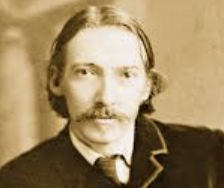
Decisive actions are often taken in a moment and without any conscious deliverance from the rational parts of man.
▼
Source
source
The Rajah's Diamond, Story of the Young Man in Holy Orders.

4 months 3 weeks ago
Morality is herd instinct in the individual.
4 months 2 weeks ago
The fall of Empire, gentlemen, is a massive thing, however, and not easily fought. It is dictated by a rising bureaucracy, a receding initiative, a freezing of caste, a damming of curiosity, a hundred other factors. It has been going on, as I have said, for centuries, and it is too majestic and massive a movement to stop.

3 months 3 weeks ago
So monstrous is the making and keeping them slaves at all, abstracted from the barbarous usage they suffer, and the many evils attending the practice; as selling husbands away from wives, children from parents, and from each other, in violation of sacred and natural ties; and opening the way for adulteries, incests, and many shocking consequences, for all of which the guilty Masters must answer to the final Judge.

3 months 2 weeks ago
To talk about religion except in terms of human psychology is an irrelevance.
▼
Source
source
"One and Many," p. 3
3 months 2 weeks ago
The indispensible is not necessarily the desirable.
▼
Source
source
Chapter 6 (p. 48)

1 month 5 days ago
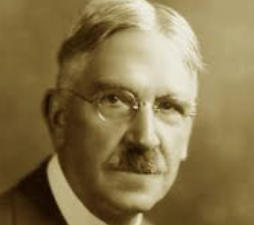
Life cannot exist without a certain conformity to the surrounding universe - that conformity involves a certain amount of happiness in excess of pain. In short, as we live we are paid for living.
2 months 1 week ago
Art expresses, it does not state; it is concerned with existences in their perceived qualities, not with conceptions symbolized in terms.
▼
Source
source
p. 139

2 months 2 days ago
In its mad passion for power, the Communist State even sought to strengthen and deepen the very ideas and conceptions which the Revolution had come to destroy. It supported and encouraged all the worst antisocial qualities and systematically destroyed the already awakened conception of the new revolutionary values.The sense of justice and equality, the love of liberty and of human brotherhood - these fundamentals of the real regeneration of society - the Communist State suppressed to the point of extermination. Man's instinctive sense of equity was branded as weak sentimentality; human dignity and liberty became a bourgeois superstition; the sanctity of life, which is the very essence of social reconstruction, was condemned as unrevolutionary, almost counter-revolutionary. This fearful perversion of fundamental values bore within itself the seed of destruction.
3 months 2 weeks ago
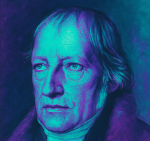
The essence of the modern state is the union of the universal with the full freedom of the particular, and with the welfare of individuals.
▼
Source
source
Sect. 260
2 months 2 weeks ago
Objection to scientific knowledge: this world doesn't deserve to be known.

3 months 2 weeks ago
Many of the actions by which men have become rich are far more harmful to the community than the obscure crimes of poor men, yet they go unpunished because they do not interfere with the existing order.
▼
Source
source
Ch. V: Government and Law

3 months 2 weeks ago
Society undergoes continual changes; it is barbarous, it is civilized, it is Christianized, it is rich, it is scientific; but this change is not amelioration. For everything that is given something is taken. Society acquires new arts, and loses old instincts. The civilized man has built a coach, but has lost the use of his feet; he has a fine Geneva watch, but cannot tell the hour by the sun.
▼
Source
source
p. 243

2 months 2 weeks ago
If you were to destroy in mankind the belief in immortality, not only love but every living force maintaining the life of the world would at once be dried up. Moreover, nothing then would be immoral, everything would be lawful, even cannibalism.
▼
Source
source
Book II, ch. 6 (trans. Constance Garnett) Pyotr Miusov, summarizing an argument made by Ivan at a social gathering

2 months 1 week ago
Man alone has the power of self-realization, the power to be a self-determining subject in all processes of becoming, for he alone has an understanding of potentialities and a knowledge of 'notions.' His very existence is the process of actualizing his potentialities, of molding his life according to the notions of reason.
▼
Source
source
P. 9
3 months 2 weeks ago
It seems to me now that mathematics is capable of an artistic excellence as great as that of any music, perhaps greater; not because the pleasure it gives (although very pure) is comparable, either in intensity or in the number of people who feel it, to that of music, but because it gives in absolute perfection that combination, characteristic of great art, of godlike freedom, with the sense of inevitable destiny; because, in fact, it constructs an ideal world where everything is perfect and yet true.
▼
Source
source
Letter to Gilbert Murray, April 3, 1902
3 months 2 weeks ago
I like mathematics because it is not human and has nothing particular to do with this planet or with the whole accidental universe - because, like Spinoza's God, it won't love us in return.
▼
Source
source
Letter to Lady Ottoline Morrell, March, 1912, as quoted in Gaither's Dictionary of Scientific Quotations (2012), p. 1318
1 month 2 days ago
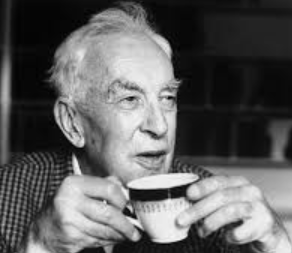
A city that outdistances Man's walking powers is a trap for Man. It threatens to become a prison from which he cannot escape unless he has mechanical means of transport, the thoroughfares for carrying these, and the purchasing power for commanding the use of artificial means of communication.
▼
Source
source
"Has Man's Metropolitan Environment Any Precedents?", Ekistics, vol. 22, no. 133 (December 1966) pp. 385-7

1 month 2 weeks ago
The true wisdom is to be always seasonable, and to change with a good grace in changing circumstances. To love playthings well as a child, to lead an adventurous and honourable youth, and to settle when the time arrives, into a green and smiling age, is to be a good artist in life and deserve well of yourself and your neighbour.
▼
Source
source
Crabbed Age and Youth.
3 months 3 weeks ago
As much in vain, perhaps, will they search ancient history for examples of the modern Slave-Trade. Too many nations enslaved the prisoners they took in war. But to go to nations with whom there is no war, who have no way provoked, without farther design of conquest, purely to catch inoffensive people, like wild beasts, for slaves, is an hight of outrage against Humanity and Justice, that seems left by Heathen nations to be practised by pretended Christians. How shameful are all attempts to colour and excuse it!
2 months 2 weeks ago
The Creation was the first act of sabotage.

3 months 4 weeks ago
The very elements themselves, though repugnant in their nature, yet, by a happy equilibrium, preserve eternal peace; and amid the discordancy of their constituent principles, cherish, by a friendly intercourse and coalition, an uninterrupted concord.
2 months 1 week ago
Position expresses the poised readiness of the live creature to meet the impact of surrounding forces, to meet so as to endure and persist, to extend or expand through undergoing the very forces that, apart from its response, are indifferent and hostile. Through going out into the environment, position unfolds into volume; through the pressure of environment, mass is retracted into energy of position, and space remains, when matter is contracted, as an opportunity for further action.
▼
Source
source
p. 221
2 months 2 weeks ago
To try curing someone of a "vice," of what is the deepest thing he has, is to attack his very being, and this is indeed how he himself understands it, since he will never forgive you for wanting him to destroy himself in your way and not his.
1 month 2 weeks ago
It may be that brain hardware has co-evolved with the internal virtual worlds that it creates. This can be called hardware-software co-evolution.

1 week 3 days ago
To my complete surprise, that exposure to out-of-date scientific theory and practice radically undermined some of my basic conceptions about the nature of science and the reasons for its special success.Those conceptions were ones I had previously drawn partly from scientific training itself and partly from a long-standing avocational interest in the philosophy of science. Somehow, whatever their pedagogic utility and their abstract plausibility, those notions did not at all fit the enterprise that historical study displayed. Yet they were and are fundamental to many discussions of science, and their failures of verisimilitude therefore seemed thoroughly worth pursuing. The result was a drastic shift in my career plans, a shift from physics to history of science and then, gradually, from relatively straightforward historical problems back to the more philosophical concerns that had initially led me to history.

4 months 5 days ago
You called and cried out loud and shattered my deafness. You were radiant and resplendent, you put to flight my blindness. You were fragrant, and I drew in my breath and now pant after you. I tasted you, and I feel but hunger and thirst for you. You touched me, and I am set on fire to attain the peace which is yours.

1 month 2 weeks ago
If one has no vanity in this life of ours, there is no sufficient reason for living.
▼
Source
source
Ch. 23. This is not, as it is often quoted, a stand-alone Tolstoy epigram, but part of the narration by the novella's jealousy-ridden protagonist Pozdnyshev.
3 months 2 weeks ago
A genuine first-hand religious experience like this is bound to be a heterodoxy to its witnesses, the prophet appearing as a mere lonely madman. If his doctrine prove contagious enough to spread to any others, it becomes a definite and labeled heresy. But if it then still prove contagious enough to triumph over persecution, it becomes itself an orthodoxy; and when a religion has become an orthodoxy, its day of inwardness is over: the spring is dry; the faithful live at second hand exclusively and stone the prophets in their turn. The new church, in spite of whatever human goodness it may foster, can be henceforth counted on as a staunch ally in every attempt to stifle the spontaneous religious spirit, and to stop all later bubblings of the fountain from which in purer days it drew its own supply of inspiration.
▼
Source
source
Lectures XIV and XV, "The Value of Saintliness"

2 months 2 weeks ago
The first and the simplest emotion which we discover in the human mind is Curiosity.
▼
Source
source
Part I Section I
2 months 2 weeks ago
The worst is not ennui nor despair but their encounter, their collision. To be crushed between the two!
3 months 3 weeks ago
If children were brought into the world by an act of pure reason alone, would the human race continue to exist? Would not a man rather have so much sympathy with the coming generation as to spare it the burden of existence?
▼
Source
source
"On the Sufferings of the World"

3 weeks 5 days ago
Science is not distinguished from myth by science being literally true and myth only a type of poetic analogy. While their aims are different, both are composed of symbols we use to deal with a slippery world.
▼
Source
source
Beyond the Last Thought: Freud's cigars and the long way round to Nirvana (p. 96)
2 months 2 weeks ago
There is no sin, and there can be no sin on all the earth, which the Lord will not forgive to the truly repentant! Man cannot commit a sin so great as to exhaust the infinite love of God. Can there be a sin which could exceed the love of God?
▼
Source
source
Book II, ch. 3 (trans. Constance Garnett) The Elder Zossima, speaking to a devout widow afraid of death
2 months 2 weeks ago
I am enraptured by Hindu philosophy, whose essential endeavor is to surmount the self; and everything I do, everything I think is only myself and the selfs humiliations.
2 months 2 weeks ago
The tendency to regard continuity, in the sense in which I shall define it, as an idea of prime importance in philosophy conveniently may be be termed synechism. The present paper is intended chiefly to show what synechism is, and what it leads to.

3 months 1 day ago
Friends are as companions on a journey, who ought to aid each other to persevere in the road to a happier life.
▼
Source
source
As quoted in Gems of Thought: Being a Collection of More Than a Thousand Choice Selections
3 months 2 weeks ago
Science seems to be at war with itself.... Naive realism leads to physics, and physics, if true, shows naive realism to be false. Therefore naive realism, if true, is false; therefore it is false.
▼
Source
source
An Inquiry into Meaning and Truth (1940), Introduction, p. 15
4 months 4 days ago
Every habit and faculty is confirmed and strengthened by the corresponding actions, that of walking by walking, that of running by running.
▼
Source
source
Book II, ch. 18, 1
1 month 3 weeks ago
The end of history is, alas, also the end of the dustbins of history. There are no longer any dustbins for disposing of old ideologies, old regimes, old values. Where are we going to throw Marxism, which actually invented the dustbins of history? (Yet there is some justice here since the very people who invented them have fallen in.) Conclusion: if there are no more dustbins of history, this is because History itself has become a dustbin. It has become its own dustbin, just as the planet itself is becoming its own dustbin.
▼
Source
source
The Illusion of the End (1992) (L'Illision de la Fin) Tr. Chris Turner, 1994, Stanford University Press, ISBN 0804725012, p. 26, "The Event Strike"
1 month 3 weeks ago
I might try to save the view that 'future contingents' have no truth value by saying that even present-tense statements have no truth value if they refer to the outcome of events that are so far away that a causal signal informing me of the outcome could not have reached me-now without traveling faster than light. In other words, I might attempt saying that statements about events that are in neither the upper half nor the lower half of my light-cone have no truth value. In addition, statements about events in the upper half of my light-cone have no truth value, since they are in my future according to every coordinate system. So only statements about events in the lower half of my light-cone have a truth value; only events that are in 'my past* according to all observers are determined.
▼
Source
source
Time and physical geometry

3 months 1 week ago
'Tis well to restrain the wicked, and in any case not to join him in his wrong-doing.
1 month 1 week ago
Liberty is not the same thing as equality, and that those who call themselves liberals are far more interested in equalizing than in liberating their fellows.
▼
Source
source
The Limits of Liberty, The American Spectator
2 months 2 weeks ago
My soul, my soul, where are you? Do you hear me? I speak, I call you-are you there? I have returned, here I am again. I have shaken the dust of all the lands from my feet, and I have come to you again, I am with you. After long years of long wandering, I have come to you anew. Shall I tell you everything I have seen, experienced, and drunk in? Or do you not want to hear about all the noise of life and the world? But one thing you must know, the one thing I have learned is that one must live this life. This life is the way, the long sought-after way to the unfathomable, which we call "divine". There is no other way. All other ways are false paths.
▼
Source
source
Book 2, 12. Nov. 1913
3 months 2 weeks ago
Indignation is a submission of our thoughts, but not of our desires.
1 week 5 days ago
Carnap made a detailed analysis of Heidegger's statement, "Nothing nihilates," in order to show that it is purely verbal, devoid of empirical meaning. (Incidentally, this is the only sentence from existentialist philosophy the majority of contemporary positivists appear familiar with.)
▼
Source
source
Chapter Eight, Logical Empiricism, p. 187
CivilSimian.com created by AxiomaticPanic, CivilSimian, Kalokagathia