

3 weeks 2 days ago
Some anarchists have claimed not merely that we would be better off without a state, but that any state necessarily violates people's moral rights and hence is intrinsically immoral. Our starting point then, though nonpolitical, is by intention far from nonmoral. Moral philosophy sets the background for, and boundaries of, political philosophy. What persons may and may not do to one another limits what they may do through the apparatus of a state, or do to establish such an apparatus.
▼
Source
source
Ch. 1 : Why State of Nature Theory?; Political Philosophy, p. 6
2 months 1 week ago
The great man, whether we comprehend him in the most intense activity of his work or in the restful equipoise of his forces, is powerful, involuntarily and composedly powerful, but he is not avid for power. What he is avid for is the realization of what he has in mind, the incarnation of the spirit.
▼
Source
source
p. 151

2 months 1 week ago
Because of your unbelief: for verily I say unto you, If ye have faith as a grain of mustard seed, ye shall say unto this mountain, Remove hence to yonder place; and it shall remove; and nothing shall be impossible unto you. Howbeit this kind goeth not out but by prayer and fasting.
▼
Source
source
17:20-21 (KJV)

3 months 2 weeks ago
When I was a student in the 1950s, I read Husserl, Sartre, Merleau-Ponty. When you feel an overwhelming influence, you try to open a window. Paradoxically enough, Heidegger is not very difficult for a Frenchman to understand. When every word is an enigma, you are in a not-too-bad position to understand Heidegger. Being and Time is difficult, but the more recent works are clearer. Nietzsche was a revelation to me. I felt that there was someone quite different from what I had been taught. I read him with a great passion and broke with my life, left my job in the asylum, left France: I had the feeling I had been trapped. Through Nietzsche, I had become a stranger to all that.
▼
Source
source
Truth, Power, Self : An Interview with Michel Foucault

1 month 2 weeks ago
In the electric age, when our central nervous system is technologically extended to involve us in the whole of mankind and to incorporate the whole of mankind in us, we necessarily participate, in depth, in the consequences of our every action. It is no longer possible to adopt the aloof and dissociated role of the literate Westerner.
▼
Source
source
(p. 4)

2 months 1 week ago
The empiricist thinks he believes only what he sees, but he is much better at believing than at seeing.
▼
Source
source
"Objections to Belief in Substance", p. 201

4 months 2 weeks ago
Where any answer is possible, all answers are meaningless.
1 month 1 week ago
What is imposed on us by birth and environment is what we are called upon to overcome.
▼
Source
source
Part I, p. 28
2 months 2 weeks ago
What will be the influence of communist society on the family? It will transform the relations between the sexes into a purely private matter which concerns only the persons involved and into which society has no occasion to intervene. It can do this since it does away with private property and educates children on a communal basis, and in this way removes the two bases of traditional marriage - the dependence rooted in private property, of the women on the man, and of the children on the parents.

2 months 2 weeks ago
Skepticism is an exercise in defascination.

3 months 2 weeks ago
Is dogmatic or scholastic theology less doubted in point of fact for claiming, as it does, to be in point of right undoubtable? And if not, what command over truth would this kind of theology really lose if, instead of absolute certainty, she only claimed reasonable probability for her conclusions? If we claim only reasonable probability, it will be as much as men who love the truth can ever at any given moment hope to have within their grasp. Pretty surely it will be more than we could have had, if we were unconscious of our liability to err.
▼
Source
source
Lectures XIV and XV, "The Value of Saintliness"

1 month 2 weeks ago
The man is making preparations for a year, and does not know that he will die before evening. And I remembered God's second saying, "Learn what is not given to man." 'What dwells in man" I already knew. Now I learnt what is not given him. It is not given to man to know his own needs.
▼
Source
source
Ch. XI
3 months 2 weeks ago
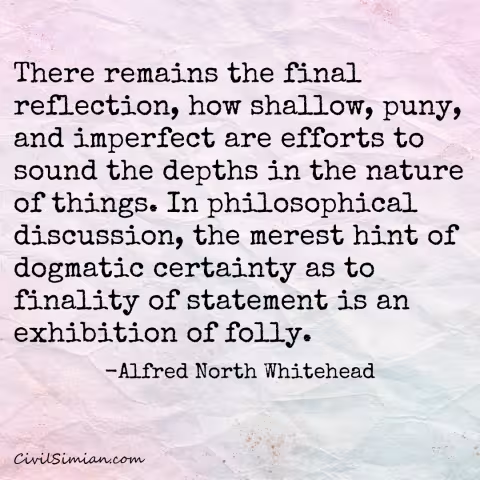
A sovereign shows himself to be a tyrant if he disregards his honest advisors, or punishes them for what they have said.

3 months 2 weeks ago
The chief function of the disciplinary power is to 'train', rather than to select and to levy; or, no doubt, to train in order to levy and select all the more. It does not link forces together in order to reduce them; it seeks to bind them together in such a way as to multiply and use them.
▼
Source
source
Part Three, The Means of Correct Training

4 months 2 weeks ago
If I were to imagine a girl deeply in love and some man who wanted to use all his reasoning powers and knowledge to ridicule her passion, well, there's surely no question of the enamoured girl having to choose between keeping her wealth and being ridiculed. No, but if some extremely cool and calculating man calmly told the young girl, "I will explain to you what love is," and the girl admitted that everything he told her was quite correct, I wonder if she wouldn't choose his miserable common sense rather than her wealth?
2 months 4 days ago
Error is the price we pay for progress.
2 months 2 weeks ago
I'd rather offer my life as a sacrifice than be necessary to anything.

2 months 2 weeks ago
You talk of Paine with more respect than he deserves: He is utterly incapable of comprehending his subject. He has not even a moderate portion of learning of any kind. He has learnd the instrumental part of literature, a style, and a method of disposing his ideas, without having ever made a previous preparation of Study or thinking-for the use of it. ... [Paine] possesses nothing more than what a man whose audacity makes him careless of logical consequences, and his total want of honour and morality makes indifferent as to political consequences, may very easily write. They indeed who seriously write upon a principle of levelling ought to be answerd by the Magistrate-and not by the Speculatist.
▼
Source
source
Letter to William Cusac Smith (22 July 1791), quoted in Alfred Cobban and Robert A. Smith (eds.), The Correspondence of Edmund Burke, Volume VI: July 1789-December 1791 (1967), pp. 303-304

1 week 3 days ago
To such a one, already filled with intellectual substance, and possessing what we may call the practical gold-bullion of human culture, it was an obvious improvement that he should be taught to speak it out of him on occasion; that he should carry a spiritual banknote producible on demand for what of "gold-bullion" he had, not so negotiable otherwise, stored in the cellars of his mind. A man, with wisdom, insight and heroic worth already acquired for him, naturally demanded of the schoolmaster this one new faculty, the faculty of uttering in fit words what he had. A valuable superaddition of faculty:-and yet we are to remember it was scarcely a new faculty; it was but the tangible sign of what other faculties the man had in the silent state.

3 months 3 weeks ago
If a workman can conveniently spare those three halfpence, he buys a pot of porter. If he cannot, he contents himself with a pint, and, as a penny saved is a penny got, he thus gains a farthing by his temperance.
▼
Source
source
Chapter II, Part II, Article IV, p. 951.

3 months 2 weeks ago
I did not know the way in which, among the ordinary English, the absence of interest in things of an unselfish kind, except occasionally in a special thing here and there, and the habit of not speaking to others, nor much even to themselves, about the things in which they do feel interest, causes both their feelings and their intellectual faculties to remain undeveloped, or to develope themselves only in some single and very limited direction; reducing them, considered as spiritual beings, to a kind of negative existence.
▼
Source
source
(p. 59)

4 months 2 weeks ago
It would be better for me that multitudes of men should disagree with me rather than that I, being one, should be out of harmony with myself.

3 months 2 weeks ago
There are a thousand hacking at the branches of evil to one who is striking at the root, and it may be that he who bestows the largest amount of time and money on the needy is doing the most by his mode of life to produce that misery which he strives in vain to relieve.
▼
Source
source
p. 87
2 months 1 week ago
A man is a man to the extent that he is a superman. A man should be defined by the sum of those tendencies which impel him to surpass the human condition.
▼
Source
source
Introduction

3 months 2 weeks ago
Love is better than hate, because it brings harmony instead of conflict into the desires of the persons concerned. Two people between whom there is love succeed or fail together, but when two people hate each other the success of either is the failure of the other.

3 months 2 weeks ago
The history of science, like the history of all human ideas, is a history of irresponsible dreams, of obstinacy, and of error. But science is one of the very few human activities - perhaps the only one - in which errors are systematically criticized and fairly often, in time, corrected. This is why we can say that, in science, we often learn from our mistakes, and why we can speak clearly and sensibly about making progress there.
▼
Source
source
Ch. 1 "Science : Conjectures and Refutations"

3 months 2 weeks ago
The days .... come and go like muffled and veiled figures, sent from a distant friendly party; but they say nothing, and if we do not use the gifts they bring, they carry them as silently away.
▼
Source
source
Works and Days
2 months 4 days ago
Often things realised in thought are more vivid than than the same things in inattentive physical experience. But the things apprehended as mental are always subject to the condition that we come to a stop when we come to explore ever higher grades of complexity in their realised relationships. We always find tat we have thought of just this - whatever it may be - and of no more.
▼
Source
source
Ch. 10: "Abstraction", p. 239
2 months 1 week ago
Suppose ye that I am come to give peace on earth? I tell you, Nay; but rather division: For from henceforth there shall be five in one house divided, three against two, and two against three. The father shall be divided against the son, and the son against the father; the mother against the daughter, and the daughter against the mother; the mother in law against her daughter in law, and the daughter in law against her mother in law. And he said also to the people, When ye see a cloud rise out of the west, straightway ye say, There cometh a shower; and so it is. And when ye see the south wind blow, ye say, There will be heat; and it cometh to pass. Ye hypocrites, ye can discern the face of the sky and of the earth; but how is it that ye do not discern this time? Yea, and why even of yourselves judge ye not what is right?
▼
Source
source
12:51-57 (KJV) Variant translation of 12:57: Why do you not judge for yourselves what is right?
3 months 3 weeks ago
The discovery of truth is prevented more effectively, not by the false appearance things present and which mislead into error, not directly by weakness of the reasoning powers, but by preconceived opinion, by prejudice.
▼
Source
source
Vol. 2, Ch. 1, § 17
3 months 2 weeks ago
Men love to wonder, and that is the seed of our science.
▼
Source
source
Works and Days;

3 months 4 weeks ago
As to the people; in all these countries the greater part of the people certainly detest war, and most devoutly wish for peace. A very few of them, indeed, whose unnatural happiness depends upon the public misery, may wish for war; but be it yours to decide, whether it is equitable or not, that the unprincipled selfishness of such wretches should have more weight than the anxious wishes of all good men united.

3 months 1 day ago
When the wise man opens his mouth, the beauties of his soul present themselves to the view, like the statues in a temple.
▼
Source
source
Pythagorean Ethical Sentences From Stobæus
4 months 2 weeks ago
If the very essence of knowledge changes, at the moment of the change to another essence of knowledge there would be no knowledge, and if it is always changing, there will always be no knowledge, and by this reasoning there will be neither anyone to know nor anything to be known. But if there is always that which knows and that which is known if the beautiful, the good, and all the other verities exist I do not see how there is any likeness between these conditions of which I am now speaking and flux or motion.
1 month 5 days ago
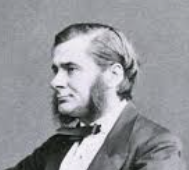
Only two suppositions seem to be open to us - Either each species of crocodile has been specially created, or it has arisen out of some pre-existing form by the operation of natural causes. Choose your hypothesis; I have chosen mine. I can find no warranty for believing in the distinct creation of a score of successive species of crocodiles in the course of countless ages of time.
2 months 1 week ago
Have no fear, little flock, for your Father has approved of giving you the Kingdom.
▼
Source
source
12:32
2 months 2 weeks ago
When we cannot be delivered from ourselves, we delight in devouring ourselves.
3 months 2 weeks ago
Old-fashioned determinism was what we may call hard determinism. It did not shrink from such words as fatality, bondage of the will, necessitation, and the like. Nowadays, we have a soft determinism which abhors harsh words, and, repudiating fatality, necessity, and even predetermination, says that its real name is freedom; for freedom is only necessity understood, and bondage to the highest is identical with true freedom.
▼
Source
source
The Dilemma of Determinism (1884) republished in The Will to Believe, Dover, 1956, p. 149

2 months 2 weeks ago
I suddenly dreamt that I picked up the revolver and aimed it straight at my heart - my heart, and not my head; and I had determined beforehand to fire at my head, at my right temple. After aiming at my chest I waited a second or two, and suddenly my candle, my table, and the wall in front of me began moving and heaving. I made haste to pull the trigger.

3 months 3 weeks ago
Separate an individual from society, and give him an island or a continent to possess, and he cannot acquire personal property. He cannot be rich. So inseparably are the means connected with the end, in all cases, that where the former do not exist the latter cannot be obtained. All accumulation, therefore, of personal property, beyond what a man's own hands produce, is derived to him by living in society; and he owes on every principle of justice, of gratitude, and of civilization, a part of that accumulation back again to society from whence the whole came.
▼
Source
source
Means by Which the Fund Is to Be Created
3 months 1 day ago
Truth is so great a perfection, that if God would render himself visible to men, he would choose light for his body and truth for his soul.
▼
Source
source
As quoted in A Dictionary of Thoughts: Being a Cyclopedia of Laconic Quotations from the Best Authors of the World, both Ancient and Modern (1908) by Tyron Edwards, p. 592

3 months 3 weeks ago
Ambition is not a vice of little people.
▼
Source
source
Book III, Ch. 10

2 months 3 weeks ago
The principle of equality does not destroy the imagination, but lowers its flight to the level of the earth.
▼
Source
source
Book Three, Chapter XI.
1 month 2 weeks ago
Another theme of the Wake that helps in the understanding of the paradoxical shift from cliché to archetype is "pastimes are past times". The dominant technologies of one age become the games and pastimes of a later age. In the twentieth century the number of past times that are simultaneously available is so vast as to create cultural anarchy. When all the cultures of the world are simultaneously present, the work of the artist in the elucidation of form takes on new scope and new urgency. Most men are pushed into the artist role. The artist cannot dispense with the principle of doubleness and interplay since this kind of hendiadys-dialogue is essential to the very structure of consciousness, awareness, and autonomy.
▼
Source
source
(p.99)

3 months 3 weeks ago
The Law continues to exist and to function. But it no longer exists for me.
▼
Source
source
Chapter 2, Verse 19
3 months 3 weeks ago
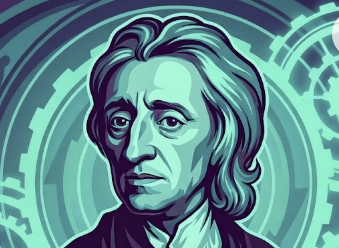
Though the managing ourselves well in this part of our behavior has the name good-breeding, as if a peculiar effect of education; yet... young children should not be much perplexed about it... Teach them humility, and to be good-natur'd, if you can, and this sort of manners will not be wanting; civility being in truth nothing but a care not to shew any slighting or contempt of any one in conversation.
▼
Source
source
Sec. 145
2 months 2 weeks ago
The Africans had that claim on our humanity which could not be resisted, whatever might have been advanced by an hon. gentleman in defence of the property of the planters.
▼
Source
source
Speech in the House of Commons (12 May 1789), quoted in The Parliamentary History of England, From the Earliest Period to the Year 1803, Vol. XXVIII (1816), column 98
3 months 2 weeks ago
When memory begins to decay, proper names are what go first ...[C]ommon qualities and names have contracted an infinitely greater number of associations ...than the names of most of the persons ...Their memory is better organized. ...'Organization' means numerous associations; and the more numerous the associations, the greater the number of paths of recall. For the same reason... words... which form the grammatical framework of all our speech, are the very last to decay.
▼
Source
source
Ch. 16

2 months 2 weeks ago
The word "God," so "capitalised" (as we Americans say), is the definable proper name, signifying Ens necessarium; in my belief Really creator of all three Universes of Experience. I, Ens necessarium is a latin expression which signifies "Necessary being, necessary entity"
CivilSimian.com created by AxiomaticPanic, CivilSimian, Kalokagathia